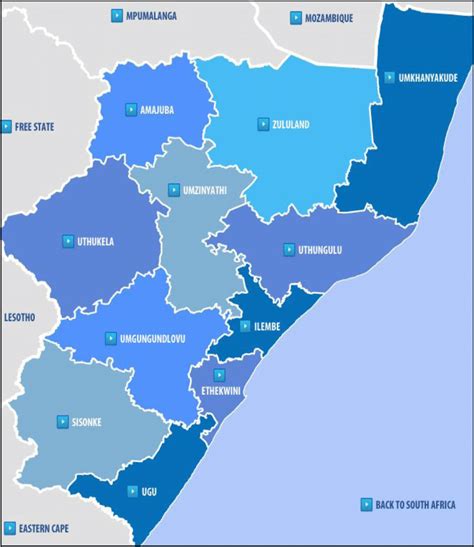
Passion and love are two words that spring to mind at Thula Thula Private Game Reserve. Thula Thula Private Game Reserve is a private game reserve situated in Zululand, KwaZulu-Natal province in South Africa. Thula Thula, with its centuries of cultural and wildlife heritage, takes pride in tracing back its origin to the private hunting grounds of King Shaka, founder of the Zulu Empire. Thula Thula was once the private hunting grounds of the mighty Zulu Warrior, King Shaka.
This 4500 hectare, malaria-free wildlife reserve was established in 1911 and has been operational as Thula Thula since 1998. Thula Thula was owned and operated by international conservationist and founder of the Earth Organization Lawrence Anthony, and by his wife Francoise Malby-Anthony.
The first historic meeting between Shaka and his father, Senzangakhona, which set the stage for the creation of the Zulu nation, took place at the Nseleni River at Thula Thula. Each majestic animal that walks the 9000 hectares is known by name and they seem to know that the rangers are talking of them as they look up at the sound of their name.
Thula Thula is home to a diverse African wildlife population, including elephant, rhinoceros, leopard, giraffe, zebra, nyala, hyenas, crocodile, kudu, wildebeest and a spectacular variety of other indigenous species, great and small. It is home to a wide variety of animals, including African bush elephant, Cape buffalo, southern white rhinoceros, African leopard, South African giraffe, zebra, nyala, hyena, Nile crocodile, kudu, wildebeest as well as other indigenous species.
The up close views that you get to have with the elephants, giraffe and rhinos is something that I have personally never experienced. The rhino come to the vehicle for you to give them a good rub. The elephants are more than happy to wash the safari vehicle for you while getting in your face, literally. Watching elephants dominate the dam where the hippos were frolicking is comical.
Read also: Explore Madikwe
Volunteers and guests alike seem to all flock to Thula Thula for the same reason: these close encounters with Africa’s most famous elephant herd and to get a glimpse of the first matriarch Nana, who takes a prominent place in The Elephant Whisperer. I stare at her while she is peacefully feeding and scratching her bum on a tree stump right next to the vehicle. We feel that Lawrence’s legacy is well alive when looking at this tranquil giant who once was so violent as a traumatized and rogue elephant. Today Frankie’s daughter, Marula, leads the herd after Nana has passed down her wisdom. From 7 elephants, the herd now counts 29, having embraced some more traumatized elephants along the way.
Apart from enjoying the reserve on sunrise and sunset game drives as a guest while staying in the tented camp or the more luxurious lodge, one can join the Volunteer Academy.
Françoise explains; “My goal is to educate the people about nature conservation while they can have a good time in the African bush.
To prepare your visit to Thula Thula, make sure to read The Elephant Whisperer by Lawrence Anthony, soon to be adapted as a movie.
Lawrence Anthony's Rehabilitation of Elephants
Read also: Exploring South Africa's Game Reserves
The Return of Elephants and the Legacy of Lawrence Anthony
The re-introduction of a family herd of elephant in August 1999 marks the historic return of these great creatures to the area for the first time in 100 years. In 1999 Lawrence Anthony was asked to accept a herd of 'rogue' wild elephants from Mpumalanga onto Thula Thula which were destined to be shot unless alternative arrangements could be made.
The herd was housed in a boma on Thula Thula but managed to break free and escape. The elephants were successfully tracked, recovered and transported back to Thula Thula. The story of their rehabilitation and Lawrence's subsequent relationship with the herd is told in his book The Elephant Whisperer. The elephant herd, including Nana, Frankie and Mabula are still at Thula Thula as of 2018. The herd had grown to 29 elephants as of 2018.
On March 2nd, 2012, a herd of African elephants started walking to pay their respects. They walked for two days to arrive on March 4th. For three years in a row, every March 4th, the herd returned to that very same house tucked away deep in the African bush.
Elephants mourn their dead, returning to where bones of one of them lay and linger around for hours; except that this time, they were mourning a man, Lawrence Anthony who had passed away unexpectedly while he was abroad on the 2nd of March 2012. Lawrence, founder and late owner of the Thula Thula game reserve in KwaZulu Natal, South Africa, had saved this rogue herd of elephants, and each of them knew it.
Despite all the struggles, with this elephant herd breaking through the fence of the park, one flipping his car over and killing a rhino, and many more described in his acclaimed book The Elephant Whisperer, Lawrence did not give up on his beloved elephants. The Thula Thula game reserve that he established with his wife Françoise Malby has remained their home.
Read also: Hunting in Africa
It is a hot afternoon when we sit for lunch on the large terrace of the Elephant Lodge in the welcoming shade of large acacias. The vervet monkeys observe our every move with great interest, hoping to steal a bit of food at the slightest opportunity. Some may accuse Françoise of anthropomorphism, yet, her love for these animals runs deep. Both, her and Lawrence were deeply affected when Heidi, their beloved white rhino got poached in 2009.
With the help of a donation by the animal welfare organisation “Four Paws”, Françoise opened the doors of a rhino orphanage by the end of 2014. Soon they had four rhino orphans, three white rhinos and one black rhino which required specific care and around-the-clock attention. Most of the baby rhinos were severely traumatized after witnessing their mothers being slaughtered by poachers and could not be left alone.
“Without a horn though… Deciding to dehorn them broke my heart”, Françoise explains while her face saddens. “Since poaching numbers have increased, 24/7 security is in place with an Anti-Poaching Unit as well as frequent dehorning procedures.
It is early 2017 when the rhino orphanage becomes the target of poachers. Six rhino calves and one baby hippo are present when poachers brutally kill one of the baby rhinos and hack off the horn of another which they do not even bother to kill as the bullet wounds the rhino severely enough for it to not move.
Françoise races to the crime scene in the middle of the night to find the security guard and three caretakers in total shock after being assaulted and put at gunpoint. But Françoise is determined to rehabilitate more animals and to provide a safe haven for them in her beloved Thula Thula.
If Françoise wants to help every animal, the rehabilitation centre needs to operate within reason. As soon as an animal arrives, the priority is to avoid stress as it is the main cause of death in these centres where wildlife that is completely unfamiliar with human activities, voices, and smells is brought in. As it should, interactions with wildlife are kept to a minimum. The sleek centre is well-designed with inside enclosures called bomas where animals can receive the care they need before being moved to the outside bomas when they are strong enough.
The Anti-Poaching Unit (APU) does more than protecting rhinos 24/7. About 10 snares a day get removed by the APU that patrols the fence continuously. Please bear in mind that these brave men and women (whom are hardly paid and remain invisible to the public) risk their lives daily to fight the ongoing war against poachers with machine guns.
Game walks are guided by experienced trackers. Game drives are conducted in openland rovers by our professional rangers.
Check out this interactive map for the specific details to help you plan your trip and more articles and photos (zoom out) about the area!
The Arrival of Cheetahs
As 2025 rolls in, so do three new cheetahs into Thula Thula! In December 2024, Thula Thula welcomed three cheetahs to the game reserve.
Cheetahs are the worlds fastest land animals, accelerating to speeds of almost 100km/h in just 3 seconds! With distinctive tear marks, and a sleek, spotted frame engineered for speed, cheetahs are an evolutionary marvel. Once abundant across the plains of Africa and the Indian subcontinent, less than 7000 exist in the wild today.
A few years ago Thula Thula got Savannah, the first cheetah in the Kwazulu Natal region in a long time. However, since she was the only cheetah that could actually be introduced to the game reserve at the time, it wasn't sustainable to extend the population and genetic diversity of this endangered species through just her.
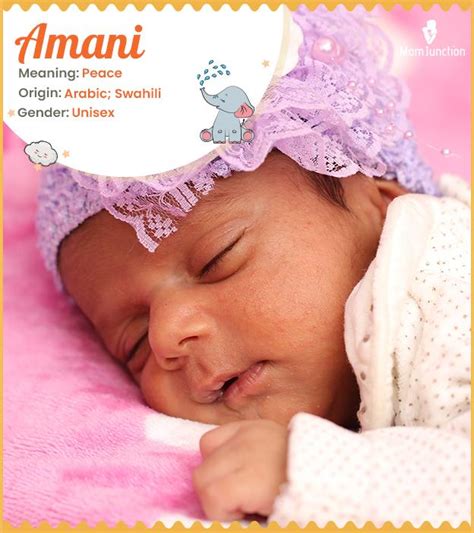
Now, with the introduction of two males, Amani and Asante, and a female, Ayana, hopefully cheetahs will soon be a self-sustaining part of the Thula Thula ecosystem.
Meet Amani & Asante
Amani and Asante were born on the 12th of January 2022 to a free-roaming male cheetah, and a female cheetah named Njozi residing in the Garden Route Reserve in the Gauteng province of South Africa. The brothers, like other male cheetahs, are very close, and are often spotted together in the Boma. Read more about them in the information card below.

Meet Ayana
Ayana, the female cheetah, was born on July 2022 in the Matlabas Game Reserve based in the Thambazimbi area in Limpopo, South Africa. Ayana is much more shy than the brothers, and there was worry as she hid in the bush didn't accept any food for the first few days upon arrival. However, slowly, she started accepting food and coming closer to the fence; her confidence continuing to grow day by day.
Unfortunately, upon arrival, it was discovered that her tracking collar had gotten stuck in her mouth, causing her a lot of pain. Thankfully, due to the quick action of Thula Thula vet Dr. Trever Vilijoen, the collar was removed and the wounds were treated well. A few days ago, she was successfully re-collared.
Naming the Cheetahs
Francoise, the owner of Thula Thula, reached out to me to help name the new cheetahs, and I researched lots of names that meant "speed" in different languages. Eventually, she chose the names Amani, Asante and Ayana. Their names have Swahili origins, with Amani meaning "peace", and Asante meaning "thank you." Ayana means many things in many different cultures; across Africa, India, Japan, and even the Americas. But, the primary Swahili meaning is "wildflower." Ayana is also a female version of my name - Ayan. It is truly an honor to have a beautiful wild animal named after me, and I would have never imagined this happening just a few short years ago.
Reintroducing Cheetahs to India
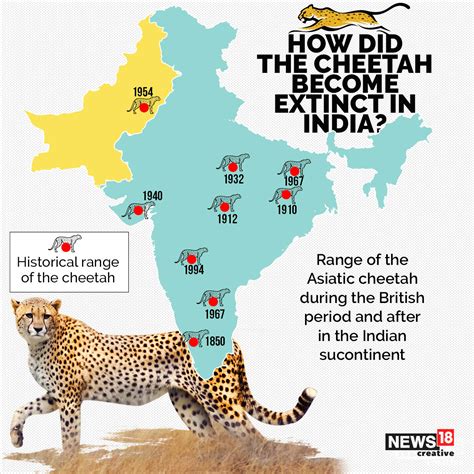
On a separate note, cheetahs have been reintroduced to India after their extinction in the mid 20th century. In 2020, the supreme court agreed for small numbers of African cheetahs to be introduced to different parts of India. 8 cheetahs from Namibia were released into quarantined enclosure in the Kuno National Park in 2020, followed by an additional 12 from South Africa in 2023. Later that year, they were released into the wild. A cheetah gave birth to 4 cubs in March 2023, the first recorded cheetah birth in India in more than 70 years.
While the project has had ups and downs, and the jury is still out on whether it has been successful or not, India has had a good run with wildcat conservation over the past half-century. Project Tiger is a great example of one of the most successful conservation efforts in the world, and so I am very hopeful that Project Cheetah will follow suit.
Cheetah Art
When I heard these cheetahs were arriving, I immediately wanted to help ensure their safety and survival at Thula Thula. To do this, I adopted the three cheetahs, which means that Thula Thula gets money to contribute to the purchase of tracking collars for all three cheetahs. These collars enable Thula Thula to monitor their movements, ensure their assimilation into the environment, and eventually (hopefully) their breeding. I am very grateful for all my supporters and donators who have made this possible!
Accommodations and Dining at Thula Thula
Rediscover Nature in great style and true to the African safari camp of a past era at the Thula Thula Luxury Tented Camp, where the peaceful essence of the African bush can be heard and felt.
The Luxury Tents are perfect for those seeking a rustic yet intimate and romantic safari. The Family Suites luxurious and built in the old colonial style.
View wildlife while sipping a cocktail from the swimming pool bar or relax in your hammock overlooking the Enseleni River.
Dining at Thula Thula is always a joyous occasion. Enjoy a buffet lunch served around the outside thatched bar or by the swimming pool. Each and every guest, young or old is catered for at Thula Thula Tented Camp. Facilities such as an air-conditioned lounge, TV-DSTV, and game room for children as well as a swimming pool bar.
With only 7 luxury thatched chalets, decorated in flavours of ethnic and colonial elegance, and all en-suite with deliciously designed bathrooms, the "Elephant Safari Lodge" is a haven for the discerning traveler. Thula Thula offers superb cuisine with as much privacy and comfort you could wish for. For special occasions including honeymoons or anniversaries, the 'Suite Royale' is a must.
Exclusivity is assured with only 8 luxury tents, all with private viewing decks, mosquito nets, fans and luxurious en suite bathroom with Victorian bath and outside shower in the luxury double tents.The 2 family tents offer space, luxury and comfort for parents and children and the generous ensuite bathroom has Victorian bath and open inside shower.
Dining Candle lit dinners are served either in the dining room, around the pool, on the veranda, or in the Boma for a traditional bush barbecue under the African sky.A walk-in wine cellar offers a great selection of superior Nederburg auction wines. Enjoy exotic cocktails at the "Marula Bar" or just relax in the lounge in the thatched lapa while viewing game at the waterhole.
Planning Your Visit
Thula Thula is only a 2 hour drive from Durban, and less than 30 minutes from Richards Bay Harbour & Airport.
Local Attractions
- Hluhluwe Umfolozi Game Reserve
- Shakaland Zulu Cultural Village
- Anglo-Zulu Battlefields
- St Lucia and more
Check in: 13h00
Popular articles:
tags: #Africa
