Whether you’re an avid safari-goer or it’s your very first time, South Africa’s diverse national parks and private reserves offer some of the best wildlife viewing opportunities in the whole of Africa. That said, each of South Africa’s safari locations have something different to offer, allowing you to build a trip shaped around what you’re most passionate about.
South Africa is a haven for animal enthusiasts, offering an array of game reserves where you can encounter everything from majestic lions to elusive leopards. Here’s a look at some of the places across the country where these magnificent creatures roam freely. If you’re eager to explore the rich tapestry of South African wildlife and perhaps tick off seeing the Big 5 animals from your bucket list, you’re in for a treat!
South Africa has a varied collection of state-run parks and reserves, but the country’s list of private reserves is even more impressive. While national parks cater to everyone, including self-drive and day visitors, private game reserves in South Africa are more exclusive and therefore less crowded. Packages usually include luxury accommodations, all meals and safari activities. Game drives are conducted in open vehicles, and off-road driving makes for excellent close-up encounters of the Big Five (lion, leopard, buffalo, elephant and rhino) and other safari favorites.
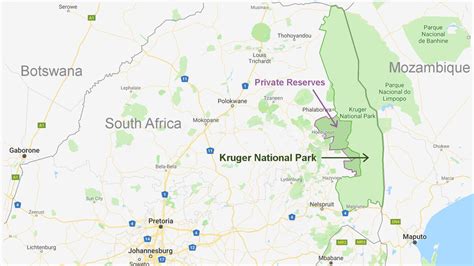
Here is the map of all South African game reserves, or visit the interactive Google Maps version.
In need of some inspiration?
Read also: Planning Your Ethiopia Trip
The Greater Kruger Region
The Greater Kruger Region is the oldest and largest area of undisturbed natural bush in South Africa. Known as South Africa’s premier big cat viewing destinations, Kruger National Park and the wider Greater Kruger Region (which includes a variety of private reserves bordering the park) boast the highest densities and widest varieties of classic safari animals in the country.
To the south and southwest, the rivers are bordered by woodland, which gives perfect cover to leopards. If you’re looking to travel on a budget and are happy to drive yourself around the park, you can choose from an array of government-run lodges and camps within the park’s boundaries.
Safaris in the Greater Kruger Region are predominantly vehicle-based, but it’s sometimes possible to take a bush walk too.
Kruger National Park
Located in northeastern South Africa, Kruger National Park is one of Africa’s largest game reserves, sprawling over about 7,722 square miles (almost 5 million acres).
Most Amazing Kruger National Park Wildlife Sightings of 2022
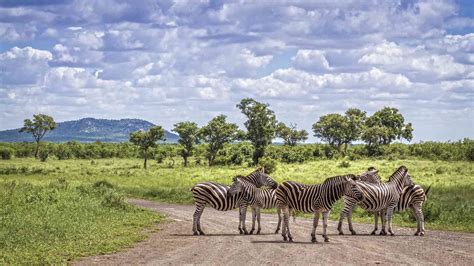
The Park is the home of 145+ mammal species, 500+ bird species, 30+ amphibian species, 110+ reptile species, and 45+ fish species. It is estimated to have 1,500 lion, 17,000 elephant, 48,000 buffalo and 1,000 leopards individuals.
Read also: Ethiopian Cuisine: Philadelphia Guide
It is an approx. 6 hours from Johannesburg by car. The closest airport is Kruger Mpumalanga International Airport in Nelspruit. Other regional airports that are close by: Hoedspruit and Phalaborwa.
Sabi Sands Game Reserve
Adjacent to Kruger National Park, Sabi Sand Game Reserve is 251-square-mile reserve renowned for exceptional leopard sightings.
Sabi Sands is arguably the most famous private reserve in the region, but there are also a number of smaller ones, such as the Timbavati, Thornybush, and Klaserie, where you'll see fewer vehicles and just as much wildlife. Both Sabi Sands and Timbavati have unfenced borders with Kruger National Park, so animals are free to move in and out.
Sabi Sand Game Reserve, South Africa’s most popular private game reserve, shares an unfenced border with the much larger Kruger National Park. This makes the reserve part of a vast self-sustainable ecosystem. There are lots of different lodges to choose from, most of which are small and luxurious.
The Sabi Sand Private Game Reserve is renowned as a haven for the Big Five and for luxury game lodges of international standing. The reserve’s lush vegetation adjoins the Kruger National Park, and fences have been dropped.
Read also: Best Beaches in Ghana
Here you’ll find adventure at its most luxurious - it’s all about combining amazing food and wine with safari. In nearby Sabi Sands Game Reserve, the quality and quantity of the game viewing is famously rich, with local residents including several leopards making regular appearances. Its location on the Sand River makes it a magnet for animals, especially in the winter months when other water sources in the game reserves have dried up, making Sabi Sands one of the most revered game reserves in South Africa.
It is an approx. 6 hours from Johannesburg by car. The closest regional airport is Skukuza.
Timbavati Nature Reserve
With open borders to neighboring Kruger, Timbavati Nature Reserve is the closest competitor to Sabi Sands. Although superficially similar, the safari experience feels wilder in Timbavati. The lodges are spread out in the rugged landscape and vehicle traffic is minimal. Aside from 18 all-inclusive luxury lodges, there are four self-catering camps.
Timbavati Private Nature Reserve, situated next to the Kruger National Park, is home to a dozen of South Africa’s best luxury game lodges. Timbavati is lion territory, including the incredibly rare white lion. There are thought to be only 13 left in the wild, so count yourself very lucky if you see one. However, you will be much more likely to see the numerous prides of lions who call Timbavati home.
Lion guarding over a giraffe kill in Timbavati Nature Reserve. Keep an eye out for white lions, the reserve’s claim to fame.
Klaserie Private Nature Reserve
The 60 000-hectare (148 000-acre) Klaserie Private Nature Reserve is hot and dry for most of the year, which makes game viewing along its Klaserie River hugely rewarding.
Manyeleti Game Reserve
Manyeleti Game Reserve is the only game reserve in the area owned and managed by a local community. The reserve shares open borders with Kruger and Timbavati Nature Reserve, but due to lack of permanent water, wildlife densities are lower here. Visitor numbers are lower too.
Manyeleti delivers excellent Big 5 game viewing thanks to its prime location between the Kruger, Sabi Sands and Timbavati.
Thornybush Game Reserve
One of the latest to do that is Thornybush; 34,000 acres of bushveld, which is a haven to the Big Five and more. It is one of the oldest game reserves in South Africa and where you’ll find some of the most exquisite lodges.
Aptly named after its open savannah woodland with dense patches of tangled thicket and thorny scrub, Thornybush is a famous Big 5 game reserve in Kruger.
Kapama Game Reserve
Easily accessible from nearby Hoedspruit Airport, Kapama is 13 000 hectares (32 000 acres) of open woodland and tangled riverine forest.
MalaMala Game Reserve
Sandwiched with open borders between Kruger and Sabi Sands, MalaMala Game Reserve is part of a massive ecosystem with animals roaming around freely. With very few properties on a large tract of wilderness, here you’ll experience first-rate wildlife viewing away from the crowds. Exclusivity is key and you’ll appreciate it when spending quality time with one of the reserve’s habituated leopards. This is where you can really witness the behavior of these normally skittish big cats.
MalaMala has become something of a byword when it comes to luxury game lodges.
Madikwe Game Reserve
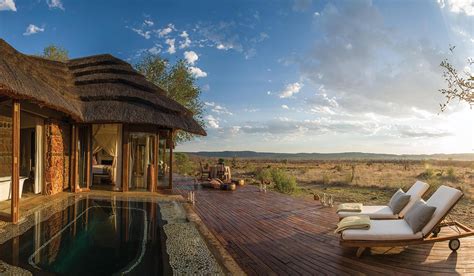
Madikwe is the second largest wildlife reserve in South Africa and home to all the wildlife big hitters, but it often flies under the radar when people plan a safari. This makes it ideal if you want a more traditional safari experience with fewer vehicles around. I consider it one of the best safari destinations near Johannesburg, around a one-hour flight from the city by light aircraft or a five-hour drive.
The vast swathes of land that make up Madikwe Game Reserve are a beautiful combination of rocky outcrops and open plains. Madikwe once had a reputation for its large population of wild dogs, but unfortunately due to the introduction of rabies by poachers, their numbers were decimated to only five individuals.
However, recently the population has started to bounce back, and on my most recent trip I saw a litter of nine pups. Wild dogs are rarely at the top of a first-time visitor’s wish list, but once you’ve seen these charismatic and sociable animals frolicking in front of you, you’ll see why experienced safari-goers love them.
Perhaps the best alternative to the excellent private reserves in the Greater Kruger area is the malaria-free Madikwe Game Reserve. Nestled against the Botswana border, Madikwe protects a vast untamed wilderness area. Although state-owned, it operates exactly like the private reserves farther south. The lodges are privately owned and they conduct all game drives. Aside from the Big Five and other safari heavyweights, you might be lucky to see a pack of wild dogs.
Madikwe Game Reserve, one of South Africa’s foremost Big Five malaria-free reserves, was envisaged not by conservationists, but by economists. They found conservation would create more income and jobs than the existing land-use, which was cattle farming.
Wild dogs at sunset in Madikwe Game Reserve.
Located in the northwest province, close to the border of Botswana, it’s something of a hidden gem but only a 40-minute flight from Johannesburg. Madikwe’s dry, yellow-sanded Kalahari plains are known for Operation Phoenix, which saw 8,000 animals reintroduced into the area in 1991 and remains the world’s largest wildlife translocation project.
Madikwe Game Reserve is around a 4-hour drive from Pretoria, with Johannesburg taking just under 5 hours.
Forget The Big Five, to turbocharge your family vacation you want to be looking for the Magnificent Seven in Madikwe.
Phinda Private Game Reserve
Probably the best private wildlife reserve in this area is Phinda. Wildlife drives and walking safaris are both possible here, making the area perfect for more active safari-goers. It’s home to the Big Five, as well as &Beyond’s guide training school, and is particularly known for its rhino sightings.
Phinda comprises several different biomes: woodlands, grasslands, wetlands, forests (including a rare dry sand forest), mountains, rivers, and marshes. It wouldn’t be accurate to say that KwaZulu-Natal is off the beaten track, but it’s certainly lesser known and quieter than other areas.
Phinda Game Reserve is the go-to area for game reserves in KwaZulu. Located in northern KwaZulu Natal, nestled in the Ubombo Mountains and flanked by golden beaches of the Indian Ocean, it is made up of 73,800 acres of land devoted to wildlife. It is home to the Big Five and more, like the endangered black rhino, the elusive cheetah, and the rare tiny Suni antelope.
Plus, every year, between November and January, two of the world’s largest turtles, the loggerhead and leatherhead, waddle out of the Indian Ocean and make their way to the warm, sandy beaches of nearby Sodwana Bay to lay their eggs. It is also very family-friendly. The Wild Child program is designed to captivate young safari-goers by teaching them about wildlife, leading cooking activities, tracing animal footprints, and more.
Phinda Game Reserve is on a par with the better-known Sabi Sands in terms of wildlife viewing. All the usual suspects are present, and you’re likely to enjoy some closeup encounters with the world’s fastest land animal, the cheetah. Seeing this gracious big cat at full speed on a hunt is a phenomenal sight. Phinda prides itself on the quality of the guiding.
The Phinda Private Game Reserve offers visitors a unique wildlife experience that combines the best of the South African bushveld with the best of the KwaZulu-Natal coastline.
Phinda Private Game Reserve is over a 7-hour drive from Johannesburg and around a 3.5-hour drive from Durban.
Cheetah family in Phinda Game Reserve.
Shamwari Private Game Reserve
The Eastern Cape is relatively new to safari compared to the Kruger region. That said, all wildlife viewing here provides ample opportunity to spot the Big Five: a stellar safari cast, including lions, leopards, rhinos, elephants, and cape buffaloes. During a three-night stay, your chances of seeing all five animals are good - though, as with all safaris, never guaranteed.
Most wildlife viewing is conducted on drives - however, you can also explore on foot. I’d recommend heading out with the more experienced guides, such as those in Lalibela Game Reserve. Unlike most other safari destinations, the Eastern Cape is malaria-free, making it ideal for families with children.
Shamwari Game Reserve is the most popular of the Eastern Cape’s private reserves. Wildlife viewing is almost on a level of what you can expect in the Greater Kruger area, except for leopard sightings, which are hit-and-miss here. You won’t miss out on seeing rhino in Shamwari; white rhino is common in the grassy areas and you’ve got a good chance of spotting the more elusive black rhino when traveling to the remote north of the reserve.
Shamwari Private Game Reserve in the Eastern Cape offers visitors award-winning luxury accommodation in the heart of the malaria-free big game country.
Shamwari is under an hour’s drive from Gqeberha. Formerly known as Port Elizabeth, this city has a domestic airport.
White rhinos in Shamwari Game Reserve.
Popular articles:
tags: #Africa
