Africa, the land of dreams, remains a unique destination for hunters seeking thrilling adventures. While modern safaris often involve hunting non-dangerous species, the allure of dangerous game, particularly the "Big Five," continues to captivate many. The Big Five game animals in Africa are: the lion, leopard, rhinoceros, elephant, and African buffalo.
The term "Big Five" was initially coined by big-game hunters, referring to the five most challenging animals to hunt on foot. Today, it is more widely used by tourists and safari operators, representing Africa's charismatic megafauna. Africa's Big Five have become major concerns for wildlife conservationists in recent years.
Hunting these animals is a daunting task, but despite concerns, they are huntable and not endangered. There is a huge distinction between “threatened” and “endangered.” Threatened animals are often hunted (including in the United States) because a monitored legal harvest is beneficial to the species. Endangered species are not hunted.
Here is the status of each as they stand in 2019:
The Big Five: Current Status and Hunting Information
Modern safaris are short hunts for a variety of non-dangerous species. These offer awesome adventure and the best bargains in the hunting world, but dangerous game is still what makes Africa unique.
Read also: Comprehensive Guide to Plains Game Hunting
Because of vast quantities of misinformation, some hunters will find this difficult to accept, but it remains fact: None of the Big Five is considered “endangered” by modern science, as monitored by the international body CITES (Convention on International Trade in Endangered Species). But if we choose, we can still hunt the African Big Five.
LONG-DISTANCE HUNTING: Is it ethical?
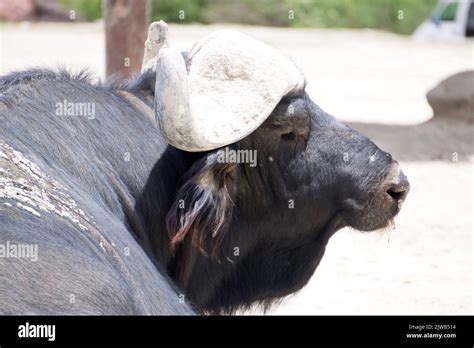
African Buffalo (Syncerus caffer)
The African buffalo exists in varying densities almost continent-wide - except for the great deserts-with total numbers in the low millions. A Cape buffalo safari costs about the same as a mid-level guided elk hunt in the Rockies. Free-range buffalo destinations include Mozambique, Namibia, Tanzania, Zambia, and Zimbabwe. All are good, with Mozambique and Zimbabwe the most economical. Regulated sport-hunting is conducted in more than a dozen nations, where the buffalo provides an important food source-and causes its share of problems with crop-raiding. Bottom line: There’s a lot of great buffalo hunting in today’s Africa. And it’s just as exciting as ever.
The African buffalo is a large horned bovid, and one of the most coveted big game species. They have heavy legs, which help to support their large body and the extra mass found in their heads and necks. Even with their large size, they can be quick quick, and agile on their feet, making them a tricky target. Additionally, they are a grayish-black color, so they often blend in with the mud they wallow in.
Rhinoceros (Diceros bicornis & Ceratotherium simum)
Thanks to intensive management in Southern Africa, both black and white rhino populations have increased dramatically over the past 30 years. Unfortunately, the new wave of poaching has caused serious losses, and despite extreme protective measures, both species are now again in decline. Rhinos are slow-breeding creatures, hard to manage, and difficult to protect against increasingly violent poachers. Both species are threatened, but present in enough parks and enclaves that “endangered” is not the correct classification.
Read also: African Hunting Literature
Despite today’s sad state of affairs, both white and black rhinos remain huntable in Namibia and South Africa, which host the majority of the world’s populations. The quota for black rhinos is a tiny token, only implemented under very specific conditions. Costs are astronomical, but even a single hunted black rhino pumps huge funds into management and protection.
The black rhinoceros (Diceros bicornis) and the white rhinoceros (Ceratotherium simum) are large herbivores with two upright horns on their nasal bridge. The black rhino is classified as critically endangered and the white rhino as near threatened, and both are subject to extensive poaching.
| Species | IUCN Status | Hunting Availability |
|---|---|---|
| Black Rhinoceros (Diceros bicornis) | Critically Endangered | Namibia and South Africa (limited, highly regulated) |
| White Rhinoceros (Ceratotherium simum) | Near Threatened | Namibia and South Africa (more available, expensive) |
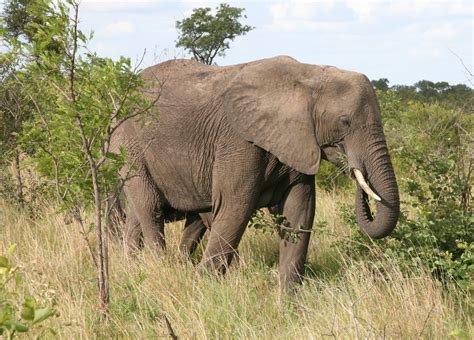
Elephant (Loxodonta africana)
Forty years ago, organized poaching gangs devastated Africa’s elephant populations. Many of us predicted the end, but we were wrong. The international ban on the ivory trade worked, at least for a while. Some herds rebuilt, and several southern populations escaped heavy poaching. Unfortunately, since the worldwide economic downturn in 2009, there has been a new wave of commercial ivory poaching, and elephant numbers are again falling.
This does not mean elephants should not be hunted. With a current population of perhaps a half-million, the African elephant is not endangered. It is threatened in many areas yet seriously overpopulated in others. In recent years the primary opportunities to hunt elephant have been Botswana, Namibia, South Africa, Tanzania, and Zimbabwe, with limited opportunities in Mozambique and Zambia.
Zimbabwe has an aggressive quota for tuskless elephants. A hunt for a tuskless elephant can cost less than a buffalo safari and is one of the most exciting and dangerous hunts in the world. Namibia’s conservancies where elephants are hunted often offer permits for non-exportable “own use” elephants, i.e., meat hunting.
Read also: Hunting in South Africa
The African bush elephant (Loxodonta africana) and the African forest elephant (Loxodonta cyclotis) are the largest extant land-based animals. Elephants are herbivores with thick, almost hairless skin; a long, flexible, prehensile trunk; upper incisors forming long, curved, ivory tusks; and large, fan-shaped ears. Elephants are difficult to hunt because, despite their large size, they are able to hide in thick bush and are more likely to charge than the other Big Five species.
Leopard (Panthera pardus)
The leopard’s range is the most widespread of the Big Five, and it roams throughout sub-Saharan Africa. A leopard safari is more expensive than a Cape buffalo hunt and is similar to a Dall sheep or a grizzly hunt. The least costly leopard options are probably Namibia and Zimbabwe, which are good places. Other good places include Mozambique, Tanzania, and Zambia. A leopard safari is more expensive than a Cape buffalo hunt and is similar to a Dall sheep or a grizzly hunt.
The leopard (Panthera pardus) is a large, carnivorous feline. Its fur is generally tawny with dark rosette-shaped markings. The leopard is the most seldom seen of the Big Five because of its nocturnal habits (it is most active between sunset and sunrise, although it may hunt during the day in some areas), and because it is wary of humans and will take flight in the face of danger.
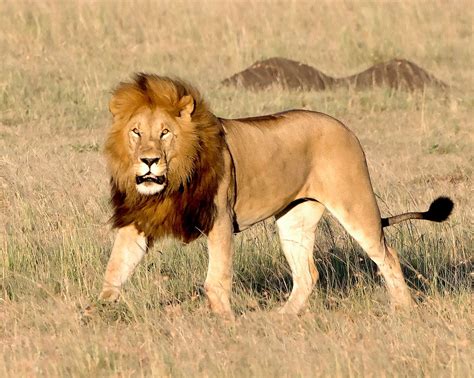
Lion (Panthera leo)
Africa’s lion population has declined precipitously since World War II and continues to drop. Estimates of wild lions are all over the map, but 35,000 seems a common number. This is not an endangered population, but lions are seriously threatened in many areas. The lion’s primary challenge is encroachment by livestock-raising humans.
Tanzania, the most important lion-hunting country, led the charge in mandating that only six-year-old males were legal for hunting. Managers in most of the other areas have followed Tanzania, so today only older “post-pride” males are targeted. This must be accepted if you take the plunge and commit to a lion safari-anywhere and at any price.
The lion (Panthera leo) is a large, carnivorous feline found in both Africa and northwestern India. It has a short, tawny coat; a tufted tail; and, in the male, a heavy mane around the neck and shoulders.
Ethical and Conservation Considerations
There are discussions about whether or not trophy hunting helps or hurts conservation efforts. Some argue that the money from hunting permits goes towards protecting wildlife, while others say that it can hurt the genetic diversity of animals like lions. Also, not all income from hunting is used for conservation.
Some hunters argue that the money spent on their hobby is funding important conservation work. Yet the Namibian government maintains an annual hunting quota of five post-breeding males, to stimulate population growth by allowing younger males to breed, the SCI representative explained. Recent studies suggest that modern hunters may be overestimating their contributions to wildlife conservation.
Planning Your Big Game Hunt
For hunters seeking a variety of animals and a thrilling big game hunt, Africa is undoubtedly one of, if not the, best destination out there. Every region of the country offers unique opportunities for big game hunting. The enticement lies in the challenge of tracking and pursuing species such as lions, elephants, leopards, buffalos, and rhinos, among others. As these are animals that you may not have the opportunity to hunt anywhere else, a big game hunt in Africa can certainly provide you with a once-in-a-lifetime experience!
South Africa accounts for a large majority of the big game hunting preserves in Africa. These South African hunting preserves offer up rare and highly sought after species of game to hunters daring enough to make the trip. Due to this region being such a hub for big game hunting, interested parties may find that accommodations for hunting trips can be made much easier than other places.
Here are a few major things to consider when planning your trip:
- Location: Hunting is readily available in the nine provinces of South Africa: Eastern Cape, Limpopo, Free State, Northern Cape, Gauteng, Mpumalanga, KwaZulu-Natal, North West, and Western Cape.
- Cost: Many hunters incorrectly assume that hunting in South Africa is more expensive than it really is.
- Skill: Big game hunting is an extremely physical commitment. You’ll want to be well prepared for the hours of walking and stalking that will likely be involved. It’s imperative that you be in good and healthy physical shape because you never know when you will find yourself in a life or death situation.
- Availability: Speaking generally, the big game hunting season in South Africa typically runs from the early spring to mid-late Fall.
Popular articles:
tags: #Africa
