Known for its dramatic landscapes, wide-open spaces, beaches, exotic wildlife, and sometimes tumultuous history, great wines, and bunny chow, South Africa is a popular tourist destination with a rich history and much to offer. Africa may be very famous for its delicious coffee, but where there is coffee, there is often tea too. And the one that comes from Africa is delicious, strong and very unique. Imagine hot weather, rich dark red soil, tropical and sub-tropical climates and a lot of sun. That’s exactly how many African teas taste like - delicious, earthy, and hiding a very special warm character.
Africa is a home of many teas - from herbal rooibos and honey bush, native to South Africa, to white, green, oolong, black and even dark fermented tea. Although pure African real tea is not as easy to find as Chinese or Indian tea, it’s often included in many tea blends. For example, English Breakfast.
While South Africa does produce black tea (camellia sinensis), primarily in the Eastern Cape Province as that area has the highest rainfall in the country, the country’s total amount of production is small, constituting less than 0.1% of world production in 2008. Interestingly, Kenya is one of the biggest tea producers in the world, right after China and Japan.
The teas that South Africa are best known for, however, and exported around the world are rooibos and honeybush. These herbal, naturally caffeine-free teas are native to and grown exclusively in the Western Cape province of South Africa. Both plants are endemic to South Africa and not grown anywhere else in the world.
Understanding Real Teas
What we call real teas are teas made from the Camellia sinensis plant. All real teas - white, yellow, green, oolong, black and dark are made from the same plant. The difference? How they are processed.
Read also: Traditional South African Bread
The Western Cape province has a Mediterranean climate, which means it has warm, wet winters under prevailing westerly winds, and calm, hot dry summers. Rooibos is usually grown in the Cederberg region, a small mountainous area. The shrubs grow in a fynbos biome, a small belt of natural shrubland or heathland vegetation. The fynbos biome makes up the majority of the area and plant life in the Cape floristic region, one of the six floral kingdoms in the world.
In 2012, one of our brokers in South Africa rode with me to a quaint village north of Cape Town, Vanrhynsdorp, which is just at the base of the climbing plateaus of the western Cape. After spending the night there, we climbed atop the plateaus among rolling mists, and I visited a lovely farm called 7 Fontein run by a nice Dutchman and his wife. They took me on a tour of their factory, and I was able to see Rooibos oxidizing in the factory - a slightly sweeter smell than oxidizing tea.
Rooibos is a legume that grows on shrubs. During the fermentation process, the tea changes from green to red-brown and its flavor is enhanced to have its signature sweet, rooibos aroma. Rooibos is well-known to have many health advantages. Rich in many minerals and antioxidants, it’s a great beverage to incorporate into your daily routine if you’re interested in your overall health.
Rooibos Tea: Benefits for Health
Types of South African Teas
Hey tea lovers! Welcome back to Tea of the Week. This week, we are featuring 3 similar herbal teas from South Africa that are packed with antioxidants! Let's delve into the varieties of South African teas:
- Kenyan Purple Tea: A new type of tea created by the Kenyan Tea Research Foundation. Purple tea is not a special type of tea - it’s a special cultivar that can be used for making, for example, green or black tea. Why purple? Because the tea leaves contain high levels of anthocyanin, a special pigment that gives color to fruits and vegetables such as acai berries or purple cabbage. It has a high free radical scavenging rate, even higher than green tea. Kenyan purple tea benefits include help with weight loss, brain protection from neurodegenerative diseases and an anti-cancer activity. Teas to try?
- Kenyan Black Tea: There are many types of Kenyan black tea. Many of them are strong, hearty and smooth, and a great choice for breakfast tea time. Kenya is the third largest tea producer in the world. Many of the teas are produced using the CTC or Cut Tear and Curl method and have small pellet-shaped leaves.
- Rwandan Tea: Rwanda is a very interesting country in the tea world. Although small, it produces delicious high grown tea including black, green and white. Rwanda is probably one of the most artisanal tea producers in Africa, and the one very new to tea production. The history of Rwandan tea is not long - it started only 70 years ago.
- Ethiopian Tea: Ethiopia is well known for its coffee, but it produces great tea too. Tea production in Ethiopia started only a bit less than 100 years ago. Interestingly, tea is not a majorly important product-but tea drinking is.
Africa is the home of two most delicious herbal teas in the world - rooibos or red bush and honey bush, both coming from South Africa. Both rooibos and honey bush are available in two styles - fermented and unfermented.
Read also: Key Trends in Nigeria and South Africa
Here is the truth, both rooibos and tea from the Camellia Sinensis plant contain high amounts of antioxidants and they both have benefits that can improve the quality of life. Traditional tea helps to keep you alert and may help with weight management due to the caffeine it contains. And its higher level of catechins provides potential for cancer-related benefits.
Hey, but then there is Rooibos and for those looking to avoid caffeine, this has its own slew of benefits. The power of the Red Bush Tea can be enjoyed by all especially due to its caffeine-free nature. Rooibos is both sweet and nutty and blends well with other ingredients giving the tea a diversity of flavors.
The indigenous Khoisan people of the region have been using the plant for thousands of years because they recognized its tremendous benefits to their health and well-being. The fame of this powerhouse plant became more widely known throughout Europe sometime in the 20th century. The outbreak of war put import constraints on tea in Europe, which paved the way for an alternative to black tea.

Rooibos Tea Plantation in South Africa
Red Rooibos
The ultimate African herbal drink that grows exclusively in South Africa has won many hearts around the world over the last few decades. In fact, it was mostly unknown in the United States until about 20 years ago. Red rooibos, also known as African red bush tea, originates from the Western Cape province of South Africa. The tea is made from the leaves of the Aspalathus linearis plant, which is naturally caffeine-free and rich in antioxidants. Redbush tea is often described as one of the healthiest herbal beverages in the world, and the one with the prettiest color too. Red rooibos have a high levels of antioxidants, no caffeine and is suitable for all age groups. It’s strong and earthy, which makes it perfect for blending with every possible spice, fruit, flower or - chocolate.
Read also: Space Exploration in South Africa
Traditionally, after the leaves of the shrub were harvested, they were beaten with wooden hammers, placed in big piles to ferment, and then left to dry in the sun. This process of fermentation, also known as oxidation, turns the leaves red and gives the tea a more astringent flavor similar to black tea.
Green Rooibos
Green rooibos is a fresher, unfermented type of rooibos tea. Green rooibos, derived from the Aspalathus linearis plant native to South Africa, is an unoxidized variation of rooibos tea. Just like the red one, it’s made from the plant called Aspalathus linearis. Green rooibos usually contains higher levels of antioxidants. Think of green and red rooibos as a herbal caffeine free versions of green and black tea. They both have a wide range of benefits, but the green may provide more antioxidans than the red one. Green rooibos has a fresher, lightly sweet flavor that can sometimes be similar to green tea. Unlike green tea, it’s naturally caffeine free and has no bitterness at all, even if you over-brew it.
Honeybush
Honeybush carries many similarities to rooibos. Honeybush is an herbal tea that originates from South Africa, primarily the Eastern and Western Cape regions. It is also a legume, and the tea is made from the leaves of the honeybush plant, so named because the leaves smell like honey. This South African herbal tea is made from Cyclopia plant species. It’s a bit more brownish than rooibos and has a similar flavor with less earthiness and more woodiness. It is somewhat floral and sweet, with a touch of its eponymous flavor. Honeybush has a sweet, honey-like taste and a rich aroma, making it a delightful and soothing beverage. Honey bush contains no caffeine and it may provide many health benefits. Interestingly, just like the red tea, honey bush has been available for only two decades.
North African Mint Tea
North African Mint tea is a tea so well-known we often forget it comes from Africa too. It’s served throughout North Africa, for example Tunisia, Morocco, Mauritania and other countries. Depending on the country, it may contain other ingredients too, such as pine nuts. It’s sweet and made with a lot of fresh mint.
Ethiopian Spiced Tea
Unlike the regular spiced tea with black tea leaves and milk, the one from Ethiopia doesn’t contain milk.
Health Benefits of Rooibos Tea
Rooibos tea is gaining popularity as a delicious and healthy drink. Consumed in southern Africa for centuries, it has become a beloved beverage around the world. It’s a flavorful, caffeine-free alternative to black and green tea. What’s more, advocates praise rooibos for its potential health benefits, claiming that its antioxidants can protect against cancer, heart disease, and stroke.
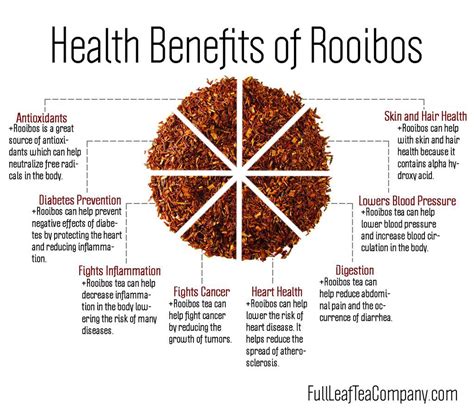
Infographic on the Health Benefits of Rooibos Tea
Rooibos tea is also known as red tea or red bush tea. It is made using leaves from a shrub called Aspalathus linearis, usually grown on the western coast of South Africa. Traditional rooibos are created by fermenting the leaves, which turns them a red-brown color. Rooibos tea is usually consumed like black tea and has a sweet and nutty taste. Some people add milk and sugar, and rooibos iced tea, espressos, lattes, and cappuccinos have also become popular. Rooibos tea is naturally caffeine-free and is a good alternative to black or green tea.
Rooibos is associated with health benefits due to its high levels of health-promoting antioxidants, which include aspalathin and quercetin. Rich in antioxidants, including phenolic compounds and flavones, honeybush can help combat oxidative stress and inflammation in the body, potentially reducing the risk of chronic diseases. Research has found that antioxidants may help reduce your risk of certain chronic conditions, such as heart disease and cancer.
There is some evidence that rooibos tea can increase antioxidant levels in your body. A 2021 review found that rooibos tea may have beneficial effects on inflammation by preventing the growth of angiotensin converting enzymes (ACEs). ACE indirectly increases blood pressure by causing your blood vessels to contract, which can lead to heart disease. Some research suggests that the antioxidants present in rooibos tea may help prevent cancer cell growth.
In fact, a 2020 test-tube study on advanced prostate cancer found that green rooibos tea may reduce the migration and invasion of cancer cells. Rooibos tea is rich in antioxidants which may be beneficial in reducing symptoms of diabetes. A 2023 review found that rooibos contains several minerals, especially flavonoids such as aspalathin, which may help to lower blood sugar levels. However, further research is still needed to understand the exact effects.
| Tea Type | Origin | Key Characteristics | Health Benefits |
|---|---|---|---|
| Red Rooibos | South Africa | Fermented, reddish-brown color, sweet and nutty flavor | High in antioxidants, may reduce inflammation |
| Green Rooibos | South Africa | Unfermented, green color, delicate and grassy flavor | Higher levels of antioxidants |
| Honeybush | South Africa | Sweet, honey-like taste and aroma | Rich in antioxidants, may help combat oxidative stress |
Potential Side Effects
In general, rooibos is very safe and is not associated with any serious side effects. Therefore, enjoying rooibos tea in moderation as part of a balanced diet is unlikely to cause issues for most people. However, studies have shown that consuming rooibos tea may lead to liver toxicity in very rare cases. If you have a health condition that affects your liver, such as hepatitis, consider avoiding this beverage. A healthcare professional can help you determine if it is safe for you to consume.
Disclaimer: This article is for informational purposes only. It’s not intended to replace medical advice, diagnosis or treatment. Every person is different and may react to different herbs and teas differently. Never use teas or herbs to treat serious medical conditions on your own.
If you are looking to unlock the health benefits of Rooibos, why wait when you can begin improving your health today?