This article provides an overview of the South West African market, focusing primarily on Nigeria and South Africa, two of the region's largest economies. It examines key economic sectors, trade relationships, and the overall business environment in these countries.
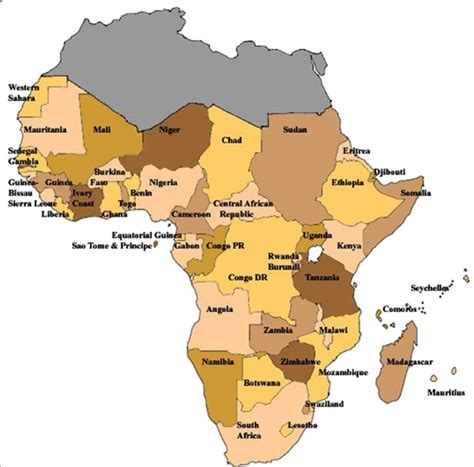
Map of Sub-Saharan Africa
Nigeria: An Overview
Nigeria has the largest market in Africa with a population of over 200 million. As such, Nigeria has an abundance of labor at rates well below high-income and some middle-income countries. The country also has an abundance of natural resources including oil, minerals, and precious stones.
Key Economic Sectors
In addition to oil and gas, Nigeria’s formal sector economic activities are conducted across several sectors including the agricultural, services, and industrial sectors. The services sector - consisting of telecommunications, financial, and other services - is the largest sector in Nigeria and accounted for 52% of GDP in the third quarter of 2022. The information and communications technology (ICT) sector contributed 16.2% to GDP in Q1 2022. The agricultural and industrial sectors accounted for 30% and 18%, respectively, during the same period.
Nigeria’s agricultural sector employed nearly 70% of the population and comprised nearly 22% of GDP in the Q1 of 2022, slightly higher than the 21.42% in Q4 2021. Nigeria possesses an abundance of arable land and a favorable climate for production of nuts and seeds fruits, tubers, and grains.
Read also: Property Practitioners Regulatory Authority
According to the Nigerian Communication Commission (NCC), Nigeria is Africa’s largest ICT market, accounting for 82% of Africa’s ICT market and 29% of internet usage in Africa. The African Development Bank lists Nigeria as one of four biggest African tech hubs that continues to attract the most fintech funding in the continent.
Nigeria's Economy: Challenges, Prospects Of 5G Network - Ozinegbe
In December 2021, the Nigerian Communications Commission completed auctions for the 3.5GHz, 5G spectrum and subsequently awarded operational licenses to MTN, MAFAB Communications. In August 2022, NCC reported that Nigeria had more than 210 million active mobile telecoms subscribers of GSM.
Oil and Gas Sector
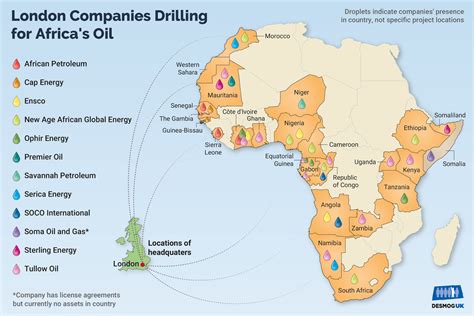
Proven Oil Reserves in Africa (as of January 1, 2020)
It is one of Africa’s key oil producers, producing high-value, low-sulfur crude oil. The economy’s heavy dependence on oil has decreased somewhat in the last few years. In the third quarter of 2022, oil accounted for about 5.6% of Nigeria’s gross domestic product (GDP), down from 7.5% recorded in the third quarter of 2021. Oil revenue remains a crucial source of government revenue, constituting 29% of total government revenues in the first half of 2022. Oil continues to account for the bulk of Nigeria’s export earnings.
The oil and gas sector is the largest contributor to government revenues and accounts for the bulk of Nigeria’s exports. However, the country has been unable to benefit for increasing global prices as a result of Russia’s invasion of Ukraine due to theft, vandalism, and insecurity in supply chains. As a member of OPEC, Nigeria’s daily production of oil is regulated by the organization.
Read also: Discover Thula Thula
Nigeria has some of the largest natural gas deposits in the world with over 206.5 trillion cubic feet of proven reserves. In 2021, Nigeria was the world’s sixth-largest exporter of liquefied natural gas (LNG). The country’s exports of natural gas rose by 14% and accounted for 9.24% of total exports in the first quarter of 2022.
Trade and Investment
Nigeria ranks 58th among the United States’ trade partners. In 2022, trade between both countries was valued at $4.45 billion. The United States and Nigeria have a bilateral Trade and Investment Framework Agreement (TIFA), and Nigeria is eligible for preferential trade benefits under the African Growth and Opportunity Act (AGOA).
According to the National Bureau of Statistics, 6.5% of all of Nigeria’s imports came from the United States in the third quarter of 2022, making it Nigeria’s fifth largest import partner. Nigeria’s major imports from the United States include durum wheat valued at over $173 million and used vehicles at $158 million. Other key Nigerian imports from the United States included spare parts, machinery, refined petroleum products, and military hardware.
The United States was Nigeria’s sixth largest export partner with 5.7% of Nigeria’s $747 million (337 billion naira) exports going to the United States.
China has emerged as a major development, trade, and investment partner of the Nigerian government and is Nigeria’s largest contractor and partner in infrastructure projects, with its total volume of projects estimated at over $77 billion.
Read also: Traditional South African Bread
Economic Challenges and Initiatives
Nigeria’s economy and commercial activities have been affected by several global economic shocks including COVID-19 and Russia’s invasion of Ukraine. Several domestic headwinds are also impacting the economy, including decline in crude export volume, a costly petroleum subsidy, rising inflation, and rapid currency devaluation.
The drop in revenues has exacerbated dwindling foreign currency reserves, making access to foreign exchange an ongoing problem for businesses. The Central Bank of Nigeria (CBN) has not harmonized multiple exchange rates, causing uncertain and dynamic market conditions for international businesses.
Under President Muhammadu Buhari, Nigeria has prioritized self-sufficiency as key to economic growth and national security, promoting backward integration, import substitution, and local content laws. The government’s Strategic Revenue Growth Initiative which aims to improve revenues to 15% of GDP by 2025 has resulted in some growth in non-oil revenues.
Infrastructure and Development
Nigeria’s publicly-owned and operated transportation infrastructure is a major constraint to economic development. The principal ports are Lagos (Apapa and Tin Can Island), Port Harcourt, and Calabar. Of the 50,000 kilometers of roads, only a little more than 10,000 kilometers are paved, with many in poor condition.
Five of Nigeria’s twenty-two airports (Lagos, Kano, Port Harcourt, Enugu, and Abuja) currently receive international commercial flights. Nigeria’s railway currently has eight lines that are slightly more than 2,000 miles long collectively.
South Africa: An Overview
South Africa is the most advanced, diversified, and productive economy in Africa. The country has a population of over 60 million, covers 1.22 million square kilometers, and is the world’s largest producer of platinum, vanadium, chromium, and manganese.
Economic Landscape
South Africa has enjoyed relative macroeconomic stability but is struggling to recover from the COVID-19 pandemic, July 2021 riots, floods in three provinces and a precarious electricity supply situation. The Covid-19 pandemic led to a 7 percent contraction to $302 billion in 2020, a 13.1 percent decline from 2019. The Gross Domestic Product (GDP) amounted to $ 405.87 billion in 2022, with the economy expanding by 2%, (GDP US $ values are not purchase power parity adjusted). Nigeria has overtaken South Africa as the largest economy in Africa.
Inflation is showing a steady drop to enter the SA Reserve Bank’s target range of 3-6 %. The steeply declining SA Rand to Dollar exchange rate is largely a function of the lower inflation and interest rates and perceived increased political risk. Lower commodity prices have put additional pressure on already highly constrained national fiscal receipts.
Key Economic Sectors
The maturity of the South African economy is reflected in the mix of economic sectors: The largest sector of the economy is services which accounts for around 73 percent of GDP. Within services, the most important are finance, real estate and business services (21.6 percent); government services (17 percent); wholesale, retail and motor trade, catering and accommodation (15 percent); and transport, storage and communication (9.3 percent). Manufacturing accounts for 13.9 percent; mining and quarrying for around 8.3 percent and agriculture for 2.6 percent.
Advantages and Challenges
Parts of the country’s urban areas boast well-developed infrastructure, comparable to OECD standards, but rapid urbanization has led to glaring contrasts. The growing services sector is a major employer, and the corporate side of the economy has been traditionally well-managed, although it faces low productivity gains. The banking and financial services sector is stable. The Johannesburg Stock Exchange (JSE) ranks among the top emerging market exchanges in the world.
Many critical State-owned enterprises (SOEs) utilities are of growing concern due to rapid service contraction and declining revenues.
Regional and Trade Agreements
South Africa is well integrated into the regional economic infrastructure as formalized by membership in the Southern African Development Community (SADC). In addition, the Southern African Customs Union (SACU) agreement with Botswana, Namibia, Lesotho, and eSwatini (Swaziland) facilitates commercial exchanges. South Africa is a member of the World Trade Organization (WTO), the G20, and the informal BRICS (Brazil, Russia, India, China, and South Africa) association of emerging economies.
The United States and South Africa signed a Trade and Investment Framework Agreement (TIFA) in 2012. The United States and SACU concluded a Trade, Investment, and Development Cooperation Agreement (TIDCA) in 2008. The United States is a critical trading and technology partner for South Africa and ranks as South Africa’s third-largest bilateral partner in two-way trade by value.
New-to-market (NTM) companies should consider South Africa’s geographic advantages, infrastructure, widespread use of the English language, and relatively transparent legal processes, which make it a low-entry threshold country.
| Indicator | Nigeria | South Africa |
|---|---|---|
| Population | Over 200 million | Over 60 million |
| Largest Sector of the Economy | Services (52% of GDP in Q3 2022) | Services (around 73% of GDP) |
| Key Trade Partners | United States, China | United States |
| Membership in Regional Organizations | ECOWAS, AfCFTA | SADC, SACU |
