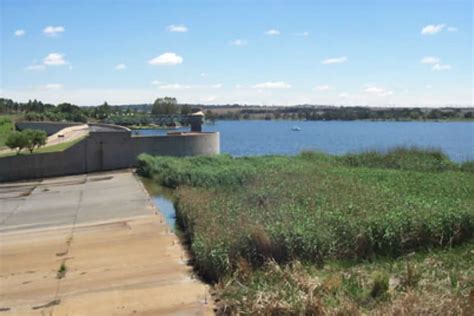
The Rietvlei Nature Reserve, located in southern Pretoria, Gauteng, South Africa, spans approximately 4,000 hectares (40 km2). This remarkable reserve encompasses the entirety of the Rietvlei Dam, which impounds the Rietvlei River. Wedged between the R21 highway (OR Tambo Airport highway) on the western side and the R50 (Delmas-Bapsfontein) road on the north-east, its mean elevation above sea level is approximately 1,525 meters.
Rietvlei is named for the dam at its centre, which is the source of around 20% of Pretoria’s drinking water.
The reserve is generally not very busy. The reserve has a typical Hightveld climate with hot days regularly followed by short and intense afternoon thunderstorms in summer. The thunderstorms are often accompanied by lightning and occasionally result in hail. Summer temperatures range between 16 °C at night to 30 °C during the day.
History and Background
The government bought Rietvlei on 2 Sept 1929 as Rietvallei (Extent 1), from DM Munro, in order to build the Rietvlei dam. As part of the Rietvlei water scheme, the Rietvlei dam was built in 1934 on the Six Mile Spruit. The dam wall is an earth structure and was built completely by hand. Donkey carts were used to cart soil onto site and remove any soil and other material that was no longer required.
Biodiversity and Wildlife
The reserve boasts a rich biodiversity, making it a unique destination for nature enthusiasts. Mostly open grassland covering low hills with indigenous tree in small groups. Rare for South Africa, it also contains a peat wetland area. The reserve has 272 bird and 530 plant species.
Read also: Discover Wildlife
The reserve carries around 1,600 individual large mammals. Cheetah, blesbuck, black wildebeest, red hartebeest, eland, common zebra, waterbuck, reedbuck, springbuck, mountain reedbuck, steenbok, grey duiker, oribi, leopard, buffalo, and hippopotamus can all be found in the reserve. There are also 4 lionesses and 2 male lions kept in a separate enclosure on the reserve. In October 2019, the Rietvlei lions were killed by poachers and since then, no lions have been kept at the reserve.
Rietvlei Nature Reserve # 1 : Animals and Birds
Bird Watching
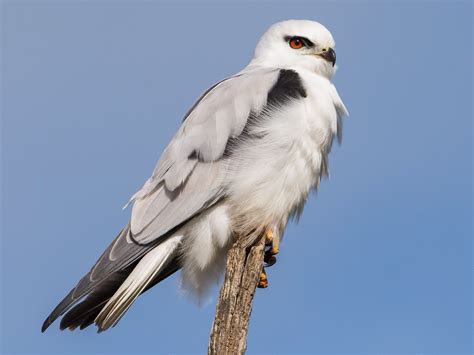
Some 404 species of bird utilize the reserve. Birds commonly encountered include colonies of southern masked-weaver, the invasive common myna and conspicuous pied crow, buffy pipit, blacksmith and crowned lapwing on short or burnt grassland, and Cape longclaw and rufous-naped lark in denser grassland or shrubby areas. Amur falcon and barn swallow occur annually in summer. Black-shouldered kite, spotted thick-knee, cattle egret, helmeted guineafowl, Swainson's spurfowl, African palm-swift, southern red bishop, anteating chat, stone chat, capped wheatear, fork-tailed drongo and pied starling are resident or regularly seen species.
Activities and Amenities
Rietvlei offers a variety of activities for visitors to enjoy:
- Self-Drive Game Viewing: 30 km of tarred and 10 km of dirt road is provided for this. Larger game tend to stay away from the main tar roads in the park.
- Bird Watching: There are four bird hides in the reserve.
- Picnic: The picnic area at Marais dam has clean toilets, braai areas, and running water.
- Sailing: The Pretoria Sailing Club operated on Rietvlei dam. In order to sail you will have to become a temporary club member.
- Day Hiking Trails: 4-hour guided hike. Groups of 10 to 15 people.
- Overnight Hiking Trails: From Friday afternoon to Sunday afternoon. Groups of 6 to 8 people. Guided hike, 21 km through the reserve. Two basic rondavels (huts) with beds, mattrasses, hot and cold water, some limited cooking utensils and firewood is provided. The rondavels do not have electricity.
- Day Horse Rides: Groups of 6 to 10 people. Horse, saddle and guide is included.
- Overnight Horse Rides: 5PM on Friday to noon on Sunday. Groups of 6 to 8 people. Horse and equipment is included. Riders should have some horse riding experience. Router covers 36 km. Two basic rondavels (huts) with beds, mattrasses, hot and cold water, some limited cooking utensils and firewood is provided. The rondavels do not have electricity.
- Night Game Drives: 2-hour game drive using spotlights to locate the wildlife. A fire (and blankets in winter) will be waiting at Fish Eagle Lapa for a bring and braai (bring your own meat, salads, drinks, and have a barbecue) after the game drive.
- Functions at Fish Eagle Lapa: Up to 30 people, firewood supplied. No loud music allowed and everyone must be out by midnight.
- Large Functions: Maximum 200 people. Firewood, power points, ice machine, stove, walk-in refrigerator and cushions are supplied. No loud music allowed and everyone must be out by midnight.
- Camping: Located in the Angling area. Basic, but clean ablution blocks. A maximum of 60 people per night are allowed on the camp site.
- Chalets.
A picnic area with toilet and braai facilities can be found at Marais dam, four birdwatching hides are situated throughout the reserve and open to anyone in the reserve. Freshwater fishing for catfish, yellowfish, carp and tilapia is allowed at the northern and western shores.
Read also: Kagga Kamma Nature Reserve
Horse rides range from a 30-minute ride from the coffee shop, to guided one and two day horse trails, which can be arranged. One and two day guided hiking trips can also be arranged. History buffs should look out for a stone rampart, originally built by British troops during the South African War (Anglo-Boer War). This is also where they installed a cannon during the second occupation of Pretoria. Keep your eyes peeled for mule shoes.
There is a shop in the reserve, the Rietvlei Coffee Shop. There is a Woolworths convenience shop just outside the reserve, at the Engen service station on the intersection of the M37 and M31. Buy drinks in the reserve at the Coffee Shop.
Gates are open for day visitors from 6AM to 5PM in summer (September to March) and 6AM to 4PM in winter. Entrance to the reserve costs R55 per adult, R30 for children (6-16 years) R10 children (2-5 years) and free for children under 2. The disabled or elderly (over 60 proof required) pay R32 entrance fee.
Rietvlei Wetland Reserve
The Rietvlei Wetland Reserve is located in South Africa near the city of Cape Town and is part of the Table Bay Nature Reserve, spanning 2,175 acres (880 hectares). The wetland received its first official recognition in 1984, when the South African government proclaimed it a Nature Area. In 1993, the government officially declared the wetlands the Rietvlei Wetland Reserve, and now the area is identified as a Protected Natural Environment within South Africa. Future plans focus on the government declaring the wetlands area a Provincial Natural Reserve. The name Rietvlei originates in the Afrikaans language, with riet and vlei meaning reed and marsh.
Rietvlei is a wetland of approximately 1,638 acres (663 hectares) located on the floodplain of the Diep River. The wetland is characterized as a coastal freshwater wetland, but at times the salinity can rise as high as 13 parts per thousand as a result of evapotranspiration. (Seawater is generally 35 parts per thousand.)
Read also: The Rich Tapestry of Egypt
The climate is moderate, ranging from a low of 47 degrees F (9 degrees C) during the region’s two coldest winter months of July and August, rising to as much as 78 degrees F (25 degrees C) during the summer months of January and February; there is a rainy season of May to September. Total annual rainfall is approximately 27 inches (686.2 millimeters).
Wetland Characteristics
The wetland occupies the low-lying area between two barrier dune systems. The landward edge was formed during the last interglacial period, while the seaward edge is part of an older dune system. The reserve is elongated parallel to the coast for about 3 miles (5 kilometers) and is 328 feet (100 meters) wide. It drains into Milnerton Lagoon and finally into Table Bay.
The wetland is characterized by a permanent freshwater lake, shallow seasonally inundated pans, extensive reedbeds, true riverine habitat, and a tidal lagoon with salt marshes open to the sea. The dominant vegetation is the reed Phragmites australis. The site receives about 17 inches (432 millimeters) of rainfall per year, and the climate is defined as semiarid.
There are five distinct wetland plant communities: perennial wetland, reed-marsh, sedge-marsh, open pans, and sedge pans. The perennial wetland has little aquatic vegetation, but does include Ruppia, Potamogeton and Enteromorpha. Dominant in the reed-marsh is Phragmites; in the sedge-marsh, Bolboschoenus and Juncus prevail. In the open pans are macrophytes, mainly Limosella and Salicornia, and in the sedge pans are Bolboschoenus in summer, and Aponogeton and Spiloxene in winter.
Anecdotal reports state that the wetland was considerably deeper in the past. Increased siltation since the late 1800s has markedly reduced the depth of the Diep estuary. Salt intrusion due to sea-level rise, tied at least in part to global warming, also has affected the Rietvlei wetland. It has been predicted that with sea-level rise of 3 feet (1 meter) or more, the Rietvlei will effectively become salt water and be connected directly to the Milnerton Lagoon.
Conservation Issues
Wetlands provide the essential ecosystem service of filtering water for human use. Even though little direct water use in the area depends on the Rietvlei wetland, the health of the nearby lagoon is very much intertwined with surrounding wetlands.
Invasive species are a problem for the functionality of the reserve. Specifically, Port Jackson willow (Acacia saligna), rooikrans (Acacia cyclops), and kikuyu grass (Pennisetum clandestinum) are a problem.
Environmental and Conservation Issues
The most dramatic human modification to the wetlands occurred in 1974-76 when the entire northwest region was dredged to provide material for the construction of docks used for recreation purposes. To facilitate the dredging process, salt water was pumped into the marsh, creating the present-day permanent lake.
The most significant threat to the Rietvlei wetland in the 2020s was pollution. Rietvlei was closed for recreation in 2021 because of high levels of E. coli in the water, which poses a threat to human health. The area was reopened in 2022 although concerns about the water quality and sewage remained. Water sampling in 2024 revealed dangerously high levels of E. coli that far exceeded the safety threshold.
Nearby Attractions
While visiting Rietvlei Nature Reserve, consider exploring these nearby attractions:
- Smuts House Museum: JC Smuts' home for over 40 years has been turned into an interesting museum.
- Fort Klapperkop: There are panoramic views from the 1889 fort that was one of four built to defend Pretoria.
- Voortrekker Monument: The imposing, art-deco-style Voortrekker Monument was constructed between 1938 and 1949.
- Freedom Park: This stunning park and museum honours fallen South Africans in all major conflicts.
- Pretoria Art Museum: Specialising in South African art from most of the country’s history.
- Pretoria National Botanical Garden: Located around 9km east of central Pretoria, these gardens cover 7700 sq m and are planted with indigenous flora from around the country.
- Melrose House: On 31 May 1902, the Treaty of Vereeniging, which ended the Anglo-Boer War (1899-1902), was signed in the dining room of this stately mansion.
Johannesburg Attractions
If you're willing to travel a bit further, Johannesburg offers several must-see attractions:
- Constitution Hill: One of South Africa's most important historical sites.
- Apartheid Museum: Illustrates the rise and fall of South Africa’s era of segregation and oppression.
- Liliesleaf Farm: This was the secret headquarters of the ANC (African National Congress) from 1961 until a.
- Gandhi Square: Revamped and renamed Gandhi Sq in honour of Mohandas (Mahatma) Gandhi.
- Rand Club: Founded in 1887, this version of the illustrious club dates from 1904 and is now open to all.
Contact Information:
- Wildlife reserve area, ☏ +27 12 358-1811.
- Angling area, ☏ +27 12 358-1819.
- Day Hiking Trails, ☏ +27 12 345-2274.
- Overnight Hiking Trails, ☏ +27 12 345-2274.
- Day Horse Rides, ☏ +27 12 345-2274.
- Overnight Horse Rides, ☏ +27 12 345-2274.
- Camping, Located in the Angling area, ☏ +27 12 358-1819.
- Chalets, ☏ +27 12 358-1819.
Popular articles:
tags: #Africa
