When it comes to an African safari, few experiences rival the excitement of stepping out of a safari vehicle and into the untamed African bush. Walking safaris offer a close connection to nature.
They immerse you in the sights, sounds, and smells of the African wilderness. Unlike the controlled comfort of a safari vehicle, walking safaris put you on equal ground with the wild. This helps to enhance your senses and offers a humbling, thrilling, new perspective.
Moreover, guided by expert rangers and trackers, walking safaris are planned with safety and education in mind.
Experiencing Nature Firsthand
Walking safaris have become a much sought-after activity - the ultimate way to experience nature first hand. For the enthusiasts, they recommend a full-length walking safari as you experience nature intimately, using all five of your senses.
Early morning walking trails depart the camp at sunrise, either on foot, or driving out to an area hand-picked by your guide, and then walking from there. Enjoy tracking animals, identifying spoor, dung and plants, learning about animal behaviour and the medicinal and traditional cultural uses of various plants and trees.
Read also: Discover Wildlife
Until you have walked in big game territory, it is hard to conceive the actual height of a giraffe, or just how enormous, silent and gentle an elephant really is.
Walking safaris offer more than exciting wildlife encounters. For instance, they provide a unique view of the natural world, revealing details often missed from a vehicle.
“It feels like a more honest way to approach the bush,” Trista reflects. “From ground level, the size of the wildlife is more striking, and the experience feels more genuine. Walking on an African safari allows guests to see the little details that make the ecosystem function. You might notice how termites build their massive mounds, marvel at the vibrant colors of birds in flight, or hear the rustle of a hidden mongoose darting through the undergrowth.
In addition, the slower pace allows for a deeper connection with nature.
African walking safaris are also perfect for photography enthusiasts. The ability to stop and capture a unique moment, whether it’s a flower in bloom or a herd of impala grazing in the sunlight, adds a creative element to the adventure.
Read also: History and Comfort in Nyeri
Beyond the experience itself, walking safaris contribute to conservation efforts. They promote eco-friendly tourism and foster a deeper understanding of the importance of preserving these ecosystems.
Black Rhino on foot - South Africa Travel Channel 24
South Africa's Premier Destinations for Rhino Walking Safaris
An African Safari in South Africa offers some of the most well-known destinations for walking safaris, each with unique landscapes and wildlife.
Kruger National Park
Located on the Mutlumuvi concession in the Kruger National Park, half an hour’s safari game drive from Skukuza Airport. Guests are privileged to exclusively the private concession on foot in ‘Big 5 territory’ that was not previously open to the public. While approximately 2 million travellers per year visit the Kruger National Park, very few have the opportunity of experiencing wilderness areas that are not open to the general public let alone have the privilege of doing so on foot.
Between walks which take place early in the morning and late in the afternoon, take pleasure in the solitude of a hidden camp. The camp is built from canvas and wood with beautiful antiques and silverware giving it the elegance of a bygone era. Overlooking the Timbetene Plain where plains game roams freely, and elephants are seen daily.
The bar is stocked with water, soft drinks, beers, spirits and liqueurs. Water, soft drinks, beers and house wines are included in the rate and Cellar wines may be ordered from their sister lodge, Rhino Post Safari Lodge. On a hot day, take a dip in the plunge pool and relax on a lounger enjoying a cold beer or iced cold drink all the while keeping an eye out for passing wildlife. The screened en-suite bathroom has a toilet, brass shower and basin with hot running water.
Read also: Kenya Safari Experience
Share drinks and stories around the fire before a delicious dinner with a South African twist. They specialise in wilderness walking safaris led by dedicated guides with years of experience and training.
Phinda Private Game Reserve
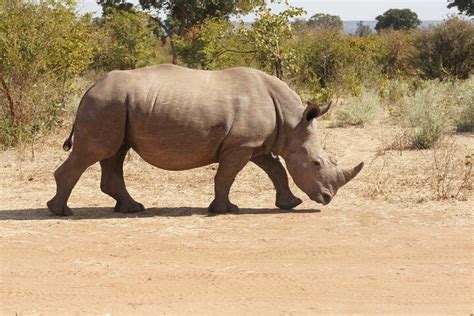
Phinda Private Game Reserve’s commitment to conservation comes alive when you spend a morning rhino tracking with its experienced guides and trackers. Alone among the Big Five, rhino can be approached safely on foot, leading to memorable encounters with creatures that appear armour-plated, but are in fact alarmingly vulnerable to humans. It’s one of South Africa’s best safari experiences.
Acting on an insider tip, we went off-menu for our breakfast at our lodge, and each ordered a ranger’s omelette before we setting off on our morning of rhino tracking. We’re sworn to secrecy as to the ingredients, but suffice to say it set us up perfectly for our adventure. We linked up with Piet and Johan, our guide and tracker team, in front of the lodge. We were dressed for the occasion in khaki, but Piet outdid us when it came to accessories: he was shouldering a heavy rifle.
Having seen rifles on game drives before, we knew it was only for backup, and that our escorts’ years of experience would keep us safe. It was deliciously cool after light rain overnight, and the vegetation looked fresh and green. Johan was delighted with the weather, as it meant that he’d be able to instantly tell which tracks were worth following.
The rhino we ultimately saw led us on a meandering route before we finally caught up with him, but this gave us plenty of time to enjoy the sense of freedom that comes from walking across a vast, wild space. We used all our senses to appreciate our surroundings: without the steady thrum of the game-drive vehicle, our ears, in particular, came into play.
Piet identified each mellifluous bird call, while Johan’s attention was focussed on the ground ahead. As he searched for a likely set of rhino tracks to follow, he would point out whether other creatures had passed by.
Just 20 minutes into our walk, we arrived at a midden, or rhino latrine. Male rhino especially are creatures of habit, and regularly deposit their dung in the same place to show who’s boss, and also to check who else is around. Johan found exactly what he was looking for: fresh tracks of a large black rhino bull.
The bull had visited the midden early in the morning, defecated there and then scored the earth with his back feet as he piled up the dung. Beneath the not-unpleasant stables smell of the midden, we could detect a more pungent aroma. Rhino urine, it turned out, is an important scent marker.
We followed Johan closely, enthralled by how easily he could follow the spoor. On open, sandy ground the tracks were clear enough - but not where there was a lot of vegetation. Piet brought up the rear, and we noticed that Johan would skirt any patches of thick bush, before picking up the tracks again on the far side.
He showed us where a hyena - eternal optimist of the bushveld - had briefly followed the rhino, and then some scuffed-up sand where the rhino, irritated by the attention, had spun on its heels and confronted his follower, who had left at speed.
Our rhino (as we were already starting to think of him) had then enjoyed a good rub on a favourite scratching post - the stump of an old tree, worn smooth by the attentions of his ancestors. Usually this would be covered in dry mud, but the overnight rain had washed it clean. A white rhino had also been there, and the difference in size between the two footprints was very noticeable.
Piet told us that while the white rhino would spend his day contentedly grazing, the black rhino would be chewing on twigs and thorns, which explained the more irascible nature of the smaller species.
The tracks led us to a small waterhole, and then towards a large tree some few hundred metres away. Johan put his finger to his lips: these were now very fresh tracks. We’d read that rhino are very short-sighted, but have acute hearing and smell. Johan led us in a wide arc toward the tree, pausing every few minutes to check the wind again.
We used a termite mound for cover - peering round it, we saw our quarry seemingly snoozing in the shade, even though the morning was still cool. His ears flicked around; peering through binoculars, Johan identified the rhino by his ear notches as one of the oldest bulls in Phinda Private Game Reserve.
Suddenly, in a puff of dust, the rhino was on its feet - and our hearts were in our mouths. Piet put a reassuring hand on my shoulder as the rhino peered myopically in our direction, then wheeled around and trotted off into a nearby thicket, his tiny tail curled comically up over his rump, like a piglet’s.
Johan’s laughter released the moment of tension, and we let the thrill of having tracked a wild rhino on foot wash over us.
Kunene Region (Kaokoland), Namibia
In Namibia’s far northwest Kunene region (also known as Kaokoland) black rhinos were almost extinct thirty years ago. Today, Kunene has the largest number of free-roaming Black Rhino in the world - the only rhino worldwide living on communally and traditionally-owned land without formal conservation status.
Our exciting Save the Rhino safari will start in Windhoek, the capital of Namibia. We will make an early departure from Windhoek after breakfast to our lodge for tonight. Our lodge is situated on the Palmwag concession in dramatic Damaraland. The concession covers around 5,000 km2 (500,000 hectares) of pristine semi-desert wilderness. The campsite in the concession will be our base from where we will start out every day.
Each day we will follow a different route, depending on what sightings we are looking for and where the animals are. We will be walking in an area where other tourists don’t get to go and the only people operating here are the Save the Rhino Team scouts patrolling.
The star of the safari is, of course, the desert-adapted Black Rhinoceros. Your safari in Palmwag will help the plight of these incredible animals immensely.
Other wildlife that we hope to see are Giraffe, Hartmann’s Mountain Zebra, Springbok, Greater Kudu, Gemsbok and hopefully some of the predators that roam this spectacular area like Cheetah, the famous desert adapted Lions, Leopard, Side-striped Jackal, and Spotted and Brown Hyaena.
This concession is also rich in reptiles, including Kaokoland Sand Lizard, Namaqua Chameleon, and Anchieta’s and Namib Rock Agama. Birding in the area is surprisingly productive, with some special species and near-endemics occurring here.
Tips for an Unforgettable Walking Safari
A walking safari is an adventure like no other, and preparation is key.
Dress Comfortably: Wear neutral-colored clothing that blends with the environment.
Above all, the success and safety of a walking safari depend on the expertise of rangers and trackers. These skilled professionals’ knowledge of tracking animals, wildlife behavior, and the ecological environment is remarkable. Working in pairs, rangers and trackers ensure the walk’s safety and minimal disturbance to wildlife. For example, a tracker might spot faint claw marks on a tree trunk, a sign that a leopard had passed through recently.
Ready for Your Rhino Walking Safari?
Are you ready to follow in Trista’s footsteps? Let Ker & Downey help you craft the ultimate African safari experience, complete with unforgettable walking safaris. Contact a Ker & Downey Travel Designer to start planning your South African safari.
Popular articles:
tags: #Africa
