Chad, a landlocked country at the crossroads of North and Central Africa, presents a complex tapestry of cultures and traditions. It is bordered by Libya to the north, Sudan to the east, the Central African Republic to the south, Cameroon to the southwest, Nigeria to the southwest (at Lake Chad), and Niger to the west. Among its diverse population, women play a crucial role, yet they face significant challenges in various aspects of life. This article explores the historical context, cultural practices, and contemporary issues impacting women in Chad.
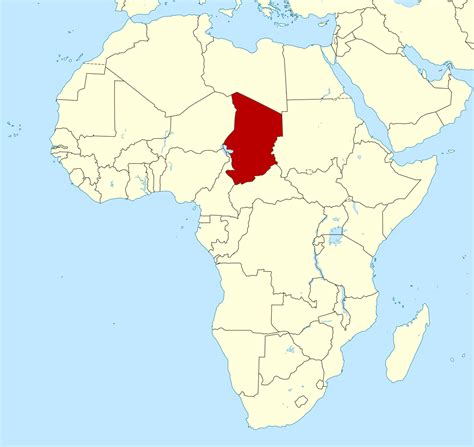
Location of Chad in Africa
Historical Context
Women in Chad have been suffering from marginalization and violence since ancient times, as they did not have full rights in society. It was difficult for women to get an education and he was marrying daughters at an early age. The government in Chad has begun to develop laws to protect women’s rights in recent years, but a lot of work still needs to be done. It is worth noting that the current government of Chad seeks to improve the lives of women in the country and promote their rights.
Cultural Traditions and Practices
Chad is a country with diverse and rich cultural practices. Among these are unique beauty rituals and clothing styles that reflect the varied ethnic groups within the nation.
Beauty Rituals
Chebe powder is a hair-care product used by rural women of the Basara Arab ethnic group in Chad. It is made from ground up natural herbs and ingredients, some of which are derived from plants unique to the region. These Bassara Arab women use Chebe as a protective styling agent, and credit the product as the secret to their famously long and healthy hair.
Read also: Resilience of Women in CAR
The ground-up powder is roasted then mixed with hair oil or animal fat. It is applied liberally to hair several times per month, to hydrate it. The hair is then braided for further protection. The frequent Chebe application and hair-braiding is also a community bonding event for the women in these rural Basara groups.
Facial scarring has been a common practice in Chad and the surrounding region for many decades. The nature of the scarring is extremely varied throughout the region, so there is no single style followed. Some are opposed to facial scarring especially on children, as children are often scarred as infants.
Clothing Styles
Traditional women's clothing styles in Chad can be separated into two general cultural categories: that of Muslim women and that of non-Muslim women. Muslim women in Chad typically dress similarly to Muslim women around the globe. This consists of wearing robes that cover the body and a hijab and/or niqāb.
A traditional style for Non-Muslim women is to wear a short-sleeved shirt, along with a pagne (or body wrap) which covers the upper and lower parts of the body, and decorative scarf called a lafai.
The Secret Behind The Long Kinky Hair of Chad Women.
Read also: Fashion History & African American Women
Gerewol Festival
Gerewol is an annual cultural festival of the semi-nomadic Wodaabe people across Niger and Chad. It takes place each year at the end of the rainy season in September. The festival is centered around a courtship ritual beauty pageant, but unlike traditional western pageants the competitors are male.
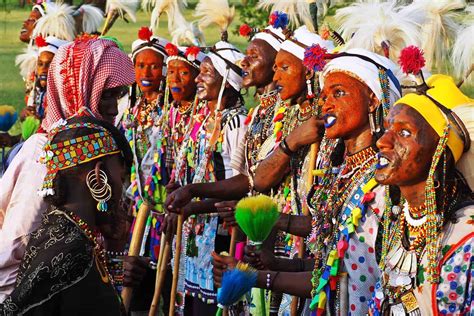
Gerewol Festival
Social Conditions and Challenges
The role of women in Chadian society have always played an important role in Chadian society, but they face many social challenges in Chadian culture and traditions. The role of a woman in the family is limited to household chores, and it is also difficult for her to get job opportunities outside the home. Also, women are deficient in vitamins and minerals, which negatively affects their health.
Several factors contribute to the difficulties faced by women in Chad, including:
- Early Marriage and Adolescent Pregnancy: In Chad, the mean age of women at their first marriage is 16, but experts believe the median age is likely even lower. Adolescent pregnancy is much more common than in other places.
- Polygamy: Polygamy is legal in Chad, and it is estimated that over a third of women live in polygamous marriages.
- Lack of Access to Contraceptives: Knowledge about and access to contraceptives is scarce, which also contributes to high levels of poverty and child mortality, resulting from families' inability to provide for their children.
- Trafficking: Chad is a source and destination country for children subjected to trafficking in persons, specifically conditions of forced labor and forced prostitution.
- Female Genital Mutilation (FGM): 60 percent of Chadian women had been subjected to female genital mutilation in 1995. The procedure is a traditional rite of passage as a girl moves into adulthood and it is followed regardless of religious orientation. It is equally common amongst Muslims, Christians and animists.
Maternal Health and Motherhood
Chad is among the worst countries in the world in terms of the maternity index, due to the risks surrounding pregnancy, childbirth and the shortening of the duration of reproductive life in women. Only 15% of women receive comprehensive care during the follicular period of pregnancy, and 14% of women under the age of twenty-five are married.
Read also: Women and Beauty in Ancient Egypt
More than 28 thousand children a year are born in Chad before the age of seventeen, while a small number of women still receive basic women’s health services, which significantly increases the risk of their death or severe illness. Chad reports the second highest maternal mortality worldwide.
| Service | Usage Rate | 95% Confidence Interval |
|---|---|---|
| Antenatal Care (ANC) | 57.6% | 49.3% to 65.5% |
| Delivery Care (DC) | 22.5% | 15.7% to 31.1% |
| Postnatal Care (PNC) | 32.9% | 25.8% to 40.9% |
In Sila region, use of MHS is low and does not meet WHO-defined standards regarding maternal health. Among all services, use of ANC was better than for other MHS. ANC usage is positively associated with the use of further life-saving MHS including DC and could be used as an entry point to the community.
Overall, 22.5% (134/624) of women reported using DC (table 2). This proportion was significantly higher in urban settings (57.5%; 103/173) compared with rural settings (5.8%; 31/451) (p<0.001; table 2). Most women reported support during delivery by an untrained traditional birth attendant (TBA) outside a health facility (59.7%; 374/624) while only 18.2% (108/624) reported assistance by a midwife, nurse or doctor (table 3).
Work and Education
Women in Chad face many obstacles in entering the labor market, on average, the percentage of women employed in non-agricultural operations is only 10.9% compared to 17.4% for men. In addition, women often work in low-paid jobs, characterized by unsanitary working conditions.
The percentage of women who own land or take legal responsibility is only 2% of the Chadian society, which hinders their role in the national economy. Education is a major problem in Chad, on average less than 3% of the community between the ages of 15-24 have access to secondary education.
Women suffer from a higher rate of illiteracy, with 72% of women without access to education and much higher in remote areas. Many point out that the dangerous conditions for primary and secondary school students are characterized by the lack of basic sanitary facilities, which makes them vulnerable to many diseases and injuries.
Political Representation and Leadership
After President Idriss Déby was killed on April 20, 2021, there was a coup which led to the dismissal of the National Assembly. The ruling military junta is now responsible for the functions previously handled by the National Assembly.
When the military junta took power, they named 93 people who would act as the interim parliament-called the Conseil Militaire de Transition (CMT)-until the next election cycle. The presence of quotas for women in government is a relatively new practice, and is part of a greater women's rights and gender equality movement that has grown in popularity over the last decade.
The goal of complete gender equality is still far from realized in Chad, and it is still rare to find women in highly influential positions in government. However, there have been some notable women in Chadian politics:
- Fatimé Kimto: The first woman to serve in a cabinet position in the country's history.
- Bourkou Louise Kabo: A Chadian politician.
- Kalthouma Nguembang: An early member of the Chadian Progressive Party (PPT).
- Lydie Beaassemda: Minister of Higher Education and Research under Chad's Transitional Military Council.
- Amina Priscille Longoh: Minister of Women and the Protection of early childhood.
- Hinda Déby Itno: Former Chadian First Lady.
- Aziza Baroud: A Chadian politician who has served in various senior government positions.
Efforts for Empowerment
Several external organizations, including the UN, have offered their assistance to Chad in the spirit of improving equality and human rights. Let’s work together for a better future for women, equality and justice in Chad. The Life Association for Africa works to change reality by providing education, training and health care.
The association contributes to the empowerment of women, providing them with the necessary skills for financial independence and supporting them in launching small enterprises and developing agricultural projects. The association also works to increase community awareness and strengthen women’s leadership in the social and political fields. The efforts of the association positively affect the lives of women and empower them to contribute to the development of Chad today.
