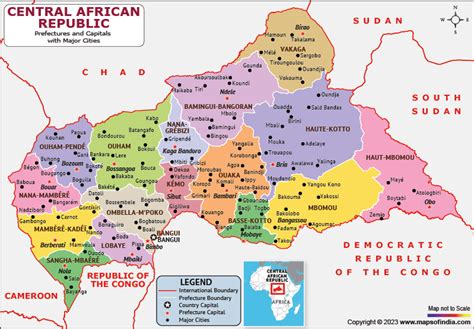
The Central African Republic (CAR) faces a complex crisis that disproportionately affects women and girls. Decades of intermittent conflict, internal displacement, and socio-economic issues have left CAR among the most fragile countries worldwide. Women in CAR experience numerous discriminations, inequalities, and rights violations from birth, exacerbated by armed conflicts and unfavorable social norms.
The Plight of Women and Girls in CAR
According to the Gender Inequality Index (GII), CAR is among the five worst countries to be a woman. Exacerbated by socio-cultural norms, gender-based violence (GBV) has reached alarming proportions. In 2024, more than two people - mostly women and girls - were victims of GBV every hour. In the first half of the same year, over 11,000 cases of GBV were reported, the majority of which were rape cases (32%).
The prolonged humanitarian crisis further exacerbates these issues, leading to transactional sex, forced and early marriage of girls, and levirate and sororate marriage. Since January 2023, 3.4 million people in CAR (of which 1.6 million are children) are in need of humanitarian assistance and protection.
Lina Ekomo – a leader for peace in the Central African Republic
Child Marriage
Child marriage is driven by gender inequality and the belief that girls are somehow inferior to boys. In the Central African Republic, child marriage is exacerbated by:
- Poverty: CAR has one of the lowest GDPs in the world. High poverty rates lead many families to marry off their daughters in exchange for bride price and to reduce the perceived financial burden.
- Gender norms: Less than a quarter of the female adult population in CAR can read and write. Girls’ rights are often neglected, with marriage and childbearing as the only expectation.
- Power dynamics: Men can take up to four wives, and younger wives are seen to increase the social status of the family.
- Religion: Child marriage is reportedly more common among Muslim communities.
- Female Genital Mutilation and Cutting (FGM/C): 24% of girls and women aged 15-49 have experienced FGM/C. This is often used to control female sexuality and is regarded as a sign of readiness for marriage.
Humanitarian settings exacerbate these factors, increasing poverty, insecurity, and lack of access to education. Since the conflict started in 2013, violence has forced thousands to flee. At the end of 2019, a quarter of the CAR population (1.2 million people out of 4.7 million) was either internally displaced or living as a refugee in neighboring countries.
Read also: A Look at Central African Republicball
Armed conflict has exacerbated child marriage cases and is the most commonly reported form of violence against refugee girls in CAR. Families often see marriage as a way of protecting daughters from sexual violence during times of insecurity. Some girls have been forcibly kidnapped and married off to members of armed groups. Orphans are particularly vulnerable, and the closure of schools due to insecurity also increases the risk.
Gender-Based Violence
Armed conflicts have seen women face a great deal of violence and the security situation is still highly volatile. According to the "Gender-Based Violence Information Management System" (GBVIMS) report, 11,700 cases of gender-based violence (GBV) were reported in the second quarter of 2022, the same amount as in the whole of 2021. This figure is much lower than the reality, as many women do not dare to report the violence they have suffered for fear of being stigmatised, or for fear of impunity for their aggressors.
In the locality of Boukaya, the challenges faced by women and girls are exacerbated by the persistence of armed conflicts and chronic insecurity. Gender-based violence is a daily reality for many, and access to safe and viable economic resources is often out of reach.
Women from the safe space in Boukaya (Northwest CAR) playing ‘kissoro’, a local game.
Initiatives and Programs for Empowerment
Despite these challenges, significant efforts are underway to support and empower women in CAR. Local women’s organizations are promoting peace, human rights, and the well-being of women and girls, even in remote areas. Given the worsening humanitarian and displacement crises, rampant human rights violations, and the rise of GBV, these organizations ensure that women and girls are at the heart of all peacebuilding, humanitarian, and recovery efforts.
Read also: Central Business District in South Africa
UN Women prioritizes initiatives and programs in areas that are fundamental to women's equality and can contribute to the progress and development of gender equality both in humanitarian and development context. Since the start of its operations in CAR, UN Women has been able to positively influence gender mainstreaming in the country through successfully implementing its coordination mandate.
UNFPA's Intervention in Boukaya
Thanks to the intervention of UNFPA, and its project financed by the European Union, a substantial change is taking place in Boukaya.
In the heart of Boukaya, the safe space set up by UNFPA and run by the NGO, INTERSOS, is a place of refuge against violence but also a place of learning and emancipation for women and girls in the community. For Marlène, the pastry training offered in this space opened up new opportunities to provide for her family without risking her safety. “The establishment of the safe space in Boukaya was very beneficial for us. It allowed me to learn a lot about GBV and to learn baking,” shares Marlène.
UNFPA's intervention in the Boukaya safe space, thanks to financial support from the European Union, goes beyond training on income-generating activities (IGA). It also includes educational sessions on women's rights and awareness raising on forms of GBV which are crucial components of this project. This multidisciplinary strategy aims to help in achieving UNFPA’s three transformative results: zero preventable maternal deaths, zero unmet need for family planning, and zero gender-based violence and harmful practices. This also includes the prevention and treatment of sexually transmitted infections (STIs) and HIV, as well as the management of early and unwanted pregnancies often resulting from sexual assault.
The Bêkou Fund and CASEF
The Bêkou Fund supports various socio-economic empowerment initiatives that are helping hundreds of women to get back on their feet. The Centre for the Socio-Economic Empowerment of Women and Girls (CASEF) provides a safe space where women can talk about their concerns. Social workers offer advice and emergency financial assistance to cover their food and hygiene needs, helping them feel better and be more independent.
Read also: Kenya Shilling Historical Rates
CASEF provides literacy classes and training on starting up income-generating activities (IGAs), aiming to improve the weak financial capacities of GBV survivors. These state structures are co-financed by the Gender III programme through the Bêkou Fund, and offer survivors of GBV psychosocial, legal or medical assistance, training and literacy classes as well as support for IGAs.
UN Women's Efforts
UN Women provided a National Gender and Election Specialist to support gender mainstreaming in the electoral process. During the initial phase of updating the electoral register, UN Women and the United Nations Multidimensional Integrated Stabilization Mission in the Central African Republic (MINUSCA) focused on increasing the registration rate of women, young girls, and other vulnerable groups, aiming for gender parity on the electoral list.
Additionally, UN Women has worked to integrate a gender perspective into the defense and security sectors, promoting women, peace, and security. This involved creating a gender structure within the Ministry of Defense, developing action plans, and establishing a committee to combat Gender-Based Violence (GBV). To reduce all forms of violence, exploitation, and discrimination, including gender-based violence, UN Women is implementing several actions to strengthen the mobilization and coordination capacities of the Ministry of Women and decentralized ANE organizations such as the National Parity Observatory (ONP) and actors committed to the protection of children in the Central African Republic.
Commitment to Ending Child Marriage
Central African Republic has committed to ending child, early and forced marriage by 2030 in line with target 5.3 of the Sustainable Development Goals. During its 2017 review, the UN Committee on the Rights of the Child expressed concern that, under customary practices, girls as young as 16 can marry with parental consent. It also raised concerns about Article 105 of the 1997 Family Code, which enables kidnappers to marry girls and leaves child brides with little legal protection.
During its 2023 Universal Periodic Review, CAR noted that a helpline called 4040 has been established for individuals to report suspected cases of child marriage.
Statistical Overview
The following table highlights key indicators related to women in the Central African Republic:
| Indicator | Data |
|---|---|
| Women impacted by the crisis and requiring urgent health and protection services | 850,000 |
| Cases of GBV reported in the first half of 2024 | Over 11,000 |
| Rape cases reported in the first half of 2024 | 32% of GBV cases |
| Women married before the age of 18 (aged 20-24) | 60% (2019) |
| Women affected by female genital mutilation | 21.6% (aged 15-49) |
| Acceptance of domestic violence | 80% of women, 84% of men |
