As you traverse the northernmost landscapes of South Africa’s Greater Kruger National Park, you'll occasionally find a silent giant that has stood watch for centuries - the baobab tree. The African baobab, commonly known as the “tree of life,” holds a place of honor not only here in South Africa but throughout the African landscape. Revered as Africa's iconic "Tree of Life”, this majestic giant embodies the continent's untamed spirit and the delicate balance of its ecosystems. Emerging from the sun-baked African savanna, the baobab tree stands as a testament to resilience and longevity.
Known scientifically as Adansonia digitata, this majestic icon belongs to a family of ancient trees that also flourishes in Madagascar and even in parts of Australia. Revered across continents for its resilience and life-sustaining qualities, the baobab is one of nature’s great survivors. In the Greater Kruger, the southernmost area you'll find these amazing trees, baobabs thrive as robust symbols of survival in an environment of extremes. Towering over the bushveld, these trees endure blistering heat and dry seasons with their water-storing trunks and deep roots.
Let's delve deeper into the world of this fascinating African legend, exploring its location, significance, and the challenges it faces.
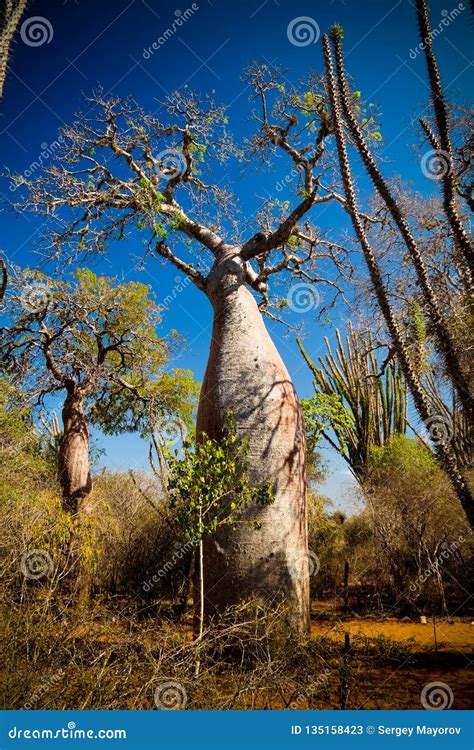
Baobab trees in Madagascar.
Location and Distribution
Africa boasts a remarkable "baobab belt," stretching across the continent from the savannahs of Senegal in the west to the arid lands of Sudan in the east. This belt encompasses regions where baobabs flourish, playing critical ecological and cultural roles. The most southerly baobabs are found in the northern region of South Africa, particularly in Limpopo Province, where they mark the edge of their natural range. These southern sentinels are a testament to the tree's incredible adaptability and resilience.
Read also: Handling African Milk Tree Sap
Not far from Africa’s shores, Madagascar boasts six unique species of baobab, whose tall, slender trunks rise dramatically against the island’s red soils. Adansonia grandidieri stretch like ancient sentinels, draws thousands of visitors each year. Adansonia gregorii, which thrives in the northern landscapes. Native to sub-Saharan Africa, the southern Arabian Peninsula (Yemen, Oman), and Australia, baobabs consist of 9 species. While the African continent is home to two different kinds, six are endemic to Madagascar, and Australia has one type of baobab.
These trees grow in dry areas of Africa, Madagascar and Australia. The record circumference of a baobab is 150 feet - the length of half a football field!
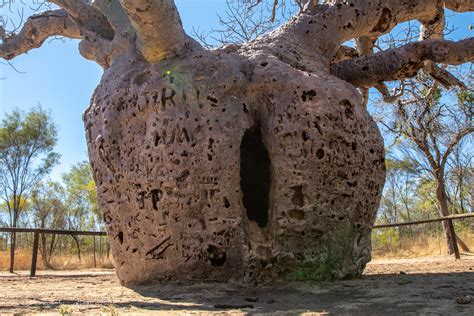
Boab Prison Tree Derby Western Australia.
Significance of the Baobab Tree
These colossal trees can live for thousands of years, offering shelter, food, and water to animals and humans alike. During the dry season, their moisture-rich interiors act as life-saving reservoirs for wildlife and people alike, underscoring their place in tribal folklore as symbols of strength, adaptability, and wisdom.
The baobab's roots in African culture run deep, weaving through ancient folklore and everyday life. In many cultures, the baobab is considered sacred, a place of spiritual significance, and a connection to the ancestral realm. Across Africa, tribal beliefs about the baobab’s upside-down shape have grown over centuries. According to traditional stories, the gods planted the baobab upside-down after it boasted too proudly, leaving its “roots” to wave in the air as a reminder of humility. This fantastical form has only enhanced its reputation, with some communities seeing the trees as ancestral spirits.
Read also: Smooth Shave with Tree Hut
Here at home, the baobab is a keystone species of its ecosystem, offering food and refuge to animals such as elephants, baboons, and birds. Elephants often strip its fibrous bark for moisture, and baboons feast on the nutrient-rich fruit, aptly named "monkey bread." Marabou storks and red-billed buffalo weavers nest in their branches, and fruit bats and bush babies-as well as lemurs in Madagascar-sip up the nectar from their blossoms, pollinating one flower to the next as it goes.
Humans depend on the baobab tree in the same way that animals do (and vice versa). The sour brown pulp of the fruit is not only edible and healthy, but it also makes a refreshing drink when mixed with water. People who live near baobab trees may roast and crush the fruits' seeds to make a beverage similar to coffee, or they will boil the tree's leaves and eat them like spinach. Paper and textiles, as well as ropes and baskets, are made from tree bark. People used it to construct waterproof caps and musical instrument strings. You may even make a type of glue by combining flower pollen and water.
Every part of the baobab tree is valuable - the bark can be used for rope and clothing, the seeds; used to make cosmetic oils, the leaves are edible, the trunks can store water and the fruit is extraordinarily rich in nutrients and antioxidants.
The fruit emerges from the flowers and takes around six months to grow. Baobab fruit and oil deeply nourish the skin, leaving it soft, supple and radiant and the oil acts as a skin barrier. Similarly, baobab products are used in scalp and hair care, to banish dandruff and add shine. Also known as the "pharmacy tree" baobab products work wonders for skin conditions like eczema, hives, and acne, as well as assisting with sun care. As a dietary supplement, baobab fruit pulp provides a powerful dose of essential vitamins and minerals, bolstering overall health and immunity.
The baobab is not just a visual spectacle; it plays a crucial role in maintaining the health of African ecosystems. Its hollow trunks provide shelter and nesting sites for a diverse array of creatures, from insects to birds and mammals. The tree's roots, extending deep into the ground, help to stabilise the soil and prevent erosion. During droughts, the baobab's stored water serves as a lifeline for wildlife, providing sustenance when other sources are scarce.
Read also: The Giants of Africa's Forests
The baobab is deeply intertwined with the lives of African communities. Its leaves are used as a traditional medicine to treat ailments such as fever and diarrhoea. The fruit, known as "monkey bread," is a nutritious source of vitamins and antioxidants. The tree's bark is woven into ropes, mats, and even clothing.
In an arid climate, baobabs symbolize life in a landscape where little else can thrive. As a succulent, the tree absorbs and stores water from the rainy season in its massive trunk, producing a nutrient-dense fruit in the dry season, which can grow up to a foot long.
The elder a baobab tree grows, the more stunning it becomes. An ancient baobab can support a complete ecosystem, from the bees and stick insects that live in its branches to the antelope and warthogs that eat its fruit.
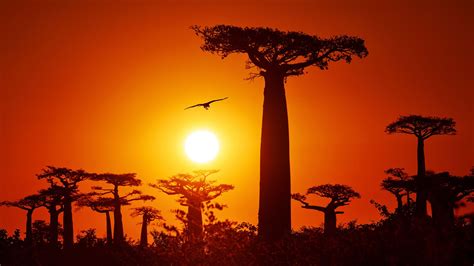
Baobab trees at sunset in Madagascar.
Threats and Conservation
Despite their enormous size and longevity, baobabs are not immune to threats. Many scientists believe that climate change is killing Africa’s oldest and largest baobab trees, the result of more frequent weather anomalies like floods and lightning storms.
WWF’s assessment of the vulnerability of African elephants regarding climate change shows that their biggest concern is having enough fresh water. Madagascar, which is home to six of the world’s 9 baobab species, has experienced massive deforestation, losing approximately 235 thousand hectares of tree cover from 2010 through 2021.
However, due to climate change, nine of thirteen of Africa’s oldest and largest baobab trees have died in the past decade. Scientists speculate that warming temperatures have killed the trees directly or made them weaker and more susceptible to drought, diseases, fire, or wind.
Eco-tourism initiatives, such as those at Kruger National Park, play a crucial role in highlighting the baobab's significance and promoting its conservation. By incorporating baobab experiences into eco-tourism packages, tour operators attract visitors eager to learn about these remarkable trees and contribute to their protection. Eco-tourism revenue supports conservation efforts, funding research, habitat protection, and community education programs.
Preserving the baobab is not just about protecting a tree; it's about safeguarding the biodiversity, cultural heritage, and ecological balance of Africa.
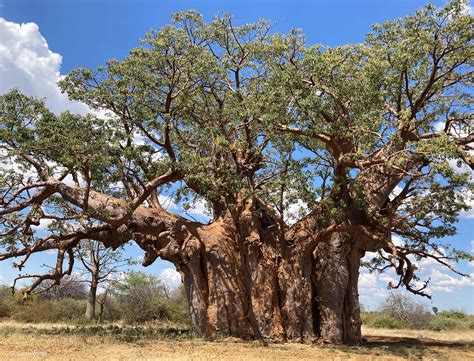
A large baobab tree in South Africa.
The Baobab Tree: A Symbol of Africa
The baobab tree is more than just an African icon; it's a symbol of resilience, life, and the interconnectedness of nature and culture. These majestic giants have stood witness to centuries of African history, providing sustenance, shelter, and spiritual guidance to communities across the continent. Their presence enriches the African landscape, adding a touch of magic and mystery to the savannas and woodlands they call home.
Only with the integration of ecological, social, and economic studies involving local communities can we restore Africa’s climate and ecosystem over the long term and ensure that the baobab tree will continue to live and thrive for thousands of years to come.
So, the next time you come to visit us, pay our baobabs a visit, hug them, stroke their super-smooth trunks and marvel at just how amazing they are!
Baobab: The Tree of Life | Secrets, Benefits, and Survival of Africa’s Ancient Giant #baobabtree
Popular articles:
tags: #Africa
