The African Milk Bush (Euphorbia trigona), while a striking houseplant, carries an environmental sting in its sap. This plant is also known as the Royal Red, the Abyssinian Euphorbia, and the High Chaparral. The milky sap or latex of the Euphorbia plant is highly toxic and an irritant to the skin and eye.
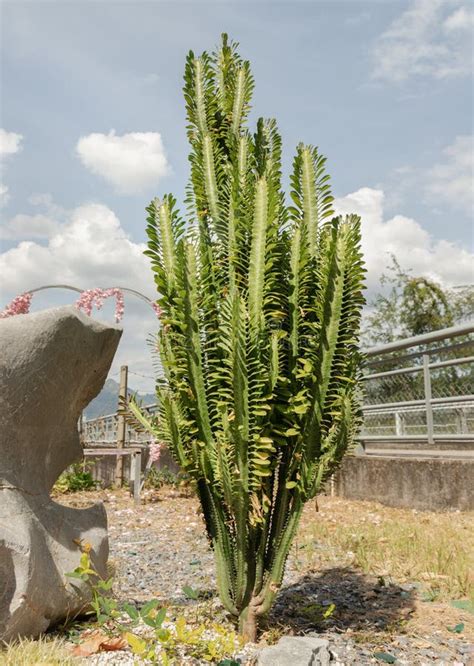
Euphorbia trigona
Identifying the African Milk Tree
The African Milk Tree features tall, upright stems that are triangular in cross-section, hence its species name “trigona.” The plant has green stems with ridged edges adorned with rows of small, sharp thorns. Each ridge also has small, teardrop-shaped leaves that grow intermittently, adding a touch of softness to the otherwise spiny appearance. In some cultivars, such as Euphorbia trigona ‘Rubra’, the stems and leaves take on a reddish or burgundy hue, further enhancing the plant’s ornamental appeal.
The African Milk Tree is native to the central regions of Africa, particularly in countries like Angola, Gabon, and Congo. In its native habitat, it thrives in hot, arid environments and is well-adapted to endure long periods of drought.
Toxicity and Its Effects
According to ASPCA, the sap of the African milk tree is mildly toxic to both pets and humans and can cause blisters, severe eye irritation, and convulsions if swallowed. Like other Euphorbia species, this plant produces a milky white sap when its stems or leaves are damaged. This sap is toxic and can cause skin irritation, rashes, or blistering if it comes into contact with the skin. It is also harmful if ingested, making the plant toxic to humans and pets.
Read also: Experience Fad's Fine African Cuisine
The African Milk Tree shares toxic properties with several other common plants. The mechanism of toxicity primarily involves irritation and damage to mucous membranes.
Handling the African Milk Bush can be a sticky situation-literally. The plant's latex is notorious for causing skin irritation.
Skin Irritation
If you brush up against it, expect redness, itching, and possibly blisters. To treat these symptoms, wash the area with soap and water and apply a soothing cream.
Eye Hazard
The eyes have it rough when it comes to the African Milk Bush's latex-it's an ocular hazard. Symptoms include pain, redness, and blurred vision. If the sap enters your eye, rinse it with plenty of water and seek medical attention to avoid complications.
Ingestion Risks
Chew on this: ingesting African Milk Bush can wreak havoc on your digestive system, causing vomiting, diarrhea, and severe abdominal pain.
Read also: The Story Behind Cachapas
Respiratory Issues
Inhaling the sap or latex vapors can lead to respiratory issues, especially for those with asthma or allergies. Symptoms range from coughing to difficulty breathing.
Case Studies of Ocular Toxicity
This report illustrates the spectrum of ocular inflammation caused by accidental inoculation of latex of Euphorbia plant. Three patients presented with accidental ocular exposure to the milky sap of Euphorbia species of recent onset. The initial symptoms in all cases were severe burning sensation with blurring of vision. Visual acuity reduced from 20/60 to counting fingers. Clinical findings varied from kerato-conjunctivitis, mild to severe corneal edema, epithelial defects, anterior uveitis and secondary elevated intraocular pressure. All symptoms and signs had resolved by 10-14 days with active supportive medication.
Here are some cases of ocular toxicity caused by different species of Euphorbia:
- Case 1: A 60-year-old male trimming his garden hedge E. trigona plant (African milk tree) got sprayed with milky sap into his right eye. He experienced immediate burning sensation and pain, which was partially relieved by irrigation with water. Examination revealed corneal epithelial defect, edema, stromal edema, and moderate anterior uveitis.
- Case 2: A 51-year-old man pruning his overgrown species of E. neriifolia plant (Indian Spurge tree) felt some sap enter into his left eye. Examination showed conjunctival hyperemia, moderate corneal edema, and mild anterior chamber reaction. The next day, visual acuity had reduced to counting fingers at 1 meter.
- Case 3: A 54-year-old woman pruning her Euphorbia milii (crown-of-thorns) houseplant felt a stinging sensation as a drop of sap entered her left eye. Examination revealed conjunctival hyperemia, punctate localized corneal epithelial lesions, and moderate corneal edema with Descemet's folds.
These cases highlight the importance of wearing eye protection when handling Euphorbia plants.
Preventive Measures
The Top 10 Deadliest Plants (They Can Kill You!)
To ensure safety when handling the African Milk Tree, consider the following measures:
Read also: Techniques of African Jewellery

Handling Precautions
- Protective Gear: Gloves and protective eyewear are non-negotiable when handling African Milk Bush.
- Hygiene: After tending to your green buddy, scrub those hands like a surgeon-soap, water, the works.
- Placement: Kids and pets have a knack for getting into things they shouldn’t. Keep the African Milk Bush on a high shelf or in a locked room if you can.
- Barriers: If your fur baby or actual baby is a climber, consider a pet gate or a plant-free zone.
Disposal Considerations
Disposing of the African Milk Bush requires more than just tossing it in the trash. To prevent its sap from seeping into the ground and waterways, seal it in a plastic bag before disposal. When dealing with dead leaves or pruned stems, never compost them. If you're getting rid of the plant entirely, the soil it was in might contain traces of the toxic sap.
Before planting African Milk Bush outdoors, check with local authorities. Some regions may have restrictions due to its invasive potential and toxicity.
Safe Houseplant Alternatives
For those wary of the African Milk Bush's toxicity, a plethora of safe houseplant alternatives exists. Consider the following options:
- Pet owners, in particular, should consider plants like the Spider Plant and Boston Fern, which are known for their pet-friendly nature.
- When selecting an alternative, consider plants like the Zebra Plant or Baby Rubber Plant. These options not only provide visual appeal but are also celebrated for their air-purifying qualities.
- For households with children, the Porkbush (Portulacaria afra) is a safe and sturdy option.
- If you're drawn to the large, leafy look of the African Milk Bush, consider the Parlor Palm or Swedish Ivy.
Remember, the key is to find a balance between your desire for a beautiful indoor space and the wellbeing of all who share it.
First Aid Measures
Understanding the risks associated with consuming toxic plants is vital.
In case of exposure:
- Skin Contact: Wash the area with soap and water and apply a soothing cream.
- Eye Contact: Rinse the eye with plenty of water and seek medical attention.
- Ingestion: Seek immediate medical attention.
- Inhalation: Move to an area with fresh air and consult a healthcare professional.
Distinguishing from Edible Plants
When exploring the world of plants, it's easy to confuse the African Milk Tree (Euphorbia trigona) with other edible varieties. To differentiate these plants, pay attention to their visual characteristics. Common edible plants that might be mistaken for Euphorbia trigona include certain varieties of cacti and succulents.
Misidentifying the African Milk Tree can lead to serious health risks. To ensure safe plant identification, utilize resources like field guides and mobile apps designed for plant recognition.
Additional Information
The African milk bush has a long lifespan and grows quickly, gaining 1 to 2 feet per year and reaching a height of 9 feet in just 3-5 years. The African milk tree has branches that resemble three-winged angles and are covered in leaves and short, prickly spines. Euphorbia rubra has a vibrant purple-red color on its stem and leaves, while Euphorbia trigona has a bronzish hue.
Here is a summary table of key information about the African Milk Tree:
| Characteristic | Description |
|---|---|
| Common Names | African Milk Tree, Royal Red, Abyssinian Euphorbia, High Chaparral |
| Scientific Name | Euphorbia trigona |
| Growth Rate | 1-2 feet per year |
| Maximum Height | 9 feet (indoors, approximately half of this) |
| Native Habitat | Central Africa (Angola, Gabon, Congo) |
| Light Requirements | Bright, indirect sunlight |
| Soil Preferences | Well-draining, sandy soil |
| Watering | Allow soil to dry completely between waterings |
| Toxicity | Toxic milky sap |
| Uses | Ornamental plant, hedge (in tropical Africa) |
