Suya, the popular West African grilled meat, has been a staple food of the region for centuries. With its smoky, spicy, and savory flavours, this street food has captured the taste buds of many worldwide. From Nigeria to Ghana, Cameroon to Sierra Leone, Suya is a beloved dish that is enjoyed in many countries across West Africa.
West Africa's diverse cultural landscape has led to a variety of names for grilled meat snacks, which often vary by country and ethnic group. Some of the most commonly used names include afra (in Gambia), chichinga (in Ghana), dibi (in Guinea Bissau and Senegal), and tsire suya, or simply suya or soya (in Nigeria).
Suya uses marinated beef strips that are seasoned, skewered and grilled. The final product is a nutty and spicy treat that is ready to enjoy alone or paired with sides. Suya spice is a dry peanut based rub, typically used for marinating meat. It has a nutty, spicy, and smoky taste with delicious onion and garlic undertones. In fact, even though it is known for marinating beef before grilling, you can use it for almost anything.
While the divisive jollof may take the top spot in many Nigerians' hearts, the food scene in the country is far from limited to it. Nigerian suya, a spicy skewered street-food recipe, is gaining popularity globally.
But where did it all begin? What is the history behind this delicious dish? Let's explore the origins of Suya and the rich cultural heritage that surrounds it. From its humble beginnings as a simple snack sold by street vendors to its current status as a global delicacy, Suya has a fascinating story to tell. Join us on a journey through time as we uncover the history of this mouth-watering West African dish and its presence in various countries.
Read also: Suya Spot: Our Honest Opinion
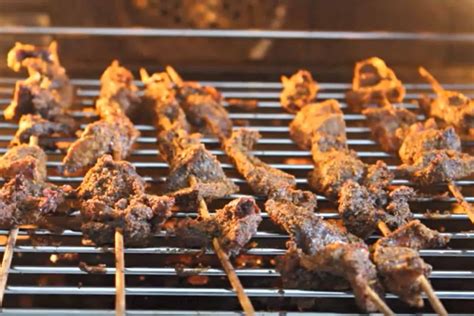
The preparation process of Suya.
The Origins and Cultural Significance
A tribe in Northern Nigeria, the Hausa, are widely credited with creating the dish, according to Google Arts & Culture. The Hausa peoples' cuisine is heavily meat-based.
Most food historians attribute the origination of Suya to pastoral nomads such as the Hausa tribes of northern Nigeria, Cameroon, southern Niger, Ghana, and Sudan. Spiced meat was grilled on bamboo skewers or their daggers over a campfire to make the first versions of Suya.
In Nigeria, it is called Suya. In Cameroon, it is called Soya. In Ghana, it is called Chinchinga or Sitsinga. Yaji refers to the seasoning mix, which typically includes ground peanuts, salt, pepper, paprika, and chili pepper. The flavor is complex, and the aroma is strong but pleasant.
Originating from Nigeria but popular across West Africa and it's diaspora, Suya is a large part of Hausa culture and food. While suya is the more widely recognized name in many areas of Nigeria, the Hausa community still predominantly uses the original name, 'tsire'. There are many variation of grilled meats in traditional Hausa cooking (such as Balangu, Kilishi, etc.), but the most popular is Suya.
Read also: Mauritius West Coast Accommodation
Suya stands can be found nestled on street corners in bustling downtown Lagos or on sun-soaked beaches with their smokey, coal-fired grills signaling the delicious fare is ready to be eaten. Suya is often sold in the evening or at night, making it a perfect pairing after a night out. Men from Northern Nigeria are often the ones preparing it. Although Suya is a traditional Hausa Nigerian dish, it has permeated the Nigerian society, being affordable for all and available everywhere.
The tradition of suya begins with the simplicity of meat preservation techniques. I speculate that the earliest form of suya involved coating meat in ash. This method served dual purposes: drying the meat for preservation while keeping flies at bay. As culinary practices evolved, the ash could have been replaced with groundnut meal-a byproduct of oil extraction from peanuts and palm nuts. This innovation not only enhanced the drying process but also added a layer of flavour and protection against pests.
Frobenius (1913) records a visit to the Bida market close to Kano. He described some of the meat delicacies he found at the market, one called Killishi. “Slices of meat are well rubbed for some days in succession with oil and spices and laid in the sun all the time.” Killishi, Nigeria’s version of South Africa’s biltong or American jerky, is rubbed with groundnut cake which is what is left after the oil has been extracted from the groundnuts. Rubbing it onto the meat aids in the drying process.
Frobenius links Kilishi to another Nigerian favourite which is the subject of our current study, namely suja. He wrote, “This kind of sun-dried meat is in great favour and its Soja (suja) variety most of all.” The dishes are different but related. “The very best cuts are taken for Soja, which is first roasted and then rubbed with aromatic herbs, etc.” The content of the “aromatic herb,” as he calls it is described below. Modern suya is a celebration of flavours with tender slices of meat marinated in a rich blend of spices and groundnut meal, then grilled to perfection over an open flame.
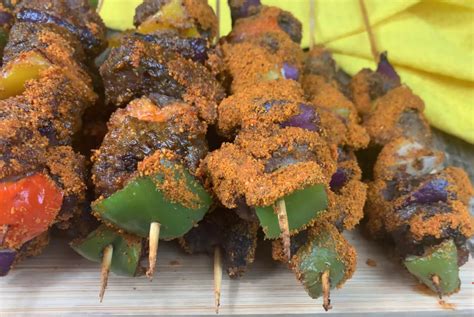
Suya stands are common throughout Nigeria.
Read also: Explore West African Food
The Ingredients and How Suya is Made
Suya is commonly found in two different forms: skewered or in chunks of meat, both served in a paper bag or in banana leaves.
When it comes to making Suya, the marinade is a KEY component that sets it apart from other grilled meat dishes. Marinating the meat for at least an hour or ideally overnight allows the flavours to penetrate the meat and gives it its signature smoky, spicy, and nutty taste.
In its skewered form, Suya is typically made by marinating:
- Strips of beef, chicken, or goat
In a blend of spices, including:
- Ground peanuts
- Chili pepper
- Onion powder
The marinated meat is then threaded onto skewers and BBQ’d or grilled over an open flame until charred and tender. Suya skewers are often sold by street vendors, who may also offer a side of sliced onions, tomatoes, and peppers for a flavourful accompaniment.
In its chunk form, Suya is made using the same blend of spices but instead of being skewered, the meat is cut into bite-sized chunks and grilled over an open flame. The chunks of meat are then served in a paper bag, along with sliced onions and tomatoes, for an easy-to-carry street food snack.
No matter the form, Suya's signature smoky, spicy, and savory flavours make it a beloved snack in West Africa and beyond. Whether enjoyed on the streets or at home, Suya is a dish that is sure to satisfy any meat lover's cravings.
Creating the quintessential suya spice mix, known as ‘Yaji’, is an art.
- Combine the Ingredients: In a bowl, mix all the dry ingredients until well combined.
- Marinate the Meat: Slice your choice of meat (beef, chicken, or lamb are popular options) into thin strips. Rub the suya spice blend into the meat, ensuring each piece is generously coated.
- Grill to Perfection: Skewer the marinated meat and grill over an open flame, turning frequently until cooked through and slightly charred on the edges.
Traditionally, suya was only made with beef. But, contemporary takes on this dish have seen ram, chicken, shrimp, and even tripe as tasty substitutions (via Culture Trip).
HOW TO MAKE BEEF SUYA | NIGERIAN STREET FOOD
Nut-Free Options
For those with peanut allergies or other nut sensitivities, this can be a barrier to enjoying this beloved dish. Whether you are a meat lover or vegan, there are various ways to enjoy Suya while accommodating your dietary needs.
How to Make Vegan Suya
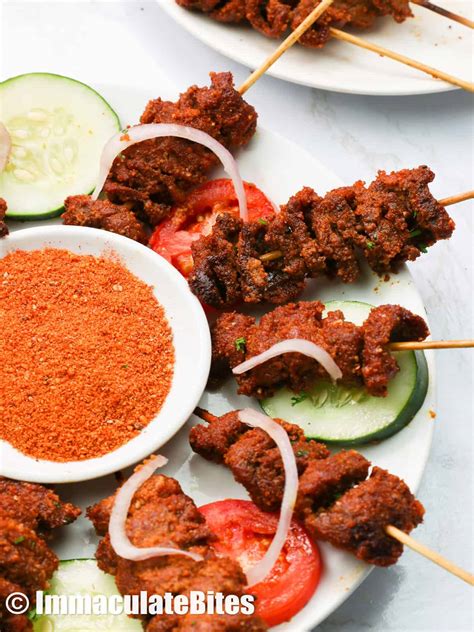
A delicious vegan version of Suya.
For those who are looking to enjoy the delicious flavours of Suya while following a plant-based or vegan diet, mushrooms can be a great substitute for meat. Oyster mushrooms and Portobello mushrooms are particularly good options for creating a vegan version of Suya.
As a former fan of Suya, I was disappointed to have to give it up after transitioning to a vegan diet. To achieve a meaty texture without using animal products, I turned to oyster mushrooms. These mushrooms are popular among the Asian community and are great flavour carriers, retaining their chewy, meat-like texture even after cooking.
With my vegan Suya recipe, I can enjoy the bold flavours and unique spice combinations of this West African dish without any guilt or compromise. My vegan Suya recipe also uses ginger powder, paprika, all-purpose seasoning, allspice, dried thyme, cumin, Suya seasoning (optional), black pepper, and salt to create a complex and savory flavour profile.
The use of Suya seasoning, a spice blend commonly used in West African cuisine, adds an authentic touch to the dish. Additionally, the dish is glazed with a sweet soy sauce made from Kikkoman Gluten-Free Soy Sauce, agave syrup, and vegetable oil.
The soy sauce adds a rich umami flavour to the dish, while the agave syrup provides a subtle sweetness that balances out the spiciness of the marinade. The use of gluten-free soy sauce makes this dish suitable for those with gluten sensitivities or allergies. Finally, the dish is served with a refreshing mint yogurt sauce made from soy yogurt, fresh mint, and a pinch of salt. The soy yoghurt sauce adds a creamy and cooling element to the dish, complementing the bold flavours of the marinade and glaze.
If you do choose to use mushrooms for your Suya, make a note of my tips:
- Don't wash your mushrooms before grilling them. Mushrooms act like sponges and will absorb water if washed, making it harder to get them crispy on the grill. Instead, wipe them clean with a damp cloth or paper towel.
- Use wooden skewers to grill your mushrooms. Soak the skewers in water for at least 24 hours before using them. This will prevent them from burning on the grill and make them easier to handle when it's time to turn them over.
By following these simple tips, you can ensure that your grilled mushrooms are crispy, flavourful, and perfectly cooked.
Pre-made Suya Spice Blends
In addition to being available as a street food snack, Suya has also become a popular flavour for pre-made spice mixes that are sold in many African stores. These spice blends typically include a mix of ground peanuts, chili pepper, onion powder, salt, and other spices and seasonings, all of which come together to create Suya's distinct flavour profile.
The availability of pre-made Suya spice mix has made it easier for people to enjoy the flavours of this West African dish at home. It allows for quick and convenient preparation of Suya-inspired meals, such as grilled chicken or beef skewers, without the need to individually measure and mix the various spices.
While pre-made spice blends can be a convenient option for home cooks, some traditional foodies would argue that the true essence of Suya lies in the individualised spice blends used by street vendors and home cooks. However, regardless of how you choose to enjoy Suya, its unique blend of spices and smoky flavour continues to captivate taste buds around the world.
Suya Spice Recipe
The next step is to create your spice mixture. Our recipe calls for cayenne, ground roasted peanuts, paprika, garlic powder, onion powder, ground ginger, salt, and ground Maggi bouillon cubes. This blend, or whatever blend you create, should be mixed with the sliced meat and marinated for at least one hour.
Kwame Onwuachi's Perspective
Suya is "the grandfather of American barbecue," says Chef Kwame Onwuachi. “Show me an America made of apple pie and hot dogs, baseball and Chevrolet and I won’t recognize it. That’s a foreign land to me,” he says in the first line of the introduction. “My America is full of internal rhymes, studded with a thousand languages, references, allusions, bits snatched from here and there…an America that didn’t just arise but was built on something. “My America is an America that didn’t just arise, it was built on something.
The first time I came across suya sellers was when I was sent to live with my grandfather, an obi, or chief, in Nigeria. From over the walls of his compound drifted intoxicating smells of spice-touched smoked meat called suya, meat I later learned was marinated in suya spice, also called yaji spice. But due to tradition, which stated that no one from the house of an obi could eat outside the home, my grandfather forbade us from eating from these mai suya, as the vendors are called. It wasn’t until later that I came to fully appreciate the magic this spice mixture, developed by the northern Hausa tribe of Nigeria, works on meat. It is the grandfather of American barbecue.
Chef Onwuachi’s acclaimed cookbook My America: Recipes from a Young Black Chef narrates his culinary and personal journey to share his love of food through his own lens. Chef Onwuachi’s cookbook contains over 125 dishes. Gorgeous full-page images complement his recipes and his own narrative stories of how he traced and assembled them. The book also delves into his personal and family history. Added to that are descriptions of the culture of ingredients and generational recipes. The culture of food hierarchy in certain parts of the African diaspora is also explored.
Suya Recipe by Kwame Onwuachi
Ingredients:
- 1 lb large (16- 20 size) shrimp, peeled and deveined
- 1 lb boneless ribeye steak, excess fat trimmed, sliced into ¼-inch strips
- 1 lb boneless, skinless chicken thighs, sliced into¼- inch strips
- 4 ½ tbsp Suya Spice (Kwame makes this from scratch, but you can find it at most grocery stores or online. Kwame’s recipe is included in the cookbook.)
- 1 ½ tsp kosher salt
- ¼ Cup roughly chopped fresh parsley
- Tomato-Ginger Soubise to serve
- Pickled Tomatoes and Onions to serve
- Lime wedges to serve
Tomato-Ginger Soubise Ingredients:
- 1 roma tomato, roughly chopped
- 2 tsp extra virgin olive oil
- kosher salt to taste
- 2 tbsp grapeseed oil
- 3 tbsp Ginger-Garlic Purée (GGP) Kwame makes GGP from scratch, but you can find it at most grocery stores or online.
- 1 yellow onion, thinly sliced
- 1 cup heavy cream
- 1 cup whole milk
- kosher salt
Pickled Tomatoes and Onions Ingredients:
- 1 cup Spice Pickling Liquid
- 1 medium red onion, large dice
- 1 medium ripe tomato, large dice
Instructions:
- Suya: Place the shrimp, steak, and chicken in three separate bowls. Season each with 11/2 tablespoons of suya spice and 1/2 teaspoon salt, mixing well to combine. Cover with plastic wrap and refrigerate for at least 1 hour. (You can marinate the shrimp for up to 12 hours, and the steak and chicken for up to 48 hours.)
- Tomato-Ginger Soubise: Heat the oven to 400°F. Line a sheet pan with parchment paper. Toss the tomatoes with olive oil and season with salt. Spread evenly over the sheet pan and bake for 15 minutes, until deep red and a little wrinkly.
- Meanwhile, heat the grapeseed oil in a medium pot over medium heat. When it shimmers, add the GGP and cook until fragrant, 2 to 3 minutes. Add the onions and cook until translucent and soft, 7 to 10 minutes. Add the roasted tomatoes, along with the cream and milk. Bring to a simmer and cook, stirring often, until reduced to about 1 cup- watch carefully, as cream has a tendency to boil over, so reduce the heat as necessary to keep it from sputtering or burning- about 1 hour. Remove from the heat and let cool slightly, then transfer to a blender and purée until velvety smooth. Season to taste with salt and set aside. You should have 1 cup of soubise.
- Pickled Tomatoes and Onions: Bring the spice pickling liquid to a boil in a small pot. Place the onions and tomatoes in a nonreactive bowl and pour the hot liquid over them, stirring to combine well. Let cool to room temperature, about 1 hour before serving. You should have about 3 cups of pickled tomatoes and onions.
- Assembling the Suya: When ready to cook, prepare a grill for high heat. Let it heat for 10 minutes. Grill the shrimp, steak, and chicken, turning occasionally, until deeply browned and cooked through, about 3 minutes for shrimp and steak and 4 to 5 minutes for the chicken.
- In a small pot, warm the soubise over low heat. Place the grilled items on a platter, dust with extra suya spice, and sprinkle with parsley. Serve with warm soubise, pickled tomatoes and onions, lime wedges for squeezing, and jollof rice.
Cooked suya shrimp will keep in an airtight container in the refrigerator for up to 1 day, chicken and beef suya for up to 4 days. Tomato-ginger soubise will keep in an airtight container in the refrigerator for up to 3 days.
Recipe from My America: Recipes from a Young Black Chef by Kwame Onwuachi with Joshua David Stein. Excerpted by permission of Alfred A. Knopf, a division of Penguin Random House LLC. All rights reserved.
Conclusion
Suya is more than just a skewered meat dish; it’s a journey through West Africa’s culinary landscape. By understanding its origins and mastering the art of its preparation, we pay homage to a tradition that has delighted palates for generations. Indulge in the making of suya and savour a piece of West African heritage.
