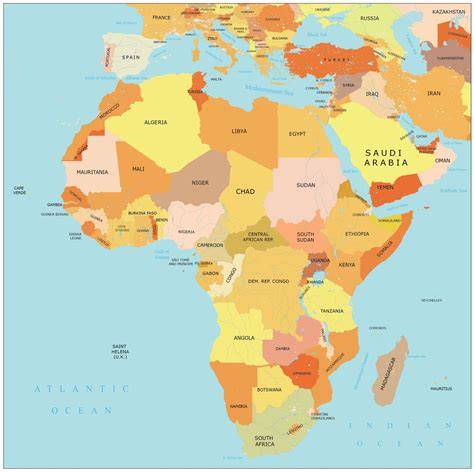
Few regions offer an experience that is more challenging or rewarding than studying abroad in Africa. It is a continent brimming with unique potential study abroad spots! Africa offers a diverse environment rich in history, culture, politics, and more, making it an ideal destination for students with various interests.
Why Study Abroad in Africa?
If you’re wondering why you should study abroad in Africa, check out these key reasons:
- Africa provides a great destination for volunteer work and internships, as students can easily get involved with their local community.
- Africa is a very affordable study abroad destination compared to other countries.
Africa is an incredibly unique place for study abroad students. As the most underdeveloped continent, the country faces quite a few issues including poverty, government corruption, disease, education shortcomings, racial tension, and malnutrition. Many study abroad programs involve interesting field work and close interaction with local communities.
For all you anthropology buffs, Africa is the birthplace of the human race! That being said, there is far from one culture on the continent. There are thousands of cultural and ethnic groups throughout the continent, and their cultures can be quite different from one another. Because of its colonial past, Africa also has an interesting cultural blend of the indigenous cultures and of the colonial cultures--particularly European and Arabic.
Cultural Insights
Because of the number of indigenous tribes, it is estimated that over 1,000 languages are spoken in Africa! Some researches even put that number closer to 2,000. Colonization also brought languages non-African originating languages to the continent.
Read also: Learn Arabic in Egypt: Guide
Throughout the various cultures, one thing remains: importance of family! Elders are highly respected for their wisdom. Schedules are not as strict in Africa, which is likely a result of the uncertainty of day to day life in many African countries. Crafting, beading, music, dance, and storytelling are also also large parts of African culture.

Exploring African Culture: Rich Traditions, Art,and Dance of African Cultures (My Cultural Identity)
Culinary Delights
Like language, popular grub changes depending on what area of Africa you’re in. Starches and root vegetables are pretty popular throughout the areas. Eastern Africa has Indian and Arabic influences (think curries, lentils, spices, cinnamon), while Northern Africa has a mediterranean flair. Ethiopian food uses this really cool spongy sourdough bread called injera in place of utensils to pick up the various stews characteristic of the cuisine.
Top Destinations in Africa for Study Abroad
Africa's a huge continent, and each region is different. Here are some cities to consider for your study abroad experience:
- Johannesburg, South Africa: Affectionately called Jo-burg by the locals, Johannesburg is the largest city in South Africa. Despite being the economic capital of sub-Saharan Africa, the city still has a nice balance of metropolitan and natural areas.
- Cape Town, South Africa: If you’re outdoorsy, try hiking up Cape Town’s famed Table Mountain: a mountain with a naturally leveled peak that provides a pretty awesome view of the city for those who make it to the top.
- Nairobi, Kenya: As the capital of Kenya, Nairobi is the country’s center of media, music, economics, and more. It is a global up-and-comer, growing at a pretty rapid pace.
- Accra, Ghana: Ghana’s capital is a modernized and highly globalized city.
- Iringa, Tanzania: Originally built as to provide protection to the German colonists at the end of the 19th century, Iringa is a unique and interesting place to study abroad.
- Kampala, Uganda: In addition to its notably friendly and social culture, Kampala is also a very safe city.
- Meknes, Morocco: Meknes is a fabulous Northern Africa study abroad location because, though it is young and full of culture, it is not a tourist hotspot. History buffs will be interested in seeing nearby Volubilis, where you can see the 2000-year-old remains of a Roman town.
- Cairo, Egypt: Though the Pyramids of Giza and the Sphinx are probably the most well-known of Cairo’s sites, the city is rich in the remains of the ancient Islamic Pharaohs.

Choosing a Program
With several study abroad programs in Africa, providers offer you with a broad range of courses, cultural excursions to key historic sites, volunteer opportunities, and weeklong homestays with local families! With an open campus model, you can design your very own study abroad semester program to include up to three different locations.
Boston College Programs
Boston College programs allow students to study directly at one of BC’s 70+ partner institutions around the world. On a BC Program, the OGE has a direct connection with the host university. Often, the host university abroad will send their own students to BC as part of an exchange. Students who attend a BC program abroad continue to pay BC tuition. Students will be billed directly by their BC host institution for housing unless otherwise noted.
Read also: Managing Pediatric Hyperthyroidism
Students continue to receive all financial aid, grants, scholarships, tuition remission, etc. Students will also pay for international health insurance offered through CISI. Students attending a BC program will earn BC credit and the grades from abroad will be factored into their BC GPA. Credit will be applied to General Elective Credit. With approval, students may have the credit applied to their major, minor, or the BC core.
Approved External Programs
Students may also study on an Approved External Program. Approved External Programs are programs that offer additional abroad opportunities for BC students. On approved external programs, BC students pay tuition to Boston College and fees directly to the program provider. Costs vary from program to program; please consult the specific program. Credits from an approved external will transfer back to BC as general elective credit. With approval, credit can be applied to a student’s major, minor, or core.
While we encourage you to compare and consider several programs for your study abroad experience, please remember that at the end you will be approved to apply to one program only.
Petitions for Non-Approved Programs
With so many options to choose from, students are expected to first consider a BC or approved external program. If a student cannot find such a program that meets their academic needs, he or she may petition to approve a program not currently listed. Students must have a strong academic rationale for choosing a program currently not approved. Students are required to meet with the OGE advisor for their chosen region to discuss the case and obtain access to the petition application. Petitions are approved on a case-by-case basis and must be submitted before the application deadline.
Safety and Health Considerations
Africa is generally regarded as a safe study abroad destination. As with any location abroad, we encourage students to stay aware of their surroundings, travel in groups when possible, and keep their belongings secure. Your study abroad program provider should brief you on safety measures for while you're in Africa. Take these seriously and understand the risks associated with the country you're in. Much like with the potential illnesses, don't let this dissuade you from studying abroad in Africa.
Read also: NGN Analysis
In some African countries, illnesses like cholera or the black plague still exist. In most, malaria is a problem. And unfortunately, it’s a rare individual who spends a lengthy amount of time in Africa without ever once getting diarrhea, worms, parasites, giardia (which is transmitted through fecal matter), or other stomach issues. Avoid this by consulting a doctor about antimalarials before you go, washing produces with bleached water, and sticking to freshly cooked street food.
Packing Tips
Many students coming to Africa have this idea that life will be rugged, almost like an extended camping trip. This results in a tendency to stuff suitcases with quick-dry t-shirts, zip-off pants, and other REI-esque outdoor wear. While some of this can be useful -- quick-dry clothes are great when you have to hand wash clothes in the rainy season -- you probably won’t end up wearing any of this on an everyday basis. Especially if you’re in an urban area you’re better off packing regular street clothes. On the other hand, some camping gear, like headlamps for frequent power outages, rain jackets, quick-dry towels, and Swiss army knives, are handy items to pack.
Financial Considerations
Cost of living varies throughout Africa. In countries soaked in oil, like Angola and Nigeria, costs are very high. Zimbabwe is also quite expensive. Most of the other African countries are cheaper to live in.
If you are planning on traveling while in Africa, you should know that currency generally changes as you cross borders, so make sure to change your money as necessary! Also, take note! Though Africa is generally an inexpensive place to study abroad, it never hurts to have a little extra cash in your pocket. Try asking your school and the program you select if they offer any scholarships.
Gap Year Opportunities
How would you spend a dream gap year in Africa? Do you picture yourself visiting mountains like Mount Kilimanjaro or Table Mountain? Sand dunes in Morocco? A safari in a national park? Or perhaps a bustling market in a busy city center? You can choose from studying a new languages and culture, volunteering with nonprofits, or going on adventures in some of the most beautiful natural areas of the world. You'll have the time of your life while also standing out from the crowd when you get home.
Volunteering and service learning are popular program types among high school students who want to spend time in Africa. They're an opportunity to explore a new culture and location while simultaneously giving back. Because you will be doing both, some programs have classes in the morning and volunteering in the afternoon (or vice versa).
Language Immersion
Given how many different languages are spoken on the continent, Africa is a fantastic location to learn or improve on another language. Language immersion programs offer students the chance to step up their academic game and gain an edge on their monolingual peers. Some popular options include Arabic, French, and Swahili.
Short-Term Programs
For students who want to experience Africa at its best but who are limited on time, short-term cultural immersion programs and teen travel programs can fulfill that wanderlust. These are usually more fast-paced, so you might be visiting an NGO one day and then checking out a stampede while on safari the next! Regardless, these teen travel programs have a strong emphasis on academics and learning about the countries they visit through travel.
Visa Requirements
Visa requirements will vary from country to country. Generally, students who are planning to stay for a shorter amount of time (a couple of weeks) will be able to enter the country on a tourist visa. If traveling to South Africa, you won't be allowed to enter without proof of a yellow fever vaccination.
Popular articles:
tags: #Africa
