This article presents a case study of an 11-year-old female who presented with symptoms indicative of hyperthyroidism. The case highlights the diagnostic process, treatment strategies, and management considerations for Graves' disease and the potential for thyroid storm in pediatric patients.
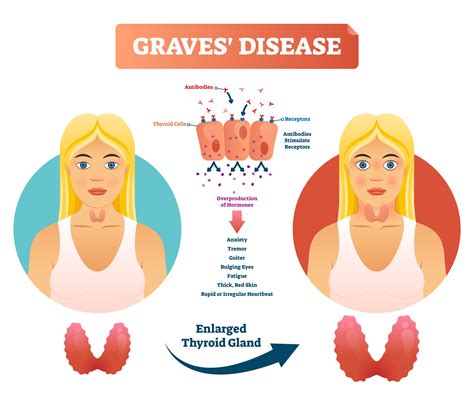
Graves' Disease
Patient Presentation
An 11-year-old female with no significant past medical history presented with symptoms suggestive of hyperthyroidism, including weight loss and heat intolerance. Additionally, she experienced a decline in her grades at school. The family history was significant for thyroid disease in both grandmothers, who were both on thyroid replacement therapies.
Diagnosis
Laboratory evaluation revealed the following:
- Anti-TSH receptor antibodies: 69.6 % Inhibit
The patient underwent thyroid imaging with uptake, which showed an enlarged thyroid gland with homogeneous increased uptake, consistent with Graves' disease. The 24-hour uptake equaled 86%.
Read also: NGN Analysis
Treatment and Management
Due to the failure of medical management for hyperthyroidism after approximately two weeks, the patient was scheduled for radioiodine ablation of her thyroid. The patient underwent radio-iodine ablation as scheduled and she was stable on Atenolol 50 mg twice a day.
Understanding Graves' Disease and Thyroid Storm
Graves' disease is the most common cause of thyrotoxicosis in children. The disorder is rare before the age of 3 and increases progressively with age thereafter. Hyperthyroidism accounts for 10-15% of all pediatric thyroid disorders, and children constitute 1-5% of all Graves' disease patients.
Thyroid storm is a potentially fatal, though uncommon condition that affects 1% of individuals with thyrotoxicosis, and accounts for between 1 and 10% of patients hospitalized for thyrotoxicosis. It is an exaggerated state of thyrotoxicosis involving decompensation of one or more organ systems and carries a mortality rate of between 20 and 30%.
Triggers of Thyroid Storm
Besides thyroid surgery, thyroid storm can be triggered by:
- Radioactive iodine therapy
- Uncontrolled diabetes
- Emotional stress
- Abrupt withdrawal of antithyroid medication
- Excessive palpation of the thyroid gland in hyperthyroid patients
- Thyroid hormone overdose
- Pulmonary thromboembolism
- Toxemia of pregnancy
- Labor
- Trauma
- Acute infection
- Severe drug reaction
- Myocardial infection
The clinical manifestations of thyroid storm are consistent with marked hypermetabolism. Patients in thyroid storm may complain of chest pain, palpitations, shortness of breath, tremor, nervousness, increased sweating, disorientation, fatigue, and fever. Usually there is marked tachycardia, often with atrial fibrillation and high pulse pressure. On rare occasions symptoms may progress to heart failure. Central nervous system symptoms include marked agitation, restlessness, delirium, psychosis, and coma. Gastrointestinal symptoms include nausea, vomiting, diarrhea, and jaundice.
Read also: CAR T-cell therapy in cancer treatment
Previously it was thought that the release of stored thyroid hormone is responsible for thyroid storm. Nowadays it is known that the blood levels of thyroid hormone are no different from thyrotoxic patients who are free of thyroid storm symptoms. Evidence suggests that in thyroid storm the number of binding sites for catecholamines (epinephrine, norepinephrine, etc.) increases. Therefore, the heart and nervous tissue have increased sensitivity to circulating catecholamines. Also, there is decreased binding to TBG, the protein which normally binds with thyroid hormone. Thus there is more available thyroid hormone in the circulation.
THYROTOXICOSIS, THYROTOXIC CRISES (THYROID STORM) EMERGENCY TREATMENT MANAGEMENT LECTURE, USMLE
Radioactive Iodine (RAI) Therapy and Thyroid Storm
RADIOACTIVE IODINE (RAI) therapy and withdrawal of antithyroid medications are two well-described causes of thyroid storm. Thyroid storm following RAI therapy has generally been attributed to increased thyroid hormone release from degenerating follicles. Brooks et al. showed that patients with thyroid storm and uncomplicated thyrotoxicosis had comparable T4 and T3 levels, but that free T4 was significantly higher in the patients with thyroid storm. Studies have shown that after RAI therapy patients pretreated with antithyroid medications have lower serum T4 and T3 levels than non-pretreated patients.
These studies also show that serum T4 and T3 levels increase significantly after withdrawal of antithyroid medication in preparation for RAI therapy. Retrospective studies have shown a lower success rate of RAI therapy in patients pretreated with PTU, but not methimazole. In addition, studies have also demonstrated lower RAI efficacy in patients treated with PTU and methimazole after RAI therapy.
Treatment with methimazole before RAI therapy is beneficial because it does not affect the overall efficacy of RAI, and pretreated patients have lower thyroid hormone levels than patients treated with RAI alone. Allahabadia et al. determined that male gender and younger age of onset of Graves' disease are associated with a higher failure rate of treatment with antithyroid medication.
Read also: Teen Heartthrob Chad Michael Murray
Dosing and Outcomes of RAI Therapy
The dose of 131I is calculated by a standard formula that uses the estimated weight of the thyroid gland and the 24-h RAI uptake to determine the dose required for the delivery of 50-200 mCi 131I/g thyroid tissue. Hamburger's retrospective study showed that within 6 months of receiving a single dose of 200 mCi 131I/g thyroid tissue, 88% of the children were euthyroid or hypothyroid.
Summary of RAI Therapy Outcomes
The following table summarizes the impact of pretreatment and post-treatment with antithyroid medications on RAI therapy outcomes:
| Medication | Impact on RAI Success | Impact on Hormone Levels |
|---|---|---|
| PTU Pretreatment | Lower success rate | Lower T4 and T3 levels after RAI |
| Methimazole Pretreatment | No impact on efficacy | Lower T4 and T3 levels after RAI |
| PTU/Methimazole Post-treatment | Lower efficacy | N/A |
Popular articles:
tags:
