Igbo Landing (also called Ibo Landing, Ebo Landing, or Ebos Landing) is a historic site at Dunbar Creek on St. Simons Island, Glynn County, Georgia. It was the setting of a mass suicide in 1803 by captive Igbo people who had taken control of the slave ship they were on and refused to submit to slavery in the United States.
In May 1803, the Igbo and other West African captives arrived in Savannah, Georgia, on the slave ship the Wanderer. They were purchased for an average of $100 each by slave merchants John Couper and Thomas Spalding to be resold to plantations on nearby St. Simons Island.
The chained slaves were packed under deck of a coastal vessel, the York, which would take them to St. Simons. The sequence of events that occurred next remains unclear.
It is known only that the Igbo marched ashore, singing, led by their high chief. Then at his direction, they walked into the marshy waters of Dunbar Creek, committing mass suicide.
Roswell King, a white overseer on the nearby Pierce Butler plantation, wrote the first account of the incident. He and another man identified only as Captain Patterson recovered many of the drowned bodies. Apparently only a subset of the 75 Igbo rebels drowned.
Read also: "Beautiful" in Igbo: A guide to Igbo vocabulary
Regardless of the numbers, the deaths signaled a powerful story of resistance as these captives overwhelmed their captors in a strange land, and many took their own lives rather than remain enslaved in the New World.
Igbo Landing was the final scene of events which in 1803 amounted to a "major act of resistance" by the Africans. The mutiny by the Igbo people has been referred to as the first "freedom march" in the history of America.
These events have had enduring symbolic importance in African-American folklore and literary history. Although for more than two centuries most authorities considered the accounts to be an Afro-American folktale, research since 1980 has verified the factual basis of the legend and its historical content.
The site bears no official historical marker. A sewage disposal plant was built beside the historical site in the 1940s despite local opposition by African Americans.
In 2021, a group of students at the Glynn Academy Ethnology Club submitted an application to the Georgia Historical Society to erect a historical marker in honor of Igbo Landing. After the application's acceptance, the Glynn Academy Ethnology Club raised roughly $2,500 for the marker. A celebration in honor of the unveiling of the sign was held on May 24, 2022 and was attended by roughly 100 people. The sign is located at Old Stables Corner on St Simons Island, Georgia, at the northwest corner of Frederica Road and Sea Island Road.
Read also: Voice Translation: Igbo to English
In September 2002, the St. Simons African American community organized a two-day commemoration with events related to Igbo history and a procession to the site of the mass suicide. Seventy-five attendees came from different states across the United States, as well Nigeria, Brazil, and Haiti. The attendees designated the site as a holy ground and called for the souls to be permanently at rest.
The story of the Igbo slaves who chose death over a life of slavery is a recurring story that has taken deep roots in African American and Gullah oral history.
Local people claimed that the Landing and surrounding marshes in Dunbar Creek where the Igbo people committed suicide in 1803 were haunted by the souls of the dead Igbo slaves.
The Myth of the Flying Africans
A typical Gullah telling of the events, incorporating many of the recurrent themes that are common to most myths related to the Igbo Landing, is recorded by Linda S. Watts. The West Africans upon assessing their situation resolved to risk their lives by walking home over the water rather than submit to the living death that awaited them in American slavery.
Read also: Igbo love phrases
As the tale has it, the tribes people disembark from the ship, and as a group, turned around and walked along the water, traveling in the opposite direction from the arrival port. As they took this march together, the West Africans joined in song. They are reported to have sung a hymn in which the lyrics assert that the water spirits will take them home.
Another popular legend associated with Igbo Landing is known as the myth of the flying Africans. It was recorded from various oral sources in the 1930s by members of the Federal Writers' Project. In these cases, the Africans are reputed to have grown wings, or turned into vultures, before flying back home to freedom in Africa.
The flying African folktale probably has its historical roots in an 1803 collective suicide by newly imported slaves.
This theory is disputed, however, by Professor Jeroen Dewulf, who argues that there are frequent references to Igbos as well as to enslaved Africans flying home in the Federal Writers' Project interviews, but that theories connecting both are built on weak foundations.
Three Minute Lesson: Igbo Landing and the Flying African
A Lasting Legacy
The history of the mass suicide at Dunbar Creek, referred to today as Igbo Landing both in place and event, endures through oral histories, particularly for the Gullah Geechee community. Igbo Landing holds symbolic importance within African American folklore as a powerful and evocative story of resistance against enslavement. It inspired tales of Africans flying or walking on water to return home.
The Igbo were known by planters and slavers of the American South for being fiercely independent and resistant to chattel slavery. The ship’s enslaved passengers included a number of Igbo people from what is now Nigeria.
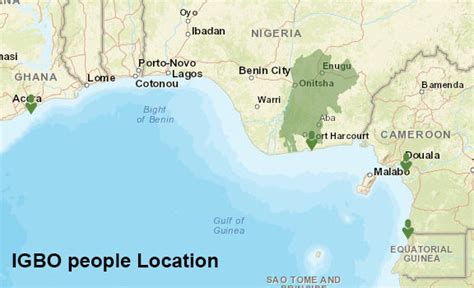
Many of those abducted and sent to the Americas were Igbo, a large group of people that have lived primarily in what is now southeastern Nigeria. Research suggests that, of the 1.7 million Africans transported from the Bight of Biafra (a bay off the coast of what is now Nigeria as well as Cameroon, Equatorial Guinea, and Gabon) to the Americas, 1.3 million were Igbo.
The mass suicide at Igbo Landing and its oral retellings have influenced a great deal of cultural works from the 20th and 21st centuries.
It is the impetus for numerous African American cultural works including Toni Morrison’s Song of Solomon, Julie Dash’s Daughters of the Dust, and Beyoncé’s Lemonade.
Examples include Nobel laureate Toni Morrison, who used the myth of the flying Africans in her novel, Song of Solomon, and Alex Haley, who retells the story in his book Roots. The Paule Marshall novel Praisesong for the Widow also was inspired by these events.
In the 2018 Marvel film Black Panther, Michael B. Jordan, as Killmonger, references Igbo Landing during his death scene.
The Saint Simons African American Heritage Coalition works to circulate and preserve the memory and oral histories of Igbo Landing. A historical marker-placed in part by the coalition-commemorates the events at the site.
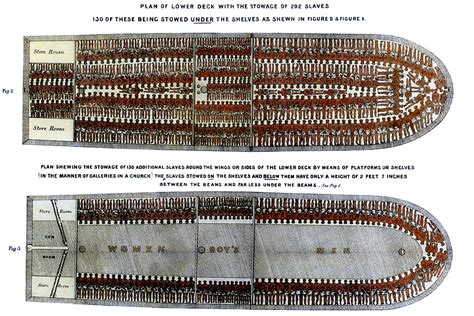
Detail of a British broadside depicting the ship Brooks and the manner in which more than 420 enslaved adults and children could be carried on board, c. 1790.
In 1803, having just overpowered their captors on a small slave vessel off the coast of a small island in Georgia, a group of Igbo people chose death over a life of enslavement and defiantly waded into the cool coastal waters and drowned.
One of the largest mass suicides of enslaved West Africans in the history of chattel slavery, the events at Dunbar Creek on St. Simons Island were a highly symbolic act of resistance: in choosing suicide, the captives exercised autonomy over their lives and bodies, which was antithetical to the very institution of slavery.
Accounts of Igbo Landing have frequently been injected with elements of the supernatural and are a rich part of Black American folklore, particularly for the Gullah people in the southeastern United States.
The events at Igbo Landing happened as the American slave trade was near its zenith; by 1803 it had existed for nearly 200 years, and millions of Africans had been trafficked from ports throughout West Africa to the New World. The Middle Passage was brutal, killing many as disease and malnutrition ran rampant in the crowded hulls of slave traders’ ships.
In 1803 about 75 of those many devastated souls were destined for St. Simons Island, where they would undertake their remarkable revolt.
The Landing
Many of the details of that fateful day in May 1803 have been lost. The Igbo people involved had just survived the Middle Passage on board a large vessel called the Wanderer, where they were shipped like cargo with many other West Africans from what is now Nigeria to Savannah, Georgia.
In Savannah they were sold as a group of about 75 to two coastal plantation owners, Thomas Spalding and John Couper, for about $100 each. They were then put aboard a smaller ship, the schooner York (or possibly the Morovia), headed for St. Simons Island.
Somewhere near Dunbar Creek, the Igbo throng rose up against their captors and forced three of them overboard, where they drowned. Some histories suggest that the captives commandeered the ship while it was still offshore and ran aground at Dunbar Creek, while others suggest that it had already landed when the rebellion took place.
In any case, once disembarked, an unknown number of Igbo people, possibly led by their chief, proceeded to walk into the marshy waters at Dunbar Creek and drowned. In oral retellings, the men-still chained together-were heard singing in unison: “By the water spirits we came and by the water spirits we will be taken home. / You cannot be an enemy of the land you are a part of.”
Thirteen bodies were recovered, but the total number of those who died by suicide remains unknown. It is possible that some of the 75 survived the waters or fled the site beforehand and remained missing or were later taken by bounty hunters and forced again into slavery.
The retellings of the Igbo Landing story say that the captives flew or walked on water back to their homes in Africa.
In one oral account, recorded in the late 1930s as part of the Federal Writers’ Project, a Gullah man named Wallace Quarterman shared that the Igbo people, fed up with their mistreatment, transformed into buzzards and flew home. It is from tales like this that “The Myth of the Flying Africans,” present in Black folklore, has been drawn.
Other tellings acknowledge their deaths and hold that their spirits have been trapped in the water. Some hold that the site of Igbo Landing is sacred or haunted.
| Aspect | Details |
|---|---|
| Location | Dunbar Creek, St. Simons Island, Glynn County, Georgia |
| Date | May 1803 |
| Participants | A group of approximately 75 Igbo enslaved people |
| Outcome | Mass suicide in opposition to slavery in the United States |
Popular articles:
tags:
