Africa's urban landscape is evolving rapidly, with cities across the continent becoming powerhouses of wealth creation and economic growth. From the banking corridors of Johannesburg to the tech hubs of Nairobi, Africa's richest cities showcase the dynamic transformation happening across the continent. Let's dive into the fascinating world of Africa's wealthiest urban centers in 2025.
Understanding Africa's Wealth Distribution: When we talk about wealth in Africa, we're looking at a fascinating but uneven picture. Africa's private wealth stood at approximately $2.5 trillion in investable assets as of end-2023, with around 135,200 millionaires and 21 billionaires calling the continent home.
What's particularly interesting is how this wealth concentrates in specific regions and cities. The "Big 5" wealth markets - South Africa, Egypt, Nigeria, Kenya, and Morocco - account for 56% of Africa's millionaires and over 90% of its billionaires. This concentration tells us something important: wealth in Africa tends to gather in urban centers with strong financial sectors, good infrastructure, and business-friendly environments.
Southern and North African nations dominate private wealth holdings, while many smaller economies have fewer millionaires. This regional wealth gap is something to keep in mind as we explore the continent's richest cities.
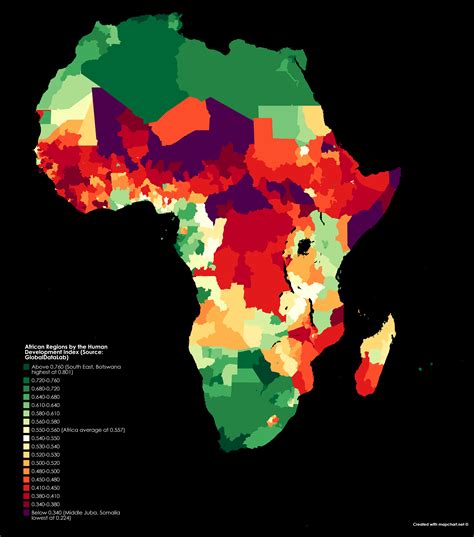
Map of African countries by Human Development Index (HDI).
Read also: Common Nigerian Surnames
Africa's Economic Landscape in 2025
Africa's economic pulse is strong in 2025, with Sub-Saharan Africa's GDP projected to rise about 4.3%, making Africa the second-fastest growing region after Asia. This growth story, however, comes with nuances. High inflation and currency depreciations have eroded some wealth gains in dollar terms.
For example, the South African rand fell 43% against the US dollar from 2013-2023, while Nigeria, Egypt, Angola, and Zambia all saw their currencies plunge over 75% in the last decade. These currency shocks mean many Africans became "poorer" in USD terms despite local asset growth.
Stable, investment-friendly jurisdictions like Mauritius have cultivated fast-growing wealthy classes, whereas conflict-affected or policy-challenged states lag behind. Overall, Africa in 2025 presents a picture of concentrated wealth in a handful of countries and urban centers, amid a generally rising economic tide tempered by local challenges.
The city ranking has over a decade of results, making analysis possible. These city rankings measure pre-conditions for innovation. The 162 Indicators cover key areas for city innovation such as: digital transformation, technology, startups, economic development, sustainability, liveability, mobility and other areas.
Above average scores across many indicators result in a higher rank. Thus, making cities that rank high, more well-balanced.
Read also: Exploring Africa's Linguistic Diversity
All the data is available to compare any set of cities you need. The full data set is at your disposal, just order the specific areas you need.
The data is available for purchase at Indicator level. Used by govt, cities, finance, insurance, consultants and businesses.
All cities ranked from Africa region.
With a population expected to double by 2050, Africa is witnessing unprecedented urban expansion, making it home to some of the fastest-growing cities in the world.
According to the research of the World Economic Forum, the fastest growing cities in Africa are Lagos, Kinshasa, Cairo, Luanda and Nairobi.
Read also: African Beauty Standards
The population and urbanization rate in Africa are rising simultaneously. This leads to the expansion of existing cities and the emergence of new urban areas. The population of Africa is expected to double by 2050 and to reach more than 2 billion people.
Top 5 Wealthiest Cities in Africa (2025)
Here are the top 5 wealthiest cities in Africa as of 2025:
| Rank | City | Country | Millionaires | Billionaires | Key Industry |
|---|---|---|---|---|---|
| 1 | Johannesburg | South Africa | 12,300 | 2 | Finance |
| 2 | Cape Town | South Africa | 7,400 | 1 | Tourism/Real Estate |
| 3 | Cairo | Egypt | 7,200 | 4-5 | Diversified |
| 4 | Nairobi | Kenya | 4,400 | 0 | Finance/Tech |
| 5 | Lagos | Nigeria | 4,200 | 3 | Oil/Finance |
TOP 10 FASTEST GROWING CITIES IN AFRICA 2025
#1 Johannesburg
Johannesburg stands as Africa's undisputed economic powerhouse and wealthiest city, home to approximately 12,300 millionaires and 2 billionaires in 2025. With a population of around 5.6 million, this South African metropolis contributes significantly to the nation's GDP, with an estimated metropolitan GDP of about $76 billion.
Often nicknamed the "City of Gold" for its historic gold mining industry, Johannesburg has transformed itself into a modern financial center. The city's wealth is concentrated in affluent suburbs like Sandton, which has earned the nickname "the richest square mile in Africa" due to its concentration of corporate headquarters and upscale residential estates.
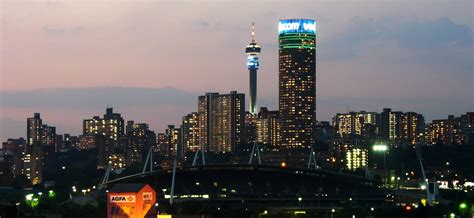
Johannesburg Skyline.
Johannesburg is the largest city in South Africa and the financial heart of the country. Most of the international companies and banks are located in the city.
Main Industries Driving Wealth
Johannesburg's wealth is driven by diverse economic sectors. The city hosts the Johannesburg Stock Exchange (JSE), Africa's largest exchange, which serves as the financial heart of the continent. The city's economic strength comes from:
- Finance and banking (headquarters of major African banks)
- Professional services (legal, accounting, consulting firms)
- Mining and resources (corporate offices of mining giants)
- Telecommunications (major telecom companies)
- Retail (luxury shopping centers and high-end retail)
The city's diversified economy and well-developed legal and financial infrastructure make it a magnet for investors across Africa and beyond. Despite challenges like inequality and security concerns, Johannesburg continues to lead Africa's urban wealth rankings through its robust business environment and established wealth management sector.
#2 Cape Town
Cape Town, with its stunning scenery and high quality of life, ranks as Africa's second-wealthiest city. Home to approximately 7,400 millionaires and 1 billionaire, this South African coastal gem has an estimated metro GDP of about $33 billion.
Cape Town contains many of Africa's most opulent residential areas, including the exclusive coastal suburbs of Clifton, Camps Bay, and Constantia. These neighborhoods (part of "New World Wealth's Prime 7" areas) feature multi-million dollar properties and have made Cape Town the most expensive African city for prime real estate, at about $5,600 per square meter.
Cape Town is the legislative capital of South Africa. The economy of the city heavily relies on tourism. The attractions are Cape Floristic Region, Table Mountain and Cape Point.
Real Estate and Business Growth
Cape Town's real estate market is booming, driven by a "semigration" trend of wealthy individuals relocating from other parts of South Africa to Cape Town for its lifestyle and safety advantages. This migration has fueled property prices in premium areas and created a thriving luxury real estate market.
Beyond real estate, Cape Town's economy is remarkably diversified:
- Tourism and hospitality (luxury hotels and experiences)
- Finance and professional services
- Technology (growing startup ecosystem)
- Film and creative industries
- Wine production and exports
Cape Town's economy benefits from its port, which serves as a trade hub, and its status as a top tourism destination. With its strong tourism sector and flourishing real estate market, Cape Town is poised to potentially overtake Johannesburg as Africa's wealth capital by 2030, according to wealth analysts.
#3 Cairo
Cairo ranks third in number of millionaires with about 7,200 high-net-worth individuals (HNWIs), but it hosts more billionaires than any other African city, with 4-5 of Africa's billionaires calling it home. This Egyptian metropolis has a population of around 10 million, making it one of Africa's largest cities.
Greater Cairo's economy is the largest in North Africa with an estimated GDP around $80-100 billion. The city is anchored by government, finance, real estate, and manufacturing sectors. Affluent districts such as Zamalek, New Cairo, and 6th of October City are known for luxury homes and gated communities.
Cairo is the capital of Egypt. It is one of the largest cities in Africa with more than 20 million people living in the urban area. Cairo is located near the Nile Delta, in the center of Egypt. The city is renowned for its historic culture dating back to Ancient Egypt. It is an important hub for business, finance and trade.
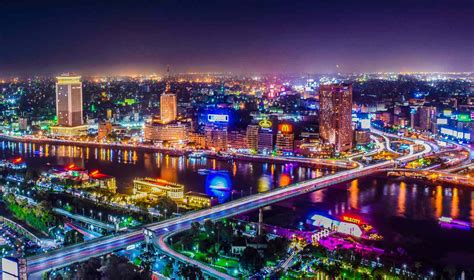
Cairo at Night.
Historical Wealth and Modern Expansion
Cairo's historical position as a cultural and business center means it attracts considerable wealth, though economic challenges like inflation and currency devaluation have impacted private wealth in USD terms. Several of Africa's richest individuals - often heads of family conglomerates in industries like telecom, construction, and consumer goods - reside in Cairo.
Cairo's wealth drivers include:
- Family conglomerates in various industries
- Government and public sector
- Finance and banking
- Real estate and construction
- Manufacturing and exports
The city is expanding with ambitious projects like the New Administrative Capital, a $45 billion development east of Cairo designed to ease congestion and create a new business hub. This massive project exemplifies Egypt's commitment to urban development and reflects the concentration of capital in and around Cairo.
#4 Lagos
Lagos is West Africa's economic heartbeat and Nigeria's largest city, home to roughly 4,200 millionaires and 3 billionaires. With a population of around 15 million, Lagos boasts an approximate metro GDP of $100+ billion, making it one of Africa's biggest city economies.
As Nigeria's commercial and financial capital, Lagos harbors the Nigerian Stock Exchange, major banks, and is the base for industrial conglomerates like Dangote Group (cement, commodities) and telecom/petroleum giants. The city's affluent neighborhoods of Ikoyi, Victoria Island, and Banana Island are known for their expensive mansions and high-end apartments.
Lagos is located in the Western Coast of Nigeria and it is the most populous city in Nigeria. Lagos is the financial and business center of Nigeria with more than 20 million population. Lagos is also home of the largest port of Nigeria.
Factors Behind Growth in Millionaires (2015-2025)
Lagos has experienced significant fluctuations in its millionaire population. Until 2022, Lagos had over 6,000 HNWIs, but Nigeria's currency depreciation saw the number in USD terms fall to about 4,200 by 2023. Despite these challenges, several factors contribute to Lagos's position as a wealth hub:
- Oil and gas industry (many energy firms and executives)
- Financial services and fintech innovation
- Real estate development (including Eko Atlantic City)
- Entertainment industry (Nollywood and music)
- Telecommunications and technology startups
Lagos is also emerging as a tech hub in Africa, with several "unicorn" startups based in the city. The Nigerian tech ecosystem attracted over $1 billion in venture capital in recent years, creating a new generation of tech millionaires.
Despite infrastructure challenges, traffic congestion, and security issues, Lagos's sheer scale and entrepreneurial spirit solidify its place among Africa's top five wealth centers.
#5 Nairobi
Nairobi stands as East Africa's richest city, with about 4,400 millionaires. Nearly 48% of Kenya's total wealth is concentrated in this vibrant capital, which generates an estimated $30 billion in GDP. As Kenya's capital, Nairobi is a regional financial and business center, hosting multinational company offices, banks, and the Nairobi Securities Exchange.
The city's wealthy reside in long-established upscale neighborhoods like Muthaiga and Karen, which feature lush gated estates. Nairobi's pleasant climate (at 1,800m altitude) and status as a UN and diplomatic hub enhance its attractiveness for both businesses and wealthy individuals.
Nairobi is the capital of Kenya. Many companies and international organizations are headquartered in Kenya. United Nations Environment Programme (UN Environment) and the United Nations Office at Nairobi (UNON) are located in the city.
Investment Opportunities
Nairobi offers numerous investment opportunities across various sectors:
- Real Estate: Premium residential areas in Karen, Muthaiga, and Runda offer strong rental yields and capital appreciation. New developments like Tatu City provide master-planned environments catering to wealthy residents.
- Technology: Dubbed the "Silicon Savannah," Nairobi's tech scene offers investment opportunities in fintech, agritech, and e-commerce startups.
- Financial Services: Banking, insurance, and investment management firms are expanding to serve East Africa's growing middle and upper classes.
- Infrastructure: Public-private partnerships in transportation, energy, and utilities present opportunities for large-scale investment.
Nairobi's millionaire population has been growing (up ~25% over the past decade) as the city continues to expand as an economic engine. With political stability and pro-business policies, Kenya has nurtured a growing middle and upper class, making Nairobi an attractive investment destination in East Africa.