Islam in Africa is the continent's second most widely professed faith behind Christianity. Almost one-third of the world's Muslim population resides in Africa. The practice of Islam on the continent is not static and is constantly being reshaped by prevalent social, economic, and political conditions.
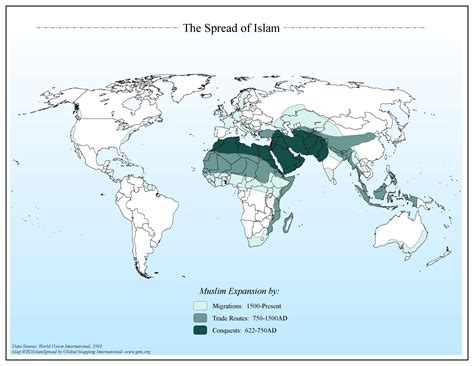
Africa was the first continent into which Islam spread from the Middle East, during the early 7th century CE. During the Hijrah ("Migration") to the Christian Kingdom of Aksum, Muslims crossed current Djibouti and Somalia to seek refuge in present-day Eritrea and Ethiopia. Like the vast majority (90%) of Muslims in the world, most Muslims in Africa are also Sunni Muslims. The complexity of Islam in Africa is revealed in the various schools of thought, traditions, and voices in many African countries. Many African ethnicities, mostly in the northern half of the continent, consider Islam as their traditional religion.
The presence of Islam in Africa can be traced to the 7th century CE, when in Rajab 8 BH, or May 614 CE, Muhammad advised a number of his early disciples, who were facing persecution by the polytheistic inhabitants of the Mecca, to seek refuge across the Red Sea in Axum. In the Muslim tradition, this event is known as the first hijrah, or migration. Twenty-three Muslims migrated to Abyssinia where they were protected by its king, Armah An-Najāshī, who later accepted Islam. They were followed by 101 Muslims later in the same year. Most of those Muslims returned to Medina in 7 AH / 628 CE but some settled in the neighboring Zeila (current day Somalia ) which was at that time part of Bilād al-Barbar ("Land of the Berber(s)").
Once in Zeila, they built the Masjid al-Qiblatayn ("Mosque of the two Qiblahs") in 627 CE. This mosque has two Qiblas because it was built before the Prophet switched the Qiblah from Jerusalem to Mecca. In 20 H / 641 CE, during the reign of Caliph Umar ibn al-Khattab, Muslim troops took over current Egypt and conquered current Libya the following year. Muslims then expanded to current Tunisia in 27 H / 647 CE, during the reign of the third Muslim Caliph Uthman Ibn Affan. The conquest of North Africa continued under the Umayyad dynasty, which annexed parts of Algeria around 61 H/680 CE and Morocco the following year. From the latter Muslim troops crossed the Strait of Gibraltar to Europe in 92 H/711 CE. Islam gained momentum during the 10th century in West Africa with the start of the Almoravid dynasty movement on the Senegal River and as rulers and kings embraced Islam. Islam then spread slowly in much of the continent through trade and preaching.
During this period these Muslims from North and West Africa came to be known by Europeans at large as Moors. By the 9th century, Muslim Sultanates started being established in the Horn of Africa, and by the 12th century, the Kilwa Sultanate had spread as far south as Mozambique. Islam only crossed deeper into Malawi and Congo in the second half of the 19th century under the Zanzibar Sultanate.
Read also: Flavors and Traditions of East Africa
Islam was introduced to the northern Somali coast early on from the Arabian peninsula, shortly after the hijra. Zeila's two-mihrab Masjid al-Qiblatayn dates to the 7th century and is the oldest mosque in the city. In the late 9th century, Al-Yaqubi wrote that Muslims were living along the northern Somali seaboard. He also mentioned that the Adal kingdom had its capital in the city, suggesting that the Adal Sultanate with Zeila as its headquarters dates back to at least the 9th or 10th century. According to I.M. Lewis, the polity was governed by local dynasties, who also ruled over the similarly-established Sultanate of Mogadishu in the littoral Benadir region to the south. In the following centuries, the consolidation of Muslim trading networks, connected by lineage, trade, and Sufi brotherhoods, had reached a peak in West Africa, enabling Muslims to wield tremendous political influence and power.
Early Arrival of Islam
The History of Islam in Africa and accounts of how the religion spread, especially in North and the Horn of Africa, has always been contentious. Head of Awqaf Africa London, Sheikh Dr. Abu-Abdullah Adelabu has written in his Movements of Islam in face of the Empires and Kingdoms in Yorubaland claims about the early arrival of Islam in southwestern Nigeria. He seconded the Arab anthropologist Abduhu Badawi on the argument that the early Muslim missionaries had benefited their works from the fall of Kush in northern Sudan and the prosperity of the politically multicultural Abbasid period in the continent which, according to him, had created several streams of migration, moving west in the mid-9th century into Africa (Egypt and Sudan). Adelabu pointed at the popularity and influences of the Abbasid Dynasty (750-1258), the second great dynasty with the rulers carrying the title of 'Caliph' as fostering peaceful and prosperous migration of the intercultural Muslims from the Nile Valley to Niger as well as of the Arab traders from the desert to Benue.
Similarly, in the Swahili coast, Islam made its way inland - spreading at the expense of traditional African religions. This expansion of Islam in Africa not only led to the formation of new communities in Africa, but it also reconfigured existing African communities and empires to be based on Islamic models. Indeed, in the middle of the 11th century, the Kanem Empire, whose influence extended into Sudan, converted to Islam. At the same time but more toward West Africa, the reigning ruler of the Bornu Empire embraced Islam. As these kingdoms adopted Islam, their subjects thereafter followed suit.
The Spread of Islam in Africa
Diversity and Adaptation
The 10th-century Sankore Madrasa, Timbuktu, Mali was one of the earliest universities in the world. The three mosques of Sankoré, Djinguereber Mosque and Sidi Yahya compose the famous University of Timbuktu. Although the majority of Muslims in Africa are non-denominational Muslims, Sunni or Sufi, the complexity of Islam in Africa is revealed in the various schools of thought, traditions, and voices that constantly contend for dominance in many African countries. Islam in Africa is often adapted to local cultural contexts and belief systems, thereby forming the continent's own orthodoxies. Additionally, Islam in Africa has both local and global dimensions.
On the local level, experts assert that Muslims (including African Muslims) operate with considerable autonomy and do not have an international organization that regulates their religious practices. This fact accounts for the differences and varieties in Islamic practices throughout the African continent. On the global level, Muslims in Africa are also part of the Ummah (Islamic community worldwide), and follow global issues and current events that affect the Muslim world with keen interest. Analysts argue that Muslims in Africa, like other Muslims in Asia, the Middle East and the rest of the world, seem to be locked into an intense struggle regarding the future direction of Islam. At core of the struggle are questions about the way in which Muslims should practice their faith. The scholars assert that the majority seems to prefer to remain on the moderate, tolerant course that Islam has historically followed.
Read also: The Cosmopolitan City of Port Said
Sharia Law and Modern Secularism
The Sharīʿah of Islam broadly influences the legal code in most Islamic countries, but the extent of which its impact varies widely. In Africa, most states limit the use of Sharia to "personal-status law" for issues such as marriage, divorce, inheritance and child custody. With the exception of northern Nigeria in West Africa, secularism does not seem to face any serious threat in Africa, even though the new Islamic revival is having a great impact upon segments of Muslim populations. Nigeria is home to Africa's largest Muslim population. In 1999, Nigeria's northern states adopted the Sharia penal code, but punishments have been rare. In fact, dozens of women convicted of adultery and sentenced to stoning to death have later been freed.
Denominations and Sufism
Muslims in Africa mostly adhere to Sunni Islam, with sizable Ibadi adherents. In addition, Sufism, the mystical dimension of Islam, has a very big presence. The Maliki madh'hab is the dominant school of jurisprudence amongst most of the continent's Sunni communities, while the Shafi'i madh'hab is prevalent in the Horn of Africa, eastern Egypt, and the Swahili Coast. Quranism is an umbrella term denoting a strand within Islam that endorses a Quran-oriented form of Islam and often eschews hadiths. According to a survey by Pew, there are thirteen countries in Africa wherein at least twenty percent of the Muslim population adheres to a non-denominational form of Islam, i.e. are non-denominational Muslims.
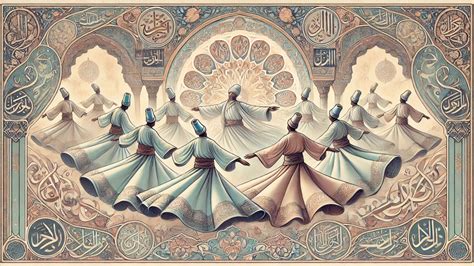
Sufism, which focuses on the mystical elements of Islam, has many orders as well as followers in West Africa and Sudan, and, like other orders, strives to know God through meditation and emotion. Many Sufis in Africa are syncretic where they practise Sufism with traditional folklore beliefs. West Africa and Sudan have various Sufi orders regarded skeptically by the more doctrinally strict branches of Islam in the Middle East. Most orders in West Africa emphasize the role of a spiritual guide, marabout or possessing supernatural power, regarded as an Africanization of Islam. In Senegal and Gambia, Mouridism Sufis claim to have several million adherents and have drawn criticism for their veneration of Mouridism's founder Amadou Bamba.
Salafism
Recently, Salafism has begun spreading in Africa, as a result of many Muslim Non-Governmental Organizations (NGOs) such as the World Muslim League, the World Assembly for Muslim Youth, and the Federation of Mab and Islamic Schools primarily funded by Salafi governments in the Arab states of the Persian Gulf. These Salafist organizations, often based out of Saudi Arabia, promote a form of conservative reformism and regard Sufism as "heterodox" and contrary to their interpretation of traditional Islam. Such NGOs have built Salafi-dominated mosques and Islamic centers in Africa, and many are staffed by puritanical African Muslims, often trained in the Middle East.
Islam in East Africa
The history of Islam in East Africa stretches back to around 1000 CE. Until the mid-20th century, it remained largely confined to the coast and closely bound up with the history of the Swahili towns situated on it. The Swahili language remains central to many East African Muslims, hence the occasionally heard phrase, “Swahili Islam.” East African Muslims are mostly Shafiites and some belong to Sufi orders, especially Qadiriyya and Shadhiliyya. Since c. 1850, Islam, with many variations in ritual, has become the religion of speakers of a multitude of languages across the region, second only to Christianity.
Read also: Healthcare Quality Management Trends in MEA
The region’s independent nation-states initially promised equality for all religions within a secular order. Since c. 1990, though, the minority status of East African Muslims has fed into a multitude of grievances related to the region’s economic and political impasses. This situation has led to growing movements of Islamic preaching and activism, supported by increased contacts with congregations elsewhere in the Indian Ocean. At times, they have influenced electoral politics, especially in Zanzibar, where Islamic activism resonates with fear of marginalization by the mainland. In Kenya, Somali-influenced Islamist terrorists committed a series of atrocities in the 2010s. East African governments, in turn, have been proactive in tracking and disrupting such networks, and in Kenya, the government engaged in targeted assassination.
Popular articles:
tags: #Africa
