Port Said (Egyptian Arabic: بورسعيد, romanized: Bōrsaʿīd) is a vibrant port city in northeastern Egypt. Extending about 30 km (19 mi) along the coast of the Mediterranean Sea, it straddles the west bank of the northern mouth of the Suez Canal. As the capital of the Port Said Governorate, the city constitutes the majority of the Governorate, with its seven districts comprising seven of the governorate's eight regions.
Port Said flourishes as a duty-free port and a popular tourist resort, especially during the summer months. It is also home to the Lighthouse of Port Said, the first building in the world constructed from reinforced concrete.
Things To Do in Port Said
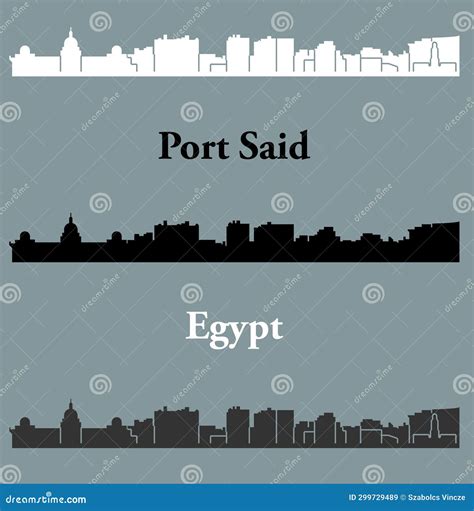
Skyline of Port Said.
Historical Significance
The city was established in 1859 during the construction of the Suez Canal. Its name first appeared in 1855 and was chosen by an international committee comprising Great Britain, France, the Russian Empire, Austria, Spain, and Piedmont. The name is a compound of the French word "port" (marine harbor) and "Said," the name of the then-ruler of Egypt, who granted Ferdinand de Lesseps the concession to dig the Suez Canal.
Read also: Luxury Stay in Port Elizabeth
Port Said was founded by Sa'id of Egypt on Easter Monday, April 25, 1859, when Ferdinand de Lesseps gave the first symbolic swing of the pickaxe to signal the beginning of construction. The first problem encountered was the difficulty for ships to drop anchor nearby. Luckily, a single rocky outcrop flush with the shoreline was discovered a few hundred meters away. Equipped with a wooden wharf, it served as a mooring berth for the boats. Soon after, a wooden jetty was built, connecting the departure islet, as it quickly became known, to the beach.
Early buildings were often imported in kit form and made great use of wood. A newly developed technique was used to construct the jetties called conglomerate concrete or "Beton Coignet", which was named after its inventor François Coignet. Blocks of concrete were sunk into the sea to be the foundations of the jetties. Still more innovative was the use of the same concrete for the lighthouse of Port Said, the only original building still standing in Port Said.
Since its establishment, Port Said has played a significant role in Egyptian history. At the start of the twentieth century, two key developments transformed the city: the export of Egyptian cotton from Mataria via Port Said in 1902, and the opening of a standard gauge railway to Cairo in 1904. These events attracted a large commercial community and raised the city's social status.
Cosmopolitan Heritage
Port Said acted as a global city since its establishment and flourished particularly during the nineteenth and the first half of the twentieth century when it was inhabited by various nationalities and religions. Most of them were from Mediterranean countries, and they coexisted in tolerance, forming a cosmopolitan community. Since its foundation people of all nationalities and religions had been moving to the city and each community brought in its own customs, cuisine, religion and architecture.
By the late 1920s the population numbered over 100,000 people. In the 1930s for example there were elegant public buildings designed by Italian architects. The old Arab Quarter was swallowed up into the thriving city. Port Said by now was a thriving, bustling international port with a multi-national population: Jewish merchants, Egyptian shopkeepers, Greek photographers, Italian architects, Swiss hoteliers, Maltese administrators, Scottish engineers, French bankers and diplomats from all around the world.
Read also: Current Operations at Apapa
All lived and worked alongside the large local Egyptian community. And always passing through were international travelers to and from Africa, India and the Far East. Intermarriage between French, Italian and Maltese was particularly common, resulting in a local Latin and Catholic community like those of Alexandria and Cairo. French was the common language of the European and non-Arab population, and often the first language of children born to parents from different communities. Italian was also widely spoken and was the mother tongue of part of the Maltese community, since the ancestors of the latter had come to Egypt before the Anglicization of Malta in the 1920s.
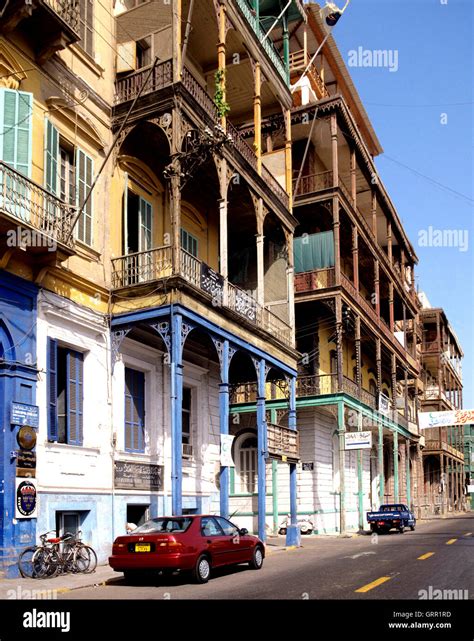
Old houses with grand balconies in Port Said.
The Suez Crisis
The Egyptian Revolution of 1952 marked a turning point. Then on 26 July 1956, President Gamal Abdel Nasser nationalised the Suez Canal Company. The nationalisation escalated tensions with Britain and France, who colluded with Israel to invade Egypt, the invasion known in Egypt as the tripartite aggression or the Suez Crisis. On 6 November 1956, British troops violently landed in Port Said while firing on the Egyptian military. Port Said next was bombed by the British, to terrorise the civilians, of whom hundreds died. The withdrawal of the last soldier of foreign troops was on 23 December 1956. Since then, this day was chosen as Port Said's national day. It is widely celebrated annually in Port Said.
The French-speaking European community had begun to emigrate to Europe, Australia, South Africa and elsewhere in 1946 and most of the remainder left Egypt in the wake of the Suez Crisis, paralleling the contemporary exodus of French-speaking Europeans from Tunisia. After the 1967 Arab-Israeli war, also called the Six-Day War, the Suez Canal was closed by an Egyptian blockade until 5 June 1975, and the residents of Port Said were evacuated by the Egyptian government to prepare for the Yom Kippur War (1973). The city was re-inhabited after the war and the reopening of the Canal.
Modern Port Said
In 1976, Port Said was declared a duty-free port, attracting people from all over Egypt. Port Said has been ranked the second among the Egyptian cities according to the Human Development Index in 2009 and 2010; the economic base of the city is fishing and industries, like chemicals, ultra-processed food, and cigarettes. Port Said is also an important harbour for exports of Egyptian products like cotton and rice, and additionally a fueling station for ships that pass through the Suez Canal.
Read also: Staying at Mahomed Khousbou Guest House
The city is the 28th-busiest seaport for container transport, the second-busiest in the Arab world (narrowly behind the port of Salalah in Oman), and the busiest container seaport in Egypt, with 3,470,000 TEU transported in 2009. The port is part of the Maritime Silk Road.
Transportation
There are frequent train services from Cairo, Alexandria and other main Egyptian cities to Port Said. The travel time between Cairo and Port Said is about four hours while the Alexandria - Port Said route can be covered in about six hours. Intercity passenger service is operated by Egyptian National Railways. Port Said is linked by ferry to its twin city Port Fouad which is considered the Asian part of this Afro-Asian governorate "Port Said" on the eastern bank of the Suez Canal, the ferry is used to cross the canal between the two cities, holding both people and cars as well (for free).
Public buses are operated by Port Said Governorate's Agency for Public Passenger Transport. Private Transport also are available referred to as Micro Buses (14 seat minibus). White and blue saloon car taxicabs are comfortable, asking reasonable prices.
Climate
Port Said has a hot desert climate (BWh) according to Köppen climate classification, but blowing winds from the Mediterranean Sea greatly moderates the temperatures, typical to the northern coast of Egypt, making its summers moderately hot and humid while its winters mild and moderately wet when sleet and hail are also common, yet less common than in Alexandria because Port Said is drier.
| Month | Avg. High °C | Avg. Low °C | Precipitation (mm) |
|---|---|---|---|
| January | 18 | 9 | 18 |
| July | 31 | 23 | 0 |
| October | 27 | 19 | 10 |
Education
Port Said has a number of higher education institutions. Port Said University is a public university that follows the Egyptian system of higher education. The most notable faculties of the university are the faculty of engineering and the faculty of science. In addition, the Arab Academy for Science and Technology and Maritime Transport is a semi-private educational institution that offers courses for high school, undergraduate level students, postgraduate.
Tourist Attractions
Port Said is a main summer resort and tourist attraction, due to its public and private beaches, cosmopolitan heritage, museums, and duty-free port, beside the other landmarks like Port Said Lighthouse, Port Said Martyrs Memorial that has the shape of the Pharaonic ancient obelisks, and the building of the Suez Canal Authority headquarters in Port Said.
- Port Said National Museum: Located on Palestine Street, in front of the tourist jetty, near the city center.
- Port Said Military Museum: Inaugurated in 1964, located on 23 July Street, narrating the story of the Egyptian resistance during the Suez Crisis.
- Museum of the Authority of the Suez Canal: Inaugurated in August 2015.
- Ashtoum el-Gamil: A protectorate located 7km west of Port Said, conserving migratory birds.
Popular articles:
tags: #Egypt
