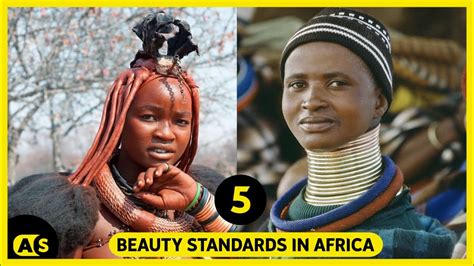
Beauty standards are not universal; they are deeply rooted in culture and societal beliefs. What is considered beautiful in one part of the world might be viewed differently elsewhere. This is particularly evident in Africa, where diverse cultures and historical influences shape perceptions of beauty.
Throughout history, the definition of beauty has been a complex and evolving concept, varying significantly across cultures and regions. Africa, with its vast and diverse societies, presents a unique landscape of beauty ideals. These ideals are influenced by a myriad of factors, including historical events, social norms, and the pervasive impact of popular culture.
The Influence of Celebrity Culture and Social Media
In the digital age, the rise of celebrity influencer power through the use of various social media platforms has become incredibly impactful on beauty ideals and perceptions worldwide, and Africa is no exception to this reality.
Evidently, celebrities play a large and powerful role when it comes to public influence and promotions of beauty standards/ideals. With such power comes a great responsibility attached to their use of social media platforms. In South Africa, celebrities are the bulk of pop culture and the ways in which celebrities communicate their perceptions of beauty and the ideal body on media platforms has the largest impact on pop culture.
Celebrities and celebrity culture tend to influence young people’s ideas of culture and the aspirational perception of self and identity. It is worth noting that, findings could ultimately confirm a latent hypothesis that; in South Africa, popular culture as reflected through social media prevails as an influential determinate of certain standards of beauty.
Read also: African Physical Characteristics: A Closer Look
In present day South Africa, celebrity culture perpetuates the ideology that Black beauty can be achieved through natural skin colour erasure, extended artificial weaves and a thin body frame. Many young women in South Africa look to pop culture to tell them what is considered beautiful or acceptable in society, therefore, the perpetuation of these overly specific and confining beauty ideals regarding the body inevitably generates an unhealthy infatuation and romanticizing of celebrity bodies.
The Impact of Social Media on Body Image & Mental Health
Skin Color and Colorism
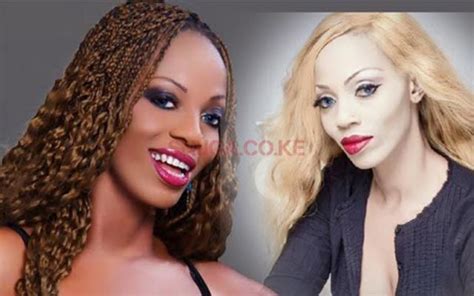
Skin lightening among Black women in various Black African societies is a body alteration trend that is commonly endorsed by many local celebrities. Black women who use skin-lightening products confirmed that they use the products because models and celebrities use them and the notion of beauty in advertisements is defined as being light-skinned.
One South African celebrity icon that easily exemplifies this is the famous South African socialite, television persona and influencer Khanyi Mbau, who openly and proudly admits to having bleached her skin as an act of enhancing her beauty. Another example comes from a local South African musician, Nomasonto ‘Mshoza’ Mnisi, who bleached her brown skin to a very light pink color and controversially made statements about how she was motivated to do the skin lightening procedure by the fact that she considered her brown African skin as having been ‘ugly’.
Sociologist Margaret Hunter defines the term ‘colorism’ as being: “a process that privileges light-skinned people of color over dark in areas such as income, education, housing, and the marriage market” (237), colorism is essentially a notion that promotes the practice of skin color stratification and is inherently prevalent and linked to brown skin communities.
Read also: BBL Popularity in Kenya
Skin lightening practices have become increasingly common among Black celebrities as well as ordinary Black women across Africa. All throughout the African continent, certain bodies are privileged above others on the basis of the skin color complex.
All throughout the African continent, certain bodies are privileged above others on the basis of the skin color complex. Evidently, light-skinned bodies are positioned at a more advantageous standing, both socially and economically within Black communities, while on the other hand, darker-skinned individuals are seen and treated as being less desirable and inferior.
Research demonstrates that light-skinned people have clear advantages in these areas, even when controlling for other background variables and dark-skinned people of color are typically regarded as more ethnically authentic or legitimate than light-skinned people.
The Colonial Psyche
The colonial psyche has created a feeling of low self-worth resulting in low self-esteem among Black populations as they occupied the lowest rung of the colonial hierarchy. Moreover, the prevalence of colorism throughout African popular culture not only provides an unfortunate basis for self-hatred within Black African communities, it also poses as a threat towards biogenetic blackness as well as solidarity and unity among Black Africans as a whole.
Skin bleaching is accurately interpreted as a profound attack on genetic blackness and by extension African descendants. As a result of the country’s racially discriminative history, underlying limiting beliefs still linger on a psychological level among the nation and remain prevalent within the culture. Particularly, the sentiment expressed towards Black South African women is that their natural bodies and African features are not good enough as they are.
Read also: The meaning and impact of "African Booty Scratcher"
Body Shape and Size
Media and marketing tend to propagate a ‘one-size-fits-all’ prototype image comprised of a thin physical make-up. It is precisely this ‘slim’ prototype image that gets cast by a large majority of advertising campaigns as being the perfect body image, particularly in terms of femininity and female excellence.
When I lived in Africa, the big African women with their voluptuous figures & features were considered beautiful. In fact, the fatter a woman is the more beautiful she is, as her fat contributes to her curves! Women there are celebrated for their rounded assets, no matter what shape or size they come in.
South Africa is a country that still suffers some of the effects of its brutal apartheid past. As a result of the country’s racially discriminative history, underlying limiting beliefs still linger on a psychological level among the nation and remain prevalent within the culture.
Hair Culture
Black South African women are not only plagued by issues of having to keep up with pop culture’s skin color trends and body shape preferences, they additionally have to deal with beauty ideals around the issue of their natural hair. The narrative of ‘good hair’ vs. ‘bad hair’ is highly prevalent among Black communities.
In the Black community, hair is a very important feature of the body and it is often connected to a woman’s identity. Popular culture often projects a notion that ‘good hair’ is defined as straight and long hair, while ‘bad hair’ is defined as afro-textured, coarse or short hair.
As a result of these indoctrinating ideals projected by pop culture many Black women resort to using chemical relaxers to straighten their natural hair, wearing weaves, hair extensions or wigs, to achieve the look that popular culture deems to be desirable. In the case of weave or wig wearing, Black women are seen sporting Peruvian or Brazilian hair on their heads, while in doing so they thus hide their natural African hair.
While many Black South Africans enforce the ideals themselves, the beliefs behind the discriminative ideals stem from colonial ideals that latently promote European beauty standards. Many young black women do not wear their natural hair as a result of many stereotypes and issues with social acceptability.
Historical Depictions of the African Body
When discussing the representation of the native African woman in popular culture and media, anthropologist Aleksandar Bošković, recalls an 1898 National Geographic advertisement. The advert featured an image involving a half-naked African woman with a focus on her body. This example lends itself to the discussion on body politics in popular culture, because it highlights the regard and metaphorical ideals related to the native African body.
Looking blandly at the camera, the woman is standing right next to her husband, and they are both (as the natives should be) naked from the waist up. The caption under the photograph is truly informative: ‘These people are of dark bronze hue, and have good athletic figure. The advertisement reflects an age old depiction of the African native as somewhat animalist, hypersexual and subhuman; a colonial sentiment that once assigned the African native to a category of "other".
Given that the advertisement was the first photograph image of a semi-nude African woman, Bošković describes the advert as having been: “an inauguration of a certain way of representing “native” women or “women of color” (178). Adjacent to this conception is a similar sentiment and depiction relevant to the African male body that Bošković notes as being a sentiment stemming from early colonialism when Europeans first arrived in Africa.
Historically speaking, when early western colonialists first arrived on the African continent they perceived ‘African culture’ as being very uninhibited in terms of its expressions of sexuality, as a result of this perception- the generated opinion by the Western colonialists towards the African natives was that the natives were sexually uninhibited.
On the one hand, the imagined sexuality of African men was perceived as dangerous and threatening - coming from the (perceived) promiscuous cultural background, they were imagined to be totally superior to the white men (myth of the black lover with huge penis). Similarly, the view generated of the native African women was that they were perceived as ‘easy’ and ‘willing’.
It can be argued that it is these colonialist sentiments that may have contributed towards the often hyper sexualized archetype image of the Black woman in present day popular culture, as seen in media and on entertainment platforms - especially music videos and in rap/hip-hop culture. Bošković’s reading presents and confirms the claim that: “the ‘Africa’ has served as a metaphor for the exotic, different, mysterious other”.
Facial Cues and Attractiveness
Facial attractiveness plays a crucial role in human mating success and explains more variance in overall attractiveness than bodily attractiveness. Past research in WEIRD populations identified various facial cues related to female facial attractiveness: symmetry, averageness, femininity, youthfulness, skin condition and facial adiposity (or “facial fatness”).
The aim of this study is to test the combined role of facial adiposity, skin colour, skin homogeneity and youthfulness-four facial features previously found to affect attractiveness in WEIRD populations- in African attractiveness judgements of unmanipulated African female faces. To our knowledge, this is the first study to test the relationship between these facial features and female attractiveness in a native African population.
Younger, thinner women with higher values for the skin colour component (lighter, yellower and redder skin colour) and lower values for the skin heterogeneity component (more homogenous skin) were considered significantly more attractive than their counterparts.
Table 1. Correlations Between Variables
| Variable | 1 | 2 | 3 | 4 | 5 | 6 | 7 | |
|---|---|---|---|---|---|---|---|---|
| 1. Attractiveness | - | |||||||
| 2. Age | -.34* | - | ||||||
| 3. Facial Adiposity | -.41** | .03 | - | |||||
| 4. CIELab L* | .42** | -.46** | -.18 | - | ||||
| 5. CIELab a* | .26 | -.39* | -.06 | .66** | - | |||
| 6. CIELab b* | .45** | -.46** | -.21 | .89** | .73** | - | ||
| 7. Post-inflammatory hyperpigmentation | -.33* | .14 | .11 | -.11 | .11 | -.12 | - | |
| 8. Skin Heterogeneity | -.32* | .06 | .04 | -.03 | .17 | -.03 | .86** | - |
Note: * p < 0.05, ** p < 0.01
Table 2. General Linear Model Predicting Attractiveness
| Variable | B | SE B | β | t | p |
|---|---|---|---|---|---|
| Age | −.19 | .08 | −.34 | −2.32 | .026 |
| Facial Adiposity | −.42 | .20 | −.48 | −2.08 | .045 |
| Facial Adiposity2 | .18 | .19 | .21 | .95 | .349 |
| Skin Colour Component | .37 | .15 | .44 | 2.52 | .016 |
| Skin Heterogeneity Component | −.37 | .15 | −.44 | −2.45 | .019 |
Note: Model R2 = .42
