Giant African Land Snails (G.A.L.S.) are increasingly popular pets, captivating enthusiasts with their size and relatively low-maintenance care. Originating from East Africa, these snails have adapted to various environments and, where legal, can be fascinating additions to a home. However, it's important to understand their specific needs to ensure their well-being.
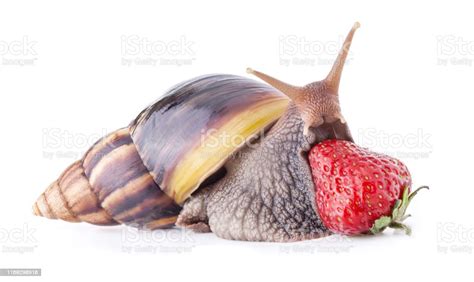
Giant African Land Snail eating a Strawberry
Housing Your Albino African Land Snail
To start, you'll need a suitable habitat. A large glass or plastic terrarium is ideal, with the size depending on the number of snails you plan to keep. A minimum of a 5-gallon tank is recommended for a couple of snails, while a 10-gallon tank is great for a larger group. The general rule is 1 gallon per snail. Make sure that your enclosure has ventilation and a removable, tight fitting lid that locks in place.
The substrate, or flooring, is crucial for your snail's comfort. Since snails like to burrow, you should provide a deeper area in the tank where they can dig. Add a few inches of pesticide/chemical/fertilizer-free substrate to the bottom. Do NOT use bagged potting soil as it may contain harmful chemicals. Snails like to burrow, so you should also avoid using sand, pebbles or gravel. A sterilized soil specifically sold for pets for terrariums is a good choice. Avoid using soil from your garden, as it can contain parasites. A thick layer of sphagnum moss helps maintain humidity and provides soft padding. Peat moss is not recommended because it is too acidic. The compost you use needs to be kept moist for the snail to be happy. It doesn't need to be soaking wet, just damp.
Snails enjoy climbing, so add sticks, pieces of bark, branches, and leaves to their habitat. Avoid rocks, as snails may fall and break their shells. Provide places for them to crawl and hide, such as a hollowed-out log cave or a nook with a large leaf. Real plants or grasses can also be added.
Read also: Caring for Giant African Land Snails
Choose a location for the terrarium out of direct sunlight. Mist the substrate inside of the terrarium as needed with filtered water inside of a clean spray bottle to maintain humidity. You want everything to be moist, but not soggy. Snails prefer moisture and will be most active if you maintain an ideal environment for them.
Feeding Your Albino African Land Snail
G.A.L.S are omnivores and require a varied diet. 40% - 60% of a snail's diet should be made of vegetables & greens.
- Alfalfa Hay
- Burdock
- Clover Leaves, Stems
- Dandelion Leaves, Flowerhead
- Ficus (F.
Some G.A.L.S. keepers grow edible plants directly in the snails' enclosure, as a constant supply of food and enrichment. Here are some specific feeding guidelines:
- Frequency: Some snail keepers feed their snails daily, others feed once a week, & others anything in between. Any of these ways of feeding is acceptable, but it is advised to keep a set routine.
- Preparation: Foods should be washed thoroughly & chopped/cut before being fed. Food should be given raw. Plane frozen foods are OK to be fed once toughed (as long as nothing has been added to them). Do not feed the first few leaves from a head of lettuce, cabbage & similar vegetables as these leaves will have been most heavily exposed to pesticides.
- Spoiled Food: Don’t worry about food is a little bit past it’s best before date, snails like to eat slightly rotting vegetables & fruit, so don’t worry about leaving food over night or more , but never leave moldy food in the enclosure.
- Loss of Appetite: Don’t worry if your snails don’t eat for a few days, snails will not eat for various reasons such as during a growth spurt or after a big protein meal or if their surroundings have changed & they are settling. But if you notice that your snails are acting unusual & have not eaten for no apparent reason, it could be a sign of bad health.
In addition to vegetables, calcium and protein are essential components of a snail's diet.
Calcium
15-30% of a snail's diet should be Calcium. Snails need a constant supply of calcium in their enclosure. It is extremely important, as they need it to grow their shell. If snails are not given a constant supply of calcium it can lead to deformed shells, thin shells or stunt growth.
Read also: Comprehensive Guide to African House Snakes
Here are some common calcium sources:
- Cuttlefish Bone: Also known as Cuttlebone is a hard, brittle white shell. It is an internal shell found in all members of the Sepiidae spices, commonly known as Cuttlefish which is a creature similar to a Squid or an Octopus. Therefore despite it’s name a Cuttlefish bone is not really a bone nor does it come from a fish! Cuttlefish bone is the most commonly provided calcium source, by snail keepers. It can be bought from most local and online pet shops or aviaries. For hatchlings and small snails we advice to split the cuttlebone in various smaller pieces and spread them around the tank. If the cuttlebone gets dirty simply rinse it under water and place back.
- Limestone Flour / Calcium powder: Limestone Flour / Calcium powder should be served as a paste or a cake. Limestone / Calcium Paste is created by adding some water to the flower and mixing it till it forms a thick paste. It is then placed on plastic saucer and put in the snail’s enclosure. Most snail keepers do this as a treat for their snails together with a regular calcium source. Limestone / Calcium Cakes are created by adding water to the flower till a paste is formed and then it is placed in mold shape, ice tray or cupcake liners and left to dry and harden (this could take up to 72 hours). When feeding calcium powder to most exotic animals, one typically sprinkles some of the powder over the animal's food. This is NOT how you feed it to snails. Snails need to have a constant source of calcium to eat when they choose.
- Oyster Grit: Oyster grit is made up of crushed oyster shells. It is very commonly used as a calcium supplement for chickens. Not all snails enjoy Oyster grit, but the ones that do usually prefer the finer crushed one, as there are a few different types. Please make sure you buy pure Oyster grit without any additives.
- Crushed Eggshells: Normal hen cooking eggshells can be used a calcium source though it is the least advised from the ones mentioned. Eggshells should be washed very well, dried and then crushed. It is up to you how fine you want to crush the shells, though not necessary, the finer they are crushed the more snails seem to like them. The crushed shells should then be placed on plastic saucer and put in the snail’s enclosure. Most Snail keepers do not use egg shells as the only source of calcium for their G.A.L.S.
Regardless on which calcium source you choose to provide to your snail, always top up immediately when finished. Always make sure they have a good and constant supply of calcium, available at all times in their enclosure.
How to Care for Pet Snails!
Protein
20% of a snail's diet should be made of food high in protein. Too much or too little protein can cause all sorts of diseases and deformities. Here are some protein sources:
- Beans: All kinds of beans can be fed to snails. Make sure the beans are fully soaked & have no additives added to them.
- Dog Biscuits: Dog biscuit that don’t contained any added salts or other bad additives can be fed to snails. Please be careful and always check all ingredients and nutritional values. The Purina brand, Bonio original Dog biscuits are the most commonly fed to snails. The biscuit should be soaked in water and left for a few minutes till it is fully moist and mushy.
- Dried bugs: These are generally crickets, very commonly feed to various animals as a protein source. They are easily bought at any pet shops or online.
- Dried Mealworms: Mealworms are the larval form of the mealworm beetle. Dried Mealworms are very commonly feed to various animals as a protein source.
- Fish food/ Algae Flakes with under 40% protein: There are many brands and different types of fish flakes available in the market. Please choose the ones without any extra additives such as color enhancement, Always check the ingredients on the label, and do not buy fish food without a label. Fish food that contain roughly 15% protein should be fed twice a week. The flakes should be soaked in water and left for a few minutes till they are fully moist and mushy.
- Peas : Fresh or frozen peas can be fed to snails. If frozen make sure the peas are left to thaw before serving. G.A.L.S. tend to prefer peas cut in half or mashed. Avoid canned peas.
- Seeds: (Hemp seeds, Lentils, Pumpkin Seeds, sunflower seeds and most bird seed) Dry seeds should be crushed and grated as much as possible. The seeds should be then mixed with water till they form a thick paste.
- Snail Mix: Snail mix can be made or bought. It is created by finely crushing and mixing many ingredients together to form a powder mix. Snail mix should be mixed with water and left for a few minutes till they are fully moist and mushy. It can then be placed on plastic saucer and put in the snail’s enclosure. There are a few online sellers of Snail mix. Please always look at ingredients listed and reviews before buying.
- Blood worms: Commonly use as fish bait or as fish food is a good source of protein for snails. There are different ways blood worms are packed. Some come frozen or dried. If frozen make sure the worms are left to thaw before serving. If dried the worms should be mixed with a bit of water and left for a few minutes till they are fully moist and mushy.
- Fish food/ Algae Flakes with 40%+ protein: There are many brands and different types of fish food available in the market. Please choose the ones without any extra additives such as color enhancement. The fish food that contain roughly 40% protein can be fed once a week. The flakes/pellets should be soaked in water and left for a few minutes till they are fully moist and mushy. It can then be placed on plastic saucer and put in the snail’s enclosure.
These can be fed once a month:
- Spirulina: Spirulina is a type of algae. It can be bought as a tablet or a powder. We advice buying the powder as it is easier to soak. Spirulina I extremely high in protein,(around 65%) we advice mixing it with other foods when feeding and only feeding very small quantities. Spirulina should be soaked in water and left till fully moist and mushy.
- Raw Meat: G.A.L.S. can eat a variety of meats including: Chicken, Beef, Lamb, Goat, Duck, and Pork. Please only feed raw meat and avoid fatty bits. Do not feed any cured or salty meats such as: Bacon, Ham and Fish. Always make sure there are no additives to the meats.
- Whole Animal: Pinkies, Mice and Chicks are commonly fed too many exotic animals; including G.A.L.S. Adult snails can eat all parts of these meals; skin, bone, hair and feathers. Mice are bread to be feeders for reptiles such as snakes. Pinkies are new born mice predominantly used to feed small reptiles, and are a big favourite for G.A.L.S. Chicks are chicken hatchlings. These are usually fed to birds of prey and snakes. They are a bi-product of the farming industry.
Fruits
ONLY 10% of a Snails diet needs to be fruit. Snails who are fed too much sugar can suffer from several diseases and deformities. So please limit yourself to feeding fruit as a treat and never more than a small portion once a week.
Read also: The Plight of the African Wild Dog
Maintaining a Healthy Environment
Maintaining the correct temperature and humidity is vital. The temperatures at which each species is happiest can vary. The Lissachatina Fulica, for example, needs a tank ideally between 22-24 degrees celcius, while the Achatina Achatina or Tiger snail prefers it warmer at 27-29 degrees celcius. The best way to achieve a warmer temperature (if the room isn't warm enough) is to place a heating pad on the side of the snail's tank. You shouldn't place it under the tank as this will dry out the substrate. Only place it on half the tank so the snail has somewhere to go to cool down if need be. It also is vital that you use a thermostat with any heat pad to control the temperature range of the tank. Heat pads can have temperature malfunctions and potentially kill your snail and are not good at controlling temperature alone.
Snails need some light to be happy. However, indirect sunlight is best.
If your snail doesn't like the conditions of its house, it will likely close itself up in its shell, creating a papery white seal at the opening. This has two main causes; a lack of humidity- called aestivation, or a lack of warmth- called hibernation. If your snail is in aestivation or hibernation, revise your care and see if there might be something that needs ammending- and fix them. Snails will (with a few rare exceptions) destroy their seal and come out within a few days of the issue being resolved.
When you notice the tank starts to look smeared or dirty, it's time to wipe it down. You can also check for eggs during this time.
Place a shallow water dish in the snail's container for the snail to drink. This dish has the added benefit of providing extra humidity to the tank, but does not really provide much otherwise and can spill. If you do decide to use one, be sure to change it out regularly. Get one made out of a soft material like plastic or silicone- ceramic or glass dishes can break a snail’s shell if they happen to fall on them.
Handling and Health
Wet your hands before picking up a snail. Slide your hand under the front of the snail. Don't pick snails up by their shells, especially when they are young.
From the viewpoint of snail welfare, it is best not to handle your snails too often, especially if you are waking them up to do so. However they do get used to being touched and will respond to being handled, often gently grazing sweat and salts from the skin (which may tickle but will not hurt you). Don't hold the shell by the delicate part where the new growth joins on to the existing shell - this corner is a particularly delicate area - unfortunately it also happens to be one of the most natural places to put your fingers when you hold your snail!
Injuries are the most common type of health problem that giant African land snails experience. Your snail can endure mantle prolapse from incorrect handling. Other issues these big snails may experience include mites, dehydration, skin issues, and calcium deficiency, which can lead to shell malformation.
Legality
Giant African land snails are illegal because they can damage ecosystems and structures as well as pass diseases on to humans. The Department of Agriculture's Animal and Plant Health Inspection Service states that this species of snail can destroy over 500 different species of plants as well as cause damage to plastic and stucco structures. Additionally, the giant African land snail may carry parasites that can cause meningitis in humans. These snails can not only destroy plants that are important to the ecosystem but can also cause meningitis, a life-threatening disease.
Always check local regulations before obtaining a Giant African Land Snail to ensure compliance with the law.
| Aspect | Recommendation |
|---|---|
| Enclosure Size | Minimum 5 gallons for 2 snails, 1 gallon per snail |
| Substrate | Sterilized soil, sphagnum moss |
| Temperature | Varies by species (e.g., 22-24°C for Lissachatina Fulica) |
| Humidity | Maintain damp but not soggy conditions |
| Diet | 40-60% vegetables, 15-30% calcium, 20% protein, 10% fruit |
| Calcium Sources | Cuttlefish bone, limestone flour, oyster grit, crushed eggshells |
| Protein Sources | Beans, dog biscuits, dried insects, fish food |
