The Republic of Rwanda, known as “The Land of a Thousand Hills,” boasts diverse landscapes, from lush western mountains to eastern savannahs. Located in the heart of Africa, Rwanda is a landlocked country bordered by Uganda, Tanzania, the Democratic Republic of the Congo, and Burundi. The capital city, Kigali, is centrally located.
Rwanda's population is among the densest in Africa at almost 12 million. Many people throughout history have been drawn by its breathtaking scenic beauty, but Rwanda was first settled by the Twa Pygmy people between the 5th and 11th centuries, soon followed by the Hutus. By the beginning of the 14th century, a third ethnic group, the Tutsis, had migrated to Rwanda from the North.
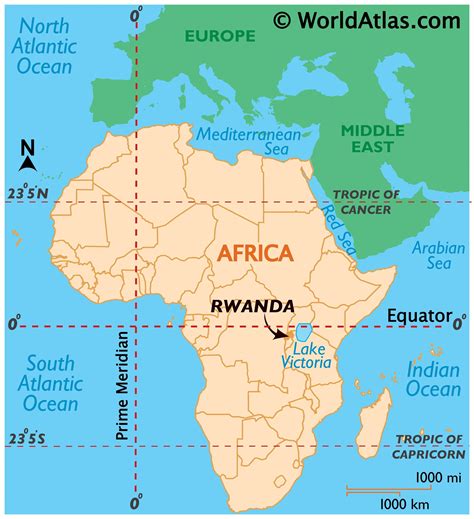
Location of Rwanda in Africa
Historical Context
Like many other African countries, Rwanda’s history is heavily influenced by its experiences with European colonization. Germany was the first European country to colonize Rwanda, but it held a short 24-year rule before the League of Nations reassigned the country to Belgium. Belgium consolidated the countries of Rwanda and Burundi into one territory, but by then the two countries had already developed different political systems.
The Belgians had established an ethnically-based hierarchy that favored Tutsis and discriminated against the Hutus. In 1959, a peasant revolt grew to the size of a national revolution for Rwandan independence from colonial powers. Rwanda’s first President, Grégoire Kayibanda, was elected by the Party for Hutu Emancipation. What followed was a swift shift of power to Hutu groups at the local level, and mass violence against Tutsis began.
Read also: Property Practitioners Regulatory Authority
Thousands of Tutsis were displaced until the 1990s when the Rwandan government facilitated a large-scale systematic genocide against Tutsis and Hutu moderates in 1994. Government-run radio stations encouraged civilians to pick up arms against their Tutsi neighbors and promised great rewards. The political and legal infrastructure of Rwanda was not prepared to prosecute thousands of genocidaires, many of whom had fled Rwanda after the RPF gained control in Kigali. With international assistance, Rwanda formed gacaca courts, locally-led courts specially designed to judge cases of genocide.
The military commander of the Rwandan Patriotic Front, Paul Kagame, continues to lead in rebuilding the nation as president of Rwanda. In the early 2000s, Rwanda was involved in a conflict in Zaire, now the Democratic Republic of Congo (DRC). However, the next President of the newly established DRC did not expel the remaining Hutu militias as he had promised, and so Rwanda switched allegiances, joining rebel forces to depose the new President.
Today, Rwanda is among the safest countries in Africa due to its restored peace and security. Rwanda’s future is promising and bright. Rwanda has one of the fastest-growing economies in Africa with a real growth rate of 8.6% in 2018. Over the last couple of decades, Rwanda has climbed the global economic ladder and grown its education system. When the new constitution was passed in 2003, it required that 30% of parliamentary seats be filled by women. Rwanda currently models the greatest representation of women in parliament in the world, at 61%. Today, 91.5% of Rwanda’s people profess Christianity as their faith.
The Mission of Africa New Life Ministries
Since 2001, Africa New Life has shared the gospel using two hands: the hand of compassion and the hand of evangelism. Our goal is to see lives transformed through meeting basic needs, to give hope for the future for those living in poverty in Rwanda, and to share the freedom and hope found in Christ. The Rwandan people continue to show great compassion with creativity and make strides in demonstrating Christ’s radical love. Africa New Life is thrilled to serve in a country that has learned from its history, and that has so much to teach the rest of the world. Even though the people of Rwanda experienced horrific violence in the 20th century, they have provided the world with an example of resilience, grace, and continued healing.
At the heart of our model for breaking cycles of poverty is educational sponsorship. At Africa New Life, we believe that education is the key to helping children escape the cycle of poverty. But while educational sponsorship is central to our ministry, we recognize that children also need other key factors to succeed: a growing faith, a developing community, and a healthy body.
Read also: Amazing Facts About Africa

Africa New Life Ministries Impact
Key Initiatives and Growth
Africa New Life Ministries was founded in 2001 with the first 30 sponsored children. Since then, well over 17,000 students have been supported through educational sponsorship across the nation. Africa New Life staff from Rwanda and the United States have been featured in several thought-provoking podcasts about ministry. Here’s a look at some of the key milestones:
- Annie F. Africa New Life begins sponsoring students in the community of Nyagatare in northeastern Rwanda.
- Africa New Life launches a new sponsorship community in Gashora, an arid district south of Kigali.
- Emergency food relief efforts are launched in response to the devastating economic toll of the COVID-19 pandemic.
- Africa New Life launches a new partnership with Nyamagabe, a rural and mountainous district in southwestern Rwanda.
- Africa New Life launches a new sponsorship community in Karangazi, a rural district in northeastern Rwanda.
- The Dream Medical Center Hospital, the second largest private hospital in Rwanda, opens to the public.
- 190 students are now being educated for ministry at Africa College of Theology through its traditional diploma, certificate, and Bachelor’s programs.
- Africa New Life purchases land in Kayonza for a school garden, which now helps feed the community’s school children.
- Africa New Life purchases property in Bugesera and breaks ground on a church and well.
- A solar-powered well is built in Kageyo to move water nearly a kilometer to the Kageyo Primary School (Kageyo B).
- Africa New Life begins running a second school in the community of Kageyo: Kageyo Primary School.
- Africa New Life schools continue to be exemplary. New Life Christian Academy opens a secondary school and continues to be ranked as the 5th best academic primary school in Rwanda.
Leadership and Key Figures
Africa New Life Ministries Rwanda was founded by Rwandans and is run by Rwandans. Our partners make this ministry their own and expand the scope of what Africa New Life does and whom Africa New Life touches! Saddleback Leather Co. Kenneth E. M.J. and Rwandan sides of Africa New Life.
Dr. Charles Mugisha: Charles Mugisha grew up in Uganda in a family of Rwanda refugees. After seeing the devastation in his home country following the 1994 genocide, Charles and his wife Florence founded Africa New Life Ministries in 2001 to bring hope to young Rwandans. With degrees from Reformed Theological College in Kampala, Uganda, Multnomah University, and Gordon-Conwell Seminary, Charles currently serves as the lead pastor of New Life Bible Church in Kigali and as the President of Africa New Life.
Alan Hotchkiss: In 2008, after having served as the National Director of Church and Community Partnerships at the Palau Association for 10 years, Alan joined the Africa New Life team. Visiting Rwanda and meeting his sponsored students in 2006 changed Alan's life forever! Today he uses his passion for the children of Rwanda to encourage others to partner with Africa New Life. Alan lives in Gresham with his wife.
Read also: Discover Thula Thula
Rev. Florence M. Mugisha: Growing up a Rwandan refugee in Uganda, Florence developed a passion for helping girls for whom education was out of reach. After meeting her husband Charles in college and receiving a master’s degree from Multnomah University, Florence used her savings to help sponsor the first 30 children and launch Africa New Life Ministries. Today, Florence serves as the Director of Women’s Ministries for Africa New Life and is a motivational speaker and preacher of the good news of Jesus Christ.
Trina K. Dr. Dr. Dr. staff works out of our Portland, Oregon, headquarters and from locations in Texas, California, Indiana, and New Jersey. They would love to hear from you!
What are the educational impacts of child sponsorship?
Popular articles:
tags: #Africa
