Africa's wetlands, functioning as water sources and purifiers, contribute to shoreline protection and serve as natural carbon reservoirs. They support an assortment of life from terrestrial mammals like elephants, antelope, and rhinos, to aquatic species like hippos, crocodiles, fish and frogs. These services include nutrition, water supply, and purification, as well as climate and flood regulation and coastal protection.
Wetlands offer a source of freshwater, fisheries, moist soil for farming and wild plants for food, construction and medicinal uses. They also provide crucial sites for African animals to breed and feed, as well as providing nesting sites for seasonal migrants.
Despite their importance, wetlands remain among the most threatened ecosystems in the world. Between 1970 and 2015, inland and coastal wetlands both declined by about 35% globally. That’s three times the rate of global forest loss. This is a huge loss to important flora and fauna and a critical loss to the many people who relied on them for their livelihoods.
In Africa, three things contribute to the decline of wetlands: growing populations, economic development and climate change.
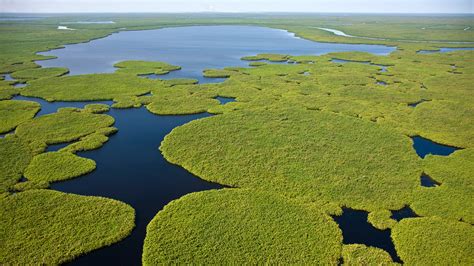
Wetlands cover about 4.7% (1.15million km²) of Africa’s continental area - about the same size as Ethiopia. Covering 692,631km2, freshwater marshes are the most extensive wetland type within the region. And about 65% of wetland area is located within the four largest river basins on the continent -- the Chad, Congo, Niger and Nile river basins. But there is considerable uncertainty in these figures because countries either don’t have them, or because they classify and create wetland inventories in different ways.
Read also: Property Practitioners Regulatory Authority
The Importance of Wetland Inventories
Comprehensive and up-to-date national wetland inventories are vital. A wetland inventory typically involves the collection and presentation of data on wetlands within a certain area. It covers attributes like; location, type, area, uses, ownership, physical characteristics, the organisms that live in it and the challenges it faces. This information is essential for policy-making and management.
Part of the solution to protecting wetlands is through the creation of accurate inventories. Inventories provide essential information - like the type of wetland, exact geographic location and area - needed for effective wetland management. But despite their importance, less than 35% of African nations have a national wetland inventory.
Developing a comprehensive inventory has its challenges, but increasingly available Earth observation data can help. By collecting data from satellites, we can describe many types of wetland over huge areas. The data are also more efficient and reliable as consistent methodologies can be applied nationally for a particular wetland type. They are also more affordable as many wetland areas are difficult to access on the ground.
Aside from flagging challenges to wetlands, this sophisticated data can be used to identify where things can be improved. For example, the first global study to map mangroves consistently across time using Earth Observation data showed that 20% of the world’s mangroves are found along African coastlines. Further assessment showed that over the past 20 years, about 6% in East and Southern Africa have become degraded, and about 2% in West and Central Africa. However, the majority of these - over 90% - have the potential to be restored.
Iconic Wetland Sites in Africa
1. Okavango Delta, Botswana
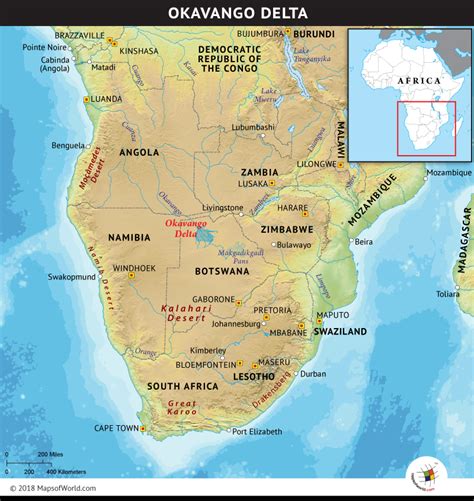
The Okavango Delta is one of the most iconic and ecologically significant wetlands in Africa. It is the largest inland delta in the world, known for its unique hydrological system and diverse ecosystems. The delta supports a rich variety of wildlife, including elephants, hippos, crocodiles, and numerous bird species. Designated as a UNESCO World Heritage Site in 2014, the Okavango Delta is a haven for African safaris and attracts visitors from around the world.
Read also: Amazing Facts About Africa
2. Bangweulu Wetlands, Zambia
Bangweulu Wetlands in Zambia is a vast and important wetland system known for its rich biodiversity, including numerous bird species and aquatic life. Bangweulu means “where the water meets the sky”, a perfect description of this extraordinary community-owned, and protected, wetland in northeastern Zambia.
3. Rufiji Delta, Tanzania
The Rufiji Delta is a vast, 54,500-hectare expanse of mangroves in Tanzania, protected by the Mangrove-Rufiji Forest Reserves. The Rufiji Delta marks the end-point of Tanzania’s most extensive river system, the Ruaha-Kilombero-Rufiji. Notably, the Rufiji River flows through Nyerere National Park, formerly the Selous Nature Reserve, which is one of the largest conservation areas in Africa.
4. iSimangaliso Wetland Park, South Africa
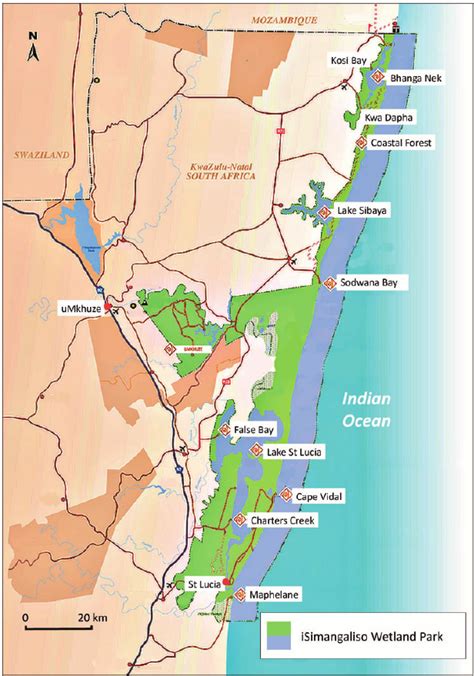
The iSimangaliso Wetland Park is located along the coastline of the KwaZulu-Natal Province of South Africa. Isimangaliso designated a UNESCO World Heritage Site in 1999, showcases rich biodiversity and unique ecosystems in a compact area. Its diverse fauna and flora thrive across varied ecosystems, from coral reefs and sandy beaches to subtropical dune forests, savannas, and wetlands. The impressive array of wildlife includes elephants, leopards, rhinos, Cape buffalo, and marine species like whales, dolphins, and turtles.
African Great Lakes
Africa has an impressive collection of freshwater lakes. The Great Rift Valley in East Africa, however, is a world apart with some amazing lakeside destinations to choose from. The Rift Valley lakes form a chain along the East African Rift, spanning from Ethiopia in the north to Malawi in the south, encompassing the African Great Lakes. A lake is a naturally formed, substantial, and stationary body of freshwater situated on the earth's surface. These bodies of water vary widely in size and depth, providing habitats for diverse ecosystems and serving as essential freshwater reservoirs.
Lake Victoria
Lake Victoria is the largest lake in Africa by area, the second largest freshwater lake by surface area, and the largest tropical lake in the world. Lake Victoria is shared by Kenya, Tanzania, and Uganda. Lake Victoria gets 80% of its fresh water from rain and is drained by the Nile River on its northern shore near Jinja in Uganda.
Read also: Discover Thula Thula
Lake Malawi
Also known as Lake Nyasa and the Lake of Stars, Lake Malawi is one of the Great Rift Valley lakes and the third-largest lake in Africa. It is renowned for its crystal-clear waters, colourful endemic cichlid fish species, and beautiful shoreline.
Lake Tanganyika
As the second deepest lake in the world, Lake Tanganyika is known for its incredible depth and clarity. Lake Tanganyika is the second oldest freshwater lake in the world, the second-largest by volume, and the longest freshwater lake on the planet. The lake is largely It is shared by four countries in East Africa. The lake is surrounded by mountains and supports a unique array of fish species, including several endemic cichlids.
Lake Nakuru
Lake Nakuru, situated in the Great Rift Valley in Kenya, is famous for its vibrant pink flamingos that gather along its shores. The lake is part of Lake Nakuru National Park, where visitors can also spot rhinos, zebras, and other wildlife.
Lake Manyara
Located on Tanzania’s northern safari circuit, Lake Manyara is a popular safari destination. Lake Manyara is formed inside a closed basin with no outflow. Water is fed into the lake by underground springs, and rainwater from the ephemeral rivers that drain the surrounding catchment. Water is lost through evaporation and the level of the lake fluctuates throughout the year. The soda ash lake is a haven for thousands of pink flamingos, and the Lake Manyara National Park is famous for its tree-climbing lions. The lake is surrounded by breathtaking scenery and has a host of wildlife including elephants, giraffes, zebras, wildebeests, impalas, waterbucks, and warthogs as well as leopards.
Lake Turkana
Lake Turkana, also known as the Jade Sea, is the world's largest desert lake and the largest alkaline lake in the world. It is situated in the Great Rift Valley and is shared by Ethiopia and Kenya. Lake Turkana is fed by the Omo River, Turwel River, and the Kerio River, but there is no outflow and the primary water loss is through evaporation. Lake Turkana is known for its striking landscapes, volcanic islands, diverse birdlife, and cultural significance because of the range of hominin fossils found in the Turkana Basin.
Lake Victoria: A Biodiversity Hotspot in East Africa #animal2024
Estuaries in Africa
Africa is known more for grassland, wild bush, and deserts than for its estuarine systems. Estuaries are transition zones where the forces of tidal movements and riverine influences converge.
iSimangaliso Wetland Park is a UNESCO World Heritage Site, which encompasses diverse ecosystems, including estuaries, lakes, and coastal dunes.
St. Lucia Estuary
St. Lucia, South Africa, boasts one of Africa's largest estuaries, stretching approximately 85km from south to north and reaching a width of 22km at its broadest point. In total, the St. Lucia Estuary covers around 350 km² / 140 sqm.
Impact of Human Activity
For example, Lake Chad and Lake Victoria have both undergone significant change in recent years because of human activity. Lake Chad has shrunk by 90% partly because its water is being used for irrigation. Lake Victoria has experienced dramatic changes because of the introduction of Nile perch, sewage inflows and more sedimentation and nutrients from increased agriculture in the basin.
Decline of Wetlands
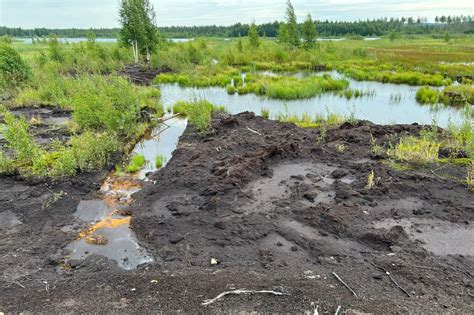
Wetlands support millions of people around Africa. They include all areas that are permanently or frequently covered by water, and could be at the edge of a lake or the mouth of a river.
Popular articles:
tags: #Africa
