Imagine a continent where every conversation opens a door to a different world, where languages reflect an incredible variety of cultures, histories, and traditions. This article isn't just a list of languages - it's an invitation to find out what are the most spoken languages in Africa, and their cultural significance. You’ll also learn an expression or two along the way!
From the Berber tongues echoing through the mountains of Morocco to the Zulu clicks that resonate in South Africa, every language here carries the soul of its people.
Whether you're a linguistics enthusiast, a cultural explorer, or someone who loves learning about new places, embark on a linguistic safari and discover the most spoken languages in Africa!
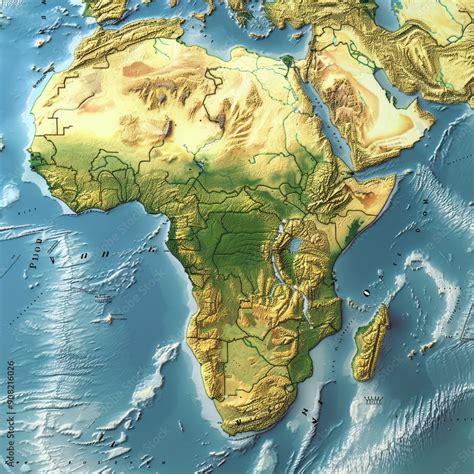
Topography of Africa
Africa is a diverse continent with over 1.2 billion people and home to more than 2,000 different languages spoken, constituting approximately one-third of the world’s languages.
Read also: Exploring Africa's Linguistic Diversity
It is worth noting that many African countries have their own indigenous languages, which are often used in everyday communication. An ‘official’ language is a language (or languages) used by a government to conduct official, day-to-day business. A ‘national’ language, is a language commonly shared among the people(s) of the state, regardless of its legal status.
The choice of official languages in African countries has been a subject of debate and controversy. Some argue that the colonial languages still dominate, while others believe that the promotion of African languages is necessary to preserve cultural heritage and promote national unity.
The most widely spoken official languages in Africa are English (23), French (21), Arabic (13), Portuguese (6), Swahili (4), siSwati/Swazi and other Southern African languages (2), Somali (2), Tamazight (2) and Tigrinya (2).
English (23) is the most used foreign language as official language, while French (21), Arabic (13), Portuguese (6), Swahili (4) and others are widely spoken across Africa. English is the most common (foreign language used as) official language in Africa except Northern Africa.
English (8) is the dominant language in East Africa, followed by French (5), Arabic (5) and Swahili (3). Article 137 of the Treaty for the Establishment of the East African Community provides that “English shall be the official language of the Community while Kiswahili will be developed as a lingua franca of the Community”.
Read also: Experience Fad's Fine African Cuisine
English (8) is the dominant language in Southern Africa, followed by Portuguese (2) and other indigenous languages, some of which differ by dialect.
Language Families in Africa
The languages of those 54 nations can be sorted into four major language families.
- The Afroasiatic language family extends from North Africa along to the Horn of Africa and into Southwest Asia. Some of the most spoken African languages in this group include Arabic, Amharic, Somali, Oromo, Tamazight, and Hausa.
- The tonal Nilo-Saharan languages are something of an odd grouping. The most common African language in this group is Kanuri, with between four and five million speakers.
- Covering Central, West, and Southeast Africa, the Niger-Congo language family contains around 1,400 distinct languages. Around 85% of Africans speak one or more Niger-Congo languages. Swahili has more total speakers than any other Niger-Congo language, while Yoruba has the greatest number of native speakers out of any language in the Niger-Congo family.
- Centered around the Namibia and Botswana deserts, Khoisan languages are notable for their click consonants. Altogether, some 30 languages are classed as Khoisan.
Languages from families outside of the African continent are also spoken there. Many African creoles also use Indo-European lexifiers.
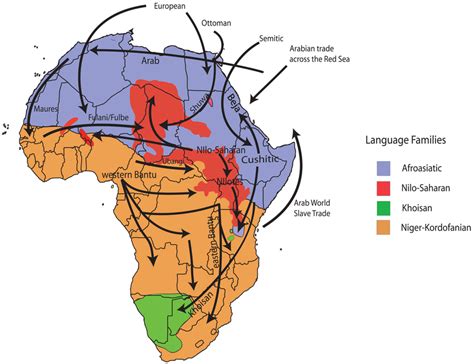
Language families in Africa
Having looked at the main language groups, I want to examine some of the most spoken languages in Africa.
Read also: The Story Behind Cachapas
Top 19 Most Spoken Languages in Africa
Here's a list of the top 19 most spoken languages in Africa:
- Arabic
- Total speakers: 150 million
- Region: North Africa
- Example phrase: "As-salamu alaykum" (Peace be upon you)
Arabic is the language most spoken in Africa - it’s the 6th most spoken language in the world - including several dialects such as Egyptian, Maghrebi, and Sudanese. It’s the liturgical language of Islam and holds cultural significance across North Africa, including Egypt, Sudan, Libya, Algeria, Morocco, and Tunisia. Arabic's influence extends beyond daily communication to literature, education, and media.
The Arabic writing system is a unique and widely used script, characterized by its right-to-left direction and cursive style. While primarily an abjad focusing on consonants, it uses diacritical marks to denote short vowels, giving it a rich and expressive quality. This script - in my opinion, absolutely beautiful - is not only functional but also a major aspect of cultural and artistic expression in the Arabic-speaking world.
Arabic Conversation for Beginners | 70 Basic Arabic Phrases To Know
If you’re up to a linguistic challenge, Arabic is one the hardest languages to learn for English speakers… but totally worth the effort!
- French
- Total speakers: 120 million
- Region: West Africa, Central Africa, North Africa
- Example phrase: "Bonjour" (Hello)
French is a significant language in Africa, serving as an official or second language in 21 African countries. Its influence extends across various sectors, making it a key player in government, education, and business. In countries like Côte d'Ivoire, Senegal, Mali, and the Democratic Republic of the Congo, French is not just an infamous memory of colonial history but a vital part of daily communication and administration. These nations use French to bridge diverse ethnic groups, facilitating smoother governance and fostering national unity.
In education, French serves as the primary medium of instruction in many schools and universities, while in business, it enhances trade and economic cooperation within the Francophone world and beyond. The widespread use of French in Africa underlines its role in connecting the continent to global networks and opportunities.
- Swahili
- Total speakers: 80 million
- Region: East Africa
- Example phrase: "Hakuna Matata" (No worries)
Who hasn’t heard “Hakuna Matata”? Swahili, the lingua franca of East Africa, is a Bantu language with significant Arabic influence. As the official language of Tanzania and Kenya, Swahili also enjoys widespread use in Uganda, the Democratic Republic of Congo, and other parts of East Africa. While it’s number 3 in our list, the number of speakers estimates range from 60 million to 200 million!
This language acts as a bridge, uniting diverse ethnic groups and facilitating trade, travel, and communication across the region. Swahili's role extends beyond mere communication; it’s inherent to cultural identity and cohesion in East Africa. Moreover, Swahili is gaining global recognition, with increasing interest in its study internationally due to its cultural and economic significance.
Finally, did you know that Swahili is one of the easiest languages to learn for English speakers?
- Hausa
- Total speakers: 70 million
- Region: West Africa
- Example phrase: "Sannu" (Hello)
Hausa is a Chadic language spoken widely in Nigeria and Niger, with prominent communities in Ghana, Cameroon, and Sudan. Serving as a lingua franca in West Africa, it plays a key role in trade, media, and education.
Hausa's rich oral literature and proverbs reflect the cultural heritage of its speakers, making it an essential element of West African cultural expression and daily life. The language is also integral to the region's social dynamics, often used in political discourse and traditional ceremonies. Hausa has also seen an expansion into digital media, further broadening its reach and influence.
- Amharic
- Total speakers: 57 million
- Region: Ethiopia
- Example phrase: "Selam" (Peace/Hello)
Amharic is the official language of Ethiopia and belongs to the Semitic branch of the Afro-Asiatic language family. Known for its unique Ge'ez script and deep historical roots, Amharic offers a fascinating study for scholars and linguists alike. It plays a crucial role in Ethiopian government, education, and media, reflecting the country's national identity.
Amharic literature is rich and varied, with a long tradition of poetry, religious texts, and modern novels. Furthermore, the language's influence extends to diaspora communities, preserving cultural ties among Ethiopians worldwide.
- Yoruba
- Total speakers: 45 million
- Region: Nigeria, Benin, Togo
- Example phrase: "Bawo ni" (How are you?)
Yoruba, a language of the Niger-Congo family, is mostly spoken in southwestern Nigeria. It's known for its tonal quality and complex grammar, which are interesting challenges for language learners. Yoruba culture is rich in mythology, music, and art, making the language a gateway to understanding one of Africa's most fascinating traditions.
The language is also central to the practice of Yoruba religion and spirituality, which includes rituals and oral traditions passed down through generations. Additionally, Yoruba has a major presence in diaspora communities, particularly in Brazil, Cuba, and the United States, where it continues to influence cultural practices.
- Oromo
- Total speakers: 40 million
- Region: Ethiopia, Kenya
- Example phrase: "Akkam" (How are you?)
Oromo is the most widely spoken Cushitic language, primarily used by the Oromo people in Ethiopia and Kenya. It has a lot of significance in the cultural and social identity of the Oromo people, who have a fascinating history and vibrant traditions. The language is also a medium for education and media within the Oromo community, helping to preserve and promote their cultural heritage.
Oromo literature, though historically oral, is experiencing a revival with increasing written works and publications. Furthermore, the language is instrumental in political movements and social advocacy, highlighting its significance beyond daily communication.
- Igbo
- Total speakers: 40 million
- Region: Nigeria
- Example phrase: "Kedu" (How are you?)
Igbo is one of Nigeria's major languages, spoken primarily in the southeastern region. It belongs to the Niger-Congo family and features a rich oral tradition, including folktales, proverbs, and songs. Igbo beautiful culture emphasizes communal living, respect, and spirituality, with language playing a central role in these practices.
Igbo is also used in education, media, and literature, contributing to its vitality and resilience. Moreover, the language is celebrated during cultural festivals and ceremonies, which serve to strengthen communal bonds and preserve traditional customs.
- Portuguese
- Total speakers: 30 million in Africa
- Region: Angola, Mozambique, Guinea-Bissau
- Example phrase: "Olá" (Hello)
Portuguese is the official language of several African countries, including Angola, Mozambique, Guinea-Bissau, Cape Verde, and São Tomé and Príncipe. It’s used in government, media, and education, serving as a key tool for administration and international diplomacy.
The Lusophone African countries have a rich cultural heritage influenced by Portuguese colonization, very vivid in their music, cuisine, and architecture. Portuguese also facilitates regional integration and cooperation among these countries, promoting economic and cultural exchange. Besides, the language's presence in African literature and media continues to grow, reflecting the dynamic nature of its use in modern society.
- Zulu
- Total speakers: 27 million
- Region: South Africa
- Example phrase: "Sawubona" (Hello)
Zulu is a Bantu language and one of South Africa's 11 official languages. Known for its distinctive click consonants, Zulu is deeply embedded in the culture and history of the Zulu people. It’s widely spoken in KwaZulu-Natal province and urban areas across South Africa, having an important role in education, media, and government.
Zulu's rich oral tradition includes narratives, songs, and proverbs that convey the values and history of the Zulu people. The language is also celebrated in music and dance, particularly in genres like isicathamiya and maskandi, which have gained international recognition.
- Malagasy
- Total speakers: 25 million
- Region: Madagascar
- Example phrase: "Salama" (Hello)
Malagasy is the national language of Madagascar and belongs to the Austronesian language family. Its unique position as the only Austronesian language in Africa makes it a linguistic curiosity. Malagasy culture is rich with traditions, music, and folklore, often communicated through the language's various dialects.
The language is also integral to national identity and unity, being used in education, media, and government. Additionally, Malagasy is a vehicle for the island's oral literature, which includes myths, legends, and proverbs that reflect the values and beliefs of its people.
- Fulani (Fula)
- Total speakers: 25 million
- Region: West Africa
- Example phrase: "Jam naa" (How are you?)
Fulani, also known as Fula or Fulfulde, is spoken by the Fulani people across many countries in West Africa, including Nigeria, Mali, Senegal, and Guinea. It serves as a lingua franca in several regions and has a rich oral tradition. The language is central to the agricultural lifestyle of the Fulani, who are known for their extensive migration and cattle herding.
Fulani proverbs, music, and storytelling have a high significance in West Africa, often passed down through generations. Moreover, the language is used in regional trade and social networks, enhancing communication and cooperation among diverse communities.
- Somali
- Total speakers: 22 million
- Region: Somalia, Djibouti, Ethiopia
- Example phrase: "Salaan" (Hello)
Somali is a Cushitic language spoken by the Somali people in Somalia, Djibouti, and parts of Ethiopia and Kenya. It’s the official language of Somalia and one of the official languages of Djibouti. Somali culture is full of poetry, storytelling, and music, with the language serving as a key medium for these artistic expressions.
The language's unique phonetic and grammatical features make it very interesting for linguists. Besides, Somali is crucial for national identity and cohesion, particularly in the context of rebuilding and development efforts in Somalia and the Somali diaspora communities.
- Shona
- Total speakers: 14 million
- Region: Zimbabwe
- Example phrase: "Mhoro" (Hello)
Shona is the most widely spoken Bantu language in Zimbabwe and has several dialects. It’s the language of instruction in schools, and it’s used in media and literature for cultural transmission. Shona culture is known for its music, dance, and spiritual beliefs, with the mbira instrument being a key part of traditional ceremonies and rituals.
The language's oral tradition includes folktales, proverbs, and songs that convey moral lessons and historical stories. Shona also influences contemporary Zimbabwean arts and politics, reflecting its enduring significance in the country's social fabric.
- Rundi (Kirundi)
- Total speakers: 13 million
- Region: Burundi
- Example phrase: "Bwakeye" (Good morning)
Rundi, or Kirundi, is the national language of Burundi and is mutually intelligible with Kinyarwanda. It’s used in government, education, and daily communication, reflecting the unity and identity of the Burundian people. Rundi helps to preserve cultural traditions, including music, dance, and storytelling.
The language is also present in social and political life, serving as a medium for public discourse and community engagement. Furthermore, Rundi is celebrated during national festivals and ceremonies, highlighting its importance in the cultural and social life of Burundi.
- Kinyarwanda
- Total speakers: 12 million
- Region: Rwanda
- Example phrase: "Muraho" (Hello)
Kinyarwanda is the national language of Rwanda and is also spoken in parts of Uganda and the Democratic Republic of the Congo. It’s closely related to Rundi and serves as a vital tool for communication and education in Rwanda. Kinyarwanda is central to Rwandan identity and unity, used extensively in government, media, and daily life.
The language has a beautiful oral tradition, with folktales, proverbs, and songs that reflect the values and history of the Rwandan people. Furthermore, Kinyarwanda is increasingly featured in literary and academic works, contributing to its preservation and development.
- Chichewa
- Total speakers: 12 million
- Region: Malawi, Zambia, Mozambique
- Example phrase: "Moni" (Hello)
Chichewa, also known as Chewa or Nyanja, is widely spoken in Malawi and also used in Zambia and Mozambique. It’s one of Malawi's official languages and is widely used in education and media. Chichewa is central to Malawian culture, with a tradition of oral literature, including folktales, songs, and proverbs.
Popular articles:
