Electricity is the engine of modern development, the invisible force that powers industries, fuels innovation, and touches every aspect of daily life. Yet, for more than six decades, Nigerians have endured a frustrating paradox: living in an oil-rich country yet plagued by chronic power outages. From ceaseless blackouts to an overwhelming reliance on fuel-guzzling generators, Nigeria’s power problem has become a national embarrassment.
The Nigerian power sector has experienced a turbulent journey over the years. Since its privatisation in November 2013-which unbundled the sector into three components: Generation, Transmission, and Distribution-efforts to revitalise electricity supply have largely fallen short of expectations. For many Nigerians, privatisation has failed to deliver the promised stability, making reliable power supply an elusive dream.
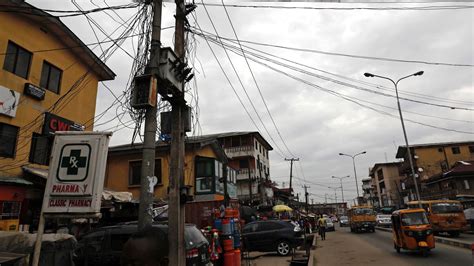
Power outages have been a persistent issue in Nigeria, impacting businesses and daily life.
A History of Unmet Expectations
Between 1999 and 2023, successive administrations made repeated attempts to tackle the crisis. Billions of dollars were pumped into the power sector, and a variety of reforms were rolled out. Still, for the average Nigerian, electricity remains more of a luxury than a guaranteed right. The only constant in this saga has been the failure of the system.
When President Olusegun Obasanjo took office in 1999, he inherited a severely broken power sector, with national generation at just 1,500 megawatts for a population exceeding 100 million. His administration launched the National Integrated Power Projects (NIPP) in 2004, promising to revamp infrastructure and add over 10,000MW to the grid. In 2005, the Power Sector Reform Act was introduced, creating the Nigerian Electricity Regulatory Commission (NERC) and laying the groundwork for deregulation.
Read also: Power Sector in Nigeria
Despite these promising moves, outcomes fell far short. Over $16 billion was reportedly invested in the sector under Obasanjo, yet power generation only improved marginally to about 3,000MW. Many NIPP projects were abandoned or poorly executed. A subsequent House of Representatives probe in 2008 exposed massive mismanagement, but as is common in Nigeria, no one was held accountable.
President Umaru Musa Yar’Adua, who succeeded Obasanjo in 2007, also made electricity a top priority. He declared a state of emergency in the sector as part of his Seven-Point Agenda, aiming to expand generation, modernize infrastructure, and attract private investment. Yet again, bureaucratic red tape, corruption, and underfunding crippled the plan. His administration's noble intentions met the same brick wall of inefficiency.
Then came President Goodluck Jonathan, whose administration took perhaps the boldest step, privatizing the power sector. In 2013, the Power Holding Company of Nigeria (PHCN) was unbundled into 18 companies: six generation companies (GENCOs), 11 distribution companies (DISCOs), and one transmission company (TCN). The hope was that the private sector would deliver what the government could not.
Over $2.5 billion was raised through asset sales, and ₦404 billion in stabilization funds were pumped in to support the transition. Power Purchase Agreements and tariff reforms were introduced to encourage private capital. However, even with a slight uptick in generation to around 4,500MW, consumers saw little relief. Persistent blackouts, estimated billing, and poor customer service continued. Investors lamented low returns, gas shortages, and poor infrastructure, while the government still had to intervene financially, showing the sector’s heavy dependence on public funds.
President Muhammadu Buhari’s administration (2015-2023) also promised a turnaround. Initiatives such as the Presidential Power Initiative (a partnership with Germany’s Siemens AG) and the National Mass Metering Programme were introduced. Over ₦1.7 trillion in bailouts and subsidies were injected into the sector, alongside a $2 billion Siemens deal and $486 million World Bank loan.
Read also: Delving into Nigeria's Power Crisis
But despite these efforts, Nigeria recorded over 100 grid collapses between 2015 and 2022, with average generation fluctuating below 4,000MW. Reforms were rolled out, including the Eligible Customer Regulation (2017), which allowed direct bulk purchases of electricity, bypassing inefficient DISCOs. Still, the average Nigerian remained trapped in darkness, frustration mounting with each policy pronouncement that failed to deliver change.
Under President Bola Ahmed Tinubu, whose administration is still in its early stages, bold steps are being taken. Most notable is the Electricity Act 2023, which decentralizes power generation and regulation, giving states, corporations, and even individuals the autonomy to develop and manage their electricity supply. States like Lagos, Edo, and Kaduna have already begun acting on this mandate.
The 2024 federal budget allocated ₦344 billion to the power sector, including ₦100 billion for rural electrification and solar energy. However, a major tariff hike in April 2024, from ₦66/kWh to ₦225/kWh for Band A customers, sparked public outrage. Many consumers in Bands B-E still receive irregular power and lack prepaid meters, compounding the burden of high electricity costs.
Despite these efforts, the grim reality remains: Nigeria’s generator economy, valued at over ₦10 billion annually, is the largest in Africa. For millions of homes, hospitals, and businesses, generators are the primary source of electricity, not backup. Until government reforms begin to produce stable, affordable electricity, Nigerians will continue to bear the double burden of soaring tariffs and fuel costs.
So, what went wrong? The answer lies in a mix of corruption, policy inconsistency, lack of political will, regulatory weakness, and a gas-dependent energy mix that is constantly disrupted by supply issues. Despite over $30 billion in investments since 1999, Nigeria struggles to generate even 6,000MW for a population of over 200 million. Each administration has either failed to sustain the initiatives of its predecessor or allowed politics to derail progress.
Read also: Explore the life of Quincy Chad Power
The path forward is not shrouded in mystery. It lies in sustained, consistent policies, genuine political will, an empowered and independent regulatory framework, decentralization, and disciplined private sector participation.
Recent Reforms and Initiatives
In the past two years, the government has introduced reforms and laid down frameworks aimed at a transformative shift in the electricity landscape. One of the most significant moves was the recent approval of the National Integrated Electricity Policy (NIEP), a roadmap for the Nigerian Electricity Supply Industry (NESI). First submitted in December 2024, the NIEP seeks to unlock $122.2 billion in investments between 2024 and 2045 to revitalise the sector. Instead, the roadmap envisions integrating solar, wind, hydrogen, biomass, nuclear, and carbon capture technologies. It also earmarks $192 million over five years (2024-2028) to strengthen transmission infrastructure.
“This policy marks a significant evolution from the outdated 2001 National Electric Power Policy. It enables the growth of state-level electricity markets and decentralised energy planning,” said Power Minister Adebayo Adelabu.
The administration has set an ambitious goal: to achieve at least 8,000 megawatts (MW) of power generation by 2027. According to Adelabu, the country has already seen progress. On March 2, 2025, Nigeria recorded an all-time high available generation capacity of 6,003MW, followed by a peak generation of 5,801.44MW two days later. Average daily generation for the first quarter of 2025 stood at 5,700MW, up from 4,100MW in Q3 2023-an increase of 1,600MW, representing a near 40% growth since the administration took office.
“In just 18 months, we’ve added 1,700MW. If this momentum is sustained, we’re confident of reaching our 8,000MW target by 2027,” Adelabu affirmed.
The administration has also made strides in recovering dormant capacity. Through strategic interventions at the Niger Delta Power Holding Company (NDPHC), 232.5MW was restored from idle assets at the Omotosho and Benin power plants. Additionally, decentralised energy projects have begun to light up rural communities. Notable projects include a 550kWp mini-grid in Bakin Ciyawa and Kwande (Plateau), a 440kWp installation in Cross River, a 990kWp grid serving 3,900 households in Niger State, and a 510kWp solar hybrid grid across Osun State.
In recent months, the Niger Delta Power Holding Company has ramped up construction, upgrades, and installations of critical infrastructure across the country. This includes 14 new transmission lines and the rehabilitation of existing ones, such as the 2x132kV line bay extension at the TCN Papalanto substation in Ogun State and the 65km 330kV double circuit Afam-Ikot Ekpene transmission line.
Notably, the government is also facilitating the full evacuation of electricity from key hydropower assets. At present, the Zungeru Hydropower Plant is evacuating 550MW of its 700MW capacity, while the Kashimbila Plant is operating at its full 40MW capacity. Once stalled for six years, the 215MW Kaduna plant is now 87 per cent complete and expected to be operational by the end of 2025.
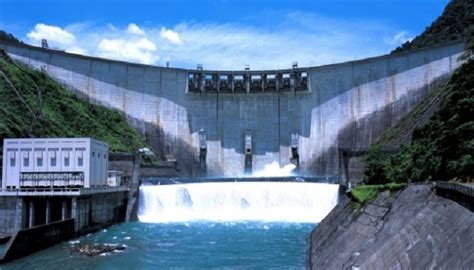
The Zungeru Hydropower Plant is evacuating 550MW of its 700MW capacity.
Financial Distress and Debts
Yet, beneath the impressive figures and initiatives lies a stark challenge: the financial distress of the Generation Companies (GenCos). Mounting debts owed by Distribution Companies (DisCos) have placed a significant burden on GenCos, hampering their ability to operate efficiently. In response, President Bola Ahmed Tinubu recently convened a crucial meeting with the leadership of Nigeria’s power-generating companies to address the N4 trillion debt threatening the sector - N2 trillion of which accrued in 2024 alone, with the rest being legacy debts.
The GenCos have expressed grave concern about their diminishing capacity to service loans, maintain infrastructure, and invest in expansion. Echoing this, Kola Adesina, Chairman of Egbin Power and First Independent Power Limited, described the situation as a national emergency, underscoring the vital role of electricity in powering industries, homes, and hospitals.
Presidential Power Initiative (PPI)
Considering these challenges, President Tinubu’s administration has reinvigorated the Presidential Power Initiative (PPI), giving a fresh boost to the long-standing Siemens project. The President fast-tracked the project through the signing of an Acceleration Agreement shortly after taking office. This move paved the way for key milestones, including a redefined technical roadmap.
Under this plan, Siemens Energy will focus exclusively on upgrading transmission infrastructure via a turnkey approach, while the distribution scope will be handled by other reputable Engineering, Procurement, and Construction (EPC) firms with strong financial and technical capacities. Already, the pilot phase has seen the successful installation and commissioning of 10 power transformers and 10 mobile substations across the country.
In 2024, the initiative focused on consolidating these gains and launching the main phase of the project. In parallel, the Federal Government-owned FGN Power Company has completed several transmission projects under the PPI banner, collectively adding over 700MW in transmission wheeling capacity to industrial zones, homes, businesses, and institutions. Under the PPI’s pilot phase, infrastructure upgrades across 13 locations added 700MW to the grid.
Transmission Infrastructure
Between 2024 and 2025, more than 70 new transformers were installed by the Transmission Company of Nigeria (TCN) using a mix of internally generated revenue and external support from the World Bank and African Development Bank’s Nigeria Electricity Transmission Project. These upgrades have expanded the grid’s transformation capacity by over 12,000MVA.
Furthermore, the 2025 Appropriation Act includes a ₦25 billion allocation for the completion of ongoing transmission projects. Structural work is also progressing to regionalise the national grid through the Eastern and Western Supergrid frameworks - a move aimed at improving resilience and minimising system collapses.
Regulatory agencies have instituted stricter performance monitoring mechanisms to ensure accountability and service improvements. The Ministry of Power has also expanded energy access through initiatives like the Energising Education Programme (EEP) and the Distributed Access to Renewable Energy Scale-up (DARES) initiative.
The EEP, which aims to provide reliable, clean energy to 37 federal universities and 7 teaching hospitals, has seen seven of these projects completed and ready for commissioning. In a further push to localise power innovation, the Rural Electrification Agency (REA) signed a landmark agreement with Oando Clean Energy to establish a 1.2GW solar power plant with an integrated recycling line for solar panels.
Financial Sustainability and Distribution Challenges
At a recent energy sector engagement, Adelabu laid bare the stark reality threatening the backbone of the nation’s electricity transmission system: inadequate financing. He raised an urgent call for the Transmission Company of Nigeria (TCN) to be included in national appropriation, warning that the agency’s sole reliance on Internally Generated Revenue (IGR) is no longer sustainable. “They are short of funds; they operate solely on their IGR, which has been nose-diving over the years,” Adelabu lamented.
Perhaps the most damning indictment in the sector lies with the Distribution Companies (DisCos), whose decade-long performance has, by the Minister’s own admission, fallen woefully short. “We need to get tough with the DisCos,” Adelabu said pointedly. “Whatever we do in generation does not mean anything to consumers if it is frustrated at the distribution points.”
Originally expected to be backed by technical partners during the 2013 privatisation, many DisCos merely paid lip service to such partnerships, which, in most cases, dissolved within months. Instead of channelling investments into improving infrastructure, stakeholders allege that many investors prioritized debt servicing over service delivery. This gap has stoked public anger.
The push for cost-reflective tariffs-a key reform being promoted by the Ministry-has triggered widespread backlash. Writing in a national newspaper, columnist Tunji Adegboye called the tariff reform “a ruse” in a system where over seven million customers are billed based on estimates. Stakeholders suggest that subsidies should be diverted from the DisCos and used instead to fund local meter manufacturing firms.
A further layer of controversy surrounds the banding system, which classifies consumers into tariff groups based on hours of supply-Band A receiving the most power at the highest rates. This system, while designed to incentivise improved supply, has sparked allegations of social injustice. Power is disproportionately channelled to high-paying urban clusters, leaving rural and low-income communities languishing in blackout. Even essentials public institutions are not spared. Universities, hospitals and research institutes, classified under Band A, have been saddled with crippling electricity bills.
Earlier this year, the Benin Electricity Distribution Company (BEDC) disconnected the University of Benin (UNIBEN) over a disputed bill exceeding N250 million-triggering student protests and a near standstill in academic activities. At least 10 public universities with the highest 2024 budgets have reportedly spent over N75 billion on electricity alone. UNIBEN’s monthly bill surged from N80 million to N280 million under the new tariff regime. Ahmadu Bello University (ABU) reportedly faces monthly bills of N300 million.
Immediate past Vice Chancellor of the University of Lagos, Prof. Oluwatoyin Ogundipe, put it bluntly: “No Nigerian university, particularly a public one, can afford the electricity costs imposed by the DisCos.” UNILAG’s power bill for 2021 stood at N1.7 billion. The government subsidy? A meagre N150 million-and it was never fully disbursed.
The Manufacturers Association of Nigeria (MAN) has voiced strong objections to the 250 per cent increase in tariffs for Band A customers, warning that such rates-now around N225/kWh-are unsustainable. Rising energy costs have forced companies to scale down production, raise prices, or relocate to more power-stable regions. For manufacturers whose margins are already squeezed by inflation and forex instability, the tariff hike could be the last straw.
Grid Instability
Perhaps the most visible sign of collapse is, quite literally, the collapse of the national grid. Data from the Nigerian Electricity Regulatory Commission (NERC) shows that the grid collapsed 93 times between June 2015 and May 2023. A single failure plunges swathes of the country into darkness, undermining productivity and shaking investor confidence.
NERC explains that the grid is designed to operate within strict stability limits-voltage (330kV ± 5%) and frequency (50Hz ± 0.5%). Any significant deviation can trigger shutdowns across generating units, cascading into a full or partial system failure. “Electricity demand higher than supply causes frequency drops.
Industry data reveals that under former President Muhammadu Buhari, Nigeria’s national power grid collapsed three times in 2015, 28 times in 2016, 24 times in 2017, 13 times in 2018, and 11 times in 2019. Between 2020 and Buhari’s exit from office on May 29, 2023, there were 14 recorded grid collapses, suggesting a modest improvement. However, this trend did not hold.
From June to December 2023 alone, the grid collapsed three more times. Additional collapses followed on March 28, April 15, July 6, August 5, October 14, 15, 19, and 22, as well as November 5 and 7, and December 11, 2024. This year, the grid suffered at least one collapse-on March 7, 2025.
In response, the Minister of Power has outlined plans to attract private investment into grid infrastructure and to regionalise the national transmission system to reduce systemic risks.
Metering Challenges
Metering remains a critical and unresolved issue within the Nigerian Electricity Supply Industry (NESI). While meters are essential for fair billing and effective revenue collection, the country’s metering gap currently stands at 6.2 million-a figure that continues to frustrate both consumers and operators.
Several government-led initiatives aimed at closing this gap-including the National Mass Metering Programme (NMMP), Meter Asset Provider (MAP) scheme, Meter Acquisition Fund (MAF), and the Presidential Metering Initiative (PMI)-have yet to meet expectations. A Special Purpose Vehicle (SPV) has been established to lead implementation, with N700 billion secured through the Federation Account Allocation Committee (FAAC). Procurement has begun for the delivery of 1.1 million meters.
Meanwhile, the World Bank-supported Distribution Sector Recovery Programme (DISREP) targets the rollout of 3.2 million meters. The first batch of 75,000 units has already arrived, with a second batch of 200,000 expected this month.
Yet, despite these efforts, metering remains a challenge that appears to have defied all known solutions. The lack of meters not only penalises consumers with estimated billing but also hampers the ability of DisCos to maintain financial viability.
Sadly, both electricity consumers and distribution companies (DisCos) continue to suffer losses-consumers through unfair billing practices, and DisCos through revenue leakages. For millions of households across Nigeria, the unavailability of meters means being subjected to the controversial estimated billing system-often described by stakeholders as extortionate.
Popular articles:
tags: #Nigeria
