Energy is essential for human survival, serving as the capacity for doing work. Humans require energy to survive. It's constantly converted, such as from chemical energy in food to potential energy and then to kinetic energy for work. The human quest to revolutionize energy conversion led to the invention of electricity.
The exact date of electricity's invention remains undocumented, but its use has evolved significantly over time. Before electricity came to be what we now have and use, various scientists played different yet complementary roles in the materialization of electricity. Benjamin Franklin’s famous kite experiment of 1752 became the break-out moment for electricity cognizance.
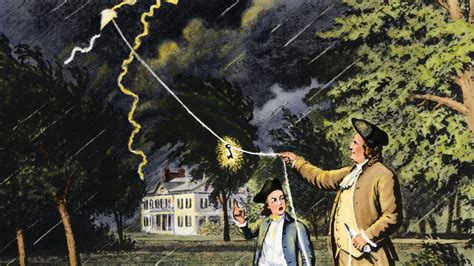
Benjamin Franklin's famous kite experiment
Early Days of Electricity in Nigeria
The clamor for lighting in Nigeria started in Lagos during the British colonial era in the late 1890 and early 1900. Colonization led to urbanization which came with vices such as burglary activities. Gas lanterns were utilized for lighting the streets of a certain part of Lagos Island to scare burglars at night. However, the lanterns were inadequate to serve the purpose for which they were required. In June 1891 further, calls were made on the colonist by both educated Lagosians and the acting governor George Denton to solve the defective lighting in Lagos.
There was a proposed infrastructure policy formulated by the Lagos chamber of commerce containing the maximum cost-effective means of implementation. The Lagos lagoon water was suggested for the generation of electricity in the correspondences between Lagos and London by the acting governor.
Read also: Delving into Nigeria's Power Crisis
Electricity generation in Nigeria dates back to the year 1896, and consumption started with street lighting in European residential areas in the year 1898. The light usually goes off at 11 pm which is the time when burglars are the most active.
Establishment of Electricity Utility Companies
In the year 1923, the Nigerian Electricity Supply Company was established as the electricity utility company for the commissioned electricity power station at Ijora Lagos. At commencement, the power plant had a generation capacity of 20 megawatts. Another power plant with a generation capacity of 85 megawatts known as the “Ijora B” plant was developed in the late 1940s and was commissioned in 1956 by the queen of England, Queen Elizabeth(ii). In the 1960s additional 30.2 megawatts were added to the two-generation plants in the country.
Electricity came with a tariff which is the cumulative cost of production and profit for the services rendered. The tariff was charged based on the income and circumstance of each consumer class. In the initial stage of electrical installation, per unit of electric charge was 8 pence per unit of Kilowatt, with further expansion of manpower there was an increase in the tariff which met agitation by the consumer and consequently, payment defaulting.
According to the then rule, defaulters ought to be given a grace period of seven days, after which nonpayment attracts disconnection. This wasn't successful in practice as defaulters got a grace period longer than a month, which frustrated debt recovery. Litigation was later explored as a mechanism for debt recovery. The use of litigation to solve the issue of bill payment defaulting proved abortive, and the government was forced to write off the accumulated debt. In 1933 and 1934, the government wrote off bad debts amounting to £26.18.1 d and £28.5.2d, respectively.
In search of a solution to forestall the reoccurrence of the losses experienced by the government, two types of Card indexes were proposed to solve the issue of payment defaulters, one for government officials and the other for other consumers. When demand started outweighing the supply of electricity, certain restrictions were made to prevent waste and moderate consumption at peak hours; 6 pm and 10 pm. High-load consuming electronics were prohibited from being used at peak hours and the defaulter’s penalty is disconnection.
Read also: Challenges in Nigeria's Electrification
Evolution of Power Management
The Native-owned and the government-owned utilities were managed separately by the Native Authorities and the government respectively, with the government establishing the Nigerian Government Electricity Undertaking (NGEU) as part of the Public Works Department.
The Niger Dam Authority was established in 1962 by an act of parliament and charged with the responsibility of utilizing hydropower generation through the construction of power generation dams. ECN was established under the electricity corporation ordinance of 1950 with the responsibility of purchasing the generated power from NDA and distributing the same to the end-users. the ECN was established under Nigerian Ordinance No. 1 of 1950 and was responsible for the generation and distribution of electricity.
It was a monopoly and had immunity from sanction and liability in the event of a power outage, damage, or loss incurred due to a power outage. Subsequently, NESCO was licensed to generate electricity for tin mining in the plateau state, and the excess was sold to the ECN for distribution to its consumers in Jos, Vom, and Bukuru.
Post-Independence Challenges
The existing power challenges during the colonial era were inherited at independence. The condition deteriorated with the largest turbine at the Ijora power station going out of shape, efforts to salvage the turbine didn’t return it to its original state. 1965 and 1966 were the worst years of power supply issues due to technical and managerial lapses. The power situation saw no improvement till the mid-1960s to the early 1970s when the Kainji Dam project was commissioned under NEPA. Soon the supplies were back to square one as demand overwhelmed the capacity of electricity generation.
On 20th May 1975, two of the four power generation stations at Kainji collapsed and weren’t responding to repairs. the country was thrown into a serious crisis. The NEPA acronym which stands for National Electric Power Authority was redefined by Nigerians as “Never Expect Power Always”. This was a sign of hopelessness in the electricity system.
Read also: Explore the life of Quincy Chad Power
NEPA's Era and its Issues
NEPA didn’t help matters with the way it handled the maintenance of its faulty equipment and the refusal to replace worn-out equipment. The corruption in NEPA further aggravated Inefficient debt recovery. mismanagement of funds, vandalization of equipment, and fluctuating water levels at Kainji, among other factors, contributed to the decay of the system.
The defaulters were mostly government agencies like The Federal, State, and Local Government agencies, military, and para-military establishments, which have accumulated huge debts running into billions of naira. Attempts to recover such monies failed woefully. Unlike during the colonial period, NEPA utilizes the option or possibility of litigation.
Government Interventions and Reforms
Sundry efforts by the Government and its agencies responsible for running the electricity sector to support the power companies to navigate Nigerians from the dark sea of electricity poverty have not availed tangible results to reckon with. The Central Bank of Nigeria in early 2015 launched a 213bn naira (US$1.1bn) Nigeria Electricity Market Stabilization facility to provide operators with soft loans.
The Government has also raised prices paid by electricity consumers under the Multi-Year Tariff Order (MYTO), introduced in June 2012 to gradually make tariffs more cost-reflective to encourage private investment. The latest adjustment in the current MYTO (2015‑2024), which took effect on February 1st, raised prices by an average of 45%. In Lagos, Nigeria's commercial hub, small residential power users now pay N24 (US$0.12) per kWh, and heavy domestic users pay N29 per kWh.
This met a lot of criticism from consumers and various stakeholders in the electricity sector. Therefore, it can be said that the efforts of the Government have not yielded much as the electricity sector is in a state of comatose. This, is attributable, among other factors to the problem related to automation, corruption, lack of transparency, and capacity to make investment returns in the electricity sector.
While discussing the electric supply deficiency in Nigeria, it is noteworthy that, according to the World Bank sustainable energy for all database on the global tracking framework led jointly by the World Bank, International Energy Agency, and the Energy Sector Management Assistance Program, access to on-grid electricity in Nigeria increased steadily from 27.3% in 1990 to 56.5% in 2018. The remaining percentage of 43.5 is without access to on-grid electricity even though the entire country has been divided among the 11 Discos from the defunct PHCN.
The EPSRA 2005 created Rural Electrification Agency and saddled it with the electrification of the unserved parts of the country. The Native-owned and the government-owned utilities were managed separately by the Native Authorities and the government respectively, with the government establishing the Nigerian Government Electricity Undertaking (NGEU) as part of the Public Works Department.
There was consumer network expansion under NEPA, but without commensurate infrastructural development and maintenance of the utilities to serve the growing network, this led to poor electricity supply and power outages in the country due to demand outweighing supply.
Privatization and Unbundling
Upon the swearing-in of a democratically elected government of Olusegun A. Ihovbor power station Edo. These power projects were initiated to give the electricity systems an added boost, it is under the supervision of the Niger Delta Power Holding Company. The PHCN ran the electricity sector until 2013 when the privatization and unbundling of the electricity utilities pulled through putting an end to the PHCN and establishing the Nigerian Electricity Regulatory Commission according to section 31 of the EPSRA 2005, to take over the regulation of the electricity industry.
Generation is 80% and 20% is government while TCN is 100% government-owned, managed by a Canadian company; Manitoba Hydro Company on behalf of the government and the distribution end is 60% privatize and 40% government.
The Power Holding Company of Nigeria (PHCN), formerly the National Electric Power Authority (NEPA), was a power company owned by the government of Nigeria. It represented Nigeria in the West African Power Pool. During the era when it operated as NEPA, the company managed a football team, NEPA Lagos.
The history of electricity development in Nigeria can be traced back to the end of the 19th century when the first generating power plant was installed in the city of Lagos in 1898. From then until 1950, the pattern of electricity development was in the form of individual electricity power undertaking scattered all over the towns.
By 1950, in order to integrate electricity power development and make it effective, the then-colonial government passed the ECN ordinance No. 15 of 1950. The statutory function of the authority is to develop and maintain an efficient co-ordinate and economical system of electricity supply throughout the Federation. The decree further states that the monopoly of all commercial electric supply shall be enjoyed by NEPA to the exclusion of all other organisations. NEPA, from 1989, has since gained another status-that of quasi-commercialisation. By this, NEPA has been granted partial autonomy and by implication, it is to feed itself.
By Decree No. 24 the ECN were merged to become the NEPA with effect from 1 April 1972. The actual merger did not take place until 6 January 1973 when the first general manager was appointed. In the early 1960s, the Niger Dam Authorities (NDA) and Electricity Corporation amalgamated to form the Electricity Corporation of Nigeria (ECN).
Immediately after the end of the 1967-1970 Nigerian civil war, the management of ECN changed its name to the National Electric Power Authority, or NEPA. For several decades, despite consistent perceived cash investment by the federal government, local and at times even nationwide power outages have been the norm instead of the exception. Generally, the tariff has been criticised as being too low compared to the cost of generating power.
Major issues within the Nigerian power sector, principally concerning power outages and unreliable service, compelled the Nigerian government to take radical action. It enacted the Electric Power Sector Reform Act of 2005, which called for unbundling the national power utility company into a series of 18 successor companies: six generation companies, 11 distribution companies covering all 36 Nigerian states, and a national power transmission company.
The act stipulated that ownership of these companies be granted to the Bureau of Public Enterprises (the privatization arm of the federal government) and the Ministry of Finance Incorporated. In 2007, the Bureau of Public Enterprises hired CPCS Transcom Limited, an international consulting firm based in Ottawa, Ontario, Canada to provide advice about the best ways to move forward with the privatization of the country's 11 distribution companies and the 6 generation companies.
On 30 September 2013, following the privatization process initiated by the Goodluck Jonathan regime, PHCN ceased to exist. In its stead, the Nigerian Electricity Regulatory Commission (NERC) was formed. Following the 2013 divestiture of the federal government from PHCN, the company was divided into separate companies or entities called Local Electric Distribution Companies or Local Distribution Companies (LDC).
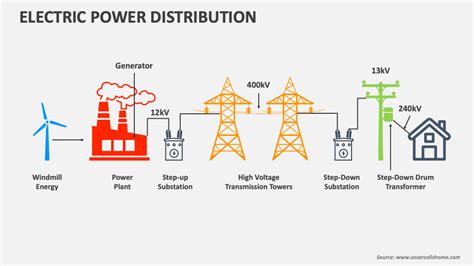
Power distribution assets
Electricity in Nigeria is generated through thermal and hydropower sources. Before the beginning of the Fourth Nigerian republic, power generation was mainly the federal government's responsibility through NEPA. However, reforms started in 2005 with the Electric Power Sector Reform Act (EPSRA) signing, which opened up the industry to private investors.
In 2010, the Nigerian Bulk Electricity Trading Plc (NBET) was established as a credible off-taker of electric power generation companies. In 2014, the sector was privatized with three groups having the responsibility of providing power.
Nigeria has twenty-three (23) power-generating plants connected to the national grid with the capacity to generate 11,165.4 MW of electricity. These plants are managed by generation companies (GenCos), independent power providers, and Niger Delta Holding Company. The primary independent power plants before the power sector reforms are Shell-owned Afam VI (642MW), Agip-built Okpai plant (480 MW), and AES (270 MW).
The third sector is the Nigerian National Integrated Power Project, NIPP, a project that was initiated in 2004 to fast-track the development of new power plants in the country. The majority of the new proposed plants are gas-powered plants. Current electricity generated in Nigeria needs to be improved to meet the demand needs of households and businesses; as a result, Nigeria has a low per capita consumption of electricity, 109 kWh in 2006.
Besides this deficit, between 1970 and 2009, available power plants operated below optimal levels, and electricity generated was lost in transmission. While electricity capacity was 5600 MW in 2001, the power generated fell as low as 1750 MW. The hydropower plants in Kainji, Shiroro, and Jebba tend to have higher capacity utilization rates, while the gas-powered plant was affected by infrastructural and maintenance issues.
Between 1980 and 1996, the country witnessed a significant gap in electricity generated and electricity billed, which indicates electricity loss in transmission and theft from unauthorized connections. Since the coming of democracy in 1999, the loss ratio has reduced from 46.9% in 1996 to 9.4% in 2008.
In Nigeria, electrical power generated by the GenCos is used to power the grid through the Transmission Company of Nigeria (TCN). Electricity is distributed through the transmission of electric power from TCN to the distribution companies (DisCos) primary substations, then to the secondary distribution system, and finally to the end consumers.
Alternating Current (AC) is used for the transmission of electric power; this is because AC can be easily changed from one voltage to another with a slight loss of energy with the use of a transformer. The electric power is transmitted at high voltage (33kV) to the DisCos' primary substations in the six geopolitical zones based on the load allocation formula. The high voltage received is then stepped down to medium voltage (11kV) with the use of transformers. This medium voltage power is now transmitted to secondary distribution transformers near the consumer's residence. The secondary distribution transformers further step down the medium voltage to customers' consumption capacity (low voltage, usually 220 to 240V).
Nigeria's Electricity Problems and Solutions Are Unstoppable - Chukwueloka Umeh
Table: Key Milestones in Nigeria's Electricity Sector
| Year | Event |
|---|---|
| 1896 | Electricity generation begins in Nigeria. |
| 1898 | Street lighting introduced in European residential areas. |
| 1923 | Nigerian Electricity Supply Company (NESCO) established. |
| 1950 | Electricity Corporation of Nigeria (ECN) established. |
| 1962 | Niger Dam Authority (NDA) established. |
| 1972 | ECN and NDA merge to form National Electric Power Authority (NEPA). |
| 2005 | Electric Power Sector Reform Act (EPSRA) enacted, leading to unbundling and privatization. |
| 2013 | PHCN unbundled and privatized; Nigerian Electricity Regulatory Commission (NERC) formed. |
Popular articles:
tags: #Nigeria
