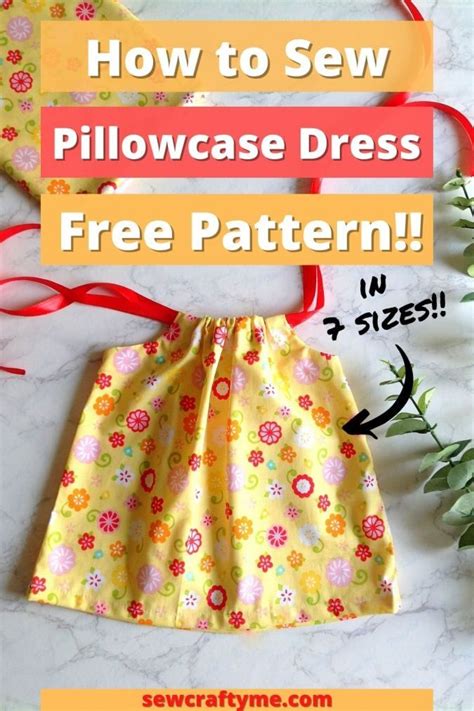
Are you ready to sew and make a difference? This tutorial provides a pattern for creating pillowcase dresses, perfect for the Dress A Girl Around the World Sew-A-Long. These dresses offer a simple yet impactful way to contribute to those in need.
If you haven’t made a Pillowcase Dress, then these templates will take out all of the guesswork! Following the simple steps, any size new or gently used pillow case can be quickly turned into a prized possession for a grateful little girl in Africa. Pillow case patterns are only a suggestion, so feel free to use your own material if you’d rather! Any simple pattern is fine to use. Feel free to add pockets, or lace. Buttons as decorations are great, but please avoid zippers as they are difficult to repair in the villages.
These dresses will be the only item of clothing for many of the children. Please make sure they are machine sewn. They do not have to be fancy but they MUST be sturdy. Finish all edges and do not use ribbon for ties, as they are not strong enough to hold up in 3rd world climates. Elastic is a much better choice.
Thousands of little dresses are received from all over the world sewn by amazing volunteers, which is great! We aren’t going to run out of children in need. To help us get them to the children quickly, please group your beautiful dresses by small, medium and large size. They do not need to be individually sized but just in groups for easy re-packing. They are measured from the shoulder. You get them to us and we get them to the kids. It costs about $2/a dress to get them to the children. We are grateful for any amount you can include for shipping the dresses to Africa.
FREE Patterns you can sew for charity #sewfrugal24
Materials and Preparation
Before you begin, gather your materials and prepare your pattern. You can find the printable pattern here. The pattern and instructions will produce a dress that will fit girls of varying sizes and ages. When you've printed the pattern, check that the square box measures an inch. Line the printed pages up edge to edge and tape. Make sure to use lightweight (but not sheer) fabrics.
Read also: Learn about Moroccan Lumbar Pillows
Cutting the Fabric:
- Take your fabric, fold in the sides (selvage to selvage) to meet in the middle. Place pattern on one side, with the straight edge of your pattern piece aligned with the fold.
- Take your pattern, flip it over, and place it on the opposite side, straight edge aligned with the fold. Pin in place and cut.
Hemming:
- Take your dress pieces and place them right side down. Fold the fabric ¼” along the hem line and press.
- Fold up ¾” and press. Once you have your hem creases, unfold.
**If making a dress with a contrasting band on the bottom, you'll need to attach the contrast band pieces to your dress pieces before hemming. Place the bands along the bottom of the front and back of the dress, right sides touching, and pin. Sew together using a 1/4" seam allowance. Finish the seam by serging, pinking, or zig zag stitching. Press the seam towards the top of the dress. Turn your dress pieces right side up and top stitch along the seams you just created.
Creating the Casing for Elastic
Next, we'll create the casing for the elastic.
- Fold the fabric down ¼” at the top of the dress and press.
- Fold down ¾ of an inch and press.
- Stitch about 1/8th inch from the bottom and top edges of the casing you created. Press casing.
*Tip for beginner's: I like to line up an edge (inner or outer depending on what I'm sewing) of my presser foot with the edge of the casing/hem. Then, I move the needle position close to the edge of the casing/hem. This helps to give you a nice, straight line of stitching. In the photo, I lined up the left inner edge of my presser foot against the folded edge of my casing.
Read also: Embroidered Dresses
Next, cut 2 pieces of 6.5” of ½” elastic and attach safety pins to both ends. Feed the elastic through the casing and pin. Remove safety pins and sew the elastic in place at both ends of the casing.
Sewing the Side Seams
Now you’ll sew the side seams of your dress. Place one dress piece on top of the other, right sides facing, and pin together along the side seams, starting at the bottom of the arm hole and ending at the bottom of the dress. Use a ¼” seam allowance. Make sure to backstitch at the beginning and end of your seam.You'll need to finish your seams by serging, pinking, or zig zag stitching.
Attaching Bias Tape to Arm Holes
Next, grab your package of bias tape and cut two pieces about 46-48 inches long. Take one piece, unfold it, find the mid point and mark it. Match the mid point of the bias tape (right sides touching) to the seam of one of the arm holes. Finish pinning the bias tape to the entire arm hole. Sew just inside the crease of the bias tape, from one end of the arm hole to the other. Now, fold the bias tape over to the inside of the arm hole and press. Place a few pins along the entire length of the bias tape, especially along the arm hole.
Finishing the Hem
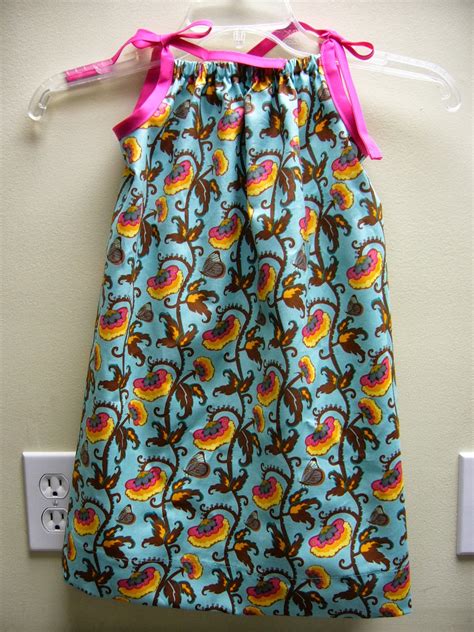
Next, fold the hem up along the creases you created earlier. Press and then pin in place. Sew near the edge of the hem all the way around the bottom of the dress, overlapping your stitches a bit. Press the hem and then turn your dress right side out. You're all finished!
Additional Options
Cut 2 strips of bias tape 2" wide and 13" long. To make your own bias tape, use the 45 degree marking on your cutting mat as a guide. Line the left edge of your fabric piece with a vertical line on your mat. Place your ruler along the 45 degree line and cut. Once you've made a cut on the bias, turn the fabric so the cut edge of your fabric is parallel to the vertical lines on your cutting mat. Cut (2) 2" strips. Fold the strips in half lengthwise and press. Open back up and fold both sides in towards the middle, then fold in half.
Read also: Tradition and Modernity in Nigerian Fashion
Let's attach the bias tape to the arm holes. Take one piece, unfold it, find the mid point and mark it. Match the mid point of the bias tape (right sides touching) to the seam of one of the arm holes. Finish pinning the bias tape to the entire arm hole. Sew just inside the crease of the bias tape, from one end of the arm hole to the other. Now, fold the bias tape over to the inside of the arm hole and press. Place a few pins along the entire length of the bias tape.
Now, fold the fabric down ¼” at the top of the dress and press. Fold down 1” and press. Sew a long the bottom edge of the casing only. Basically, it's the same as the elastic casing but wider! See photos in step 4a you need to. Almost finished! You'll need to make a fabric tie to feed through the casing. I don't have photos of this step but it's really simple! Cut a strip of fabric about 64" long and 2.5" wide. Fold in 1/4" along all four edges of the strip and press. Fold the fabric in half, wrong sides touching, and press. Sew along all 4 edges of the tie. Now, attach a safety pin to one end of the tie and pull through the front casing and then the back. Even up the ties and then tie a nice bow on one side.
I hope you've found this tutorial helpful! Are you familiar with the Little Dresses for Africa? (www.littledressesforafrica.org)
Other Needs
Any size boys shorts are welcome. Any simple boys shorts pattern is great. Elastic or drawstring both work well. Sizes up to size 12 are needed.
Boys shorts are needed desperately. All sizes, any style and even gently used shorts are welcome. Drawstring style or sports style is always great!
Can you imagine having to drop out of school because you cannot manage your menstrual cycle? This is a very real but often unacknowledged problem in 3rd world countries. According to UNICEF, one in ten schoolgirls in Africa miss classes or drop out completely due to their period.
Little Dresses for Africa has seen the need among the young girls and women and encouraged our sewers to take part in sewing and sending what we call “sani-pani” as part of our Dignity Program. Improvements in sanitation can go a long way to combating the problem. The distribution of these washable pads along with adult sized panties lead to very helpful discussions surrounding their use and general health. The resulting good hygiene enables the girls to manage their periods more easily.
Store bought new panties are always needed in all sizes for teen girls.
Changing lives here and across the ocean. Glorify God. Serve mankind. Walk in obedience. planting in the hearts of little girls that they are worthy
Little Dresses for Africa: Mission and Values
Little Dresses for Africa works alongside the people of the village to address their specific needs through water, education and community.
Glorify God. Serve Mankind. Walk in Obedience.
Clean Water: Clean water saves lives immediately. You can save lives through clean water.
Education: Education changes the future and stops the cycle of poverty.
Community: Community sustains change.
Follow us on social media for pictures and updates of our mission.
