Malaria is a significant public health challenge, particularly in sub-Saharan Africa, where prevalence remains the highest in the world. Nigeria accounts for 56% of malaria cases in the West African sub-region. In response to this burden, the Nigerian government has implemented various strategies and initiatives aimed at controlling, eliminating, and ultimately eradicating malaria.
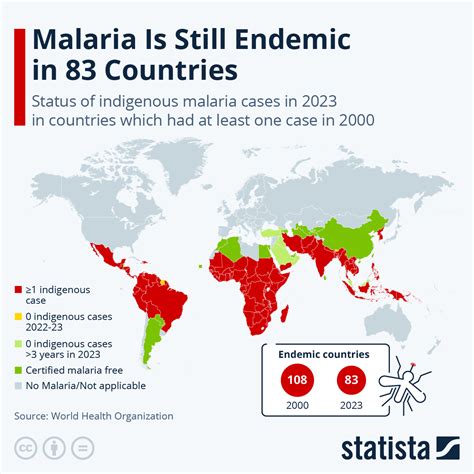
Malaria incidence per country.
The Global Context of Malaria
Malaria is currently endemic in 91 countries and territories, a reduction from 108 countries in 2000. Over half of the world’s population is at risk for malaria with prevalence in sub-Saharan Africa remaining the highest in the world. Currently, 43 countries in sub-Saharan Africa are endemic for malaria.
The estimated global incidence rate of malaria decreased by 21% between 2010 and 2015 and 41% between 2000 and 2015. Also, the proportion of the population at risk in sub-Saharan Africa infected with malaria parasites is estimated to have declined from 22% in 2005 to 17% in 2010, and to 13% in 2015.
The global technical strategy for malaria 2016-2030 describes an ambitious roadmap for a malaria-free world with huge achievements by 2030. By this date, we should have achieved a 90% reduction in malaria mortality rates and malaria incidence worldwide in comparison to the 2015 proportion of 13%. The agreed targets for malaria eradication are achievable in line with the principles entrenched in the Sustainable Development Goals (SDG) agenda.
Read also: The Rise of Nigerian Basketball
Nigeria's Fight Against Malaria
Malaria control is historically the oldest control programme in Nigeria, having been in existence since 1948. It has gone through several transitions from the National Malaria Service to the National Malaria Control Programme in 1986, to the National Malaria Elimination Programme in 2013 as a reflection of the country’s desire for a malaria-free nation.
The National Malaria Elimination Programme and its State Elimination Programmes are domiciled in the Ministries of Health and are tasked with oversight, regulatory and programme management functions relating to all malaria control activities in the country and its states. The National Malaria Strategic Plans (NMSP) have, over the years, served as the blueprint of malaria control and elimination objectives and targets. Four NMSPs have been in use with the latest being the NMSP 2014-2020.
Following the World Health Organization 2021 report of Nigeria being the leading country among the four African countries responsible for half of the malaria mortality all over the world, the President of Nigeria, on August 16, 2022, inaugurated the Nigeria End Malaria Council to reduce the malaria burden in the country, serves as a platform to solicit funds for promoting malaria elimination in the country and to ensure the good life and wellbeing of the people.
Nigerian President Muhammadu Buhari has launched a council to eradicate malaria and named Africa's richest man, Aliko Dangote, as its leader.
During the event, Nigerian President Buhari inaugurated the 16-member committee, which will oversee an effort to eliminate malaria in Nigeria within the next eight years. He appointed business magnate Aliko Dangote as the chairman of the group.
Read also: Requirements for Nigeria Police Clearance
"Our inauguration today will ensure that malaria elimination remains a priority on our agenda with strong political commitment from leaders at all levels," said Buhari.
National End Malaria Council is an intervention that has been tested with proven track records of progressive success in malaria control and reduction in the countries where it has been established.
Key Intervention Areas for Malaria Prevention
The NMSP 2014-2020 listed five key intervention areas for malaria prevention activities:
- Long-Lasting Insecticidal Nets (LLINs)
- Indoor Residual Spraying (IRS)
- Prevention among vulnerable populations
- Supplementary vector control methods
- Malaria diagnosis and treatment
New Malaria Prevention Strategy in Niger
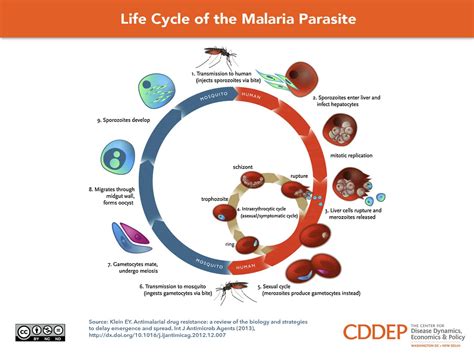
Malaria Life Cycle.
Long-Lasting Insecticidal Nets (LLINs)
LLINs have been lauded as the mainstay of malaria prevention, especially in sub-Saharan Africa. As of 2015 net ownership across the Nigeria was 69%. This is a steep increase from ownership of 2% in 2003. Over 103.8 million LLINs were distributed in Nigeria between 2009 and 2015 with higher net ownership in rural compared to urban populations.
Read also: Nigeria's Thriving Music
However, net utilisation is yet to come to par with net ownership. There are persistently lower rates for net utilisation compared to ownership. However, net utilisation rates (measured as the proportion of persons who slept inside a treated net the previous night) has risen over the past decade.
The challenges mitigating against increased net ownership and utilisation are manifold. In spite of all the social mobilisation campaigns around net ownership and use, many Nigerians still find sleeping under a treated net unacceptable. Socioeconomic and sociocultural barriers such as irregular power supply, the perception that net use is for women and children, perceptions surrounding itching, colour, odour, and heat production, among others, impede net use. There are also concerns for sustainability since virtually all the net hanging campaigns have been capital intensive and donor driven. There is currently only one indigenous firm manufacturing LLINs in the country.
Indoor Residual Spraying (IRS)
IRS is also a very effective intervention for rapid reduction of malaria transmission. In 2015, 106 million persons around the globe were protected with IRS. IRS is used only in particular areas. The proportion of the population at risk protected by IRS declined from a peak of 5.7% globally in 2010 to 3.1% in 2015, and from 10.5% to 5.7% in sub-Saharan Africa.
Specifically, in Nigeria, the 2015 Malaria Indicator Survey (MIS) reported that only 1% of households surveyed in the country had received IRS within the preceding 12 months. Reasons for this within the Nigerian context may relate to the prohibitive cost of IRS campaigns, the absence of vector maps to guide implementation and the rising incidence of resistance to pyrethroids and other insecticides.
Prevention Among Vulnerable Populations
Prevention among vulnerable populations involves providing Intermittent Preventive Treatment for pregnant women (IPTp) and infants (IPTi) and providing seasonal chemoprevention (SMC) for children less than five years of age. IPTp entails giving three or more doses of sulphadoxine-pyrimethamine (SP) as directly observed treatment (DOTS), one month apart from after the onset of quickening.
The uptake of the three-dose IPTp in Nigeria is low at 19% in 2015. However, uptake of two-dose IPTp was 37%. Both figures reflect poor implementation of IPTp and poor knowledge and acceptance of three or more doses of IPTp. Although the National Malaria Policy recognises the role of IPTi and SMC, implementation is still poor. SMC has been largely untapped as a viable option for prevention of transmission in the Sahel regions of the country especially as parasite prevalence rates continue to drop.
Supplementary Vector Control Methods
Supplementary vector control methods include larval source management (LSM) and personal protection. LSM has been advocated as useful for the control of breeding sites only where larval breeding sites are few, fixed and findable.
Malaria Diagnosis and Treatment
This is an emphatic statement about the country’s thrust towards ensuring that all persons with suspected malaria who seek care are tested with RDT or microscopy by 2020. This completely rules out presumptive diagnosis as an acceptable strategy. As a result of this, the rates of testing with RDT and microscopy within health facilities has increased significantly. Studies show that 70 to 90% of persons reporting fever in health facilities (public or private) receive a diagnostic test for malaria.
RDTs for malaria began to be available on a large scale in Nigeria in 2010. While the recognition of RDTs as a reliable and cost-effective test for parasite-based diagnosis of malaria has grown, it has encountered challenges. The ability of mRDTs to detect low levels of parasitaemia has often been challenged. Also, there is some element of subjectivity involved in reading the results, leading in some situations to the rejection of mRDT results and treatment of patients with malaria in the presence of mRDT negative results.
Microscopy remains the diagnostic gold standard. The NMSP strategic objective for malaria treatment is to ‘ensure that all persons with confirmed malaria seen in private or public health facilities receive prompt treatment with an effective anti-malarial drug by 2020’. Effective treatment as defined by the National Malaria Policy refers to the use of Artemisinin-based combination therapy (ACT) specifically Artemether-Lumefantrine or Artesunate-Amodiaquine combinations. ACT availability within the country stands at 97%. The facilitators for this include the partnerships for affordable medicine facilities that drove down prices of ACTs and ensure availability at all levels of care.
Progress and Challenges
Microscopy detected malaria prevalence in Nigeria dropped from 42% in 2010 to 27.4% in 2015. However, great variations still exist among regions within the country. The 2015 malaria prevalence (among children 6 to 59 months) ranged from 37.1% in the northwest to 16.6% in the southwest with the highest prevalence of 63.6% in Kebbi (n=157) and lowest prevalence of 0% in Lagos (n=246).
"For me it represents the highest political commitment to end malaria. The political commitment which we saw yesterday translates to recommitment to accelerate actions towards ending the disease," said Ozor.
"Malaria is not just a disease but a socioeconomic problem. The mosquito-borne disease is endemic in Africa and mostly affects children under five years old, due to low acquired immunity.
Wellington Oyibo, a parasitologist at the University of Lagos, says eradicating malaria will require a multi-pronged strategy.
"With the approval of the vaccine last year, every other control measure - vector control, the use of efficacious medicines, the use of diagnostics to confirm fever before treatment, even going further to the reengineering of the environment will be needed.
Future Innovations
Over the next decade or two, greater gains are likely to be won against malaria. These gains will most likely be fostered by game-changing novelties that improve our ability to prevent and interrupt transmission and to track, test and treat malaria. Innovations that improve the ability to detect malaria parasite such as urine testing for Plasmodium species is already within reach in the country and needing mass production and distribution at affordable cost. This will make home/self-testing for malaria feasible.
Information and communication technologies for implementing web and mobile-based technologies for vector and parasite surveillance, geo-mapping and statistical modelling will also play a key role in the war against malaria. Technologies that help improve the uptake and use of LLINs through phone and social media reminder and support systems are being piloted. Research and development for new chemicals that halt insecticide resistance in its tracks and better and more effective drug treatments are ongoing.
Finally, more than 20 malaria vaccine candidates are in various stages of development; of these, RTS, S/AS01 (known as "RTS, S") is the most advanced. The vaccine has been shown in clinical trials to provide partial protection against P. falciparum malaria in young children. On April 24, 2017, the WHO Regional Office for Africa (WHO/AFRO) announced a pilot implementation programme beginning in 2018. The RTS, S vaccine will be available in three African countries-Ghana, Kenya, and Malawi.
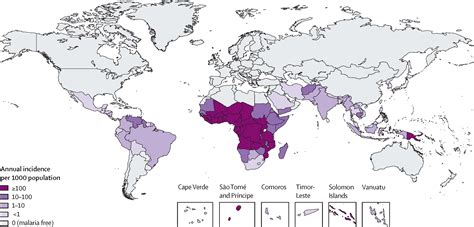
Malaria Eradication.
The Path to a Malaria-Free Nigeria
The WHO Global Technical Strategy is insistent on eliminating malaria from an additional 35 countries by the end of 2030. This is barely 12 years away. Will Nigeria join other countries in making history? The answer to this question lies in our ability to provide homegrown and lasting solutions to the challenges facing scale up and consistent implementation of tried and tested malaria interventions.
Particular focus needs to be made to the economic and social development as the milieu for effective implementation of the National Malaria Policy. We also need to pay attention to and support homegrown technologies and innovations in prevention, diagnosis, treatment and other supportive/cross-cutting activities.
Popular articles:
tags: #Nigeria
