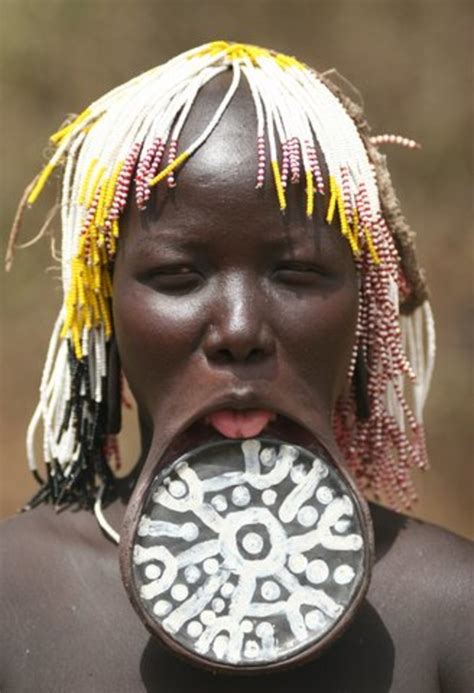
In the Omo Valley of Ethiopia, the Mursi tribe stands out not only for their fascinating customs but for one of their most distinctive forms of body modification which is the use of lip plates. This tradition is practiced by Mursi women, and it involves wearing large discs made of clay or wood in their lower lips. This practice comes off as shocking to outsiders, but for the Mursi tribe, it holds a deep cultural and personal significance.
These lip plates serve as a unique form of expression, a mark of identity, and a sign of strength. Despite global curiosity and the evolving views of the younger generation, these plates remain central to Mursi culture. The Mursi tribe, one of Ethiopia’s most intriguing indigenous groups, lives in the remote Omo Valley. Known for their vibrant traditions and fascinating way of life, they attract anthropologists, photographers, and adventurers eager to understand their unique cultural identity.
Location and Language
Surrounded by mountains between the Omo River and its tributary the Mago, the home of the Mursi is one of the most isolated regions of the country. The Mursi speak the Mursi language as a mother tongue. It is classified as Surmic, which is a branch of the Nilo-Saharan language family. Mursi is closely related (over 80% cognate) to Me'en and Suri, as well as Kwegu.
According to the 1994 national census, there were 3,163 people who were identified as Mursi in the SNNPR; 3,158 spoke Mursi as their first language, while 31 spoke it as their second language. Two orthographies for the Mursi language exist. One is the Amharic-based, although the Mursi language is one the Surmic languages with incompatible vowel structures and stressed and unstressed consonants compared to Amharic. The second is the more suitable Latin-based alphabet.
Origins and Way of Life
In the Lower Omo Valley there is a confluence of two out of the four African language families-Afro-Asiatic and Nilo-Saharan. The Mursi as we know them today are the product of a large scale migratory movement of cattle herding peoples in the general direction of the Ethiopian highlands. Three separate movements may be distinguished in the recent history of the Mursi, each the result of growing environmental pressure associated with the drying out of the Omo basin over the last 150-200 years.
Read also: Mursi Traditions
The Mursi way of life revolves around seasonal patterns and environmental niches. In this lowland area rainfall is unpredictable, so the Omo River is a life-line for them and for their neighbours. This is an immensely bio-diverse area where hippos wallow, birds feed, crocodiles hunt, and where elephants, buffalo, leopards and lions roam.
Social Structure and Beliefs
The population is divided into five main local groups, or bhuranyoga (sing. bhuran), which are named, from north to south, Baruba, Mugjo, Biogolokare, Ariholi and Gongulobibi. These groups are not clearly bounded, geographically, but they give society its structure. Like many agro-pastoralists in East Africa, the Mursi experience a force greater than themselves, which they call Tumwi. This is usually located in the Sky, although sometimes Tumwi manifests itself as a thing of the sky (ahi a tumwin), such as a rainbow or a bird.
The principal religious and ritual office in the society is that of the Kômoru, the Priest or Shaman. This is an inherited office, unlike the more informal political role of the Jalaba. The Kômoru embodies in his person the well-being of the group as a whole and acts as a means of communication between the community and the god (Tumwi), especially when it is threatened by such events as drought, crop pests and disease.
His role is characterized by the performance of public rituals to bring rain, to protect men, cattle and crops from disease, and to ward off threatened attacks from other tribes. Ideally, in order to preserve this link between the people and the Tumwi, the Kômoru should not leave Mursiland or even his local group (bhuran).
Economy and Daily Life
The Mursi economy is based upon the integration of three main subsistence activities, rain-fed cultivation, flood-retreat cultivation and cattle herding. They cultivate at the Omo from September to February each year and then they return to the inland grassy plans to cultivate during the rainy season from March and August. Sometimes they grow beans and pumpkins. Cattle provide milk which is often eaten with porridge.
Read also: Bodi Traditions
There are various rites of passage, educational or disciplinary processes that people undergo. Women of the Mursi tribe may have their lips cut at the age of 15 or 16. A small clay plate is then inserted into the lip. Through the years, larger plates are inserted into the lip causing it to stretch. The larger the clay plate, the more the woman is worth before she gets married.
The Iconic Lip Plates
The women of the Mursi tribe are widely recognized for their distinctive cultural practice of wearing horned crowns and massive lip plates.
How Africa's Lip Plate Tribe Eats!!
This tradition symbolizes beauty, social status, and a rite of passage into adulthood. Historically, larger plates signified higher dowries, reflecting a woman’s value in marriage. Some researchers suggest that the practice may have originated as a defense mechanism to make women less appealing to slave traders. While the custom continues today, its significance has evolved, with some women opting not to wear lip plates due to the growing influence of modernity.
In this tribe, the journey to wearing a lip plate begins in adolescence. When a Mursi girl reaches a certain age, often around 15 or 16, she may choose to begin the process, which is entirely voluntary. A small incision is made in her lower lip, and a wooden peg is placed inside to hold the cut open. Over time, larger plates are inserted, gradually stretching the lip to accommodate bigger plates.
The size of the lip plate is often seen as a point of pride for Mursi women, and many take pleasure in gradually increasing the plate’s diameter, each step marking a rite of passage in their journey to adulthood. For the Mursi tribe, the lip plate is far more than an accessory. It represents a combination of beauty and strength. Wearing a lip plate is both a personal and a family matter, as it is said to reflect the pride and endurance of the family itself.
Read also: Enigmatic Blue Eyes
As the plate size grows, so does the young woman’s place within her society. In this sense, the lip plate can be seen as a status symbol, an outward sign of maturity and grace. Traditionally, the plate is decorated, painted, or carved with intricate designs that further personalize it, adding a layer of artistry to an already striking practice. This custom has captivated the interest of people worldwide, particularly photographers, anthropologists, and tourists who travel to the Omo Valley, hoping to catch a glimpse of the Mursi and their striking lip plates.
Some visitors find the practice beautiful, while others find it fascinatingly unusual. Interestingly, the lip plate practice has also evolved over time. For centuries, it was worn as a symbol of fertility and a mark of cultural pride. Some believe the tradition may have initially served as a protective measure against slave traders, as the large plates made the women less likely to be taken.
Today, it is primarily seen as an aesthetic and cultural choice, rather than a form of resistance. In fact, with exposure to other ways of life, some younger Mursi women have begun questioning whether they want to carry on the tradition, leading to a quiet shift within the community. Some young women are opting for smaller plates or forgoing them altogether, blending modern perspectives with age-old traditions. Despite this gradual change, the custom endures as an essential part of Mursi identity, keeping their culture alive even as it adapts.
Despite the curiosity it attracts, the lip plate remains, at its heart, a choice-a choice that reflects strength, pride, and cultural identity. For the Mursi tribe, the decision to wear a lip plate isn’t about following a trend but about upholding a heritage that speaks to who they are and where they come from. As global interest in their unique practices grows, the Mursi continue to navigate the line between tradition and modernity. While some choose to wear the plates and others don’t, all share a common understanding: the Mursi identity goes far beyond any single tradition.
In the end, the Mursi’s lip plate tradition is a beautiful reminder of how identity can be expressed in ways that defy global norms yet resonate deeply within a community. Though times are changing and customs may shift, the spirit of the Mursi endures, carried forward by each new generation. For those curious about the Mursi and their practices, perhaps the greatest lesson lies in the respect and pride with which they carry their heritage. The Mursi lip plate isn’t just a piece of clay; it’s a piece of who they are.
Body Scarification and Decoration
The Mursi people are masters of body painting and scarification, using natural clay and pigments to adorn their skin. These designs serve multiple purposes, ranging from aesthetic beauty to spiritual protection. In some cases, the paints act as insect repellents, crucial in the Omo Valley's harsh environment.
Scarification, on the other hand, holds deep cultural significance. Men and women alike use scars to commemorate milestones such as marriage, childbirth, or achievements in combat. These intricate patterns are seen as marks of strength and resilience. Mursi (or Murzi) women of Ethiopia have elaborate symmetrical scarring patterns made on their bodies. They focus on the stomach but also curve around the breasts.
Mursi society has a high level of infant mortality and raising children is greatly valued. Scarring around the hips, on the stomach and breasts can highlight areas associated with fertility. The scars themselves can also remain sensitive for years following their creation and be a source of heightened sensation for those with scars and anyone who touches them. The body scarring on the Mursi tribe women is a sign of both strength and beauty.
Using razor blades or thorny branches, they cut the skin and then rub ash in the wound so it creates the scars that they admire. Some of the teenage and young adult girls have written words with their body scarring. Similarly the Suri Tribe girls in more recent years have started to write words or their names on their body scarification, however most of the Suri ones I’ve seen recently are in English.
Many of the men in the Mursi tribe village in more recent years have begun scarring their bodies as a sign of fashion and identity, however in the past the mens body scarring was more specific, symbolic and had meaning. Body painting, covering and decoration are practised by Ethiopias Mursi tribe for various reasons including sun protection, keeping insects away, health and for celebrations or intimidation.
Donga Stick Fighting
Donga, or stick fighting, is a traditional martial art practiced by young Mursi men. The competition is not just about physical strength but also a test of bravery and endurance. Participants use long wooden sticks in duels that often draw large crowds, with the winner gaining social prestige and becoming a desirable marriage prospect.
Unfortunately, the rise of modern weapons has impacted this custom. While stick fighting remains an essential cultural activity, disputes sometimes escalate into violence involving firearms, threatening the tradition's authenticity. Ceremonial duelling (thagine) is a highly valued and popular activity of Mursi men, especially unmarried men, and a key marker of Mursi identity, and is a form of ritualised male violence.
Just like any other ethnic tribe in the lower valley, the men must pass a test before they can get married. A Mursi man is given a stick called a Donga and must face one opponent. During the fight they protect their most vulnerable parts with coarse cotton cloths. The ceremony takes place every year after the harvests (November- January). All the Surmic groups participate in this ritual as another step up the social ladder for their young men.
The fight is symbolic; the adversary has to be defeated without being killed. The victorious young man wins special prestige and, above all, attention from the young, single women. The first fighter to submit loses and the winner is taken by a group of women to determine who he will marry.
Cattle and Social Structure
Cattle are central to the Mursi's wealth, sustenance, and social status. Milk and blood from their herds form a significant part of their diet. Cattle also play a critical role in marriage negotiations, with dowries often including 30 to 40 cows or even rifles in recent years. Interestingly, cattle inspire personal identity among the Mursi. Men often name themselves after their favorite cows, reflecting the deep connection they share with their livestock.
Some cattle are treated as prized possessions, adorned with scarification patterns and decorated horns. The Mursi have a defined age-grade system for men, while women derive their status primarily through marriage and family roles. Leadership is informal, with elders guiding the community through wisdom and debate.
Religion and Spirituality
Spirituality is central to the Mursi way of life. Rituals and ceremonies are performed to address challenges like droughts, illness, or community conflicts. These practices not only strengthen social cohesion but also preserve their cultural identity in the face of external influences. The Mursi tribe follows traditional indigenous beliefs and practices, making their religion animistic in nature.
Animism is a belief system that attributes spiritual significance to various elements of nature, such as animals, plants, rivers, and natural phenomena. In this belief system, these elements are believed to possess spiritual energy or life force, and the Mursi people often seek to maintain a harmonious relationship with these forces. Central to their religious practices is the veneration of ancestors and spirits.
The Mursi believe that their ancestors continue to play a role in their lives and can influence their well-being and fortunes. Therefore, they perform rituals and ceremonies to honor their ancestors and seek their guidance and protection. The Mursi also have belief systems surrounding supernatural beings and spirits that inhabit the natural world. These spirits are often associated with specific natural features or phenomena, and the Mursi engage in rituals to appease or gain favor from these spirits.
Challenges and Preservation
The Mursi face numerous challenges, including encroaching modernity, land disputes, and climate change. The construction of dams and the expansion of agriculture in the Omo Valley threaten their traditional way of life. Efforts to preserve their culture through sustainable tourism and advocacy are ongoing, but the tribe's future remains uncertain.
Similar to many indigenous people, the Mursi suffer from modernity and outside forces eager to change the community’s way of life. The cumulative development projects the Ethiopian government has been implementing in the Omo Valley, such as constructing dams, and farmland have forced the Mursi off their land.
There is now considerable action being taken to try and conserve Mursi culture from within and through outside assistance. Some of the Mursi elders and leaders are now encouraging the youth to keep on wearing lip plates and involving themselves in scarification ceremonies saying it is part of their tradition. Many Mursi traditions have also been captured on camera by NGOs and anthropologists who provide and offer information that might assist the process of preservation.
Mursi Tribe: Diet and Food
The Mursi tribe relies on a diet primarily based on subsistence farming, livestock herding, and hunting and gathering. Their food sources are closely connected to their local environment and may vary depending on the season and availability of resources. In general, their diet primarily consists of:
- Sorghum: Sorghum is a staple crop for the Mursi people.
- Maize: Maize, or corn, is another important crop in their diet, providing additional carbohydrates.
- Millet: Millet is another grain that the Mursi cultivate and use as a food source.
- Vegetables and Fruits: The Mursi tribe consumes a variety of vegetables and fruits, including beans, lentils, pumpkins, and wild fruits found in their surroundings.
- Livestock Products: The Mursi are skilled livestock herders, and they keep cattle, goats, and sheep. They consume milk, butter, and meat from their livestock.
- Wild Game: Hunting plays a significant role in the Mursi’s diet. They hunt wild game such as antelopes, baboons, and birds to supplement their protein intake.
- Honey: The Mursi also gather honey from wild bees, which is a valuable and nutritious food source for them.
The Mursi grind sorghum and maize to make most of their meals. They don’t eat meat much, but drink the blood (without killing the cow) and milk of their cattle. The Mursi also drink warm blood from cows. They value their cattle as it is one of their signs of status and wealth. The cattle are not killed often as meat is not often consumed in Mursi villages.
However, using a bow and arrow an artery near the neck of a cow is pierced and then the flowing blood collected in a container by a younger boy. Once they’ve collected enough blood the cow is let go (it is not killed) and they will choose another cow the next time. The younger boy then uses his hand to scoop the bits that have become solid/chunky before passing the container of warm blood to one of the men.
Visiting the Mursi Tribe
The Mursi tribe offers a window into one of the most unique and resilient cultures in Africa. From their striking lip plates to their deep connection with cattle, every aspect of their way of life is steeped in tradition and meaning.
You can visit the Mursi tribe from Jinka in a vehicle with a local guide and scout. The Mursi have gained quite a reputation and every visit to their villages is always so different. It’s not just the different villages, but even visiting the same village on multiple occasions can be a completely different experience depending on the day. There are hotels in Jinka and an airport where you can get quick and inexpensive flights between Addis Ababa and Jinka.
This is another reason why so many tourists visit as those short of time can get a quick flight from Addis and see the Mursi tribe without much delay or driving. If driving through Mago National Park is not an option when you visit, then there is a small Mursi tribe village that is not within the park and that can easily be accessed. The Mursi tribe villages in Mago National Park are an area that is at times a dynamic situation.
When tribes are in conflict it is crucial for visitors to avoid the areas. The shootings do not mean that the Mursi tribe are dangerous. However, the area where most of the Mursi tribe live within Mago National Park was (and is currently as at March 2025) unsafe due to the conflicts happening with and around them.
| Topic | Description |
|---|---|
| Lip Plates | Cultural practice symbolizing beauty, status, and identity |
| Scarification | Body art marking milestones, strength, and resilience |
| Donga Stick Fighting | Traditional martial art testing bravery and endurance |
| Cattle | Central to wealth, diet, and social structure |
| Religion | Animistic beliefs venerating nature and ancestors |
| Challenges | Modernization, land disputes, and climate change |
Popular articles:
tags: #Africa
