For centuries, the art of Moroccan metalwork has been passed down from one generation to the next, preserving an ancient tradition of intricate craftsmanship. In the bustling souks of Fez, Marrakech, and beyond, skilled artisans continue to forge metal into masterpieces. Whether it’s shimmering brass trays, ornate lanterns, or delicately engraved jewelry, the work of these craftsmen captures the spirit of Morocco’s rich heritage. The clang of hammer against metal echoes the timeless rhythm of a culture rooted in artistry, where each piece tells a unique story of passion and perseverance.
As your hands trace the intricate patterns etched into the surface of a handmade Moroccan tray siniya, you feel a sudden connection-not just to the object but to the centuries of craftsmanship it represents. The weight of the tray is satisfying, its luster mesmerizing, reflecting light like whispers of ancient stories. It’s more than a tray; it’s a portal into the soul of Morocco, an heirloom of artistry and tradition.
Mid Century Moroccan Brass Coffee Table Restoration. Fun challenge with @midcenturyflipper
The Origins of Moroccan Metalwork: A Tradition Forged in Fire
Moroccan metalwork dates back to ancient times when blacksmiths first mastered working with metals like copper and brass. In early societies, these metals were not only essential for tools and weapons but also symbolized power and status. Over centuries, these basic necessities evolved into highly decorative and artistic objects, melding beauty with practicality. Metal artisans, or maalems, became highly respected figures, with their skills considered both a craft and an art form.
The craftsmanship involved in Moroccan metalwork is meticulous. Each piece begins with raw metal, which is melted and shaped by hand, using tools passed down through generations. Artisans work long hours over hot forges, hammering and shaping the metal into everything from household items to elaborate decor. The traditional patterns they engrave reflect centuries-old designs, inspired by Islamic geometry, natural forms, and Berber symbolism. Through this process, metalwork transforms into a medium for cultural expression.
Fez and Marrakech remain the strongholds of Moroccan metalworking, where entire districts are dedicated to the craft. Apprentices spend years honing their skills under master craftsmen, learning not just the techniques but the patience and discipline required. The master-apprentice relationship is key in preserving the integrity of the craft, ensuring that each new generation continues to uphold the meticulous standards set by their forebears.
Read also: The Allure of Blue and White Tile
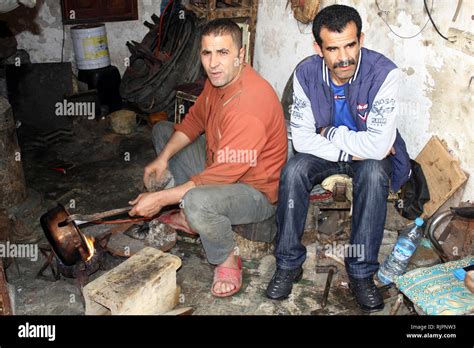
Metalworkers in Fez.
Brass and Copper: The Heart of Moroccan Metalworking
Brass and copper form the foundation of Moroccan metalwork, each metal bringing its own qualities to the craft. Brass, with its soft golden hue, is favored for its ability to take on intricate engravings, making it the go-to material for decorative items like trays, lanterns, and jewelry. Copper, on the other hand, offers more strength and is commonly used for both utilitarian and decorative purposes, from large cooking pots to finely detailed jewelry pieces.
The process of working with these metals is labor-intensive. Artisans begin by cutting the metal sheets into the desired shape before heating them to soften the material. Once malleable, they use small hand tools to hammer and engrave the surface, carefully crafting designs that reflect Morocco’s artistic heritage. The repetitive tap of the hammer is a familiar sound in the narrow streets of Fez and Marrakech, where workshops are filled with men and women focused on their detailed work.
The designs they etch into brass and copper are not only beautiful but symbolic. Traditional patterns often draw from Islamic and Berber influences, including geometric shapes and floral motifs. These intricate designs, passed down through generations, speak to the spiritual and cultural depth of Moroccan society. Metal items are not just functional; they are imbued with meaning and history, connecting the artisan to their cultural roots.
Patterns That Speak
What sets the handmade Moroccan tray siniya apart is its intricate surface. These trays are not merely hammered; they are inscribed with poetry. Floral motifs intertwine with geometric patterns, each stroke of the chisel guided by a steady hand and a sharper mind.
Read also: Morocco's Blue Pearl
The designs are inspired by Morocco’s rich heritage-Andalusian influences meet Berber geometry, while Arabesque flourishes weave tales of the Islamic Golden Age. A copper tray from Tetouan, for instance, might bear an eight-pointed star encircled by floral vines, symbolizing balance and eternity. In contrast, a brass siniya from Marrakech might display a lattice of tiny diamonds, representing protection and abundance.
These patterns are not random. “Every stroke has meaning,” Lahcen, an elderly artisan says, seated cross-legged in his workshop in the heart of Fez. “The lines are prayers, the curves are blessings.” When you hold a siniya, you’re holding a piece of coded history, a conversation between past and present.
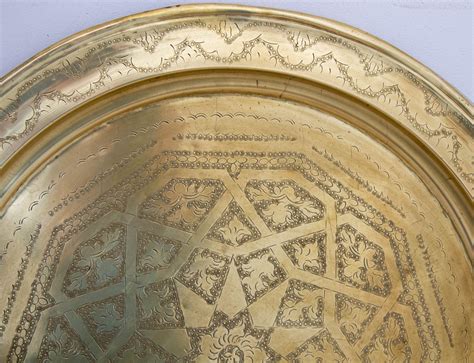
Examples of Moroccan Brass Tray Designs.
The Souks of Fez: A Metalworking Paradise
The souks of Fez are world-renowned for their vibrant display of Moroccan metalwork. Wandering through the narrow streets, visitors can hear the steady rhythm of hammers as artisans work on everything from delicate jewelry to large-scale lamps and trays. These workshops have remained relatively unchanged for centuries, preserving the traditional methods of Moroccan metalwork. Fez, in particular, is known for its high-quality metal artisans, whose skills are unmatched throughout Morocco.
The artisans of Fez take great pride in their work. Many of them come from families with generations of metalworking experience, where children are introduced to the craft from an early age. Apprenticeship is key to the survival of the craft, and young men and women spend years perfecting their technique. The bond between master and apprentice is one of trust and respect, with each generation striving to maintain the standards of the past while subtly pushing the craft forward.
Read also: Men's Moroccan Fashion
As you walk through the metalworking neighborhoods, it’s impossible not to be impressed by the sheer variety and beauty of the pieces on display especially in the famous Seffarine square. Every tray, lantern, and teapot tells a story, not just of the artisan’s skill but of Morocco itself. Visitors are often drawn to the glowing brass items, their intricate engravings catching the light in the narrow alleys. The experience of buying a piece of Moroccan metalwork from the souks is one of connection-between the buyer, the artisan, and the centuries of tradition that shaped the item.
From Workshops to Homes: The Journey of Moroccan Metalwork
The journey of Moroccan metalwork doesn’t end in the workshop. The items crafted by Moroccan artisans find their way into homes around the world, becoming cherished pieces in both traditional and modern settings. Brass trays and lanterns, in particular, have become iconic symbols of Moroccan decor, their intricate engravings and craftsmanship adding a touch of authenticity to any room.
In Moroccan homes, metalwork has always played a central role. Whether it’s a hand-engraved tea tray used for serving mint tea or a copper pot for cooking, these items are often passed down through generations. Each piece carries with it the stories of the family and the artisan who made it, serving as a connection to the past. In many homes, metal lanterns light up courtyards and patios, casting intricate shadows on the walls and creating an ambiance that is uniquely Moroccan.
Globally, the demand for handmade metalwork from Morocco is growing. As people seek to bring authentic, handmade crafts into their homes, Moroccan artisans are finding new markets for their work. This global appreciation not only helps preserve the craft but also ensures that future generations of Moroccan metalworkers will continue to thrive. From the souks of Fez to living rooms in Paris and New York, Moroccan metalwork tells the story of a timeless craft that continues to capture the imagination of people worldwide.
The Future of Moroccan Metalwork: Sustaining a Living Art
The future of Moroccan metalwork lies in the hands of the next generation of artisans, who face both challenges and opportunities. As the world becomes more industrialized, handmade crafts like metalwork must find their place in modern society. Many young artisans are now exploring new ways to keep the tradition alive while adapting to contemporary tastes. The challenge is not only to preserve traditional techniques but to evolve the craft in a way that resonates with new audiences.
Artisans are also grappling with the need for sustainability. Traditional methods often rely on natural resources that are becoming increasingly scarce. As such, there is a growing focus on using recycled materials and finding eco-friendly solutions that do not compromise the quality of the craft. Many artisans are now blending old and new techniques, experimenting with designs that appeal to both traditionalists and those seeking something modern.
Despite these challenges, the future of Moroccan metalwork remains bright. With increasing global interest in artisanal crafts and a renewed appreciation for handmade goods, Moroccan artisans are finding new platforms to showcase their skills.
Moroccan Tea Folding Table
In today's world, portability and space-saving designs are highly valued. Moroccan folding tables offer a beautiful and practical solution, serving as an elegant alternative for carrying drinks like tea. Their sleek design and modern look add a touch of sensuality and character to any living space, making them a unique piece of art.
Specific Features
Moroccan folding tables typically feature wooden folding legs with a brass tray on top. The tray can be used separately even when the stand is folded. These tables are often used as tea or coffee tables in front of couches, adding an elegant touch to the room.
Varieties of Styles
Moroccan tea tables come in a wide variety of designs, from plain to complex. The wooden legs are often engraved with Middle Eastern designs. When choosing a table, it’s important to select one that complements your existing home décor and suits your preferences.
Easy Maintenance
Brass folding tables are a popular choice due to the ease of maintenance. Any greenish discoloration can be easily removed using lemon juice and vinegar. Simply wipe the mixture on the surface, let it sit for about 10 minutes, and then polish with a soft rag. A normal metal polish can also be used for a shiny finish.
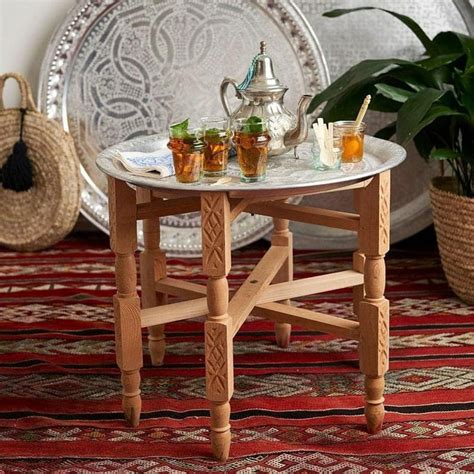
Example of a Moroccan Tea Table.
| Feature | Description |
|---|---|
| Materials | Brass, Copper, Silver, Wood |
| Designs | Geometric, Floral, Berber, Islamic |
| Craftsmanship | Handmade, Engraved, Hammered |
| Usage | Serving Tea, Decoration, Cultural Symbol |
| Locations | Fez, Marrakech, Tetouan |
Popular articles:
tags: #Moroccan
