African violets (Saintpaulia ionantha) are beloved for their colorful blossoms and symmetrical form. Their profuse blooming, ease of care, and the mystique of being native to Africa make them a favorite among houseplant enthusiasts. Propagating African violets is relatively easy, and this guide will walk you through the process of rooting them from leaf cuttings.
Why Propagate African Violets?
Propagating African violets from leaf cuttings is an excellent way to expand your collection or share them with friends. Using leaves to start new plants produces exact copies, or clones, of the mother plants. This method is cost-effective if you're willing to invest some time.
Meagan McManus of the Northwest Horticultural Society says, “Giving to friends is why I propagate some of my favorite plants. It’s joyful to give them away to people who will appreciate them.”
You can propagate African violets any time of year, but the best time is during the spring and summer.
Tools & Materials
Before you begin, gather the following tools and materials:
Read also: Guide to Nigerian Root Vegetables
- A sharp knife, razor blade, or Exacto knife
- 70% isopropyl alcohol (rubbing alcohol) for disinfecting the blade
- Light, fluffy, well-draining, and moisture-retentive potting mix (specialty mixes like "African violet soil" are ideal)
- Small pots (2-3 inch plastic cups with drainage holes are ideal)
- Optional: Rooting hormone
- Zip-lock plastic bags, clear clam-shell food containers, or clear plastic storage containers
Propagation Steps
1. Choose the Best Leaf
Start with a healthy mother plant. Select vigorous leaves from the middle rows of leaves. Young leaves are not mature enough, and the larger leaves are too old for propagation.
Instead of a leaf, you can use the flower stem to start new plants. Before the flowers begin to fade, remove all the flowers from the stem. It works best if tiny leaves remain. Cut the flower stem to ½ to 1 inch below the leaves at a 45-degree angle.
2. Trim the Stem
Lay the leaf, top side up, onto a hard surface. Cut the stem at a 45-degree angle, one-half inch to one inch from the leaf.
Using rooting hormone is optional. Studies have shown little difference. Some growers trim off the top one-third to one-half of the leaf to encourage root development; again, there is little difference.
3. Pot the Cuttings
Fill the container with potting soil; fill loosely without compacting the soil. Add water so that the soil is moist, but not wet.
Read also: Treating African Violet Root Rot
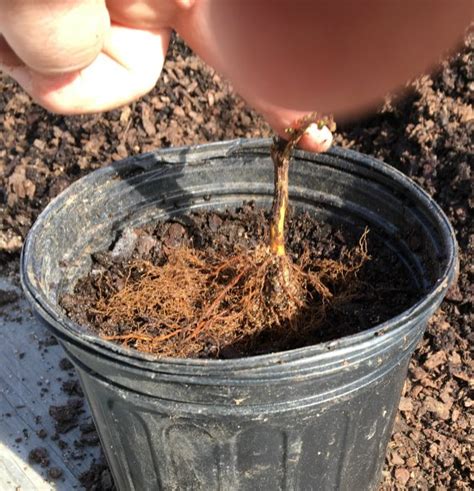
Insert the stem of the cutting into the soil at an angle. Gently firm the soil over the stem; keep the leaf itself out of the soil. Label the container with date and variety.
4. Caring for Cuttings
Growth Chamber
It is important that the humidity remain high until the baby plants are well-rooted. Place the prepared pots of cuttings into zip-lock plastic bags, clear clam-shell food containers, or clear plastic storage containers. You can even cover a single pot with a clear glass jar.
Check the cuttings a few times a week for moisture and add a small amount of water if necessary. Some growers fertilize regularly with dilute (1/4 strength) liquid fertilizer. Do not wet the leaves, as this can cause harm to the plant.
Light
Place the container in indirect light, preferably in an East-facing window or under grow lights. Direct or excess light can burn the leaves.
Provide light for 10-12 hours daily but don't leave the lights on all of the time. The plants need a dark, downtime each day to grow.
Read also: Root Vegetables in Nigeria
Repotting African Violets + Care/Propagation Tips! 🪴😍 // Garden Answer
5. Upshifting to Larger Pots
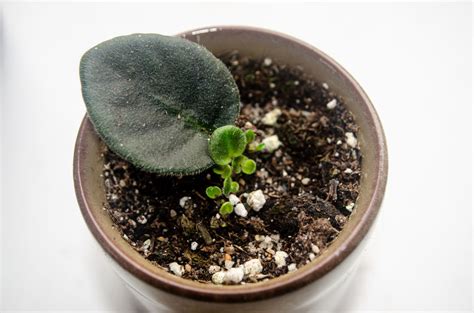
After 8 weeks, young plantlets with leaves should appear at the cut surface of the stem. When the baby leaves grow to dime-size (miniature varieties) or to quarter-size (standard varieties), the plants can be moved to their final pots.
Squeeze the sides of the original container to loosen the soil. Slide out the soil and gently pull and tease away the baby plants from the mother leaf. Take care not to injure the delicate roots of the new plants.
Discard the mother leaf; the mother leaf is no longer needed and will only rot away. Plant the babies into suitably sized pots of African violet mix.
Alternative Method: Rooting in Water
Some growers prefer to place their leaf stems directly into water; change the water every other day if you choose this method.
Beth Syphers of Crowley House Flower Farm suggests using a small shot glass as a vessel for the cuttings. After you cut the stem, place it in the shot glass filled with water and check on it every day. Set the shot glass in a warm, sunny, brightly lit area, but not in direct sunlight. It will do best in filtered light, such as behind a curtain near the windowsill.
Step-by-Step Instructions for Leaf Stem Cuttings
- Prepare Growing Medium: Combine equal parts vermiculite and perlite or fill 2-inch pots with potting mix. Alternately, you can just use potting mix made for African violets. Soak filled pots in water and allow to drain.
- Take Cuttings: Take cuttings from 3rd row of leaves from middle of plant using clean scalpel taking at least 1-inch of stem with the leaf. Write plant tag for each cutting if you want to track them (flower color, etc.).
- Trim Leaf Stem: Place cutting on table with fuzzy side up. Cut last inch of stem at 45-degree angle, tapering to base.
- Plant Cutting: Use dibber in potting mix to create hole and insert cutting with leaf resting on side of pot. Bottom of leaf should be just above soil level.
- Grow Cuttings: Close lid on clamshell if humidity is low (under 40%). Provide 12 hours light per day. East-facing natural light (without hot sun) is good. Avoid drastic temperature changes and drafts. Keep even moisture and open clamshell if condensation forms.
Ideal Growing Conditions
To mimic the natural habitat of Saintpaulia, aim for the following conditions:
| Condition | Details |
|---|---|
| Sunlight | East or west windows are recommended. Avoid excessive heat and cold. |
| Water | Water deeply, until the saucer fills. Empty the saucer after 30 minutes. Best to water from below and avoid wetting leaves. |
| Humidity | 40-50 percent. Use a household humidifier to help maintain humidity. |
| Pot Type | Plastic or clay. Plastic works best in low humidity households. |
| Fertilizer | Use a fertilizer designed for African violets. |
| Reblooming | If growing conditions are optimal, by snipping off old flowers (“disbudding”), new blooms may appear in 6 to 8 weeks. |
FAQ: African Violet Propagation
How Long Does it Take a Cutting to Root?
An African violet cutting takes about 3 to 4 weeks to form new roots. Around 3 to 4 weeks later, you will begin seeing new leaves. Once there are 2 to 3 new leaves growing, it’s time to repot. This process can take anywhere from 2 to 6 months.
Do I Need Rooting Hormone to Propagate African Violet Cuttings?
African violet cuttings do not require rooting hormone. They grow roots just fine without further assistance.
How Long Does it Take for Roots to Form on African Violet Cuttings?
Roots will start forming on African violet cuttings within days and will be 1 to 2-inches long within a month or so.
How Long Does it Take for African Violet Cuttings to Grow Leaflets?
African violet cuttings generally take about two to three months for little leaflets to start appearing.
Should I Use Fertilizer While Propagating African Violets?
African violet cuttings do not need fertilizer. Fertilizer is usually needed when the plant is mature and capable of flowering.
