Root vegetables are a diverse group of foods, including culinary staples. These are a part of a plant grown underground and eaten as food.
Because “root vegetable” is a culinary category rather than a botanical one, it is composed not only of true roots but also bulbs, corms, rhizomes, tubers, and other underground plant structures. Many root vegetables are highly nutritious, containing both important nutrients and calories, often in the form of starch. Some root vegetables are tubers, which are not roots but modified stems that grow underground. Like tuberous roots, tubers store energy in the form of starch.
True root vegetables are those whose edible part consists of the root of a plant. Many are taproots and may be tapering in shape, such as carrots, daikon, and parsnips, or more bulbous, such as beets and turnips. Some are considered tuberous root vegetables, such as sweet potatoes and cassava, and are highly developed storage organs.
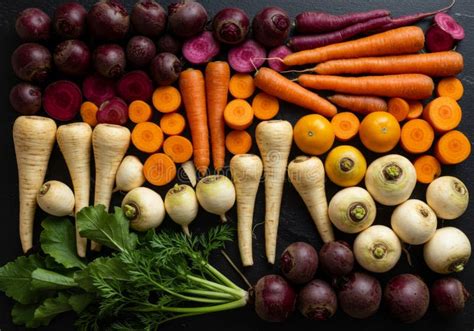
An assortment of root vegetables, showcasing their variety in shapes, sizes, and colors.
Common Root Vegetables and Their Uses
Some root vegetables are among the most widely cultivated foods in the world. Like other vegetables, they tend to contain a wide variety of nutrients important for health. Some, such as radishes and carrots, can be eaten fresh, while most are cooked in a variety of preparations. Many are staple foods eaten almost every day, and they may serve as the primary source of calories in some places, especially in tropical climates where many cereal grains cannot grow.
Read also: Rooting African Violet Leaves: Step-by-Step
As energy storage organs for plants, starchy root vegetables like potatoes, cassava, taro, and yams are high in carbohydrates. Many of these are made into flours and serve as the chief ingredients for regional cuisines across the globe. Other root vegetables, like garlic, radishes, wasabi, and ginger, are highly valued for their flavour and are sometimes considered spices.
Some root vegetables, such as beetroot, sacred lotus, sweet potatoes, and onions, are quite versatile, providing not only edible roots but also greens. One reason root vegetables are so successful as crops is that they tend to be hardy. They also tend to require relatively little space or resources to produce.
Many can be harvested at any size, making them good choices for areas with short growing seasons. Many of these plant structures serve to help plants overwinter or survive other difficult conditions, and thus root vegetables often store well, especially in root cellars. Some root vegetables, such as the rutabaga, can be kept in cool, dark areas for months without spoilage. In general, the harder a root vegetable is, the longer it can survive storage.
Because of their hardiness to cold and durability once harvested, root vegetables are historically important foods in areas that experience cold winters that impact the cultivation of other food plants.
Root and tuber vegetables are the underground storage system of various plants found around the globe and include potatoes, yams, sweet potatoes, turnips, rutabagas, and celery roots (celeriac). Potatoes, first cultivated in South America, come in various colors, shapes, sizes, and textures. Other tubers popular in tropical climates in the Caribbean, South America, Polynesia, and Western Africa include manioc (cassava), taro (dasheen), and malanga (yautia).
Read also: Treating African Violet Root Rot
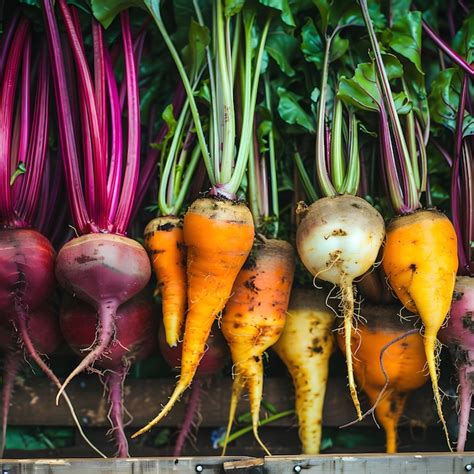
Specific Root Vegetables
Potatoes
There are thousands of varieties of potatoes, but they generally fall into three categories: new or waxy, mature or starchy, and all-purpose. Matching the potato characteristics to the best cooking method will yield the most consistent results in the kitchen.
- New Potatoes are any variety of potatoes harvested in the spring or summer with high moisture and low starch content. They are sometimes called waxy potatoes and are best when steamed, roasted, or grilled.
- Mature Potatoes are Russet Potatoes harvested in the fall with low moisture and high starch content. Because of this high starch content, the potato granules swell and break into dry granules that are easy to mash and puree. They are suitable for baking, pureeing, and frying.
- All-Purpose Potatoes, including large red, white, and yellow varieties, have moderate moisture and starch content and are suitable for diverse preparations. All-purpose potatoes hold their shape after cooking and are used in salads, soups, and casseroles. They are also ideal for boiling, steaming, frying, and roasting.
Other Tubers and Root Vegetables
Unrelated to the common potato, sweet potatoes are suited more for slow, dry-heat cooking that turns the starch into maltose and gives them a sweet flavor. Yams are a distinct species separate from American sweet potatoes that are dry and mealy. Most yams in the US are sweet potatoes and not real yams.
In the Caribbean, Central, and South America, boniato and batata are white sweet potatoes. Other root and root-like vegetables, including carrots, parsnips, rutabaga, turnips, and celery root, contain less starch but can be cooked using the same potato preparations. The following chart includes root vegetable descriptions, flavor profiles, and recommended cooking methods.
4 cooking tips to make Perfect Roasted Vegetables
Cooking Methods
Some root and tuber vegetables, including raw potatoes, parsnips, and celery root, oxidize when peeled and should be held in water until cooked. Citric acid can also be added to help keep them from discoloring. Root and tuber vegetables are cooked to soften textures and make them digestible.
Moisture and starch content determine the best method, whether simmered, baked, or roasted. Frying in fats adds flavor, texture, and color. Once cooked, color pigments are relatively stable.
Read also: Root Vegetables in Nigeria
Young vegetables, in general, have higher levels of sugar and lower levels of starch. As vegetables mature, the sugar is converted to starch. Roots and tubers, when harvested and stored, become starchier and, therefore, more fibrous. Cooking methods and cooking times should be adjusted to compensate for this disparity. Some vegetables, like mature carrots, may need added sugar to compensate for their lack of sweetness.
Vegetables cooked by moist heat methods are simple in their preparation and presentation. They can be served by tossing with butter or oil, fresh herbs, salt, and seasoning. Roots and tubers, when steamed or simmered, can be cooked in their skins, peeled and cooked whole, sliced, diced, or tournéed. Cooking vegetables in their skins retains more nutrients and flavor but is sometimes impractical in production.
Steamed and simmered potatoes are used for purees, gnocchi, flatbread dough, potato salads, stews, and casseroles.
Best Choice: New potatoes, all-purpose potatoes, red skin, and yellow skin varieties.
Method:
- Scrub potatoes
- Remove eyes, sprouts, and green spots.
- Peel if desired.
- Cook whole or cut into uniform shapes for even cooking.
- Submerge in cold water to prevent discoloration.
- Start potatoes in cold water (hot water promotes uneven cooking and mealy potatoes).
- Add salt to the water, 1 oz./28 g per 1 g/4 l of water.
Glazing Root Vegetables
Glazing can be done with almost any vegetable but is well suited for root vegetables like carrots, parsnips, turnips, and rutabagas. Because each vegetable cooks up differently, glazing them separately and combining them after cooking is best.
When glazing vegetables, the goal is to reduce the liquid, butter, and sugar to a syrupy-like consistency when the vegetables are cooked al dente. Since vegetables are mostly water, adding too much liquid will create a boiled vegetable effect. Therefore, starting with minimal water and adding more as needed is better.
Glazed Vegetable Production Method
- Cut vegetables into uniform shapes.
- Combine in a sautoir or braising pan with salt, butter, and sugar.
- Add a small amount of water to coat the vegetables. Avoid drowning the vegetables in water because the result will be boiled vegetables rather than glazed.
- Heat the vegetables on the stovetop and toss them to coat them with the liquid.
- Cover with parchment and allow to cook until tender but not soft. Toss the vegetables periodically. Add more liquid as needed.
If prepared correctly, the liquid in the pan will reduce to a syrup glaze just as the vegetables have finished cooking. If the liquid is too watery, strain and reduce it separately, and then add it back to the vegetables.
Gratinée & Casserole
Potatoes cooked en casserole are combined with milk, cream, savory custard, stock, or sauces. They are often gratinéed with grated cheese or bread crumb crust to add color and texture to the finished dish.
Production Cooking Method
- Scrub and peel potatoes, and par-cook if desired.
- Assemble all ingredients for rapid prepping.
- Heat liquids, cream, sauce, stock, or custard to speed up cooking.
- Slice potatoes ⅛” thick on a mandolin; hold in water to prevent discoloration.
- Dry potatoes thoroughly; excess moisture will affect flavor, seasoning, and texture.
- Season the potatoes with salt and pepper.
- Butter a casserole dish or hotel pan and rub with raw garlic.
- Layer the potatoes in the pan.
- Pour the hot liquid over the potatoes to cover the surface.
- Cover with buttered parchment and foil.
- Bake in a water bath at 325˚F/160˚C until almost tender.
- Remove foil and parchment, and top with grated breadcrumbs or grated cheese (Parmesan, Gruyere, or other hard-grating cheese).
- Return to oven to brown the surface.
- Cut and serve immediately.
Pommes Pavé Method
- Square off potatoes and slice on mandolin.
- Season with salt and pepper.
- Layer side by side in a pan lined with buttered parchment.
- Cover with foil and bake until tender.
- Weight down and cool completely.
- Remove from pan and cut into squares.
- Sauté until browned on all sides.
Dry Heat Cooking Methods
Fried & Sautéed
A standard potato preparation that includes classic French to rustic American traditions with many assorted variations provides a hearty accompaniment to roasts, steaks, and egg dishes.
Best Choice: Red skin and yellow skin varieties
Pommes Lyonnaise
Home fries, also called American or Cottage Fries, Lyonnaise, and Sardalaise, are all sliced potatoes fried or sautéed in fat. The potatoes are often blanched, whole or after slicing, before the final pan-cooked step. Some recipes call for caramelized onions; others vary the fats from oil to butter to duck or goose fat. These recipes can be garnished with the addition of garlic, bacon, peppers, mushrooms, spices, and fresh herbs.
- Blanch potatoes, either whole or pre-sliced, until about half cooked.
- Drain and oven-dry potatoes to remove excess moisture.
- Caramelize the sliced onions in sauté pan; remove from pan and reserve.
- Add potatoes and sauté stirring occasionally to brown on all sides.
- Add the onions to the potatoes and season with salt and pepper
- Garnish with chopped parsley
Potato Pancakes & Latkes
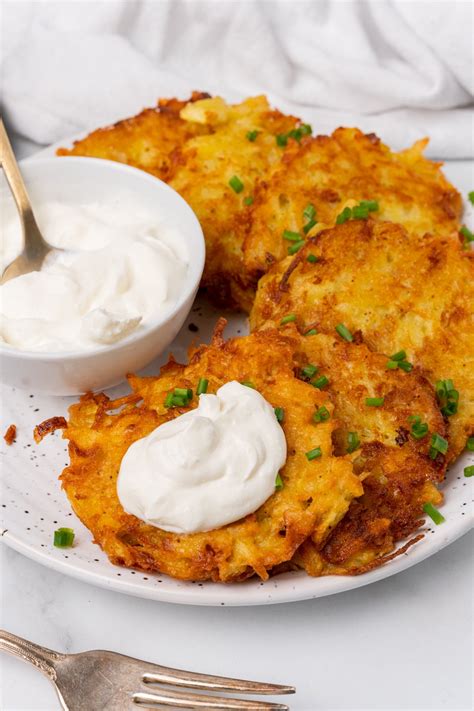
Shredded potatoes formed into cakes and fried are known by different cultural names. These preparations can be served as appetizers with smoked salmon, sour cream, caviar, chives, or applesauce.
Cooked and shredded potatoes are the characteristics of American hash browns and rӧsti potatoes. Hash browns can be prepared free-form or shaped in a small individual cake. Some variations of hash browns are diced or sliced. Rӧsti are large pan-size cakes that are turned out and portioned in wedges when finished.
Pommes Frites
Deep-fried potatoes are best when fried twice. The first is a blanching stage at a temperature of 300-325˚F/150-160˚C to soften their texture. The finishing stage at 350-375˚F/175-190˚C completes the cooking process, providing a crisp texture and golden brown color.
- Scrub and trim potatoes, peel if desired, and cut into uniform julienne shapes on a mandolin.
- Soak in cold water until ready for cooking.
- When ready to fry, drain the potatoes well and blot dry on paper towels.
- Drop into a deep-fryer at 300-325˚F/150-160˚C for a few minutes to soften the potatoes.
- Spread out on a sheet pan lined with parchment paper.
- The potatoes can be kept cooled or frozen until ready for finishing
- To finish, drop in a fryer at 350-375˚F/175-190˚C and cook until crisp and golden brown.
- Sprinkle with salt and serve immediately.
Chips & Gaufrettes
The key to perfect vegetable chips is ultra-fresh oil and the correct frying temperature. Because of the sugar content in vegetables like sweet potatoes maintaining a low fryer temperature averts the chips from getting too dark or bitter tasting.
- Scrub, peel and trim vegetables.
- Slice on a mandolin 1/16” thick.
- Soak in cold water until ready to cook.
- Drain vegetables and pat dry
- Deep fry at 300-325˚F/150-160˚C until crisp
Baked & Roasted
To bake and to roast are different names for the same process. The terms are assigned based on traditional use and to create menu variety and interest.
Best Choice: Russets
Oven Roasted Root Vegetables Recipe
These Oven Roasted Root Vegetables are an easy, healthy and colorful vegetable side dish. Roasted caramelized veggies are perfect for holidays, buffets, or even a weeknight dinner. The flavor that comes from roasting the vegetables with garlic and aromatic herbs makes them irresistible. Root vegetables have a sweet, earthy flavor that seems tailor-made for roasting. This recipe for oven roasted root vegetables has been a favorite on the site for years.
With yams, carrots, parsnip, and potatoes, this hearty mix of vegetables is sure to satisfy. Red onions and garlic cloves are added to pump up the aromatic flavor. With rosemary, thyme and a touch of cumin, these vegetables are utterly addicting. They are the perfect side dish for holiday celebrations like Thanksgiving, Passover, and Rosh Hashanah. This recipe is great for a crowd; you can easily double the quantity on two baking sheets and roast two batches at once. This dish is perfect for a buffet, it’s equally tasty warm or at room temperature. Use any combination of root veggies you like. Not a fan of yams? Substitute plain potatoes.
Trouble finding parsnip at the market? Use more carrots instead. Other root vegetables like turnips, daikon, rutabaga and yuca will work too. Butternut squash also works well here. No matter which veggies you use, the key to even roasting is cutting them all the same size. This way they’ll roast evenly. If you use red beets in this recipe, keep in mind that the roasting will release a pinkish juice that will color the other vegetables. The color doesn’t bother me- in fact, I think it’s kind of pretty. I like to keep my seasonings simple here. Salt, pepper, cumin, rosemary and thyme are all you need to bring out the earthy, wonderful flavors of the root veggies.
For more flavor, you could sprinkle them with oregano, turmeric, or chili flakes to spice things up. Prepare these roasted root vegetables ahead by doing all of the chopping, peeling, and measuring up to two days ahead. Place all of the ingredients into a sealed refrigerator bag, seal and toss ingredients to coat, then refrigerate until ready to cook. You can also roast the vegetables and cook them up to two days ahead. When you roast, cook them until almost (but not quite) fully tender. Refrigerate the cooked vegetables in a sealed bag. Just before your meal, reheat in a 400 degree F oven for just a few minutes. By the time they’re heated through, they’ll be perfectly cooked. We are a participant in the Amazon Services LLC Associates Program, an affiliate advertising program designed to provide a means for us to earn fees by linking to Amazon.com and affiliated sites. These roasted root vegetables are totally addicting! Note: If using red beets your other vegetables may take on a bit of red color.
Instructions:
- Place a rack in the bottom of your oven and preheat oven to 400 degrees F.
- Slice all vegetables into chunks roughly 1 1/2 inches wide. The more similar the size of the vegetable pieces, the more evenly they will roast.
- Place cut vegetables and garlic cloves into a large mixing bowl. Add 3 tbsp olive oil, fresh thyme leaves, ground cumin, kosher salt, and black pepper. Stir until all vegetables are evenly coated with oil, spice and herbs.
- Brush large rimmed baking sheet with remaining 1 tbsp olive oil. Spread the vegetables out evenly on the baking sheet. Place the rosemary sprigs on top of the vegetables, evenly spaces across the sheet.
- Roast the vegetables in the oven for 15 minutes. Stir the vegetables, bringing the chunks from the outside towards the center and the chunks in the center out towards the edges. Return baking sheet to oven and continue to roast until the largest chunks are tender and the edges are starting to turn golden/dark, another 15-25 minutes.
- Remove the roasted rosemary sprigs and stir the vegetables (some leaves of rosemary will remain, this is good). Season with additional salt and pepper to taste, if desired.
- Vegetables can be served warm or at room temperature. Nutritional information should be considered an estimate only; please consult a registered dietician, nutritionist, or your physician for specific health-related questions.
Potatoes are tubers, while sweet potatoes are tuberous roots. Some roots are made of stem tissue as opposed to root tissue. And bulbs are different from corms.
First, you’ve got your tubers, which are basically underground storage units for the nutrients and water the plant will need to make it through the winter - or during a dry spell. Potatoes and other tubers are rich in antioxidants, such as vitamin C, and are full of resistant starch, which is a type of fiber that feeds our beneficial gut bacteria.
This starch improves blood sugar control for those with type 2 diabetes, can treat and prevent constipation, decreases LDL cholesterol, and lowers the risk of colon cancer and digestive disorders. Next, there are taproots, which grow straight down in one single structure, rather than the fibrous roots that look like tangled string.
The taproots we like to eat also double as nutrient storage units, just like the tubers. Common taproot veggies include carrots, beets, parsnips, radishes, and turnips, as well as the turnip’s colorfully named relatives, kohlrabi and rutabaga.
The colorful members of the taproot clan also boast high levels of antioxidants, including the beta carotene in carrots that’s famously good for eyesight, and a host of powerful compounds found in beets. The third category is the rhizomes, which store starches and proteins that allow plants to survive harsh seasons and return the following year.
Ginger and turmeric represent the rhizome family fabulously in terms of health benefits. Ginger is a powerful antiviral, fights cancer, and aids digestion, among its many virtues. And I think it’s adorable that the name of its principal active ingredient is gingerol, which is far better for you than ginger ale.
And it might take up less screen space to tell you what turmeric isn’t good for, rather than what it treats. Fourth, we’ve got the true bulbs, which include the mighty onion and its aromatic cousins shallots, leeks, ramps, and scallions, as well as the equally awesome garlic.
The bulb squad also features nutritional all-stars. Onions, garlic, and their kin are rich in organosulfur compounds, which have antioxidant, antiviral, and antibacterial properties. Fifth are the corms, which look like bulbs but don’t grow in rings. Instead, they’re actually made up of stem tissue that’s modified to allow it to store nutrients.
The corm veggies might not be so familiar to you, but many are staples around the world. Corms like taro also boast significant health benefits. Taro is gluten-free, fiber-rich, and loaded with phenolic flavonoid compounds that support healthy skin and vision - and protect against certain cancers.
Some of these root vegetables are available year-round, but the peak season in many climates is fall through spring. Some varieties get sweeter the longer they’re kept in the ground during cold weather, as the low temperatures challenge them to convert starch into sugar, which acts as a natural antifreeze and prevents cell damage. Parsnips are a great example. Once the ground freezes, these oft-maligned veggies become far sweeter.