The architecture of Africa is as diverse as the continent itself. Throughout its history, Africans have developed unique local architectural traditions, often influenced by external cultures. African architecture uses a wide range of materials, including thatch, stick/wood, mud, mudbrick, rammed earth, and stone.
The underlying theme is building structures that use recyclable and natural materials. House design trends with a focus on nature enhance the living spaces, unlike anywhere else in the world.
African house design trends are evolving quickly with a firm handle on environmental-conscious practices, a focus on sustainable living, and minimal impact on nature.
Here we explore different types of houses and construction methods found in Africa, highlighting the ingenuity and cultural significance behind them.
Traditional Housing Styles
Most of Africa’s rural peoples use natural materials that are locally available for their buildings. In grasslands, people typically use grasses to cover walls and roofs. In forested areas, people build with hardwoods as well as with bamboo and raffia palm. Earth and clay are also major building resources.
Read also: Wooden Doors in Ghanaian Homes
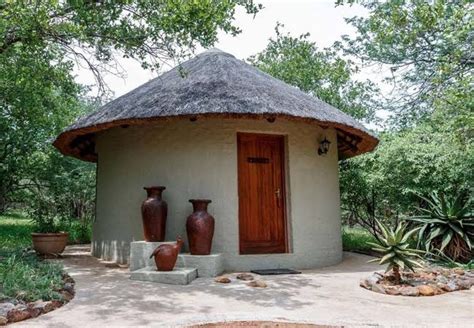
African houses are often cylindrical (round) in shape. The Xhosa people of southern Africa build round one-room houses called rondavels. A rondavel is typically made from a ring of timber posts, filled in with mud or basket weave, and topped with a conical thatched roof. In the semidesert regions of Sudan and western Africa, round houses are often constructed of sun-dried mud in a coil pottery technique.
Some specific examples of traditional African houses include:
Rondavels
The Xhosa people of southern Africa build round one-room houses called rondavels. A rondavel is typically made from a ring of timber posts, filled in with mud or basket weave, and topped with a conical thatched roof.
Tata-Somba Houses
The Somba people of northwest Benin are known for being skilled builders. Traditional Somba dwellings are mighty earthen fortresses called tata-somba houses. They’re typically two stories tall and have mud walls, straw roofs, and turrets like you might see on a castle. Though similar to the tekyete structures found in neighboring Togo, tata-somba houses uniquely have designs engraved on both inner and outer walls.
Sukhala
In the village of Tiébélé, which is occupied by the Kassena people of the greater Gurunsi ethnic group of Ghana and Burkina Faso, there exist hand-painted houses dating as far back as the 15th century. These simple yet elaborate structures, called sukhala, are found in the chief’s complex and feature designs drawn by Gurunsi women, while men are customarily responsible for building.
Read also: Guide to Kenyan Homes
Dorze Huts
Engaging in the process of weaving allows us to structure, communicate, reflect on, and connect with our designs. By experimenting with different fabric structures, we gain insight into how materials behave under tension and compression. This understanding helps us push the boundaries of textiles and their limitations, resulting in designs that stretch and test the properties of the materials. The round hut is a significant feature in many African cultures, known by various names among different tribes. In Angola, it is called Mbukushu, in Botswana, it is Dumela, in Ethiopia it is Dorze, and so on.
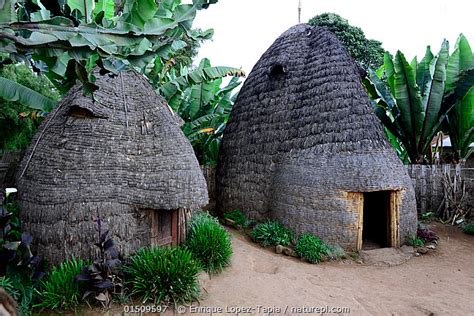
These houses are built to be over seven meters high, allowing for gradual shrinkage as rot and termites eat away at the base. Typically, the house will lose around 2 to 5 centimeters in a year. The main doorway between the porch and the house is also very tall for the same reason, as the structure gradually interacts with nature and time. Because of this, the door and porch of the huts are rewoven every few years, constantly bringing builders and craftsmen to interact with the techniques and intricacies of the material.
Nama "matjieshuis" Huts
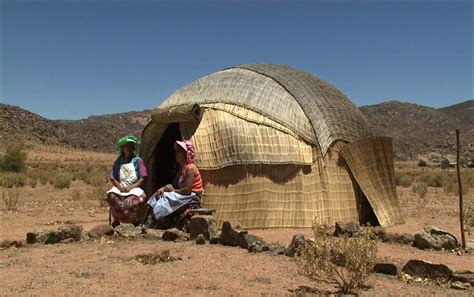
These houses are round-shaped huts with a dome, constructed using branches and covered with woven reed mats. Originally designed for the nomadic lifestyle of the Nama people, these homes are lightweight and easy to dismantle and rebuild in a new location when resources in an area become scarce. The assembly aspect is evident in the woven reeds, which are made in panels of various sizes for convenient transportation and coupling.
Materials and Construction Techniques
The materials used to build a person’s house depended greatly on the kind of environment they lived in - if you lived somewhere with moist ground, you’d be able to use clay. But if you didn’t, soil, stone, leaves, or even sticks may be used instead.
Clay and Mud Construction
Most people of Ancient Africa lived in basic clay huts with thatched roofs - that is to say, a roof made of dry grass and straw. Most Ancient African clay huts were built in a circular shape and had just one room. In the savannah and desert regions of Sudan in Western Africa, cylindrical houses made of mud were the norm. These houses were assembled in a traditional “coiled pottery” pattern.
Read also: Finding a House for Rent in Africa
Multi-brick wall construction is common in Durban, South Africa. Instead of wooden stud frame walls, a multi thickness of clay bricks, plastered inside and out with mortar, is used. This technique is used everywhere in the country and has been for a long time. Although the brickwork doesn’t look great when exposed, what does look impressive is the way the black African tradespeople apply plaster. It’s hard work to apply well, especially using the heavy 3-parts sand, 1-part Portland mixtures that are used exclusively.
Stone Architecture
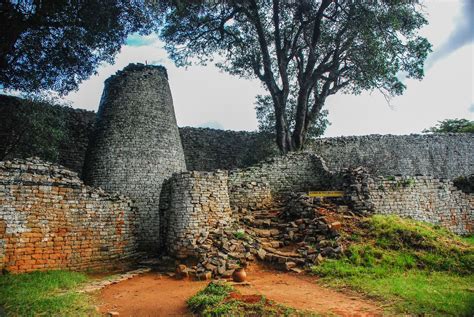
In contrast to natural materials, Africa still has some ancient structures made of stone, which is much more durable. The oldest examples of stone architecture in Africa are the pyramids of Egypt, which were built more than 4,500 years ago. South of the Sahara, stone ruins of Great Zimbabwe remain in what is now the country of Zimbabwe.
British Influences in Durban
Homes are constructed just like they’ve always done it in England, in a masonry-heavy way, thousands of miles away from where this was developed originally. Durban is hot, humid and populated with wood eating bugs. That’s why the British style of building with bricks, mortar and very little wood has remained so popular here. Frost isn’t an issue, of course, (it’s never been colder than 48ºF or 9ºC in Durban), so foundations need only be deep enough to get to solid ground, though that can sometimes be deeper than a typical Canadian basement.
Interior walls are built with the same double bricks plastered with smooth mortar, and even ceilings are solid masonry, too. These are typically built with a series of precast lintels that support precast cross pieces molded to interlock with the lintels. Everything fits together dry, then a 2” layer of concrete is poured on top to create the floor above, with mortar troweled on underneath to create the ceiling surface below.
Roof trusses, instead of traditional rafters, are one of the only innovations you’ll find on a modern South African homebuilding site. These support lengths of 2×2 strapping spaced horizontally to hold up the ends of concrete roof tiles - the nearly-ubiquitous roofing choice in South Africa.
Cultural and Historical Influences
Like other aspects of the culture of Africa, the architecture of Africa is exceptionally diverse. African architecture in some areas has been influenced by external cultures for centuries, according to available evidence.
Islamic Architecture
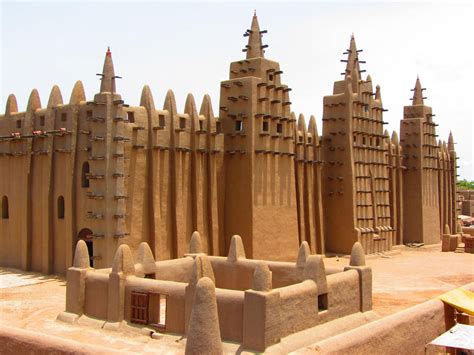
For more than a thousand years, the religion of Islam has influenced architecture in several regions of Africa. Islamic states traded with the early kingdoms of the western Sudan region and exposed them to Islamic culture. Of the many mosques in western African towns, probably the most magnificent example is the great mud-walled building in Djenné, Mali.
European Colonial Architecture
European architecture came to southern Africa in the second half of the 1600s. It began when the Dutch developed Cape Town as a trading post. A Dutch fortress called the Castle of Good Hope, completed in 1679, still stands. Many large public buildings, churches, and private homes were built in the Cape Dutch style. Some of these buildings have distinctive gables.
In 1806 the British government took control of the Cape. From then on, the colonial architecture of Britain influenced local architecture. Many British-built homes had ornamental metal roofs and narrow columns. Similar styles can still be seen in South Africa.
Modern Trends in African Architecture
New-age architects in Africa have a distinct advantage over their global counterparts since they can avoid the common sustainability errors made in the past. New house design trends focus on installing solar panels to supplement power needs and lower the family’s dependence on supply grids.
Urban homes incorporate lots of natural lighting with the smart placement of windows and glass panels to lower the reliance on artificial light.
Modern-day homes follow brilliant color themes tempered with soothing greens, cinnamon, baked milk, and honey. Although architects are dedicated to preserving ethnic African spirit and culture, they are also excited about infusing global themes into their designs with seamlessly-flowing lines and styles.
Considering that overall weather conditions are either wet and hot or warm and dry, you would need a sturdy roof that can withstand both. Options like slate, concrete, metal, and asphalt shingles would be ideal.
Here are some modern architectural landmarks across the continent:
- Currency Museum (Luanda, Angola): Reflects the modern aesthetic of local architecture firm Costalopes.
- One Airport Square (Accra, Ghana): Features a honeycomb-esque exterior inspired by the bark of native palm trees.
- Lideta Mercato (Addis Ababa, Ethiopia): A sustainable shopping center inspired by Ethiopian textiles.
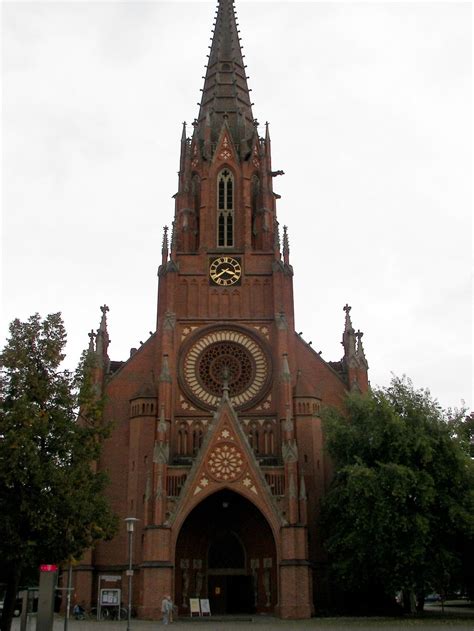
- Christuskirche (Windhoek, Namibia): A German Lutheran church with neo-Romanesque and Gothic revival elements.
Labor and Economic Factors
Before the late 1980s, it was actually illegal for anyone other than a white man to pick up a trowel and get paid for it. When legislative changes opened the building trades to anyone who wanted in - regardless of colour - it added hundreds of thousands of people to the labour pool, causing wages to plummet and stay down.
Where it used to be possible for a bricklayer to earn enough to support the kind of life we enjoy in North America, these days your kids earn more money working a summer job than the highest paid trade worker building houses in South Africa.
The cost of houses in this country is unbelievably low when converted to dollars. Watching Warren Miller, a supervisor on one of Scates’ sites, I saw just how hands-on the management of the labour force has to be in South Africa. “I’ve got to watch everything constantly,” he explained.
Here is a summary of labor costs in Durban during the time of the author's visit:
| Worker Type | Daily Wage (Rand) | Daily Wage (USD) |
|---|---|---|
| General Labourer | 100 | $15 |
| Highest Paid Bricklayer | 300 | $50 |
“It used to be possible to earn a living as a bricklayer,” explains Scates. “Now you can’t. You need to manage 20 bricklayers to make enough money to live. That’s really what I do.
Interpreting the Contemporary Procession of African Vernacular Architecture: Part 1
Popular articles:
tags: #Africa
