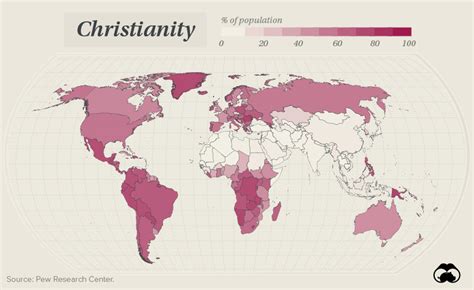
Over 685 million people in Africa identify with Christianity in some way. Contrary to the misconception that Christianity is a "white man's religion" with no place among true Africans, Christianity was present in Africa 1000 years before the first European Colonialists arrived on African shores.
Christianity has been active in Africa since the 1st century. Therefore, it’s inaccurate to call it a white man’s religion. Christianity is a religion that started in the Near East and travelled to both Africa and Europe at the same time.
In a quest for greater coherence between parochial identities, culture and Christianity, there exists an African consciousness which seeks to indigenise and decolonise Christianity. Africans are profoundly religious people who view their faith as part of their way of life, as strengthening their cultures and providing a moral compass for daily living.
In efforts to transform society, the Christian religion has played a significant role in the path to African development. Christianity in Africa dates to the very inception of the church. Africans consequently played a crucial role in establishing the doctrines and theology of the early church.
While African Traditional Religion (ATR) is paramount, it is the purpose of this article to suggest that the Christian faith has and continuous to play a significant role on the African continent in its development. While there are many indigenous African beliefs, these have been to a large extent supported by Christianity in a quest to systematize novel knowledge and promote peace and tolerance across the continent.
Read also: A concise overview of African history
Many Africans have sought facets of Christianity that are similar to their religious and personal practices and continue to do so. Thus, while there exist numerous similarities and also differences between Christianity and ATR, it is imperative to preserve old-style regional distinctiveness and Christianity as the unifying rudiments in nation building endeavours and in efforts to spread the gospel of Jesus Christ.
Africans can and should come to comprehend the Triune Godhead as being consistent with their own spiritual consciousness and existential veracities. Indigenization of Christianity requires enculturation and essentially an understanding that it is indeed ecumenical and also embraces diversity and fundamentally requires viewing Holy Scriptures and the truths they propound as being applicable to any context and cultural milieu across the ages.
This article will explore the historical presence and influence of Christianity in Africa, its relationship with African Traditional Religion, and its role in the continent's development.
Early Roots of Christianity in Africa
You may be familiar with the strong base for Christianity established in Alexandria, Egypt, in the 1st century. Eusebius even wrote that the Gospel writer, Mark, came to Alexandria as early as 43 AD. To become the nation’s official religion, it’s likely that Christianity was already established in the country a long time before. For comparison, it took two and a half centuries for Christianity to become the official religion of the Roman Empire.
Going further back, we have Irenaeus of Lyons, writing in 180 AD. He wrote that a ‘Simon Backos’ preached ‘the coming in the flesh of God’ in his homeland of Ethiopia (Adversus Haereses, 3.12.8). And going back further still, Luke writes of the 1st century conversion of an Ethiopian high official (Acts 8:26-40). Could this official have started the first church in Ethiopia? Many of the Colonists were not aware of this heritage.
Read also: Literature and African History
While some Ethiopian monks did make it to the Council of Florence in the 15th century, when the Portuguese landed in Ethiopia in 1493, they found-to their shock-that it was already full of churches!
Sadly missing from many people’s understanding of Christianity is that a significant number of the Church Fathers were African. I used to assume that these Church Fathers were Roman or Greek Christians living in Africa as part of the Roman Empire. Only they weren’t.
Origen was Coptic. Augustine and Cyprian were Berbers. Both Coptics and Berbers are indigenous people groups native to Northern Africa. Tertullian was slightly different. He was Punic. Punics were a Semitic people who had come from Canaan and settled in Northern Africa in the Early Iron Age.
Along with other theologians who lived in Africa-such as Athanasius, Clement, Ambrose, Pachomius, Cyprian, etc.-these giants of Church history fought off heresies such as Gnosticism, Arianism, Montanism, Marcionism, Pelagianism, and Manichaeism. They also helped elucidate our view of the Trinity and taught us how to exegete correctly.
Amongst these mighty men, Augustine stands head and shoulders above the rest. He was a prolific writer, leaving behind 113 books, 218 letters, and over 500 sermons. Two of his books, Confessions and City of God are considered classics and shaped theological thinking for many centuries to come.
Read also: African American History Trivia
Evidence of Jesus in Jerusalem (8 Biblical Archaeology Discoveries)
Archaeological Evidence
At an archaeological site in Ethiopia, researchers are uncovering the oldest Christian basilica in sub-Saharan Africa. An international assemblage of scientists discovered the church 30 miles northeast of Aksum, the capital of the Aksumite kingdom, a trading empire that emerged in the first century A.D. and would go on to dominate much of eastern Africa and western Arabia.
Through radiocarbon dating artifacts uncovered at the church, the researchers concluded that the structure was built in the fourth century A.D., about the same time when Roman Emperor Constantine I legalized Christianty in 313 CE and then converted on his deathbed in 337 CE. The discovery of the church and its contents confirm Ethiopian tradition that Christianity arrived at an early date in an area nearly 3,000 miles from Rome.
“The empire of Aksum was one of the world’s most influential ancient civilizations, but it remains one of the least widely known,” says Michael Harrower of Johns Hopkins University, the archaeologist leading the team.
Helina Woldekiros, an archaeologist at St. Louis’ Washington University who was part of the team, adds that Aksum served as a “nexus point” linking the Roman Empire and, later, the Byzantine Empire with distant lands to the south.
Harrower’s team conducted their work between 2011 and 2016 at an ancient settlement called Beta Samati, which means “house of audience” in the local Tigrinya language. The location, close to the modern-day border with Eritrea and 70 miles to the southwest of the Red Sea, appealed to the archaeologists in part because it was also home to temples built in a southern Arabian style dating back many centuries before the rise of Aksum, a clear sign of ancient ties to the Arabian Peninsula.
The excavators’ biggest discovery was a massive building 60 feet long and 40 feet wide resembling the ancient Roman style of a basilica. Developed by the Romans for administrative purposes, the basilica was adopted by Christians at the time of Constantine for their places of worship. They also uncovered a stone pendant carved with a cross and incised with the ancient Ethiopic word “venerable,” as well as incense burners.
The Role of Christianity in Colonialism
I am not denying that Colonialism spread Christianity in Africa. It often brought with it the baggage of European culture, giving the impression that Christianity is European. Take Western European art as an example. Jesus is often painted as a blue-eyed, pale-skinned, European. In contrast, Jesus and his original disciples were 1st century, Levantine Jews, most likely brown-eyed, black-haired, and olive-skinned. Christianity was not a religion brought by the white man to Africa. It’s not even a white man’s religion. Christianity is a religion of the world.
As the imperial powers of Europe set their sights on new geographic regions to expand their spheres of influence in the 19th century, Africa emerged as a prime location for colonization due to its wealth of natural resources and purportedly undeveloped economies ripe for exploitation. In reality, European colonization devastated traditional African societies and economies.
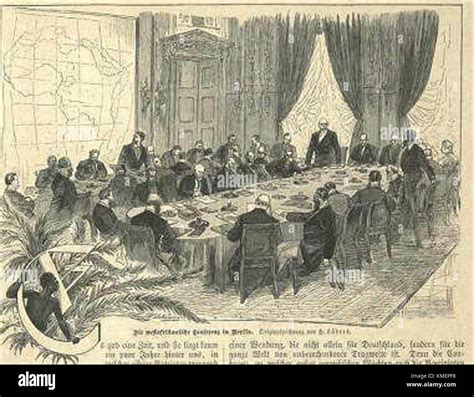
In 1884, the Berlin Conference marked the official beginning of colonialism in Africa. One of the justifying principles behind colonialism was the need to civilize the purportedly backward peoples of Africa.
One of the justifying principles behind colonialism was the need to civilize the purportedly backward peoples of Africa. The idea of the White Man’s Burden was to better (“seek another’s profit”) an ostensibly backward people (anyone who was not white).
The sentiments expressed in “White Man’s Burden” were not uncommon during this time. Africans were considered culturally inferior, an idea that was supported by scientific racism.
However, prior to this the idea existed that Europeans had a responsibility to colonize and therefore civilize Africans. The idea of civilization was “the triumph and development of reason, not only in the constitutional, political, and administrative domains, but in the moral, religious, and intellectual spheres… the essence of French achievements compared to the uncivilized world of savages, slaves, and barbarians”.
Christianity was one justification that European powers used to colonize and exploit Africa. Through the dissemination of Christian doctrine, European nations such as Great Britain, France, and the Netherlands sought to educate and reform African culture.
In his book A History of Africa, scholar J.D. Fage describes the racially based logic of European intellectuals and missionaries saying: “Mid-and late-nineteenth-century Europeans were generally convinced that their Christian, scientific and industrial society was intrinsically far superior to anything that Africa had produced”.
To many European nations, Christianity represented western civilization and the basis for Anglo-Saxon morality. Christianity served as a major force in the partition and eventual colonization of Africa.
During the late 19th century, European nations increasingly vied for global power. Essentially Christianity was a guise by which Western governments justified the exploitation and conquest of African nations.
Furthermore European missionaries called upon the tenants of Christianity to spread what they believed was a just and compassionate doctrine. In practice they were used to degrade the culture and society of the African people.
While European powers justified colonialism in Africa as a moral obligation to bestow modern civilization and Christianity on African societies, the potential for commerce and natural resources provided the true impetus for the colonization of Africa.
Following the abolition of the British slave trade in 1807 and the decline of trade with the United States in the mid-1800s for the same reason, Africa represented to Europe a recently legitimized and untapped region for economic expansion.
Syncretism and Africanization of Christianity
As of 2024, there are an estimated 734 million Christians from all denominations in Africa, up from about 10 million in 1900. In a relatively short time, Africa has gone from having a majority of followers of indigenous, traditional religions, to being predominantly a continent of Christians and Muslims, even though there is a significant and sustained syncretism with traditional beliefs and practices. Christianity is embraced by the majority of the population in most Southern African, Southeast African, and Central African states and in large parts of the Horn of Africa and West Africa, while Coptic Christians make up a significant minority in Egypt.
Within different geographical areas, Africans searched for aspects of Christianity that could more closely resemble their religious and personal practices. Adaptations of Protestantism, such as the Kimbanguist church emerged. Within the Kimbanguist church, Simon Kimbangu questioned the order of religious deliverance- would God send a white man to preach? The Kimbanguist church believed Jesus was black and regarded symbols with different weight than the Catholic and Protestant Europeans. The common practice of placing crosses and crucifixes in churches was viewed as a graven image in their eyes or a form of idolatry. Also, according to Mazrui, Kimbanguists respected the roles of women in church more than orthodox churches; they gave women the roles of priests and preachers.
Members within these churches looked for practices in the Bible that were not overtly condemned, such as polygamy. They also incorporated in their own practices relationships with objects and actions like dancing and chanting.
When Africans were able to read in the vernacular, they were able to interpret the Bible in their own light. Polygamy was a topic of debate- many literate Africans interpreted it as acceptable because of information contained in the Old Testament- while it was condemned by European Christianity. Dona Beatriz was a woman from Central Africa known for her controversial views on the acceptance of polygamy - she argued that Jesus never condemned it - and she was burnt at the stake.
Missionaries largely condemned the controversial African views and worked against leaders branching out. Within African communities, there were clashes brought on by Christianization. As a religion meant to "colonize the conscience and consciousness of the colonized," Christianity caused disputes even amongst hereditary leaders, such as between Khama III and his father Sekgoma in nineteenth-century Botswana.
In addition to Africanizing Christianity, there were movements to Africanize Islam. In Nigeria, movements were created to arouse Muslims to de-Arabize Islam. There were clashes between people who accepted the de-Arabization and those who did not.
Contemporary Trends
Africa is one of the most dynamic centres of Christianity in the world. Africa has a significant share of the world’s 2.2 billion Christians. It has about 30% of the world’s evangelicals, 20% of the world’s Pentecostals and charismatics, and about 15% of the world’s Roman Catholics.
The modern missionary movement and indigenous Christian movements in Africa of the nineteenth and twentieth centuries built upon these earlier foundations. Contemporary Pentecostal and charismatic Christianity has brought a renewal to the church in Africa. And now the churches of Africa in the twenty-first century are missionary-sending churches that are spreading the gospel around the world.
There are two significant trends in Christianity in Africa since independence. First, the emergence of a large African theological fraternity composed of both Catholics and Protestants. This second trend has seen African Christians move around the world in migration and mission.
In the early years of the twenty-first century, the largest church in England was led by a Nigerian missionary pastor. Similarly, in Kyiv, Ukraine, Europe’s largest church was shepherded by a Nigerian. Churches like Ghana’s Church of Pentecost and Nigeria’s Redeemed Christian Church of God have established centres all over the world. This is a trend sometimes described as ‘reverse mission’.
The new era of African missions is still in its infancy. Christianity in Africa dates to the first generation of the church. Africans played a crucial role in establishing the doctrines and theology of the early church.
The powerful African church is coming to maturity in the twenty-first century. We should claim our Christian identity and mission with both boldness and humility. Boldness in proclaiming our vibrant faith to the world. Humility in learning from others and working together.
Christian Adherents in Africa: A Snapshot
| Denomination | Percentage |
|---|---|
| Evangelicals | 30% |
| Pentecostals and Charismatics | 20% |
| Roman Catholics | 15% |
Popular articles:
tags: #Africa
