Throughout the year, we honor the achievements and legacies of African Americans, shedding light on pivotal moments and figures often overlooked in mainstream narratives. Black culture and history are undeniable and deeply ingrained in American society.
Here are some interesting facts from African American history:
The Tuskegee Airmen
Nearly 1,000 men graduated from the Tuskegee program, flying 1,578 missions and over 15,000 sorties, destroying 261 enemy aircraft. Bombers led by the Tuskegee Airmen experienced some of the lowest loss rates of the war. They were awarded more than 850 medals.
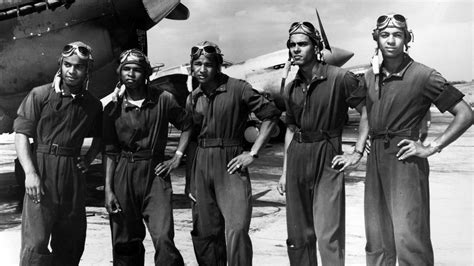
Tuskegee Airmen in Italy, 1945
The Montgomery Bus Boycott
Following the arrest of Rosa Parks, a Montgomery seamstress, who refused to give up her seat to a white woman at the bus stop, a 13th-month movement that would become a main catalyst of the civil rights movement began in Montgomery, Alabama. The Montgomery Bus Boycott, coordinated by the Montgomery Improvement Association under the leadership of Dr. Martin Luther King, was a movement in the South where African Americans refused to ride public bus transits until the desegregation of public transits was accomplished.
Read also: Test Your Knowledge of Black History
On December 5, 1955, the MIA organized a boycott, in which 90% of the black residents of Montgomery stayed off the busses. Following that day, several ministers, leaders, and community members met with Dr. King to discuss the plan of action going forward, and Dr. King and the MIA voted to continue the movement. For 381 days, African Americans in Alabama boycotted public transit systems, gaining national spotlight.
According to the National Park Service, Montgomery City Lines lost an estimated 30,000 and 40,000 bus fairs each day, resulting in millions of dollars lost in revenue for the city. This led to the landmark 1956 case Browder v. Gayle, which ruled that segregation on public transportation was unconstitutional.
The 15th Amendment and Voter Disenfranchisement
The Browder v. Constitution, granting African American men, the right to vote. Following the ratification of the amendment, African Americans in the 1880's began to hold offices and vote in some southern states, but things quickly changed as confederate states would begin enacting Jim Crow laws, to prevent African American's from voting. Literacy tests, "The Grandfather clause", and poll taxes were some of the notable voter disenfranchisement tactics used to prevent voting. government to oversee elections in southern states, that had a history of voter suppression.
Garrett Morgan and the Traffic Light
Garrett Morgan, the African American inventor responsible for laying the blueprint for the invention that has saved countless lives and made highway transportation smoother and pedestrian crossing safer-the traffic light. patent for an automatic three-position traffic signal, the first of its kind.
Prior to Morgan's invention, there was a manually operated two-light signal, that was manually operated, causing it to be very susceptible to human error, often causing confusion for drivers and pedestrians. Morgan's traffic signal was a T-shaped pole that featured a stop, go, and an all-directional stop position.
Read also: Experience Fad's Fine African Cuisine
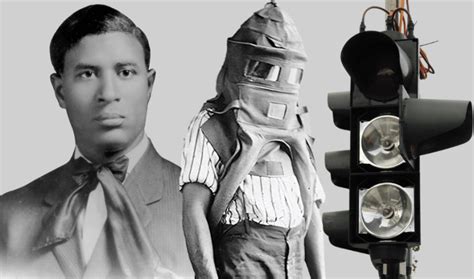
Garrett Morgan
Willie Mays
Lightning speed, a power slugger, and an all-time great, the electrifying "Say Hey" Willie Mays is widely considered one of the greatest baseball players of all time. Willie Mays was born on May 6, 1931, in Westfield, Alabama near Fairfield. As a Jefferson County Native, Mays picked up baseball from his father, Cat Mays, who played for a Birmingham Industrial League team and often took him to games with him.
Willie Mays was a multi-sport athlete at Fairfield Industrial High School. By the age of 16, he began his professional baseball career, playing for the Negro League team, the Chattanooga Choo-Choos for a short time before joining the Birmingham Barons in 1948. By the time he graduated high school, he was highly coveted by several major league teams, and on May 24, 1951, Mays was called up by the New York Giants (now San Francisco Giants) in MLB.
Mays went on to have a 23-year MLB career, becoming the National League Rookie of the Year, a 24-time All-Star, a 2-time National League MVP, a 4-time National League home run leader, a 4-time stolen base leader, and a World Series Champion, to name a few. He is sixth all-time in home runs with 660. He was inducted into the Baseball Hall of Fame in 1979. While Mays passed away at the age of 93 on June 18, 2024, his legacy lives on.
In honor of Willie Mays and the legacy of HBCU baseball, Miles College will host the Inaugural Willie Mays Open, set to begin on Friday, February 7, at the historic Rickwood Field in Birmingham, Alabama.
Read also: The Story Behind Cachapas
Lewis Latimer and the Light Bulb
While Thomas Edison is often credited with inventing the light bulb, it was Lewis Latimer, an African American inventor and engineer, who created the durable carbon filament that made incandescent lighting practical, efficient, and affordable for the masses. Lewis Latimer was an African American inventor born on September 4, 1848, in Chelsea, Massachusetts to George and Rebecca Latimer who escaped slavery from Virginia.
Navy to help support his family. After being honorably discharged, Latimore returned to Boston working at the Crosby and Gould patent law office. During his time there, Latimer observed the work of draftsmen at the firm and taught himself mechanical drawing and drafting. He was promoted to draftsman and would work alongside Alexander Graham Bell, making the drawings for Bell's first patent application.
Electric Lighting Co., Latimer, and his partner Joseph Nichols registered a patent for a light bulb with a carbon filament in 1881, which served as a major improvement from Thomas Edison's original paper filament light bulb. Latimer would then go on to work for Thomas Edison's Light Company, authoring his first book,Incandescent Electric Lighting: A Practical Description of the Edison System in 1890.
His filament allowed for light bulbs to become more widely used in homes, businesses, and public spaces, which led to the mass production of electric lighting leading into the 20th century. While lighting today has now evolved to LED and other energy-efficient sources, Latimer's work laid the foundation for the reliable electric lighting systems we use today.
Mae Jemison
Mae Jemison was born on October 17, 1956, in Decatur, Alabama. She made history in 1992 as the first African American woman to travel in space when she flew aboard the Space Shuttle Endeavour as a Mission Specialist. Before becoming an astronaut, Jemison earned a degree in chemical engineering from Stanford University and a medical degree from Cornell University. She also worked as a general practitioner and participated in medical research.
In addition to her work in space, Jemison has been an advocate for science education, particularly for young women and underrepresented groups in STEM fields. After leaving NASA in 1993, she founded the Dorothy Jemison Foundation for Excellence, which aims to promote science education, particularly in minority communities.
Jemison’s achievements as a scientist and astronaut have made her a role model for countless young Black women and men aspiring to break barriers in science and technology. She has not only broken gender and racial barriers but also continues to inspire a new generation to pursue careers in space and STEM fields.
Fun Fact: Jemison High School in Huntsville, Alabama is named after her.
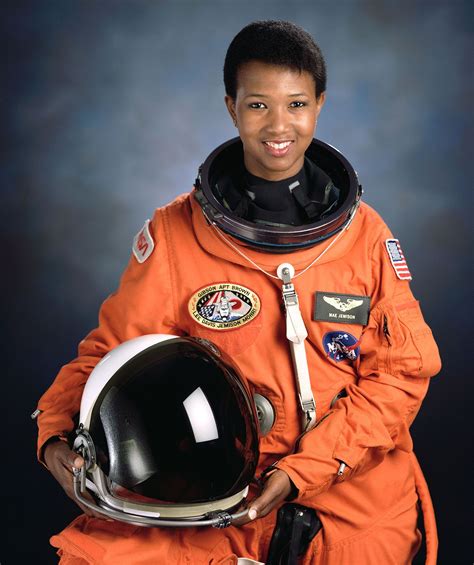
Mae Jemison
The Reconstruction Era
The Reconstruction Era (1865-1877) followed the Civil War and focused on rebuilding the South while incorporating formerly enslaved African Americans into society. government aimed to secure civil rights for freed slaves, allowing many Black individuals to enter politics. Congress in 1870, becoming the first African American from Alabama to serve in that role. His election highlighted the progress African Americans made politically during Reconstruction.
However, as the Reconstruction period came to an end, Jim Crow laws began to be implemented in the 1880s, creating significant barriers for African Americans. These laws legalized racial segregation and introduced measures such as poll taxes and literacy tests to disenfranchise Black voters. In Alabama and other Southern states, Black politicians like Turner were increasingly pushed out of office, and the civil rights of African Americans were severely restricted. The rise of Jim Crow laws resulted in the institutionalized oppression of Black people, hindering their progress and setting the stage for decades of segregation and discrimination.
Fred Shuttlesworth
In Alabama, many have come through the Birmingham-Shuttlesworth Airport, but have you ever stopped to ask, why is it named Shuttlesworth? Well, the name was given to the airport in honor of Fred Shuttlesworth, a transcendent leader of the Civil Rights Movement.
Reverend Frederick Lee Shuttlesworth, an Alabama native, was born on March 18, 1922. Graduating from Selma College, and Alabama State Teachers College, Shuttlesworth would become the pastor of the Bethel Baptist Church in Birmingham in 1953. Rev. Shuttlesworth then would go on to establish the Alabama Cristian Movement for Human Rights in 1956, coordinating boycotts and sponsoring federal lawsuits aimed at dismantling segregation in Birmingham and the state of Alabama. Bethel Baptist Church in Birmingham would serve as the headquarters for the movement from 1956 to 1961.
In addition, Rev. Shuttlesworth also served as the Secretary of the Southern Christian Leadership Conference from 1958-1970, where he and several others worked alongside the Congress on Racial Equality to organize freedom rides throughout the South, as well as mass demonstrations and boycotts in Birmingham and the state through a campaign he organized known as "Project C". Shuttlesworth, known for his battles with segregationist Bull Connor, led movements against the violent tactics of Birmingham police, ultimately contributing to the desegregation of downtown businesses in 1963 after the mistreatment of African Americans gained national attention.
Rev. Shuttlesworth's campaigns for voter registration with NAACP, along with the integration of the South, contributed to the passage of the Civil Rights Act of 1964 and the Voting Rights Act of 1965. To honor his legacy in Birmingham, in 2008, Mayor Larry Langford and the Birmingham Airport Authority, voted to change the name of the airport from the Birmingham International Airport to the Birmingham-Shuttlesworth Airport.
Marie Van Brittan Brown and Home Security
Do you have or know someone who has a home security system? Whether it is a ring, ADT, SimpliSafe, or Vivint, all of them derive from the invention of a woman named Mary Van Brittan Brown. Mary Van Brittan Brown was an African American inventor who is best known for creating the first home security system. She was born in 1922 and lived in Queens, New York, where she faced concerns about crime and the slow response times from the police in her neighborhood.
In the 1960s, Brown, a nurse who worked long hours, grew frustrated with the lack of safety and security at her home, especially when her husband, Albert Brown an electronics technician, was often away. military used during World War II, that would allow her to monitor the front door from inside the house. The system consisted of a camera that could be mounted near the front door, a monitor inside the home to see who was outside, and a two-way microphone to communicate with visitors. She also included a button to alert the police in case of an emergency. In 1966, Brown and her husband were awarded a patent for this invention, which was one of the first steps toward the development of the advanced home security systems we know today.
Mary Van Brittan Brown's work was groundbreaking, especially considering the era in which she lived, and her system greatly influenced the security industry.
Jesse Owens
Jesse Owens, born in Oakville, Alabama, in 1913, was a track and field athlete who became a global icon at the 1936 Berlin Olympics. As an African American competing in Nazi Germany, Owens defied Adolf Hitler’s racist ideology by winning four gold medals in the 100 meters, 200 meters, long jump, and 4x100 meter relay. He was not invited to the White House by President Franklin D. Roosevelt and struggled to find financial opportunities. However, later in life, he was recognized for his achievements and contributions to civil rights. Olympic Hall of Fame (1983)**, among other honors.
Owens’ achievements played a pivotal role in breaking racial barriers in sports, inspiring future Black athletes, and advancing the civil rights movement. His legacy continues to be celebrated as a symbol of excellence, perseverance, and the fight for equality.
Autherine Lucy Foster
Autherine Lucy Foster was born in Oakville, Alabama in 1926. On February 3, 1956, she became the first African American student to enroll in the University of Alabama. Before arriving at UA, Foster graduated from Linden Academy, an African American boarding school in 1947. Following her education at Linden Academy, Foster attended Miles College, where she graduated with a bachelor's degree in English in 1952.
Following her graduation from Miles College, Foster applied for graduate school at UA, but her application was denied because she was not white. That decision would later be reversed by a federal court, and Foster enrolled in 1956. Just three days would pass from the time of her arrival on campus before she was suspended and expelled from campus due to riots and constant death threats against her life.
A little over three decades would pass before the UA board of trustees appealed her expulsion in 1988. Lucy then would join her daughter Grazia Foster at the University, and she would earn her master's degree in elementary education in August 1991. Autherine's brave choice to attend the University of Alabama eventually led to other black students attending the institution, with Vivian Malone and James Hood registering at the school on June 11, 1963, marking the beginning of school desegregation in the state.
In 2010, the University of Alabama dedicated the Autherine Lucy Clock Tower in her honor and in 2022, they renamed Bibb Graves Hall after her, replacing the name of the former Alabama Governor and KKK leader.
John Lewis
John Lewis, born February 21, 1940, in Pike County, Alabama was an American Civil Rights Leader and politician. Lewis, the son of...
Here is a table summarizing some of the key figures and their contributions:
| Figure | Contribution |
|---|---|
| Tuskegee Airmen | Distinguished service during World War II, challenging racial stereotypes |
| Rosa Parks | Sparked the Montgomery Bus Boycott by refusing to give up her seat |
| Martin Luther King Jr. | Leader of the Montgomery Bus Boycott and a prominent figure in the Civil Rights Movement |
| Garrett Morgan | Invented the automatic three-position traffic signal |
| Willie Mays | One of the greatest baseball players of all time |
| Lewis Latimer | Invented the durable carbon filament for light bulbs |
| Mae Jemison | First African American woman to travel in space |
| Fred Shuttlesworth | Civil Rights leader who fought against segregation in Birmingham |
| Marie Van Brittan Brown | Invented the first home security system |
| Jesse Owens | Won four gold medals at the 1936 Berlin Olympics, defying Nazi ideology |
| Autherine Lucy Foster | First African American student to enroll in the University of Alabama |
| John Lewis | American Civil Rights Leader and politician |
