Every February, we celebrate a special holiday. And no, I'm not talking about Valentine's Day. I'm referring to the 28 (or 29) days we dedicate to honoring Black History Month, our nation's way of showing respect and recognition for the hard work of and sacrifices made by African Americans.
But out of all the calendar pages, why is Black History Month in February (a.k.a. the month of love)? And who started this tradition? Here's a primer.
It all started with a man named Carter G. Woodson.
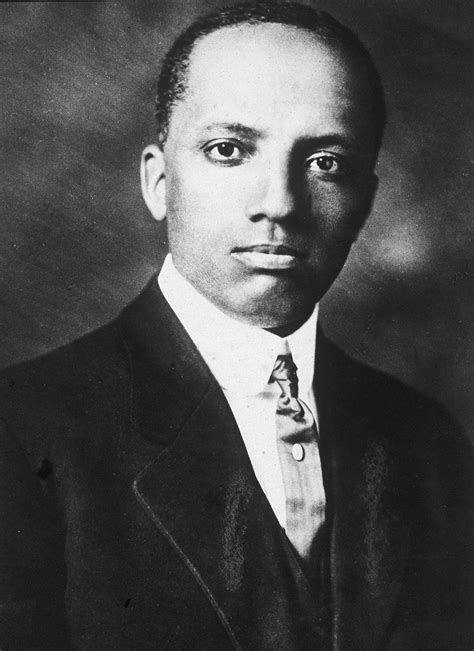
Carter G. Woodson, the founder of Black History Month.
The Origins of Black History Month
Harvard-educated historian Carter G. Woodson is credited with creating Black History Month.
Read also: A Look at African Birthday Celebrations
In 1915, after seeing a display depicting events in African American culture, Woodson decided to form what is now named the Association for the Study of Afro-American Life and History (ASALH), in order to encourage the study of the accomplishments made by Black Americans.
According to Scott, after Woodson wrote The Journal of Negro History in 1916, which chronicled the overlooked achievements of African Americans, he sought to amplify Black people's success and spread his findings to a wider audience.
Through community outreach, he encouraged his fraternity Omega Psi Phi to promote his work. In 1924, the fraternity responded by creating "Negro Achievement Week."
Two years later, despite Omega Psi Phi's efforts, Woodson still wanted to make a bigger impact. So in 1926, he and the ASALH officially declared the second week of February to be "Negro History Week," announcing the news through a press release, according to Scott.
"This was celebrated for years and was chosen because of the birthdays of Abraham Lincoln on February 12th, and Frederick Douglass on February 14th," says Zebulon Miletsky, the co-chair of the marketing and PR committee for ASALH.
Read also: Cultural Birthday Greetings in Nigeria
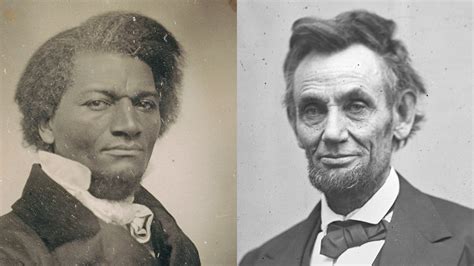
Abraham Lincoln and Frederick Douglass, whose birthdays influenced the timing of Black History Week.
Both Lincoln and Douglass had long been celebrated by the Black community in the years before "Negro History Week" was created. Since his assassination, Lincoln's birthday was honored by both African Americans and Republicans alike, so the ASALH only solidified this tradition. And Douglass was already revered as a change-making abolitionist and orator whose legacy would now be cemented with festivities that honored the people he fought so hard for.
In the 1940s, efforts began slowly within the Black community to expand the study of Black history in the schools. In the South, Black teachers often taught Negro History as a supplement to United States history," Scott says.
"During the civil rights movement in the South, the Freedom Schools incorporated Black history into the curriculum to advance social change. The Negro History movement was an intellectual insurgency that was part of every larger effort to transform race relations."
Consequentially, the ASALH expanded the recognition to Black History Month.
Read also: Mother's Day Celebrations: An African Perspective
To solidify this change, in 1976, President Ford declared February "Black History Month" in a commemorative speech. He urged citizens to "seize the opportunity to honor the too-often neglected accomplishments of Black Americans in every area of endeavor throughout our history."
In the years following Ford's speech, congress passed a law in 1986 that deemed February "National Black (Afro-American) History Month.” Both presidents Ronald Reagan and Bill Clinton issued their own proclamations recognizing it as a national observance, and every POTUS has issued one annually since 1996.
"Black History Month shouldn’t be treated as though it is somehow separate from our collective American history, or somehow just boiled down to a compilation of greatest hits from the March on Washington, or from some of our sports heroes," President Barack Obama said in a 2016 speech.
"It’s about the lived, shared experience of all African Americans, high and low, famous and obscure, and how those experiences have shaped and challenged and ultimately strengthened America. It’s about taking an unvarnished look at the past so we can create a better future. It’s a reminder of where we as a country have been so that we know where we need to go."
Today, Black History Month continues to be widely celebrated. The observations live on as we take the time to honor greats such as Martin Luther King Jr., James Baldwin, Maya Angelou, and our very own Oprah Winfrey.
The Impact of Black History on Culture
Frederick Douglass and Valentine's Day
Frederick Douglass, the most famous Black Abolitionist of the 19th century, the most lyrical writer in the English language of the 19th century or so said the immortal Amiri Baraka, was born in the brutal bondage of slavery in Maryland sometime in February of either 1817 or 1818.
He was born tragically as a consequence of his enslaved mother having been sexually violated. To defy that horror, she made her young man her ‘Valentine’s’ and marked that to be the day of his birth.
It was one of the most incredible acts of self-determination that I have ever heard!
It would go down as the most important single memory Douglass would have of his mother, who died when he was only eight.
Malcolm X and Sacrifice on Valentine's Day
Now let’s leap ahead to the 20th century on February 14th, 1965…The modest Queens New York home of Malcolm X was firebombed!
One bomb was lobbed into the bedroom of his young daughters only coming within inches and moments of killing them! Into the bedroom of his young daughters!
Malcolm knew that was his fate ‘marked’ to ultimately give his life to advance our struggle and at no time did he ever seek to avoid that fate.
After enduring his home being bombed, Malcolm secured his family and got on a plane to Detroit to keep a speaking engagement made by one of his one of his lawyers, the late Milton Henry, planned sometime earlier and wound up giving us one of his most remembered presentations.
It comes to us as ‘The Last Message.’ It took place as the keynote of a grassroots organizing effort that included two of his favorite female comrades, the late Gloria Richardson and Rosa Parks!
He dedicated his remarks in an amazing offhanded apologetic way to his wife, the late Betty Bahiyyah Shabazz, and his daughters.
“I was in a house that was bombed, my own…It isn’t something that made me lose confidence in what I am doing, because my wife understands, and I have children,…even in their young age, they understand...that they would rather have a father…who will take a stand in the face of reaction…rather than compromise and later on have to grow up in shame or disgrace…So I ask you to excuse my appearance…”
Malcolm X, The Last Message, February 14, 1965
Apologizing because he didn’t have a tie on.
Only hours earlier his children came from within inches of being killed.
He would die a week later in a hail of 21 bullets on February 21st 1965 in front of his wife and children at the then Audubon Ballroom in New York.
Sacrificed his own life in service to a liberated future for his people who he loved so!
Black Love Day
Nothing like a day dedicated to celebrating Black love! Black Love Day falls on February 13 every year since it was founded in 1993.
This spiritual holiday is rooted in African cultures and ideas, and the aim is to complete the five Tenets: to practice love toward "the Creator, for Self, for the Family, within the Black Community and for the Black Race" for 24 hours, according to the African American Registry.
“We encourage people on this day to do something very simple-just demonstrate love for 24 hours, and celebrate and atone, offer forgiveness to ourselves and to others, and to accept the very important tenets,” Ayo Handy-Kendi, the founder and director of the African American Holiday Association (AAHA), told the DailyDot.
What does celebrating Black Love Day look like? It can take many forms.
Black Love Day isn't exclusive to Black people, either. People of other races can participate, as well, by putting their "love into action," meaning they work on their behavior and racial attitudes toward Black people.
That can include conversations, introspection, or supporting Black people in any way they can.
While practicing the tenets is a mainstay tradition, the holiday itself is different every year.
"Love is a spiritual link that connects tolerance with compassion, so we don’t hurt another to love ourselves or hate because of differences," Handy-Kendi said.
| Holiday | Date | Focus |
|---|---|---|
| Black History Month | February | Honoring the achievements and history of African Americans |
| Black Love Day | February 13 | Celebrating love within the Black community and promoting its tenets |
