The mixed-race experience is a complex tapestry woven with threads of identity, culture, and belonging. For individuals of mixed White and Nigerian heritage, this experience can be particularly nuanced, as they navigate the expectations and perceptions of two distinct cultures.
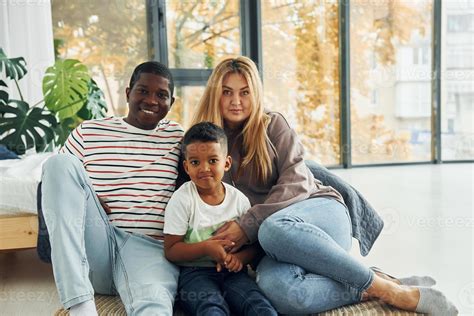
It’s quite difficult, because so many words now exist for what I am. I usually say I’m half-Irish from my mum and half-Nigerian from my dad. Sometimes I don’t like the word mixed-race, maybe because I’m a bit older, it just reminds me of a tin of Heinz 57. I don’t know the correct way to describe myself.
It sounds a bit odd saying you’re half-this and half-that, like you’re not a full person. So I’m still struggling with that description. Anytime anybody asks me where I’m from, there’s always a moment of hesitation on how to answer. In Nigeria, people still describe themselves as half-caste - it wasn’t until I came here that I realised that it has bad connotations and was almost an insult. That’s what I’d been calling myself, and in my mind, it wasn’t negative, it was just descriptive.
Growing Up Between Cultures
Growing up in a mixed-race family often means navigating different cultural norms and expectations. This can lead to a feeling of being caught between two worlds, never fully belonging to either.
You’re growing up around people that more or less look like you and have the same culture. There is colourism in the Caribbean and in Africa, so you’re treated a bit differently. You’re treated as if you’re special if you’re ‘half-caste,’ but here was completely different. I moved to Manchester in the ‘90s, and although it was diverse it was segregated. Most people looked down on the Africans, even the Black people. They thought we were swinging in trees and had no idea where Nigeria was. I felt out of my comfort zone.
Read also: "Better Half": A Nigerian Drama Analysis
In some ways, but in other cultural ways, maybe parents don’t want their sons to marry a ‘half-caste’ because the culture is very strong in Nigeria, [and if you’re mixed] you’re not a whole person and aren’t going to be able to adapt, you’re too European. It’s not always the way, but when I was growing up, white women married to Nigerian men faced a lot of discrimination and were called Nigerwives. It works both ways.
The Influence of Family
The experiences of mixed-race individuals are also heavily influenced by their family dynamics. Parental attitudes towards cultural heritage and identity play a significant role in shaping a child's sense of self.
No, I think one of the problems we had is that we grew up with the internet bubble. My father was of a generation where they thought colonialism was a good thing and they didn’t want you to learn your language, like Igbo, they wanted the children to go to European schools… My brothers and sisters embraced Nigerian culture as much as they could when they got older, but as children we lived in a European bubble. We are Nigerian food, but I’ve learned that there are so many other foods I didn’t know about.
I thought what we ate were the main foods, but maybe they were the only ones my mum could cook. When I taste proper Nigerian food, it doesn’t taste anything like my mum’s. This was a problem because you’re not African enough in society, as a ‘half-caste’ person you’re not going to be really accepted until you can speak the language and know all these cultural things about weddings, ceremonies and festivals. It must feel hard - mixed people in Nigeria really have to work unless their parents made them embrace the culture from a young age.
My mum wouldn’t let us eat very local food because she felt it wasn’t safe, but if you’re in a situation with loads of Nigerians eating that food and you’ve grown up thinking it’s gross, you’re not really taking part and embracing it. So I find that a lot of mixed people in Nigeria do feel a little bit out of it. They’re working quite hard to be accepted, to be African enough. Language is also a barrier that affects a lot of mixed-race people - it’s difficult to break that down. Now, my writing is a way of connecting with my Nigerian culture.
Read also: Navigating Dual Heritage
Identity and Belonging
The quest for identity and belonging is a central theme in the lives of many mixed-race individuals. They often grapple with questions of where they truly belong and how they are perceived by others.
Tackling mixed race stereotypes and identity crisis | Simran Merali Pawar | TEDxIUEA
I feel Irish more to do with my relationship with my mum, the type of things we’d talk about and her accent. We did go to Ireland every year, but I didn’t feel Irish when I was there. I relate to Ireland and I’m fascinated by it, but I don’t feel like I belong there.
I almost feel like an imposter saying I’m half-Irish. People will say “you don’t look Irish” - it’s a weird thing feeling in between two worlds and wanting to fit into both. I long for both my Nigerian and Irish side. I know some mixed people just want to belong to one side, maybe it helps them fit in wherever they’re living. It never came up. My mum saw that mixed-race children struggled to fit in in Nigeria, they tended to gather together. She was aware that in order to be accepted, you had to really embrace the culture.
I say mixed-race, Anglo-Nigerian and half-British and half-Nigerian, but many times I say I’m Black, because that’s an easier box to put myself in. I can’t imagine ever saying that I’m white, even though I’m just as Black as I am white. I get really irritated when people decide what I am. I am what I want to be, and that can be different things at different times. Usually I’m not Black or white enough, I always fail at what people want me to be. I don’t call people out on it because you can spend your whole life rallying - I don’t want to spend my whole life educating people.
At some points in my life, I’m not even sure I know who I am, because if you dumped me in Nigeria my accent and syntax would change, my voice would get louder, my expressions and gesticulations would be wilder. But I wouldn’t feel like I was putting it on - it just happens. Sometimes I think it’s only when I’m with my husband or close friends that I can be me.
Read also: The Allure of Blue and White Tile
Sometimes I think that the mixed identity should be a standalone identity. It might seem like I don’t want to be Black, but I don’t want to be Black or white, I just want to be me. I don’t want to keep thinking that I’ve got to pick a side, I find that quite offensive.
Code-Switching and Adaptation
Many mixed-race individuals develop the ability to code-switch, adapting their behavior, speech, and appearance to fit in with different social groups. This can be a valuable skill, but it can also be exhausting and contribute to a sense of not being authentic.
Definitely. I do a lot of code switching, my accent will change and I can’t help myself. I think that's partly because I moved around a lot when I was young, so I had to keep adapting to new situations, always trying to fit into my environment.
Representation and Storytelling
The importance of representation in media and literature cannot be overstated. Seeing characters who share similar experiences can be validating and empowering for mixed-race individuals. It highlights the diversity within the mixed-race community and challenges stereotypes.
To be honest, I’d written another book and it was rejected. I was feeling very low but I couldn’t stop writing. I had an idea of a child that had gone through something and part of all of that was being mixed and having a difficult family life. It grew from that. I didn’t even realise that part of it was going to be about how difficult it is to come from different worlds. In the early 2000s, you started seeing mixed-race children in adverts. I thought it was nice because it was more diverse, but then people started saying to me that they wanted mixed-race children because they were so cute… There should be more representation of all races, because for a good five years I felt that you’d just see these curly-haired little mixed race kids in adverts. It felt like the acceptable kind of representation.
I always wanted to read a book that had people like me in it, mixed-race and middle-class, and I’m sick of books about struggle. Those books must exist, and they’ve been done beautifully, but there are other stories about regular people living regular lives, and that’s the book I wanted to read. Yes there is a backdrop of colourism and racism, but I didn’t want that to be front and centre.
Embracing a Unique Perspective
Despite the challenges, being mixed-race can also offer unique advantages. It allows individuals to see the world from multiple perspectives, appreciate different cultures, and develop a broader understanding of humanity.
I like the fact I can look outside both cultures. There’s a lot of cultural pressure in Nigeria and maybe in Ireland, but I don’t feel stuck in that. I’m able to look more broadly at the bigger picture. I can appreciate the different cultures almost as an observer, as well as a participant. I can see the good side and the bad side. I like having two different cultures, I find it very interesting.
Table: Challenges and Advantages of Being Mixed-Race (Half White, Half Nigerian)
| Challenges | Advantages |
|---|---|
| Feeling caught between two worlds | Ability to see the world from multiple perspectives |
| Struggling with identity and belonging | Appreciation of different cultures |
| Experiencing discrimination and microaggressions | Broader understanding of humanity |
| Pressure to code-switch and adapt | Enhanced adaptability and resilience |
Two homes can be twice the joy. It can make you a more rounded, solid person. I also think we’re less judgemental. A mixed bag! Sometimes my sense of belonging is really concrete. Other times it's elusive. But I wouldn't change it for the world.
