When you picture the landscape of Africa, the scorching desert of the Sahara and the rolling plains and savanna’s of the Serengeti come to mind. As it turns out, some of the most spectacular mountains in the world are found on the African continent, rivaling the Swiss Alps in terms of beauty, the magnificent Rocky Mountains as far as jagged, snow-topped peaks, and even Mt. A few lie in ravaged, war-torn areas where political strife threatens everyday life. From the rugged desert mountains of the Atlas Mountains in Morocco to the lush forests of Uganda, Africa's diverse landscapes cater to hikers and climbers of all levels of fitness. Choose what kind of animals, vegetation and landscape you wish to see - Africa has a mountain for you. Let’s explore the best mountains in Africa to climb, highlighting the unique features and experiences each has to offer.
Africa is home to several impressive mountain ranges, including the rugged beauty of the Atlas Mountains and the snow capped peaks of the Rwenzori. Stretching across North Africa through Morocco, Algeria, and Tunisia, the Atlas Mountains form a dramatic backdrop to the region’s cultural heritage and scenic beauty. This mountain range provides a physical barrier between the Mediterranean and the Sahara. It also serves as a cultural divide. Ancient trade routes linked the historically rich cities of the Maghreb with the vast Saharan hinterland. These mountains also influence the local climate, creating fertile, green valleys that contrast sharply with the arid surroundings.
South Africa’s Drakensberg, meaning “Dragon Mountains,” is a UNESCO World Heritage Site. These formidable mountains span across the provinces of KwaZulu-Natal and the Eastern Cape. The area is also known for its spectacular waterfalls, clear streams, and the high-altitude grasslands known locally as ‘veld’. The Drakensberg is important for the South African water supply. Located in northern Ethiopia, the Simien Mountains enthrall adventurers with their dramatic escarpments, deep valleys, and endemic wildlife, such as the Gelada baboons and Ethiopian wolves. The mountains’ geological formations, consisting of volcanic rocks that have eroded over millennia, create a dramatic visual impact.
Straddling the border between Uganda and the Democratic Republic of the Congo, the Rwenzori Mountains, often called the “Mountains of the Moon,” boast Africa’s third-highest peak, Margherita Peak, at 16,763 feet (5,109 meters). The Rwenzoris are particularly noted for their botanic diversity, including several endemic plant species such as the giant lobelias and groundsel, which are adapted to the high-altitude conditions. The Virunga Mountains are a chain of volcanoes in East Africa, stretch across Rwanda, Uganda, and the Democratic Republic of Congo. Part of the Albertine Rift, the Virungas are home to the critically endangered mountain gorilla, which has become a symbol of conservation efforts in the region. The range includes eight major volcanoes, most of which are dormant, with the exception of Mount Nyiragongo and Mount Nyamuragira in the DRC, which are among the most active volcanoes in the world. Nestled in southern Algeria, the Ahaggar Mountains, also known as the Hoggar, boast an otherworldly terrain of spectacular peaks, vast plateaus, and surreal landscapes. The Ahaggar Mountains are primarily composed of volcanic rock. The landscape features various extinct volcanoes, with the last eruptions occurring roughly in the Neogene period. The harsh, lunar-like environment of this region is marked by extreme temperatures and sparse vegetation.
Africa’s towering peaks offer adventurers a blend of challenging climbs and breathtaking vistas. Here’s a curated list of the continent’s highest mountains, each presenting unique experiences for those eager to explore Africa’s majestic heights.
Read also: The Heart of African Music
The majority of the mountains on this list require climbers to be accompanied by guides or porters.
10 Things I Wish I Knew BEFORE Climbing Mt Kilimanjaro! | Follow Alice | 4K
1. Mount Kilimanjaro - 5,895 meters (19,341 feet)
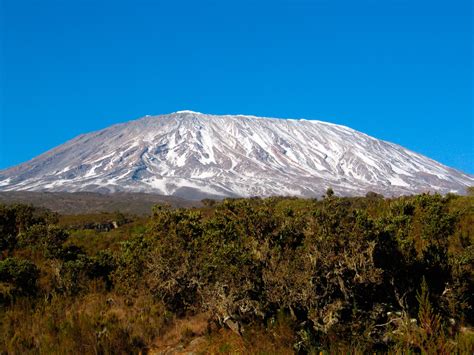
Located in northeastern Tanzania, Mount Kilimanjaro stands as Africa’s tallest mountain and the world’s highest free-standing peak. Mount Kilimanjaro is the highest mountain in Africa and it has three volcanic cones, Shira, Kibo and Mawenzi, its a dormant volcano in Tanzania with its summit of 5,895 metres or 19,341 feet above sea level. As one of the Seven Summits, Kilimanjaro is a major hiking and climbing destination. There are seven established routes to Uhuru Peak, the mountain's highest point. One of several mountains arising from the East African Rift, Kilimanjaro was formed from volcanic activity over 2 million years ago.
Standing at 5,895 metres, Kilimanjaro is Africa's highest peak and probably the most coveted destination on the continent for hikers and mountaineers. The trek to the summit takes you through five distinct climate zones, offering a dramatic change in scenery from lush rainforests to alpine deserts. Its slopes host montane forests and cloud forests. Multiple species are endemic to Mount Kilimanjaro, including the giant groundsel Dendrosenecio kilimanjari. The mountain possesses a large ice cap and the largest glaciers in Africa, including Credner Glacier, Furtwängler Glacier, and the Rebmann Glacier. This ice cap is rapidly shrinking, with over 80% lost in the 20th century.
Mount Kilimanjaro also happens to be its most famous and iconic, the poster child of many African tourism brochures and campaigns, and with good reasons. Mount Kilimanjaro’s summit consists of three primary peaks, which are all volcanoes; the highest of the three is Kibo (dormant), followed by Mawenzi (dormant) and Shira (extinct). Its three volcanic cones-Kibo, Mawenzi, and Shira-provide diverse trekking routes, with the Machame and Marangu routes being particularly popular among climbers. The ascent to Uhuru Point on Kibo offers trekkers a journey through varied ecosystems, from lush rainforests to alpine deserts.
Read also: Comprehensive List: African Actresses
Also called a stratovolcano (a term for a very large volcano made of ash, lava and rock), Kilimanjaro is made up of three cones: Kibo, Mawenzi and Shira. Kibo is the summit of the mountain and the tallest of the three volcanic formations. While Mawenzi and Shira are extinct, Kibo is considered dormant and could possibly erupt again. Scientists estimate that the last time it erupted was 360,000 years ago. The highest point on Kibo’s crater rim is called Uhuru, the Swahili word for “freedom.”
No one knows how Kilimanjaro got its name. It may come from the Swahili word Kilima (meaning “mountain”) and the KiChagga word Njaro (meaning “shining” or “whiteness”); the mountain is known for its snow-capped peak. Some local people living in the foothills of the mountain, including the Chagga and the Maasai, view it as the seat of God. Unfortunately, the white snow that the mountain is named for may soon disappear. Over the last hundred years, all of Kilimanjaro’s glaciers have begun to retreat. Some have vanished altogether. Scientists have studied satellite images and learned that Kilimanjaro has lost more than 90 percent of its ice since 1900. Many experts are studying the causes of this catastrophic melt.
The people who live in the vicinity of Kilimanjaro are an important part of the mountain’s history. In 1889, local climber Yohani Kinyala Lauwo (also known as Mzee Lauwo) guided German geographer Hans Meyer and Austrian mountaineer Ludwig Purtscheller to the Kilimanjaro summit. Lauwo then became the first Tanzanian to reach the peak at the age of 18. Purtscheller and Meyer were the first Europeans to summit. Lauwo was a member of the Chagga tribe. The Chagga have lived on Kilimanjaro’s slopes for centuries. Lauwo went on to guide climbers to Kilimanjaro’s summit for more than 50 years, dying at the age of 125. Kilimanjaro continues to be a popular hiking spot. This is partly because the hiking routes do not require as much equipment or experience as mountains of similar heights. Tens of thousands of climbers ascend the mountain each year. The climb is still dangerous, however, because of the risk of altitude sickness. Climbers can experience altitude sickness if they ascend too quickly, and it can be deadly if not treated right away. In 1973, the mountain and its six surrounding forest corridors were named Kilimanjaro National Park. The park was named a United Nations Educational, Scientific and Cultural Organization (UNESCO) World Heritage site in 1987. These measures can help protect the area’s unique environment.
2. Mount Kenya - 5,199 meters (17,057 feet)
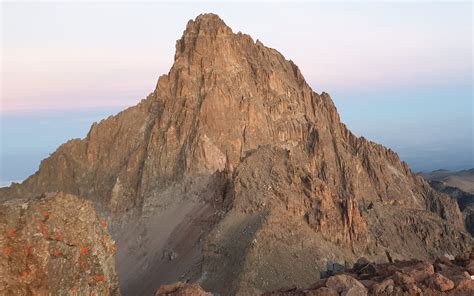
As our list reaches the final two, we bid farewell to Uganda, the Democratic Republic of Congo and the majestic Rwenzori mountains, and cross over to Kenya, where Mount Kenya awaits. Situated in central Kenya, Mount Kenya is Africa’s second-highest peak. The second highest mountain in all of Africa is an extinct volcano.
Read also: Discover the history of famous Black singers
Access to Mount Kenya is fairly easy, as the mountain is just four hours from the capital Nairobi, and the roads are good. The hike to the summit takes you through lush rainforests, where plenty of wildlife can be spotted, before ascending to the rim of the crater. There’s a huge choice of routes such as the trail to Point Lenana, the range's third-highest peak, which takes you through diverse landscapes including bamboo forests, meadows, and past lakes and glacier-carved valleys.
Although it sits near the equator, Mount Kenya receives a substantial amount of snowfall each year. In fact, unlike most other mountains of its stature in Africa, Mount Kenya serves an incredibly vital role in the area’s ecosystem. Its highest summits, Batian and Nelion, are technical climbs, while Point Lenana is more accessible to trekkers. The mountain’s rugged landscapes, glacial valleys, and diverse flora make it a favorite among mountaineers and nature enthusiasts.
Mount Kenya is a popular destination among climbing enthusiasts and mountaineers. It is widely considered a more challenging trek than the mountain occupying the number one position on this list. It presents perhaps the most technical climb in east Africa, if not the entire continent.
3. Mount Stanley - 5,109 meters (16,763 feet)
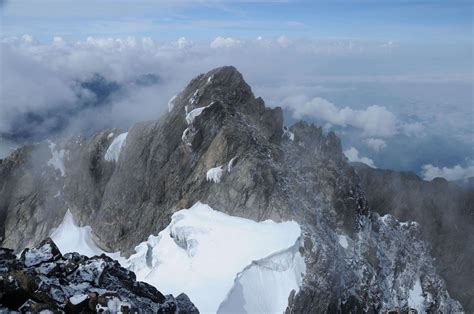
Straddling the border between Uganda and the Democratic Republic of Congo, Mount Stanley is the tallest in the Rwenzori Range. Its highest point, Margherita Peak, is renowned for its challenging climbs and stunning glacial scenery. The Rwenzori Mountains, often referred to as the “Mountains of the Moon,” are celebrated for their unique alpine flora and fauna.
4. Mount Speke - 4,890 meters (16,043 feet)
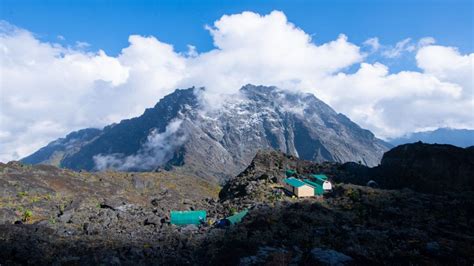
Also part of the Rwenzori Range, Mount Speke is known for its jagged peaks and deep valleys. The mountain offers climbers a mix of rock and ice challenges, with vistas that showcase the range’s dramatic landscapes.
Where once ascending Mount Speke would have required extensive snow and ice climbing gear to reach its summit, that challenge no longer exists as you would be hard-pressed to find any ice patches of any significance. The overall going is relatively rocky, with stretches requiring your full attention.
5. Mount Baker - 4,844 meters (15,892 feet)
Another prominent peak in the Rwenzori Mountains, Mount Baker provides climbers with routes that traverse glacial terrains and rocky outcrops. The ascent rewards adventurers with panoramic views of the surrounding peaks and valleys.
6. Mount Emin - 4,798 meters (15,741 feet)
The 6th tallest mountain in Africa is Mount Emin and is also the sister mountain to Mount Gessi in the Rwenzori range, and the two are separated by a deep, narrow valley that runs in a north-south direction. Whereas Mount Gessi is on the Uganda side of the valley, Mount Emin is situated on the Democratic Republic of Congo side. Located in the northern sector of the Rwenzori Range, Mount Emin features twin peaks and offers climbers a less-traveled path through the range’s unique ecosystems. The journey to its summit is characterized by challenging terrains and the opportunity to experience the Rwenzori’s pristine beauty.
As the northern-most mountain in the Ruwenzori range, Mount Emin presents a sturdy challenge to even experienced climbers. Its twin peaks, named Umberto and Kraepelin, are surrounded by narrow ridges, steep rock faces, and jagged formations.
7. Mount Gessi - 4,715 meters (15,469 feet)
Positioned in the Rwenzori Range, Mount Gessi is known for its steep slopes and rugged landscapes. Climbers tackling this peak navigate through boggy grounds, rocky ridges, and glacial areas, all while immersed in the range’s rich biodiversity.
Because of the wet climate in the entire Rwenzori range, many pathways and rock surfaces are slick or covered with slippery moss. Although no specialized gear is required (the ice has mostly melted away), a climbing rope is a must even on more popularly traveled trails.
8. Mount Luigi di Savoia - 4,627 meters (15,180 feet)
As part of the Rwenzori Mountains, Mount Luigi di Savoia offers adventurers a mix of rock climbing and trekking experiences. The ascent provides insights into the region’s geological formations and diverse plant life.
9. Mount Meru - 4,562 meters (14,968 feet)
Located in Tanzania near Mount Kilimanjaro, Mount Meru is an active stratovolcano that offers climbers a scenic trek through forests and open grasslands. The summit provides stunning views of Kilimanjaro and the surrounding landscapes.
10. Ras Dashen - 4,550 meters (14,928 feet)
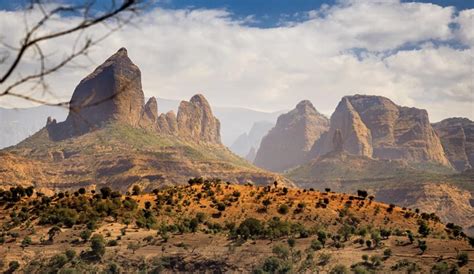
As the highest peak in Ethiopia’s Simien Mountains, Ras Dashen presents trekkers with rugged terrains, deep gorges, and a chance to encounter unique wildlife, such as the Gelada baboon. The journey to its summit is both challenging and rewarding, offering panoramic views of the Ethiopian highlands.
Ras Dashen is the highest mountain at 4,500m, and there are several peaks over 4,000m. Of particular concern were dwindling numbers of the Walia ibex which is not found anywhere else in the world but the Simien mountains area.
Table of the Highest Mountains in Africa
| Rank | Mountain | Height (meters) | Height (feet) | Location |
|---|---|---|---|---|
| 1 | Mount Kilimanjaro | 5,895 | 19,341 | Tanzania |
| 2 | Mount Kenya | 5,199 | 17,057 | Kenya |
| 3 | Mount Stanley | 5,109 | 16,763 | Uganda/DRC Border |
| 4 | Mount Speke | 4,890 | 16,043 | Uganda |
| 5 | Mount Baker | 4,844 | 15,892 | Uganda |
| 6 | Mount Emin | 4,798 | 15,741 | DRC/Uganda Border |
| 7 | Mount Gessi | 4,715 | 15,469 | Uganda |
| 8 | Mount Luigi di Savoia | 4,627 | 15,180 | Uganda |
| 9 | Mount Meru | 4,562 | 14,968 | Tanzania |
| 10 | Ras Dashen | 4,550 | 14,928 | Ethiopia |
Popular articles:
tags: #Africa
