Take a moment and think of your favorite modern musician or band. Got one in mind? Now think about what it is that you like about their music. Is it the tone of the guitar? Is it the lyrics the singer belts out? Or is it an interesting combination of genres that makes this artist stand out? As musicians, it’s great to live “in the now,” but it’s also important to understand and appreciate the music that came before us. The roots of pop, jazz, soul, R&B, hip-hop, gospel, house, folk and disco music can all be traced to Black musicians.
This article celebrates the remarkable contributions of African American singers who have shaped the landscape of music across various genres. From the early pioneers of jazz and blues to the contemporary icons of R&B and pop, these artists have not only entertained but also inspired generations with their talent, innovation, and cultural impact.
The Evolution Of African-American Music
Pioneers of Jazz and Blues
Louis Armstrong
Jazz artist Louis Armstrong, also sometimes referred to as simply “Satchmo”, was a jazz trumpeter whose tone’s richness could only be rivaled by that of his singing voice. In a way, he used his voice like a trumpet, with his wide vibrato and his tremendous skill for scatting. While the composer of the original song is unknown, Armstrong and his orchestra’s 1938 rendition of “When the Saints Go Marching In” is known as one of the most famous performances of the song. While the song had previously only been performed as a traditional gospel song, Armstrong was notably the first to release a recording of the song as a jazz standard.
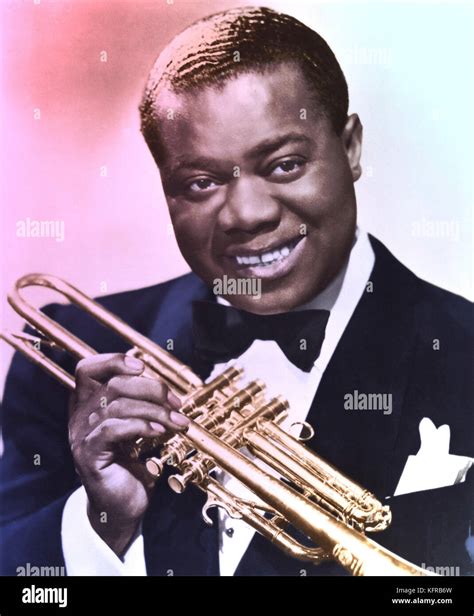
Louis Armstrong
Ella Fitzgerald
With the nicknames Queen Of Jazz and The First Lady Of Song, Ella Fitzgerald is among the most influential Black musicians of jazz’s golden age. Born in 1917, Fitzgerald made her start touring with the famous Chick Webb Orchestra, with whom she made a name for herself before going solo. Fitzgerald was one of the first female jazz artists to break through in America, and hits such as Dream A Little Dream Of Me and It Don’t Mean A Thing (If It Ain’t Got That Swing) are timeless classics.
Read also: Experience Fad's Fine African Cuisine
Bessie Smith
The “Empress of the Blues,” Bessie Smith, is a pioneer of female musicians in the blues age.
Ma Rainey
Ma Rainey, often referred to as the “Mother of the Blues,” was one of the first professional blues singers and this helped her chart a path for generations of blues artists. Born Gertrude Pridgett in Columbus, Georgia, in 1886, she began performing in vaudeville and minstrel shows as a teenager. Her deep, powerful voice vividly captured the struggles, joys and resilience of Black life in the early 20th century and is arguably still a time capsule for what that era was like. Songs like “See See Rider” and “Prove It On Me” are two examples of how she took the vulnerability of the times, the emotion it evoked in her and told powerful stories through her music. Though she passed away in 1939, Ma Rainey’s impact on music is still relevant. Her iconic recordings helped to popularize the blues, and her radical-unapologetic-acceptance of her identity and sexuality challenged societal norms of her time.
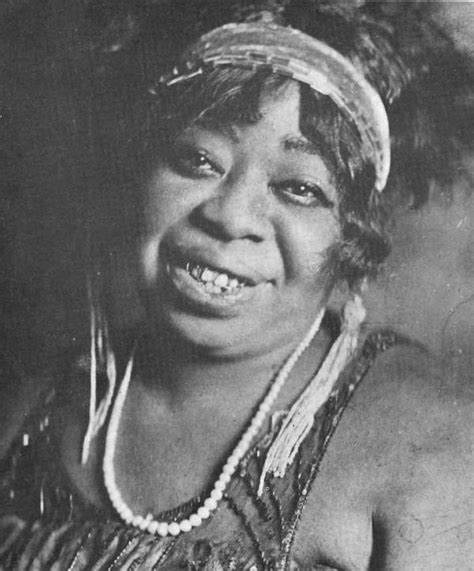
Ma Rainey
Legends of Soul and R&B
Sam Cooke
Sam Cooke, sometimes referred to as the “Father of Soul Music,” was a singer and songwriter in the soul, R&B, and gospel genres. Having been singing since childhood, Cooke became the lead singer of the Soul Stirrers - a band he had been a fan of while he was growing up. By his late twenties, Cooke began releasing solo music. As Cooke developed his signature sound, he created a crossover of gospel and pop music. This song is one of Cooke’s most political, and it essentially became a civil rights anthem. The song was performed by Bettye LaVette and Jon Bon Jovi at the inaugural concert of former President Barack Obama.
Hailed as “The King Of Soul”, Sam Cooke was one of the first music superstars, his remarkable vocal performances helping to move soul music into the mainstream. Cooke would inspire many acts during his career, including the likes of Al Green, Smokey Robinson and Stevie Wonder.
Read also: The Story Behind Cachapas
Aretha Franklin
Soul and R&B artist Aretha Franklin, also known as the “Queen of Soul,” was a singer, songwriter, and pianist. Franklin got her start singing gospel in her church choir and she began touring churches around the country at the age of 12, under the management of her father. During one of the tours, she met artist Sam Cooke, who inspired her to pursue a career in pop music. Her catalog of popular songs is quite extensive, featuring massive hits such as “Chain of Fools” and “(You Make Me Feel Like) Natural Woman.” One of her most successful songs ever is the 1967 release “Respect,” a cover of a song written, performed, and released just two years prior by soul singer Otis Redding. Franklin’s cover of the song was markedly more popular than the original. Her refreshing new arrangement, along with her more dramatic delivery of the lyrics, has helped the song become known as a “feminist anthem” to this day.
Stevie Wonder
Stevie Wonder is a prolific singer, songwriter, keyboardist, harmonicist, and record producer whose sound is a culmination of genres that spans soul, R&B, funk, gospel, progressive, and jazz. Wonder suffered vision loss shortly after his birth, and from that point onward was considered legally blind. In a 2010 CNN interview, Wonder explained that he and his doctors attribute his blindness to being born six weeks premature and thus being placed in an oxygen incubator with a high temperature, which was later discovered to cause medical issues in infants. Wonder, whose birth name is Stevland Judkins, earned the professional nickname “Little Stevie Wonder” when the 12-year-old prodigy signed to Motown Records. He released his first album, “The Jazz Soul of Little Stevie Wonder,” in 1962. He has since gone on to release 22 more albums. Wonder was the youngest solo artist to ever top the Billboard 100 chart when he was only 13, and his career only took off from there. Throughout his entire career, he has had 10 singles top the pop charts and 20 singles top the R&B charts. One of his most famous songs is the 1972 single, “Superstition,” which scored number 1 on the Billboard Hot 100 the following year. In 2004, the song was also ranked #73 on Rolling Stone’s Top 500 Greatest Songs of All Time list.
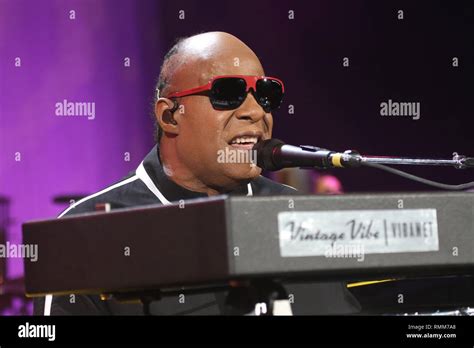
Stevie Wonder
James Brown
Funk and soul singer and songwriter James Brown was one of the most recognizable performers in his genre, helping him earn the nickname of the “Godfather of Soul.” Brown had a tumultuous childhood, and is said to have been kicked out of school at the age of 12 for “insufficient clothing.” Around this time, Brown began channeling his energy into music and started singing in the church choir. Brown joined his first group, The Gospel Starlighters, when a friend of his called Bobby Byrd, invited him to join. The group was later renamed the Famous Flames and had several Billboard Top 40 charting singles. Brown inspired many up-and-coming artists - most notably the young Michael Jackson. During his long and prolific career, Brown went on to release many well-received songs as a solo artist. One of his most famous songs is “I Got You (I Feel Good),” which Brown wrote, sang, and produced. Out of all Brown’s charting songs during his long career, spanning from 1944 to 2006 (the year he passed away), “I Got You (I Feel Good)” was undoubtedly his most successful song. On the Billboard HOT 100, his song charted for 12 weeks in total, and for 7 of those weeks, was in the top 10, peaking at #3.
Marvin Gaye
One of the major influences in 20th-century music, Marvin Gaye was a multi-instrumentalist, singer and songwriter, who influenced popular culture with his spiritually-themed music and the diversity of his lyrics. Marvin Gaye is one of the true icons of the R&B scene. His classic 1973 album, Let’s Get It On, is filled with soulful rhythms, while 1971’s What’s Going On is an incredible work that continues to speak to political injustice.
Read also: Techniques of African Jewellery
Etta James
Etta James was a six-time Grammy Award-winning singer whose genres included gospel, blues, rock and roll, jazz, R&B, and soul. A child prodigy, James began her vocal training at the age of 5 and was known to have a very powerful voice for a child so young. She mainly sang at church and also on the radio. At the young age of 16, James began recording a song called “The Wallflower” which spearheaded her prolific catalog of hit songs. James was known for her ability to stylize the songs she sang. She was quoted as saying, “My mother always told me, even if a song has been done a thousand times, you can still bring something of it to your own. Throughout her professional career, James had several hits that landed on the charts. Her 1962 single “Something’s Got a Hold on Me” charted on the Billboard 100 for 12 consecutive weeks, peaking at #37. More impressively, the single was also on the Billboard Hot R&B Sides, peaking at #4. The song was so widely appreciated that it inspired several other well-known artists to record and perform covers of it. Some artists who covered the song were Ike & Tina Turner in 1964, The Kingsmen in 1965, and more recently, pop diva Christina Aguilera in 2010.
Innovators in Rock and Funk
Jimi Hendrix
Psychedelic rock and blues artist Jimi Hendrix was a singer, songwriter, and perhaps most notably, guitarist. Hendrix had experimented with unconventional ways to play his guitar, such as being a left-handed individual but choosing to simply play a right-handed guitar upside down. However, it was when he began experimenting with his guitar tone and effects that Hendrix developed his signature sound. Hendrix’s group, The Jimi Hendrix Experience, went on to create many world-renowned songs. One such song from the psychedelic rock group is the 1967 single, “Purple Haze,” which was inducted into the Grammy Hall of Fame in 2000. The song features Hendrix playing his guitar with heavy, deliberate distortion.
Prince
Prince was an incredibly successful singer, songwriter, guitarist, and record producer. His sound transcended genres and included elements from funk, rock, R&B, hip-hop, synth-pop, and soul. Prince was famously known for his androgynous appearance, which was met with sharp criticism at the time. Fellow musician Rick James notably stated that he believed that Prince was a “mentally disturbed young man.” Throughout Prince’s career, he released many songs that gained negative attention due to their graphic nature. It was one of Prince’s songs that motivated the Parent Music Resource Center (PMRC) to create the “Filthy Fifteen” list of inappropriate songs and to push for the placement of parental advisory stickers on albums that were deemed inappropriate for a younger audience. Despite the negative connotations of the list and the warning labels, Prince’s success only grew. Throughout his career, Prince released countless charting songs. One of his biggest releases was the 1984 power ballad “Purple Rain,” which peaked at #2 on the Billboard Hot 100. Prince’s emotional, almost mournful vocal delivery, coupled with a hard-hitting guitar solo is what makes this song so memorable. Following the release of the “Purple Rain” album, Warner Bros. Pictures released a film of the same name, which starred Prince and featured music from the album.
George Clinton
The father of funk, George Clinton, had a huge impact on modern music. His bands Parliament and Funkadelic had numerous hit songs throughout the 70s and 80s and revolutionized music by influencing new genres of funk, rock, soul, hip hop and R&B. Clinton’s Parliament/ Funkadelic was inducted into the Rock & Roll Hall of Fame in 1997.
Icons of Pop
Michael Jackson
Pop and R&B artist Michael Jackson, also known as the “King of Pop,” was a singer, songwriter, and dancer who got his start at the young age of 5, when his siblings formed a group called The Jackson 5 and he joined shortly after. The group went on to become famous regionally, then nationally, and then internationally for their melodious voices and swift dance moves. Michael Jackson went on to write and perform some of the most cherished songs in pop music. His sixth studio album, “Thriller,” is particularly noteworthy as it had many hard-hitting singles, including “Beat It,” “Wanna Be Startin’ Somethin’,” and of course the album’s namesake and its epic music video, “Thriller.” Even more impressive, the album’s second single, “Billie Jean,” was ranked number 2 on the Billboard Top 100 chart in 1983. According to a report from the Guinness World Records, “Thriller” is known as the world’s best-selling album.
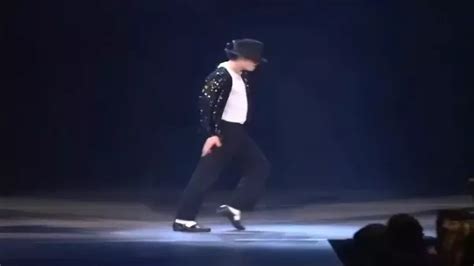
Michael Jackson
Contemporary Stars
The influence and contributions of Black people to American music and culture are undeniable and endless. From sound to trend, Black people are continuously pushing the industry and setting the standard. Here are some of the most important contemporary stars:
- Beyoncé
- Rihanna
- Lizzo
- Tems
- Janelle Monáe
- Coco Jones
- Victoria Monét
Unsung Heroes
It isn’t uncommon to go your whole life without ever coming across the personel behind the big hit.
Sylvia Robinson
If Sylvia Robinson had been just a singer, she would still be remembered as one of the most influential Black musicians of all time. But as a writer, label-owner, producer and talent-spotter, she was a (largely unsung) genius. Sylvia was born in Harlem, New York City, in 1935, and began her recording career as Little Sylvia in 1950. She formed a duo, Mickey & Sylvia, with the dazzling guitarist-vocalist Mickey Baker, hitting big with the exotic R&B tune Love Is Strange. In 1961, Sylvia played guitar on Ike And Tina Turner’s It’s Gonna Work Out Fine, and married Joe Robinson three years later.
Norman Whitfield
Norman Whitfield was an American songwriter and producer. He wrote and produced many popular songs for numerous artists such as Marvin Gaye and The Temptations.
Otis Blackwell
One of the songwriters who redefined America’s popular music in the the 1950s, Otis Blackwell is well known for his work along with Elvis Presley, Otis Redding, The Who, Billy Joel and more.
Table of Notable African American Singers
| Artist | Genre | Key Achievements |
|---|---|---|
| Louis Armstrong | Jazz | Popularized jazz trumpet, scat singing |
| Ella Fitzgerald | Jazz | First female jazz artists to break through in America, timeless classics hits |
| Bessie Smith | Blues | Pioneer of female musicians in the blues age |
| Ma Rainey | Blues | One of the first professional blues singers |
| Sam Cooke | Soul/R&B | "Father of Soul Music," civil rights anthem |
| Aretha Franklin | Soul/R&B | "Queen of Soul," feminist anthem "Respect" |
| Stevie Wonder | Soul/R&B/Funk | Prolific singer, songwriter, multi-instrumentalist |
| James Brown | Funk/Soul | "Godfather of Soul," influential performer |
| Marvin Gaye | R&B | Influential with spiritually-themed music |
| Etta James | Gospel/Blues/R&B | Grammy Award-winning singer, versatile stylist |
| Jimi Hendrix | Rock/Blues | Innovative guitarist, psychedelic rock pioneer |
| Prince | Funk/Rock/R&B | Multi-instrumentalist, genre-bending artist |
| George Clinton | Funk | Revolutionized music, influenced new genres of funk, rock, soul, hip hop and R&B |
| Michael Jackson | Pop/R&B | "King of Pop," best-selling album "Thriller" |
