Nestled in the heart of Africa, Chad is a land of rich cultural diversity, ancient traditions, and warm hospitality. Chad is a vast, ethnically diverse African country that did not create a meaningful national unity. From the vibrant markets of N’Djamena to the remote villages of the Sahel, Chad culture is woven from the threads of its many ethnic groups, each contributing to the country’s unique identity.
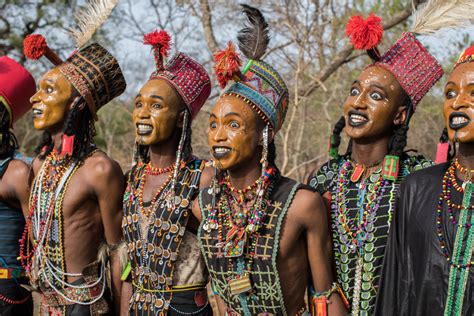
Ethnic groups in Chad
The People and Their Customs
Chad is home to over 200 different ethnic groups, including the Sara, Arabs, Kanembu, and Fulani, among others. Despite this diversity, there is a strong sense of national unity among the people of Chad. Chadian customs and etiquette are deeply rooted in tradition and are often shaped by the cultural practices of various ethnic groups.
Respect for elders is a fundamental aspect of Chad culture, with younger generations expected to defer to their elders in both speech and action. Hospitality is highly valued in Chadian culture, with guests often welcomed into homes with open arms and treated to generous servings of food and drink.
The dress code in Chad varies depending on the region and occasion. In urban areas, Western-style clothing is common, especially among the younger generation. In rural areas and traditional settings, however, more conservative attire is expected, particularly for women.
Read also: The role of women in Chad
Oral Traditions, Festivals, and Celebrations
Oral tradition plays a central role in Chad culture, with storytelling, music, and dance serving as vehicles for passing down knowledge, history, and values from one generation to the next. Throughout the year, Chad celebrates a variety of cultural festivals and ceremonies that showcase the country’s rich heritage and traditions.
One such festival is the Gerewol Festival, celebrated by the Wodaabe people in the Sahel region. The Gerewol Festival also known as the Gerewol or Guérewol is an annual courtship competition held among the Wodaabe Fula people in Niger. Another significant event is the N’Djamena International Cultural Festival, held annually in the capital city.
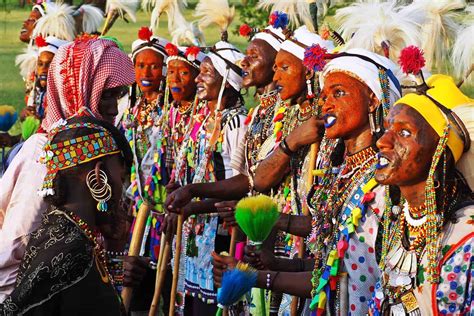
Gerewol Festival
Music and dance play a central role in Chadian culture, serving as expressions of joy, sorrow, and solidarity. Traditional Chadian music encompasses a wide range of styles and instruments, including the ardin (harp), kakaki (trumpet), and balafon (xylophone).
Religion in Chad
Chad is home to a diverse array of religious beliefs, including Islam, Christianity, and indigenous African religions. Religious practices and ceremonies play an important role in the lives of many Chadians, providing opportunities for communal worship, reflection, and celebration.
Read also: The Life of Chad Everett Harris
Two religions predominate in Chad: Christianity and Islam. Muslims live mostly in the north, Christians and Animists live in the south of the country. Christianity is concentrated in the south and among formally educated people.
Modern Arts and Entertainment
Chad-arts and entertainment includes important contribution from the electronic media and theatrical performances. Chad-arts and entertainment is a broad sphere, which has been highly commercialized in the recent times. The television channels, which provide authentic news, regional Chadian serials and programs, are a vital source of entertainment. The culture of rap and pop music is very much prevalent in Chad. Even the tribal cultural dancing is commonly seen in the rural areas of Chad.
There are many local Chadian festivals and occasions, which are an integral part of arts and entertainment of Chad. Some popular artistic personalities also carry out workshops and classes in order to spread the various kinds of art forms such as painting, dancing, singing and acting. There are some well-known theaters in Chad where performing arts such as acting, mono-acting and mimicry are conducted.
Due to the presence of restaurants and hotels in Chad people have the choice of experimenting with a wide variety of cuisines especially Chinese, continental and Thai cuisines other than the typical Chad cuisine.
Discovering Chad: A Cultural Odyssey Through History, Traditions, and Landscapes!
Read also: "Married to Evil": Chad Graves
Ennedi Natural and Cultural Reserve: A Glimpse into the Past
Ennedi Natural and Cultural Reserve (ENCR) in north-eastern Chad contains a remarkable archaeological heritage in addition to its many desert-adapted species. Ancient records in the form of rock paintings portray a time when the Ennedi ecosystem was much wetter than it is today, offering a glimpse into a forgotten past and also guidance for contemporary efforts by a partnership comprising the Chadian Government and African Parks with the support of strategic partners like the European Union and the Environment Agency of Dubai to restore today’s desert ecosystem.
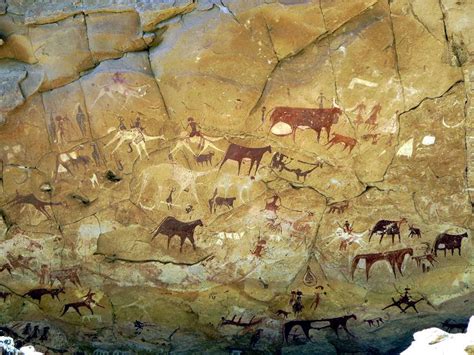
Rock Paintings in Ennedi
The Ennedi Region in northeastern Chad is famous for its amazing rocks and beautiful scenery. It’s a big area with lots of cliffs, canyons, and caves, and is also home to many native communities who have lived there for a long time. They have interesting cultures connected to the land. People like to go there for hiking, climbing, and exploring.
While still in its early days, the ENCR project has already seen initial reintroductions of two important species depicted in cave art (the addax antelope and red-necked ostrich). Today, a team of passionate Chadian archaeologists are uncovering graphic representations of Ennedi’s past, and learning lessons that can help guide our efforts to restore this desert ecosystem.
In this article, we’ll introduce you to two men who believe that Ennedi’s history can help shape its future. Head of the ENCR Archaeology Department, Guemona Djimet relocated his family to Fada in northern Chad to follow his passion for archaeology. His interest in archaeology is intertwined with some of his earliest memories, as he explains: “For me, archaeology is still very much alive because, having grown up in the village, I saw the potters making ceramics and grinding cereals with a millstone. I also saw metalworkers making farm and hand tools”.
Guemona’s decision to study archaeology was also influenced by his family, and by a desire to make a difference by doing something different. These factors spurred him to make what he calls his “long journey back in time”. He has also been on a literal journey, with his studies having taken him to Benin before ultimately settling in Ennedi.
It’s an entirely fitting destination for an archaeologist, with some 1550 sites having been already identified, and over 500 of these are classed as being of major importance. Guemona is in no doubt as to the archaeological significance of this region of Chad: “What makes the Ennedi so special is, of course, the abundance of archaeological sites from different periods that illustrate the continuous occupation of this area.
Adding to the importance of many of the panels is what Guemona describes as the density and quality of the representations of wildlife, livestock and people, and the vibrancy of sites like Sabi Gnalla which features 19 elephants, 141 giraffes and felines, as well as 39 ostriches, 95 anthropomorphic figures and 26 undetermined subjects. “It felt like I was watching a fiction film, given the concentration and superimposition of the works of art, the diversity of themes and techniques.
In a thoroughly modern approach to mapping the ancient world, Guemona and his team plot survey results on a database that helps them prioritise conservation efforts ranging from recording Ennedi’s cultural heritage to raising awareness amongst modern Chadians - the custodians of a remarkable legacy. Ennedi continues to add to our understanding of the past in surprising ways - the depictions of women in cave art inspired Guemona to write a study on the role of women in prehistoric pastoral societies.
“My interest in archaeology and the study of ancient human societies grew out of a deep curiosity about the stories of the past and their ability to shed light on the present,” explains Mahamat Ahmat Oumar, Assistant to the Archaeology Department since 2022. Thanks to his work with Guemona to help ensure the preservation, enhancement and promotion of Ennedi Nature and Culture Reserve’s archaeological heritage, Mahamat sees archaeology not as a dry and dusty profession, but as an active quest for scientific knowledge.
This quest involves using a combination of research surveying and asking local people for pointers to sites - an approach that reflects the fact that Ennedi’s stories are still relevant today. While Ennedi is already recognised for its abundance of rock paintings and engravings, Mahamat is excited about what is still to be discovered. He relishes the opportunity to glimpse prehistory through the lens of Ennedi’s cultural heritage, and learn more about every aspect of ancient Saharan life - from everyday chores to religious practices.
Like his colleague Guemona, Mahamat has certain sites that hold a special significance for him personally, often due to the visual impact of the art. The logistical challenges involved in reaching new sites include challenging terrain and extreme temperatures. As Mahamat explains, “Additional hurdles to overcome include site degradation, vandalism and looting of archaeological sites, uncontrolled tourism, and the lack of a robust legal and institutional framework,” all of which can further complicate the mission to document and preserve Ennedi’s cave paintings.
These challenges are compounded by the need for data analysis after each survey, with the necessary tools and software often lacking. Mahamat’s experiences in the ENCR have made him realise that a holistic approach is required if the area’s archaeological heritage is to be preserved. He believes that this will involve approaching the issue from multiple angles, including stakeholder participation, new legislation and using the rock and cave art sites as the basis for sustainable cultural tourism activities.
“These efforts are essential, as I see Ennedi as an exceptional region in terms of archaeology for two fundamental reasons: its wealth of rock art and the abundance of underexplored heritage”. Ennedi’s art has withstood centuries of desert conditions; with the help of committed guardians like Guemona and Mahamat and assistance from UNESCO, it will continue to dazzle and intrigue future generations. In 2024, their team recorded some 348 archaeological sites - an achievement that also hints at the volume of work still to be done.
Guemona and Mahamat are not alone in recognising the significance of Ennedi’s heritage - four of the sites contained within the ENCR have been accorded historical and cultural importance on a global scale. The ethos of the local archaeologists is very much aligned with this approach, given their desire to weave the past into the fabric of Ennedi’s future and share the treasures of the ENCR with local communities and with the world as part of an evolving narrative that places Ennedi at the heart of worldwide conversations on preserving heritage as a vital, living thing rather than a motheaten artefact.
Challenges and Preservation
Chad’s cultural heritage is a source of pride and identity for its people, serving as a reminder of the country’s rich history and diversity. However, the preservation of this heritage faces numerous challenges, including:
- Site degradation
- Vandalism and looting of archaeological sites
- Uncontrolled tourism
- Lack of a robust legal and institutional framework
Despite these challenges, committed individuals and organizations are working tirelessly to protect and promote Chad’s cultural heritage for future generations.
