Love, in its various shades and colors, is a central theme in all relationships. Without it, relationships can hardly survive, not to talk of thriving. Love in African culture is often symbolized through proverbs, folktales, and traditional practices. These symbols convey deep meaning and understanding of the complexities and nuances of love.
Valentine's Day is a holiday that is traditionally celebrated on February 14th, and it is associated with romantic love and affection. It is a day to remind every person in your life that you love and care about them. Valentine's Day is the perfect time to show your loved one how creative and thoughtful you can be when it comes to gift-giving. Whether it's something handmade or a unique and customized experience, there are so many creative ways to express your feelings. Handmade gifts can range from jewelry and wall art to scrapbooks, quilts, and other creative projects. No matter what you decide to do, make sure the gift is personalized and meaningful.
There are a variety of forces by which the world operates and by which its institutions and systems are held together:
- To love someone is to be prepared to die for the person.
- This may refer to water entering into a pot when one uses it to fetch water from a river or stream.
- Though it may be painful to have your money spent by another, it may be a sign of love for somebody to bother you in this fashion.
A woman who does not love you does not want to have anything to do with you, not to talk of spending your money so you feel she has somehow committed herself to a relationship.
Common Symbols of Love in African Culture
The African continent is home to many different cultures and traditions, and each of them has its own unique symbols of love.
Read also: Experience Fad's Fine African Cuisine
- The Heart: In many African languages, the word for heart is also the word for love. The heart serves as a part of all of us that elicits emotions making us more human and more connected.
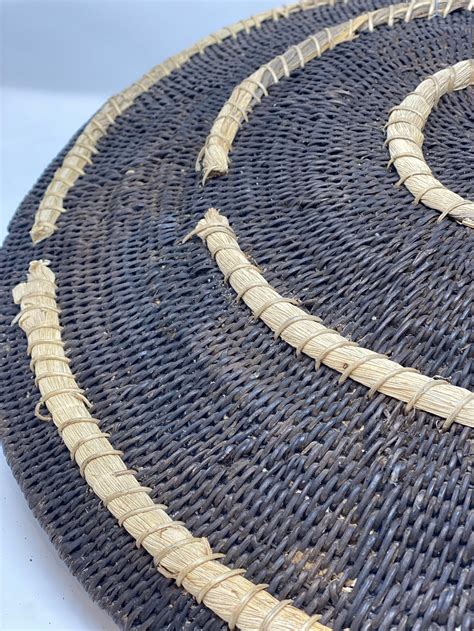
- The Circle: Another symbol of love in African culture is the circle. The circle represents unity and continuity, and is often used to symbolize the unbreakable bond between lovers. This is seen in the traditional practice of giving couples rings, which are circular in shape. The rings symbolize the couple's commitment to one another and the continuity of their love. Many African pieces of art have the circle symbol on them, from baskets to fabric, to engravings.
- The Elephant: The symbol of the elephant is also commonly used in African cultures to represent love. The elephant is seen as a strong and powerful animal, and its strength and steadfastness are often used to symbolize the strength and endurance of love. Did you also know that the elephant species are the caretakers of the wild? Usually, by God’s amazing design, these extra ordinary creatures have an incredible ability to find water underground. They use their sensitive trunks and large ears to detect moisture in the ground and then use their tusks to dig for water. This remarkable skill is an important part of elephant survival in areas with limited access to surface water. By digging for water, elephants can access a reliable source of hydration even in arid climates, creating watering holes for the fauna to survive the seasons.
- The Tree: Another symbol of love in African culture is the tree. The tree is often used to symbolize the growth and nourishment of love. The roots of a tree represent the foundation of love and the branches represent the growth and expansion of love over time. This symbol is often used in traditional wedding ceremonies where the couple plants a tree together as a symbol of their love and commitment to one another. The tree has been a powerful symbol of life in African culture for centuries. Trees are also seen as a source of nourishment and shelter for the people. They are believed to be the bridge between the physical and spiritual worlds. That is why many traditions plant a tree for their loved one after they have transitioned to the afterlife. Love remains with them, and links them to their deceased. In African symbolism, trees represent growth, renewal, and connection with nature. They also represent a sense of community and family through their roots that reach deep into the soil. Just keep in mind that many sculptures are made from wood from the strongest and most durable trees in Africa.
It is very common for people to give gifts that are symbolic of their love, such as a carved wooden spoon for a couple starting a life together, or a wooden bowl for a lasting relationship.
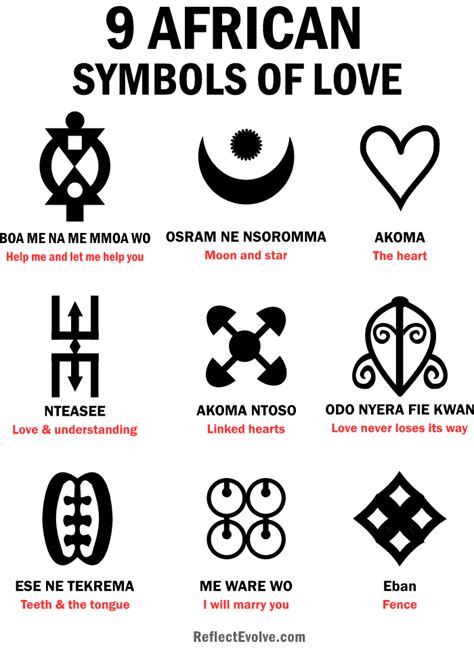
Adinkra Symbols and Their Meanings
Adinkra symbols are more than just decorative motifs; they are rich, visual representations of concepts, aphorisms, and philosophies that convey deep cultural and historical meanings. Originating from the Akan people of Ghana and the Gyaman of Côte d'Ivoire, these symbols have been used for centuries to communicate values, beliefs, and ideas. Adinkra are visual symbols that represent concepts, proverbs, and aphorisms. Saturated with meaning, Adinkra have come to represent the richness of Akan culture in particular and African culture in general.
Adinkra symbols have a storied history that dates back to the early 19th century. According to tradition, the symbols were first created by the Akan people, specifically the Ashanti, who used them to decorate cloth worn during sacred ceremonies and special occasions. The name "Adinkra" itself is said to come from the Akan word for "farewell" or "goodbye," reflecting the use of these symbols in funerary contexts to bid farewell to the departed.
Each Adinkra symbol carries its own unique meaning, often derived from proverbs, historical events, human behavior, plant life, and animal traits. Here are a few notable examples:
Read also: The Story Behind Cachapas
- Gye Nyame (Except for God): One of the most popular and widely recognized symbols, Gye Nyame signifies the omnipotence and supremacy of God. It represents the belief in the spiritual presence and the power of God in all aspects of life.
- Sankofa (Return and Get It): Depicted either as a stylized heart shape or a bird with its head turned backward, holding an egg in its beak, Sankofa emphasizes the importance of learning from the past to build a better future. It is a symbol of wisdom and knowledge. The spirit of Sankofa encompasses taking from the past what is good and bringing it into the present to make progress in the future. This symbol is often used in wedding ceremonies and on traditional love charms.
- Duafe (Wooden Comb): Symbolizing beauty, cleanliness, and feminine qualities, Duafe reflects the high regard for personal care and grooming in Akan culture. It also represents the virtues of a good woman.
- Adinkrahene (Chief of the Adinkra Symbols): This symbol of greatness, charisma, and leadership is often used to convey the qualities of an effective leader. It emphasizes the importance of authority and responsibility.
Adinkra symbols have transcended their traditional uses and are now embraced in various forms of contemporary art and design. What makes Adinkra symbols so compelling is their ability to convey complex ideas in simple, visually striking forms. Their meanings transcend cultural boundaries, resonating with people from diverse backgrounds. Whether used in fashion, home décor, tattoos, or fine art, these symbols continue to communicate powerful messages that are as relevant today as they were centuries ago.
Here is a list of Adinkra symbols with their meanings along with extra explanatory remarks.
| Symbol | Name | Meaning | Additional Remarks |
|---|---|---|---|
 | Gye Nyame | Except God | A symbol expressing the omnipotence of God. Probably the most popular Adinkra symbol in Ghana. |
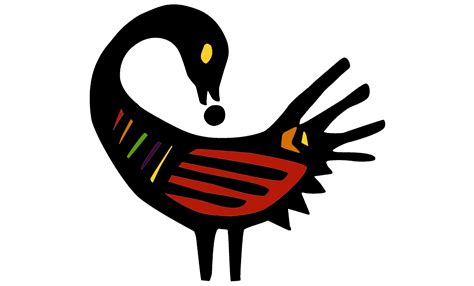 | Sankofa | Go back and get it! | A symbol of the wisdom of learning from the past to build for the future. |
 | Adinkrahene | King of the Adinkra symbols | A symbol for authority, leadership, and charisma. Also a symbol for qualities associated with kings. |
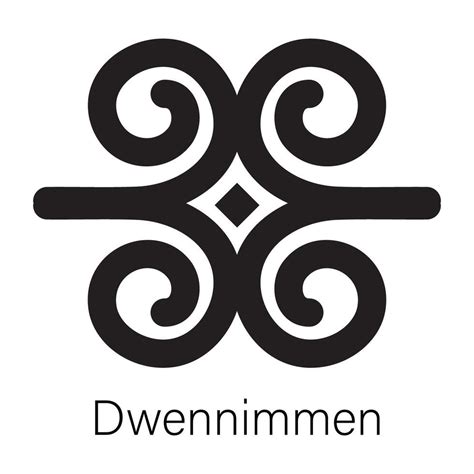 | Dwennimmen | Ram's horns | A symbol of strength (in mind, body, and soul), humility, wisdom, and learning. |
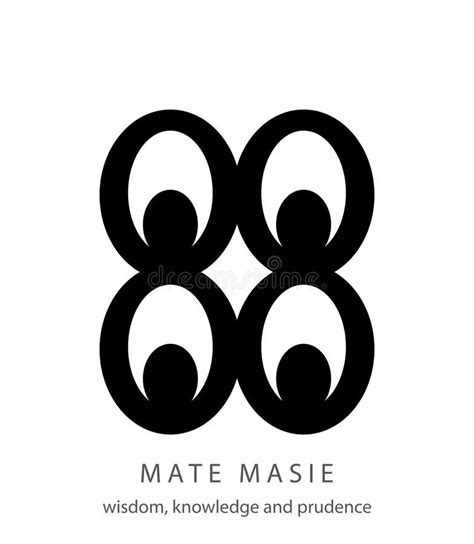 | Mate Masie | Conjoined crocodiles | A symbol representing the tortuous nature of life's journey and, also, the toughness, versatility, and dynamism required to thrive in it. |
 | Akoma | Heart | It symbolizes endurance and understanding, and can be recognized as the modern day standard heart. It's literal meaning is "the heart" and represents love, unity, endurance, patience, tolerance, goodwill, and faithfulness. It also symbolizes tolerance in the face of frustration and stresses the need for patience. |
The idea that one is certain to arrive at a desired end if his motives are pure is embedded in this phrase. One may not know exactly what steps to take to reach the final destination. This should not be an excuse for indolence, inertia, and inaction regarding the pursuit of worthy causes. The tendency of the universe towards positive outcomes in the presence of painstaking effort is itself a belief that warrants explication for it is not obvious why that should be the case. The symbol exhibits bilateral symmetry with each half spotting two spirals. As the Good Book says, “Love never fails.”
The juju hat for example is an amazing valentines gift. It has a circular shape, and is white to symbolize pure love. You can also decorate their houses with circular-shaped wall baskets, especially the Makenge basket that also encompasses a circle woven on it.
Read also: Techniques of African Jewellery
How can you gift using this symbolism? You are lucky our shop has an array of wooden gifts to choose from!
