Owning an African Grey is like living with a tiny, feathered genius. These birds are incredible at problem solving, vocal mimicry, and reading the emotions of the people around them. This level of intelligence can be a blessing and, at times, a bit of a challenge. But that intelligence means they need more than just a few bird toys to stay happy. There are simple ways to keep your Grey engaged and content. Think of your African Grey like a feathered four-year-old genius. They’re constantly observing, problem-solving, and testing boundaries-sometimes all before your first cup of coffee.
We all know birds need a healthy diet to thrive-but their brains need just as much care. Without daily mental challenges, your Grey may become irritable, withdrawn, or even destructive. That’s why I always tell new bird owners to think enrichment-first. Just like you plan meals and sleep, make play and problem-solving part of the daily rhythm.
Enrichment isn’t just a fun extra-it’s a vital part of parrot care. Toys, social time, and foraging activities help your bird feel safe, challenged, and connected. This post is your African Grey’s enrichment starter kit. Whether you’re new to parrot parenting or just need fresh ideas, you’re in the right place. I’ll share proven strategies, science-backed toy ideas, and easy ways to turn everyday routines into brain-boosting fun. You don’t need a huge budget or fancy setup-just a little creativity and consistency. This is the same approach I use in my consults-and with my own flock at home. It’s helped countless birds stay happy, curious, and calm.
Greys don’t just want interaction-they need it to feel emotionally secure. That’s why mental stimulation isn’t optional-it’s essential. These birds were built for learning, exploring, and adapting, and they thrive when given the chance to do all three. Not every activity has to be hands-on or 1:1. These kinds of self-directed activities help your Grey stay engaged while also building independence.

Why Toys are Important for African Grey Parrots
Parrots are incredibly intelligent and social creatures that like to play and interact with their surroundings. As a pet bird owner, providing toys is essential to keep them engaged, stimulated, and entertained. But that intelligence means they need more than just a few bird toys to stay happy.
Read also: Experience Fad's Fine African Cuisine
In the wild, African Grey's spend most of their day foraging, exploring, and interacting with their flock. Every sound, movement, and object is a learning opportunity. When enrichment is limited, boredom kicks in fast. That’s when you start seeing things like screaming, feather picking, or aggressive behavior. The good news? The risks of boredom are very real for African Greys. When these clever birds don’t get enough mental and physical stimulation, they often develop problem behaviors.
African greys are brainy birds that need daily out-of-cage time to stay happy and healthy. Without enough enrichment, they can easily get bored, leading to behavior issues like screaming or feather plucking. This kind of attachment may seem sweet at first, but it often turns into unpredictable hormonal aggression down the line. Your bird might pick a “favorite person,” get overly clingy, and lash out when routines or relationships shift.
Remember that in the wild, an African Grey Parrot never has to wonder what to do next. Every moment of their lives is taken up with finding food, finding water, evading predators, sleeping, and making more African Grey Parrots! Living in a cage, regardless of how luxurious it is, may eventually leave your companion bird bored!
Here are some of the best types of toys to keep your African Grey entertained:
1. Foraging Toys
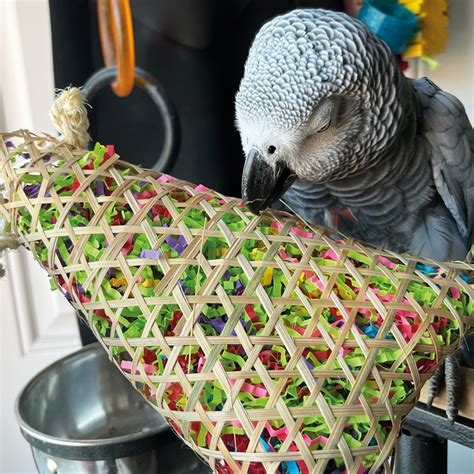
In nature, African Grey's spend most of their day searching for food-cracking seeds, peeling bark, and digging through leaves to find hidden fresh, raw foods. Foraging toys recreate this natural behavior, giving your bird something fun and challenging to do with their time and making them work for their food. Providing foraging toys in your bird’s cage is an excellent way to keep them mentally and physically stimulated. These types of toys require the bird to work to access the food hidden within them. You can place treats or fruits inside the toys to encourage your bird to explore them.
Read also: The Story Behind Cachapas
In the wild, African Greys forage both in trees and on the ground, which means they instinctively enjoy scratching through materials to uncover food just as much as plucking it from branches. You can recreate that at home by scattering treats in a shallow box of crinkle paper, clean leaves, or toy parts.
There are plenty of ready-made foraging toys available too. Brands like Caitec and Busy Bird make sturdy, medium-sized options that challenge your Grey to unscrew, slide, or flip parts to get to the good stuff. If you're feeling crafty, there are tons of easy DIY foraging ideas. Use paper muffin cups, empty tissue boxes, or cardboard egg cartons filled with a mix of foot toys, bird-safe paper, and hidden snacks.
If you're new to foraging or want to go deeper, check out my book Teach Your Bird to Forage. It’s packed with step-by-step ideas and beginner tips to help you build confidence and turn mealtime into enrichment time.
2. Puzzle Toys
African Greys are natural problem solvers, so toys that make them think are a must. Puzzle toys give your bird a mental workout by challenging them to flip, twist, slide, or open parts to uncover a treat. Parrots are intelligent animals that need to be mentally stimulated. Puzzle toys challenge their problem-solving skills, keeping their brains engaged and their natural instincts stimulated. These toys usually come in the form of a puzzle or maze that the bird has to navigate to access the rewards inside.
Brands like Busy Bird are a favorite. They're designed to keep your bird busy and curious, which helps reduce attention-seeking behaviors like screaming.
Read also: Techniques of African Jewellery
DIY Puzzle Toy Ideas:
- Egg cartons are a handy household item to make foraging toys for your African Grey. The idea is to place treats inside the egg carton for your parrot to discover. Put the treats inside the cups and scrunch them up. Next, place the cups inside the egg carton. Use masking tape to seal the egg carton shut. Hang the toy inside your pet bird’s cage. Stainless steel skewers for birds are ideal. Safety Note: Never use styrofoam for parrot toys. Be vigilant! Styrofoam is used to make various products, from egg cartons to paper cups.
- Plastic bottle lids can be easily repurposed into a fun foraging toy. Make a hole in the center of the bottle lids and thread them through a natural fiber cord such as a leather cord. Place the lids upside down so that you can place small treats inside.
- Parrots, like all pet birds, love to shred paper and cardboard! Let your imagination run riot! Take smaller boxes, paper rolls, or cups to hide treats inside. Place the hidden bird treats inside a larger box or boxes! Add as many layers as you desire.
- Your pet will love to get stuck in shredding the pages. Phone books are great if you can get your hands on them. You could go the extra mile and hide treats inside for your parrot to find. Using old books is a low-effort way to keep your bird occupied, as it requires little time to set up.

3. Chew Toys
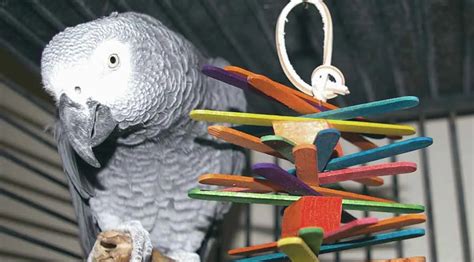
Greys love to shred-and they’re good at it! Chewing is more than just a pastime; it helps relieve stress, satisfy nesting instincts, and keep their beak in great shape. Chewing is an integral part of a parrot's playing behavior. They enjoy chewing on things to condition their beaks physically and mentally. Chew toys, such as wooden blocks, natural wood perches, and rope toys, are excellent choices for birds that love to chew. Ensure to choose toys that are made with bird-safe materials to avoid any toxicity.
Birds explore things with their mouths. You can see a bird when they encounter something new, testing it with both their beak and their tongue in an effort to determine what it is. Is it dangerous? Can I eat it? Does it make noise when I bite or pull on it?
In my experience, African Greys tend to prefer softer, thinner woods over super hard chunks. Think balsa, yucca, vine, and other easy-to-shred materials they can really sink their beak into. Rotate chew toys often and mix up how they’re presented-hanging, foot toys, or tucked into foraging setups. The more variety you give them, the more likely they are to stay interested and engaged.
DIY Jungle Gym:
Let your creative juices take the lead with this one. For a low-cost version, use cardboard boxes, foraged branches, or old PVC piping. Create the structure you want to build. Once built, you can use natural fiber rope to adorn your jungle gym with toys for your bird to play with. If you are short on time, an old laundry rack can be easily transformed into a jungle gym.
Safety note: Parrots love to chew wood. Supplying them with a natural wood to chomp on is a fantastic idea. However, some wood is toxic to parrots. You can find a list of safe and toxic wood here.

4. Interactive Toys
Many Greys also enjoy toys that make sound. Bells, clackers, or even toys that rattle can turn into a fun game your bird invents on their own. Parrots are highly social creatures that enjoy interacting with their surroundings, including their owners. Interactive toys like bells, mirrors, and tunnels provide valuable social interaction between bird and owner. Playing with these toys together with your bird helps to foster the bond between you and your pet.
5. Climbing Toys
Naturally, parrots live in trees and like to climb. Climbing toys like ladders, swings, and ropes provide a more natural environment for your bird, simulating the trees of their natural habitat. These toys also give your bird a chance to move around and get exercise, promoting physical and mental wellness in your pet.
Optimizing Your African Grey's Environment
A lot of people hang toys only at the top of the cage-but Greys need enrichment at every level. Try mounting different toys up high, at mid-level, and even near the bottom to encourage climbing, stretching, and curiosity. By using all zones, you turn the cage into a mini playground-not just a holding space. Your Grey will move more throughout the day, which supports physical health and reduces stress.
Even the most exciting toy gets old if it never changes. African Greys are quick learners, and once they’ve “solved” a toy, they often lose interest. You don’t need a huge toy collection to do this-just swap out 2-3 toys at a time, and store the rest in a toy bin for later. Reintroducing an “old” toy after a few weeks often makes it feel brand-new again.
Cage space is limited, so try building enrichment stations outside the cage too. A nearby tree stand or tabletop perch is perfect for setting up a foraging zone or shredding station. This gives your bird something to look forward to when they’re out of the cage. It also helps reduce the chance they’ll get bored and start chewing your furniture or yelling for attention.
Out-of-cage time for your African grey isn’t just a treat-it’s a must for their mental and physical health. These curious birds thrive on interaction, exploration, and movement outside the cage. Set up a bird play stand in a bird-safe room so your parrot has a dedicated hangout spot to climb, chew, and forage. Choose a stand with natural wood perches, hanging toys, and food cups to keep them entertained. Window perches let your grey bird watch the world go by, which is great visual stimulation. Just be sure there are no cold drafts or direct sun exposure that could overheat your bird. If you’ve got a secure outdoor aviary, that’s even better! Outdoor time gives your bird fresh air and sunlight, which supports natural vitamin D synthesis.
Always prioritize safety during out-of-cage time-no ceiling fans, hot pans, open windows, electrical cords, or toxic plants in the area. Supervision is a must, especially in new environments or during play stand exploration.
Bonding Through Play and Training
Daily play and training sessions are one of the best ways to bond with your African grey and keep their mind sharp. These parrots are incredibly intelligent and love problem-solving games, learning tricks, and figuring things out. Clicker training is a great way to teach new behaviors using positive reinforcement. Pair the sound of the clicker with a small, favorite treat to reward your bird the instant they do something right.
Additional Considerations
- Toy Rotation: Don’t overcrowd the cage with every toy your parrot owns. Instead, cycle through toys leaving a few in the cage at a time and swapping different toys in on a regular basis.
- Foot Enrichment: African Grey Parrots need a variety of surfaces to stand on, and to explore with their feet. Toys in a variety of materials, with a variety of textures are ideal for the African Grey Parrot’s feet. In addition to toys, perches and swings with a variety of surface textures can also provide a good foot and leg workout.
- Cost-Effective Enrichment: The most cost-effective way of providing your parrot with what they need is to get creative with DIY enrichment ideas.
- Safety First: Making toys is lots of fun and will save you money. When creating new toys always supervise your parrots when first introducing them. No toy is completely safe; however, generally, parrots will not ingest non-edible material like plastic or cardboard.
Conclusion
Parrots are playful and intelligent pets that require toys to keep them active, engaged, and stimulated. As a pet bird owner, providing toys that offer chewing, foraging, puzzle-solving, social interaction, and climbing will keep your pet bird happy and healthy. Remember to choose toys made with bird-safe materials to avoid any harm to your pet.
Need help choosing the right toys or setting up an enriching routine? We've got expert-picked supplies and guides to make it easy.
