Church hats in America, particularly within African American communities, carry deep symbolism beyond mere fashion, encompassing various cultural, historical, and personal meanings. Willie E. Burge Robinson, a retired teacher and author of "Mama's Church Hattitude" and "Pouring out God's Grace from a Mason Jar," has dedicated herself to investigating and preserving the legacy of ladies in church wearing hats.
Robinson explains, "When our mom entered a place of worship, all the women of the church were invited to wear church hats. I decided to go through my mom's boxes. And I was just - it was like a treasure hunt, but then I had an aha moment. How can I preserve this legacy? I decided to put together a booklet. My cousin saw the booklet, he said, 'You should write a book.' I had no intention for writing the book. But that's how it all started."
So, Willie Robinson wrote Mama's Church Hattitude! "Our African American ancestors found a spiritual oasis in their head covered. Symbolically, it was a way of escape to a place of peace in the midst of doom and gloom. They created within their heart, a place of abundance and hope. The African American woman that sits under a church hat has a long history of stories of struggles, triumphs, and overcoming."
Robinson discovered that hats became popular in black churches after the end of African American enslavement. "The significance of hats in the black church is rooted in Scripture that was written by the Apostle Paul. African American ancestors took them literally, that when you go to attend church, you are to cover your heads, because that's your way of honoring God."
The symbolism of church hats contains various cultural, historical, and personal meanings.
Read also: Experience Fad's Fine African Cuisine
Symbolism of Church Hats
The symbolism of church hats in America is multifaceted, encompassing religious devotion, cultural identity, personal expression, and a celebration of community and creativity within worship. Here are some critical aspects of the symbolism of church hats in America:
- Expression of Faith: Church hats are often considered a symbol of faith and devotion. It is seen as a way to present oneself dignifiedly before God.
- Cultural Identity: For many African American women, church hats are a powerful symbol of cultural identity. The tradition of wearing elaborate and stylish hats to church has historical roots in African American church culture, an essential aspect of artistic expression.
- Celebration of Individuality: Church hats are often viewed as a means of celebrating individuality and personal style. Each unique hat reflects the wearer's personality, taste, and creativity. It allows individuals to express their distinctiveness within a communal setting.
- Economic Empowerment: Many African American women have historically engaged in hat-making and millinery to contribute to their families' income. Church hats symbolized economic empowerment and creativity within the African American community.
- Sunday Best Tradition: Wearing hats to church is part of the "Sunday best" tradition, where individuals dress in their finest attire to attend Sunday services. This tradition is a way to honor the Sabbath and demonstrate the importance of the occasion.
- Rites of Passage: Church hats are often worn during significant life events and rites of passage, such as weddings, funerals, and baptisms. The hat choice for these occasions may carry additional symbolism related to the event.
- Social Connection: Wearing church hats can foster community and social connection. The shared tradition of dressing up for church, including wearing hats, creates a communal experience and a sense of unity among churchgoers.
- Symbol of Strength: In the face of historical challenges and discrimination, the tradition of wearing church hats can symbolize strength and resilience. It represents a cultural practice that has endured and thrived despite adversity.
- Fashion as Empowerment: Church hats are a form of fashion that can empower women. The choice of a hat can be a deliberate act of self-expression and a way for women to feel confident and beautiful.
What RC Sproul Believes About Head Covering
While hats are worn to religious services in various parts of the world, the specific cultural and historical significance of "church hats" as a distinct tradition is more pronounced in the United States, especially within the context of African American churches.
Congregation at Good Shepherd Baptist Church in Baltimore, Maryland in 1995.
Historical Context
The history of church hats in the United States is closely tied to the experiences of African Americans during slavery and the post-emancipation period. As a central institution in African American communities, the church has played a crucial role in shaping cultural practices, including fashion. The making and wearing of church hats became a means of economic empowerment for African American women in the early to mid-20th century. Many women engaged in hat-making and millinery, contributing to their families' income.
Wearing hats to church is part of the "Sunday best" tradition, where individuals dress in their finest attire to attend Sunday services. Sunday church services are significant social and spiritual events, and dressing up, including wearing a hat, is a way to show respect and celebrate the occasion.
Read also: The Story Behind Cachapas
In the United States prior to the 20th century, Christian women of various races and denominations practiced headcovering in accordance with 1 Corinthians 11, in which the Apostle Paul calls for them to do so. In the Southern United States, church hats became the adaptation of the biblical injunction of headcovering for Christian women.
The tradition of the church crown emerged in the early 20th century. Many African-American women were employed as domestic workers during the week, so Sunday church services provided an outlet for self-expression.

African American church service in Woodville, Georgia, in October 1941.
Evolution of Style
The Black women’s church aesthetic has always centered hats and over time they have developed from patterned headwraps to elaborate wide-brimmed beauties. The evolution of church hat style evolved from African cultures to fashion icons like Madam C.J. Walker and now to second-generation milliners, designers and makers of women’s hats. The history of Black women and headwear can be traced back to the early 1700s in sub-Saharan Africa and quickly became a staple for African women representing communal identity and individuality.
The highly respected headwraps designed from the creativity of Black women in Africa were given a different meaning in America, one of subservience. Enslaved Black women in America were expected to abide by a dress code where the only acceptable headpiece was the ‘negro cloth.’
Read also: Techniques of African Jewellery
After the Reconstruction era and into the Harlem Renaissance of the 1920s, Black women, particularly in the middle class, created an aesthetic and style of hats with bold colors, wide brims, lace, rhinestones and large feathers. The more detailed and elaborate the design, the more it symbolized success and an affluent lifestyle - these hats were worn in speakeasies and even churches.
During the Civil Rights Era, what many Black folks wore to church is also what they wore to protest, from Black men in three-piece suits and dress shoes to Black women with white dresses or dress suits and a hat.
Contemporary Perspectives
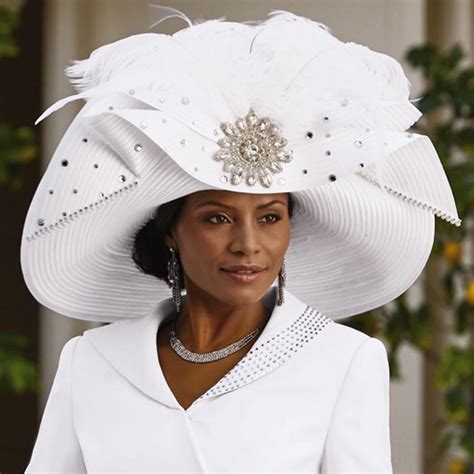
Today, church hats remain a beloved custom among many African American women. Styles range from classic to avant-garde, with wide brims, feathers, rhinestones and silks turning each hat into a work of art. While younger generations may reinterpret the tradition in modern ways, the legacy of the church hat lives on.
Whether she knows it or not, when a black woman wears a hat, she is wearing the strength of the women who came before her.
The tradition of wearing elaborate hats to church is more culturally significant and deeply rooted in specific communities in the United States, particularly within the African American church culture.
There are many books available that will highlight the history of church hats, but this book by Michael Cunningham and Craig Marberry is the "BEST"! Excerpts from the inside cover of the book "CROWNS" Countless black women would rather attend church naked than hatless. For these women, a church hat, flamboyant as it may be, is no mere fashion accessory; it's a cherished African American custom, one observed with boundless passion by black women of various religious denominations.
Photographer Michael Cunningham collaborated with journalist Craig Marberry to photograph and interview women about why they wear hats, how many hats they own, and the rules of church hat etiquette.
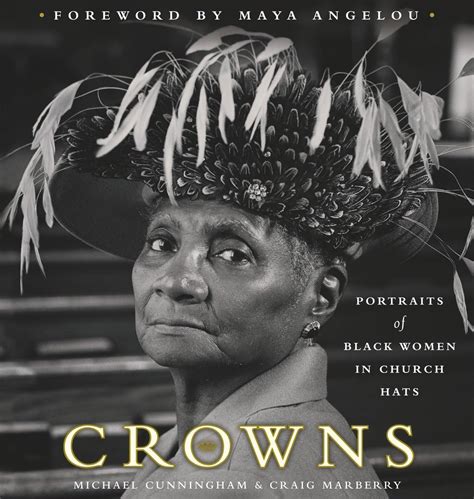
Cover of the book "Crowns: Portraits of Black Women in Church Hats" by Michael Cunningham and Craig Marberry
As Kyra March, a Rutgers doctoral student, curated the exhibit “The Head That Wears The Crown” at the Stoutsburg Sourland African American Museum (SSAAM) in Skillman, NJ. To make it difficult to differentiate free Black women from those enslaved, Tignon Laws were enacted during the 18th century, forcing free Black women to wear the headscarves. “I see tignons as a clear indication of the resistance against oppressive Black laws. They said, ‘We are going to make them their own,’ ” March said, on the connection between tignons and church hats.