Patterns and shapes can be found everywhere. Various designs found in nature have inspired great artists from all ages to make timeless pieces of art whether it be painting, poetry or even music. Mother Nature has boundless and yet to discover designs hidden in her bosom. The prehistoric man carved the shapes he saw in nature on stones and in caves. As man evolved so did his artistic freedom, shapes and patterns came out of caves and on temple walls and streets. As man grew smarter, he realized he could use these shapes to deliver unspoken yet powerful messages. He inculcated those designs in his business to deliver messages that would attract people and hence the birth of LOGO!
What is a Logo?
The word ‘logo’ has its root in the Greek word ‘logos’ and is a graphic symbol used to promote public recognition. From ancient seals and coin markings, to the more contemporary minimalistic and abstract designs, logos have travelled a long way. Logo designs come in various shapes and colors and each of these have different meanings. A logo can be artistic or formal, it could also be traditional or modern, depending on what a brand wants to convey.
Why is a Logo Important?
Logo is an essential component of a brand. It conveys unspoken messages that allow brands to establish its image. Logos go a long way in establishing brand identity and persona. Logos can do the following for the brand:
- Grab attention
- Make a strong first impression
- Part of brand identity
- Foster brand image
- Foster brand loyalty
The Psychology of Logo
Brands put in sleepless nights to design a logo that would perfectly convey unspoken messages to potential customers. Brands and designers know the psychological effects a logo has on customers. Various colors have varied effects on the human mind and so do shapes. When various colors and shapes are merged they trigger various emotions and effect on the mind therefore brands and designers very carefully merge the two to create something unique. It takes years of hard work and practice to create perfect logos that would stand the test of time.
Как создать логотип? Видеоурок
Logo Categories
Though logos can be varied, they all fall into one of the three categories:
Read also: Property Practitioners Regulatory Authority
- Ideograph logos are graphic symbols and do not contain any words or language. They mostly convey an idea or a message.
- Pictograph logos are simply pictorial representations of a physical object. They are often used in writing and graphic systems where the characters and the pictures match.
- Wordmark logo is a ‘text only’ form of logo where the brand’s name is highlighted. Some of the biggest brands have wordmarks as their logo.
Logo Shapes
Every brand is different and must be able to convey the difference through the logo it chooses. A designer understands how shapes can convey various meanings when used with various color schemes. It is imperative that the brand and the designer work closely to establish what the company wants to convey through its logo. There are various shapes to choose from and each shape would have a different meaning. Round logos can depict playfulness when combined with various colors, sharp and angular logos can be intimidating and convey power and stability.
The Various Logo Shapes with Their Meanings
Every line, every angle and every shape has meaning and when applied a certain way, they convey various messages. We will look at some of the shapes that logo makers use along with the meaning they convey.
- Circle Meaning: The circle is considered ‘original perfection’. Circle is associated with spiritual growth and self-realization or enlightenment. It represents totality and fulfilment. It also symbolizes cyclic movement. A universal symbol, the circle represents the infinite and the ultimate geometric symbol. Associated with the cycle of life, the circle is seen as beginning, end and yet another beginning!
- Organic Meaning: Anything that is close to nature is organic. Trees, animals, mountains and birds are all part of nature and therefore organic. Organic, in recent times, is also used to mean something which is healthy or is grown without the use of pesticides. Organic does not have any negative connotations and therefore highly favored by brands and designers.
- Spirals Meaning: Spiral like the circle has deep spiritual meaning. While the circle represents continuity the spiral portrays the final realization. The outer spirals signify ego and the inner spirals, the inner soul or enlightenment. The spiral also signifies connectivity, change and development. The spiral is a special geometrical curve and unlike the circle, spirals are open curves.
- Sharp Meaning: The human mind is truly an amazing place. It tends to find meaning and purpose in the most mundane of things; however, shapes and formation in nature do have various effects on the human mind. Round edged objects tend to be softer, whereas sharp edged objects or lines portray strength. Sharp lines and angles can also depict movement.
- Angular Meaning: Resolve, protection, safety and resilience is what angular lines and objects signify. Angles give purpose and a meaning. If a circle denotes beginning, end and a new beginning, then angles bring meaning between the beginning and the end. Angles bring purpose and direction. Angles breathe life in designs.
- Square Meaning: If circles and spirals have spiritual connotations then squares portray physical balance. Squares symbolize laws of nature; the four corners of the square hold reality in the middle. The square also represents balance and structure along with giving a sense of reliability and security. Designers and brands use square because it portrays a sense of protection.
- Triangle Meaning: Depending on their position, triangles could have two meanings. A masculine sign signifying stability and immense power when pointed upwards, while pointed downwards, the triangle signifies instability. Shrouded in mystery, the triangle also signifies mysticism and occult. Triangles also have deeper spiritual connotations as it portrays the union of body, mind and soul; the three points of the triangle.
- Vertical and Horizontal Lines Meaning: From ancient carvings in caves to modern brand logos, all have used horizontal and vertical lines to convey various messages. Vertical lines symbolize power with a strong base. Vertical lines also signify superiority over others. Horizontal lines have a calming effect on the mind. It also represents communication and patience. Horizontal lines are preferred by brands that want to convey movement and purpose.
- Cultural Logo Shapes Meaning: Cultural logos are used to convey specific meanings. These kinds of logos generally convey an idea or an ideology of a particular culture or a society. Cultural logos or symbols could have spiritual or religious connotations. They could also represent traditions or certain set of values. Cultural logos generally play on an individual’s emotions or empathy.
- Abstract Meaning: Abstract comes from a Latin word which means detached. Abstract form of art is detached from reality and comes to life in the mind of its creator. An abstract form of art could mean anything to anyone. The magic of abstract lies in the fact that it is unique and does not conform to any known form of art, whether traditional or modern.
- Influenced by Nature Meaning: Designed influenced by nature are similar to organic designs and sometimes can be replaced by the other, however nature inspired go a step further in the sense that these designs include man-made things like paintings and ink droplets. Leaf, trees, mountains, animals, stars and galaxies all can be categorized under nature influenced designs.
Geometric, Organic & Abstract Shapes
All possible shapes discussed above broadly fall under three main categories: organic abstract or geometric. Organic shapes are inspired by nature whereas abstract shapes come from the designer’s mind to convey powerful messages. Geometric shapes are the simplest and the most common shapes of all. Geometric shapes are squares, triangles, circles and their derivatives. Psychologists have discovered that shapes have various effects on the mind. When mixed with various colors and patterns, shapes come to life and have a deep impact on the human mind.
The Gestalt Theory
The fact that the whole of anything is greater than its components is what the Gestalt theory lays stress on. The word Gestalt is a German word which means to “put together”. In simpler words, the human brain organizes and simplifies even the most complex of designs. Even if random things are put together, the brain attempts to organize the elements and bring meaning to it as a whole. Designers use this theory to create brilliant logos combining various shapes and colors. The theory can be summarized by the following:
- Similarity
- Continuity
- Closure
- Focal point
- Common region
The Golden Ratio
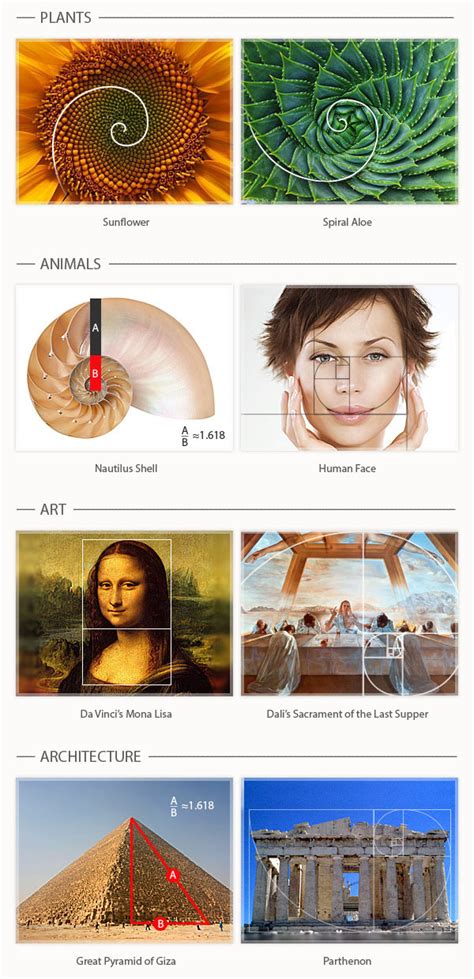
A mathematical ratio and commonly found in nature, the Golden Ratio can be aesthetically pleasing to the eyes when applied in designs. Be it the Pyramids of Egypt or the paintings of Leonardo da Vinci, they have all been designed using the Golden Ratio.
Read also: Amazing Facts About Africa
Golden Ratio: A Designer’s Delight
The Golden Ratio or the Divine Proportion is derived when a line is divided into two parts and the longer part (a) is divided by the smaller part (b) is equal to the sum (a+b/a), which is 1.618. The 1.618 ratio or the Golden ratio can be found almost everywhere in nature. From a beautiful flower to spiral galaxies all have the ratio. The ratio when applied to designs, gives balanced yet beautiful patterns and compositions.
Adinkra Symbols
Adinkra are visual symbols that represent concepts, proverbs, and aphorisms. They originated from the Gyaman people of Ghana and Côte d’Ivoire. Back then, they featured as prints on cloth which royals wore to important ceremonies. But they have transcended these Ghanaian and Ivorian origins. They now grace logos, clothing, furniture, architecture, and more. Saturated with meaning, Adinkra have come to represent the richness of Akan culture in particular and African culture in general. They serve as a concise way to convey deep truths in visual form. In fact, many of the symbols have their own associated Akan proverbs.
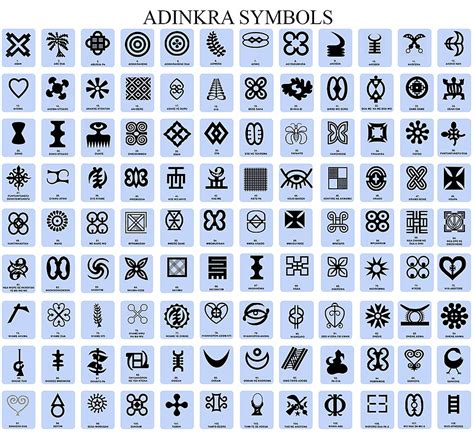
Due to their appealing attributes, Adinkra symbols are often used in logos and emblems to promote ideas and causes. Below is a list of Adinkra with their meanings along with extra explanatory remarks.
| Symbol | Meaning |
|---|---|
| Except God | A symbol expressing the omnipotence of God. Probably the most popular Adinkra symbol in Ghana. |
| Go back and get it! | A symbol of the wisdom of learning from the past to build for the future. |
| King of the Adinkra symbols | A symbol for authority, leadership, and charisma. Also a symbol for qualities associated with kings. |
| Ram's horns | A symbol of strength (in mind, body, and soul), humility, wisdom, and learning. |
| Conjoined crocodiles | A symbol representing the tortuous nature of life's journey and, also, the toughness, versatility, and dynamism required to thrive in it. |
| Love does not lose its way home | Crocodile. |
| Star (literally, "child of the heavens") | Fortress (or castle). |
African Textiles and Their Meanings
From Donna Karan’s jackets and wrapped skirts to French designer, Yves Saint Laurent’s L’ Afrik collection, some of the most memorable and popular designs have been inspired by African patterns and themes. Showcasing the diverse cultures of Africa along with the rich and vibrant color palate, influential fashion designers all over the globe have embraced the colors, patterns, cultural dress and tribal motifs of Africa. Yet, despite African patterns appearing on everything from handbags to formal gowns, many designers and fashion lovers alike are unaware that these african patterns themselves hold so much more than their beauty.
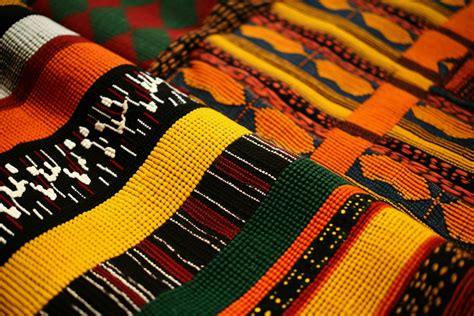
More than simply a fashion statement, traditional African textiles such as Kuba cloth and Mudcloth have an incredibly rich history of a great and ingenious people. While they may look fantastic for today’s modern fashions, the prints can be a symbol of status, hierarchy, and allegiance to tribal roots.
Read also: Discover Thula Thula
- Kuba Cloth: Produced by the Kuba people of the Congo, this popular African pattern is created with the leaf of the Raffia tree. Each leaf is hand cut and then dyed using natural resources such as indigo and mud. Once the patterns are created the fabric is created using an embroidery technique that weaves fibers into strips. This extremely time consuming process is unique to a variety of sub-groups of the Kuba people, with each fabric different than the next.
- Mudcloth (Bògòlanfini): Like Kuba cloth, mudcloth or bògòlanfini is made using a technique that weaves cloth and color together. Typically made from fermented mud, this cloth originates from Mali’s Bamana culture. In their culture, this African pattern is typically worn as a form of camouflage for hunters and as a badge of status for ritual protection. Women in the culture are wrapped in this fabric pattern after their initiation into adulthood and following childbirth. Traditionally, the cloth is believed to take away any dangerous or evil forces caused by the circumstances.
- Kente Cloth: Vibrant and woven into long panels, Kente cloth is the classic and quintessential African style. The panels are sewn together and appropriate for both men and women’s clothing. The cloth is usually brightly colored with motifs representing religious or political commentary. The color patterns are especially significant as each color has a noteworthy meaning.
Color Meanings in African Patterns
Because so much time and effort is put into making each fabric, the African people ensure that there is meaning and spirituality behind their work. Color variations hold incredible meaning depending on the tribes and sub-groups of the culture.
- White: Like in many cultures, white symbolizes spirituality and purity.
- Green: Although not used as often as gold, green also represents prosperity.
- Blue: The most harmonious of all colors, blue represents love and peace.
The Pan-African Flag
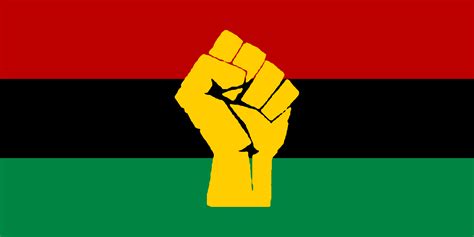
One hundred and one years ago, the Pan-African flag came into existence. Designed by the leader of the Universal Negro Improvement Association, Marcus Garvey, the flag was created as a symbol of Black freedom and unification. It also served as a direct and pointed response to a popular, horribly racist song of the early 1900s.
Choosing Red, Black, and Green
The three broad slashes of red, black, and green were chosen with intention. Each color was selected to symbolize a specific aspect of what it means to be African-American:
- Red represents blood. It honors the men, women, and children who lost-and continue to lose-their lives in the fight for liberation and equality. It serves as a reminder of their sacrifice.
- Black stands for Black people. According to the Pan-African Alliance, it symbolizes African soil, melanin, and compels remembrance that “Black men and women are all unified as members of one family.”
- Green symbolizes growth.
Color Symbolism in National Flags
The colors used in national flags across Africa often carry significant meanings that reflect the history, culture, and aspirations of the respective nations.
- Angola: The red half of the flag signifies bloodshed during Angola's colonial period, independence struggle, and in defense of the country. The black half symbolizes Africa. The gear represents industrial workers and production, the machete represents peasantry, agricultural production and the armed struggle, and the star symbolizes international solidarity and progress.
- Benin: The green of the flag represent the hope of a new democracy. The red represents the courage of the ancestors, and the yellow is for the treasures of the nation.
- Botswana: The light blue represents water, specifically, in its form of rain, as it is a precious resource. The black band with the white frame symbolise the harmony and cooperation between the people of different races who live in Botswana, as well as the racial diversity of the country.
- Burundi: The white color of the saltire represents peace, green represents the nation's hopes placed on future development and red symbolizes the suffering of the nation during its freedom struggle. The three stars stand for the three ethnic groups of Burundi: the Hutu, the Twa and the Tutsi. The three stars also stand for the three elements of the national motto: Unité, Travail, Progrès ("Unity, Work and Progress").
- Mauritius: Red represents the struggle for freedom and independence. Blue represents the Indian Ocean, in which Mauritius is situated. Yellow represents the new light of independence. Green represents the agriculture of Mauritius and its colour throughout the 12 months of the year.
- Mozambique: The red colour of the triangle represents the blood shed during the struggle for liberation. The black stands for the African continent, green for agriculture, yellow for mineral wealth, and white for peace.
South Africa Coat of Arms
The coat of arms of South Africa is the main heraldic insignia of South Africa. The present coat of arms was introduced on Freedom Day, 27 April 2000, and was designed by Iaan Bekker. It replaced the earlier national arms, which had been in use since 1910. The motto is written in the extinct ǀXam, member of the Khoisan languages, and translates literally to "diverse people unite".
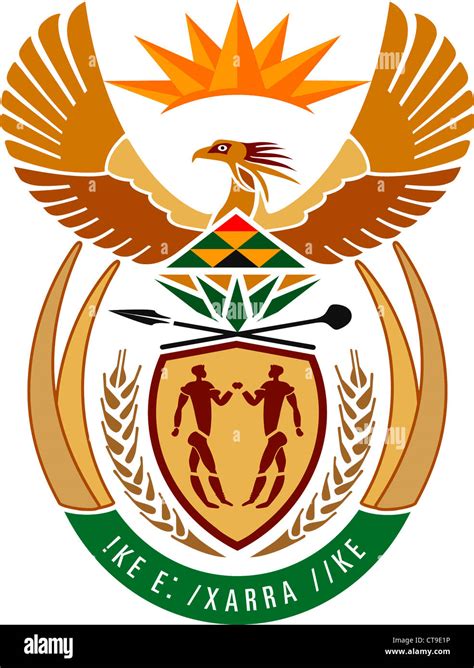
The coat of arms is a series of elements organised in distinct symmetric egg-like or oval shapes placed on top of one another. The completed structure of the coat of arms combines the lower and higher oval shape in a symbol of infinity. The path that connects the lower edge of the scroll, through the lines of the tusks, with the horizon above and the sun rising at the top, forms the shape of the cosmic egg from which the secretary bird rises.