In Africa, the Big Five game animals are the lion, leopard, rhinoceros, elephant, and African buffalo. The term was coined by big-game hunters to refer to the five most difficult animals in Africa to hunt on foot. Over time, the term “Big Five” has been adopted by safari and wildlife operators to promote wildlife tourism in Africa.
They are examples of charismatic megafauna, featuring prominently in popular culture, and are among the most famous of Africa's large animals. The 1990 and later releases of South African rand banknotes feature a different big-five animal on each denomination. They are regularly seen in savanna parks across the content, thanks to game viewing safaris arranged by tour operators in different destinations.
Africa's Big Five have become major concerns for wildlife conservationists in recent years. The African lion and African leopard are both classified as vulnerable. The African savanna elephant is listed as endangered by the IUCN as of 2021. This article shows you information about the big five animals of Africa with facts and data on where you can actually see them.
The below map shows the concentration of Africa’s iconic Big Five animals - the lion, leopard, rhinoceros, elephant, and buffalo. It serves as a unique visual guide to understanding where these magnificent creatures are found across the continent. The color gradient represents the variety of the Big Five present in each area, with darker shades indicating higher diversity.
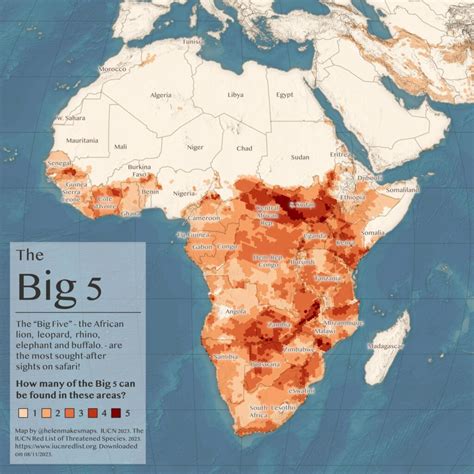
Spotting the Big Five animals in Africa in one place can be difficult, as each of these iconic animals tends to congregate in different regions. While a country may be home to all five species, the largest populations of each are often found in distinct areas. As a result, some animals may be readily visible in certain regions, while others remain elusive due to their smaller local populations.
Read also: Property Practitioners Regulatory Authority
The “Big Five” Animals in Africa!
The African Lion (Panthera leo)
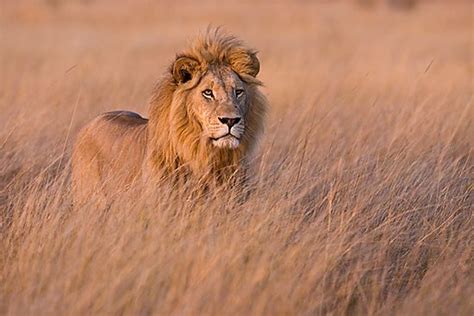
The African lion (Panthera leo) is one of the big cats in the felidae family and genus panthera. The first of Big 5 Africa are the lions. They are listed as “Vulnerable” on the International Union for Conservation of Nature’s (IUCN) Red List of Threatened Species.
A fully grown male lion is three meters long, 1.2 meters tall, and weighs 150-250 kg. A female lion is called a lioness and can weigh between 110-180 kg. According to the Wildlife Informer a lioness can strike at a force of 16,500 pounds and 22,800 pounds for a male. They’re very powerful with sharp claws and teeth and can run up to speeds of 50 miles per hour.
Lions live in social groups called prides and it takes teamwork to hunt and kill prey such as buffaloes, wildebeests, zebras, and sometimes elephants. A pride may consist of two lions or more than 40 members, of which the majority are normally related lionesses. These are primarily responsible for 90% of the hunting which is largely done at night. Males can assist in taking down larger prey and always eat first and more flesh of up to 40 kg in a day.
A pride with many members is usually led by a coalition of males with one dominant leader whose role is to mark, patrol and guard the pride’s territory. The dominant males are protective and will battle to the death to keep away other intruders from taking over their pride. When a successful takeover occurs, the newly triumphant males normally kill the cubs so as to reproduce their own genes.
Lionesses give birth to several cubs after a gestation period of 110 - 120 days and will fight the new males to safeguard their cubs. Males start to grow manes at the age of two and those that grow longer and thicker manes are most attractive to females. However, there are some maneless lions found in the Tsavo Conservation Area of Kenya. They grow little or no manes due to natural adaptation to the thorny vegetation and semi-arid climate. Besides being maneless, the Tsavo lions also exhibit a unique social structure.
Read also: Amazing Facts About Africa
According to the Tsavo Trust, most of the prides in Tsavo are led by single male lions, which is rare among prides. Kenya’s neighbors, Tanzania and Uganda, are famous for harboring the Tree Climbing Lions of East Africa. In particular, Tanzania hosts East Africa’s largest population of lions with over 8,000 individuals of the 24,000 African lion population.
According to the Panthera Corporation, lions, even though they have no natural predators, have declined by 50% and remain in only 25 countries across Sub-Saharan Africa. The primary threat to the survival of lions are humans who poach them for their body parts such as skin, teeth and claws for selling on the illegal wildlife trade. Human-lion conflict is also a big threat and occurs when lions prey on livestock which in turn triggers retaliation by poisoning or setting traps that may injure and kill lions.
As such, lions have been classified as Vulnerable on the IUCN Red List of Endangered Species which promotes long-term conservation of lions. For instance, the Lion Guardians based in Amboseli national park is a non-profit conservation organization that promotes coexistence of predators and livestock (cattle and sheep) among the prominent Maasai and other semi nomadic pastoralists of East Africa. The Maasai traditionally practiced lion hunting as a rite of passage.
Countries apply unique measures to protect lions. For instance, Rwanda has successfully reintroduced lions along with black rhinos back to Akagera national park under the program of the African Parks Network.
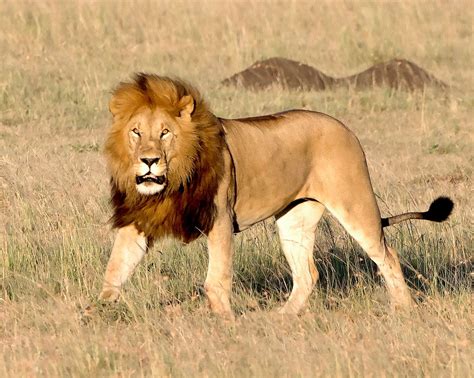
A 2023 study by Oxford University estimates that the total population of wild lions in Africa ranges between 20,000 and 25,000, spread across 25 countries. Tanzania is home to the largest population of lions, with approximately 14,000, according to recent estimates. In comparison, South Africa and Botswana each have about 3,000 lions, while Kenya and Zambia have populations of around 2,500. If you want to choose a travel to a destination where you can watch lions in their natural habitat, you should look for safaris in Tanzania.
Read also: Discover Thula Thula
The African Leopard (Panthera pardus pardus)
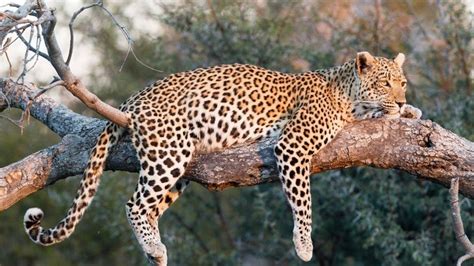
The African leopard (Panthera pardus pardus) also belongs to the genus panthera and family felidae. There’s one species of the African leopard found in over 35 countries across Africa. However, the color of their coat and the shape of spots called rosettes varies depending on where they live.
For instance, the rosettes of East African leopards are circular and square among their South African counterparts. The most common African leopards of the savanna habitats have a light brownish-orange coat. Those that live in the dense tropical forests of central and west Africa have a reddish-orange coat. There’s also the unique black leopards known as the black panthers which have melanistic genes that carry a mutation that creates a darker pigment.
Black leopards are rare with a few found in the Laikipia Wilderness Camp in Ol Pejeta conservancy in northern Kenya where Will Burrard Lucas, an award winning British photographer photographed them during a night game drive. Generally, African leopards weigh up to 60 kg for adult males and 35 - 45 kg for females. They have long bodies measuring 1.6 to 2.3 meters in length and 60 cm to 70 cm in height.
Despite their relatively smaller size, leopards are considered among the Big Five given that they’re powerful, fast and agile. They can kill and carry larger prey such as impala, giant forest hogs, warthogs up to tree branches. Leopards are elusive, nocturnal predators and can camouflage making them hard to spot in the wild. A Leopard can become aggressive when injured and will not flee from the enemy. They are brave to attack and confront with sharp claws and teeth.
Leopards give birth to 2-3 cubs after a gestation period of 2.5 months and can live for 10 to 12 in the wild and up to 20 years in captivity. Humans are the primary threat to leopards given that their skin is utilized for making royal regalia among traditional kingdoms.
Leopards are listed as Vulnerable on the IUCN RedList of Threatened Species given that they are at high risk of extinction owing to habitat degradation, human-wildlife conflict, and illegal wildlife trade. According to IUCN, there are over 700,000 leopards in Africa across 34 countries.
Samburu and Masai Mara national reserves in Kenya are famous for harboring the highest densities of leopards in East Africa. It is commonly cited that there are more than 700,000 leopards in Africa, but experts reported this number to be flawed. Still, leopards are listed as “Vulnerable” on the IUCN’s Red List of Threatened Species with their numbers in Africa declining by 48-67% in the past century.
While Angola, Zambia, Mozambique, and Zimbabwe also have significant leopard populations, their numbers are expected to decrease as their habitats shrink.
The African Rhinoceros (Diceros bicornis & Ceratotherium simum)
The African rhino is the second largest terrestrial mammal on earth. There are two subspecies which include the black rhino and the white rhino of which all are critically endangered on the IUCN red list of endangered species. The white rhino consists of two genetically unique subspecies including the southern and northern white rhino.
Both species are characterized by their thick, armor-like skin and one or two horns on their noses, with the front horn generally being longer than the rear one. The northern white rhino (Ceratotherium simum cottoni) is the rarest of all and thought to be extinct in the wild. There are only two female northern white rhinos named Fatu and Najin that live at Ol Pejeta Conservancy in Kenya. However, due to severe poaching and civil conflict, the last four (two males and females) northern white rhinos were found in DRC’s Garamba national park and taken into captivity at Dvur Králové zoo in Czech Republic.
Given that the zoo had no natural habitat, the rhinos were flown to Kenya in 2009, where the environment would be ideal for breeding. Unfortunately, the last two male northern white rhinos died in 2014 and 2018 respectively without natural reproduction taking place. The females were unable to conceive.
Southern white rhinos have a wider mouth and it is thought that the word ‘wide,’ pronounced ‘wyd,’ in the Afrikaner language of South Africa, was pronounced as white by Europeans, hence the name white rhino. A male Southern white rhino can weigh up to 2,721 km and up to 2,041 kg for females, making for the second largest terrestrial mammal on earth. Despite their size, the white rhino can run up to speeds of 45 km per hour.
According to National Geographic, there are 19,600 to 21,000 individuals of which 98.8% of that number live in four countries which include Zimbabwe, South Africa, Namibia, and Kenya. The animals have bounced back from the brink of extinction given that there fewer than 200 in the 19th century. As part of the global conservation efforts, the breeding of southern white rhinos on private conservancies mostly in South Africa has been an effective way to increase their numbers.
The countries where rhinos become extinct are able to take advantage of importing and reintroducing rhinos back to their historic range. For instance, Uganda reintroduced 5 southern rhinos in 2005 which have since increased to over 35 individuals at a privately managed Ziwa rhino sanctuary, near the country’s largest conservation area Murchison falls national park. Rwanda is famous for carrying the largest shipment of over 30 southern white rhinos to Akagera national park.
The black rhino is distinguished from the white rhino by a relatively smaller physical body, hooked upper lip and brownish-gray skin. They can be aggressive and can run up to speeds of 55 km per hour and their solitary nature makes them difficult to see in the wild. Rhinos can live for 30 in captivity and up to 40 years in the wild and females produce one calf at a time after a gestation period of 15-16 months.
Once found in many countries in Sub-Saharan Africa, the population of black rhinos greatly decreased during the 20th century as a result of poaching and habitat loss. According to the African Rhino Specialist Group of the IUCN, there are about 6,195 black individuals of which Namibia is famous for harboring over 1,750 individuals which is the world’s largest number of black rhinos. Kenya is home to over 960 which is 15.1% of the total black rhino numbers. Other countries with a significant number of black rhinos include Zimbabwe (616), South Africa, and Tanzania.
The black rhino is now classified by the International Union for Conservation of Nature (IUCN) as critically endangered. The major threat to their survival is poaching for their horns which are highly valued in some Asian cultures for their perceived medicinal properties and as ornaments. Conservationists thought that dehorning the rhinos can discourage poachers given that it lowers the horns’ market value. The species are also being reintroduced to their former ranges including Zoukouma national park in Chad and Akagera in Rwanda.
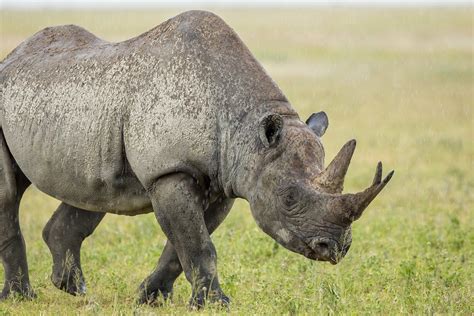
There are three rhino species in Africa: black rhinos, northern white rhinos, and southern white rhinos. From 1960 to 1995, large-scale poaching led to a dramatic 98% decline in their numbers. More than 70% of Africa’s rhinos are southern white rhinos, yet they are classified as “Near Threatened” on the IUCN’s Red List of Threatened Species. The majority of this population, about 12,968, is found in South Africa. Other countries with significant populations include Namibia with 1,416, Kenya with 873, Zimbabwe with 417, and Botswana with 242. Currently, northern white rhinos are the rarest animals in the world.
At one point, only two females were left, who were under constant armed protection in Kenya’s Ol Pejeta Conservancy. Black rhinoceros are estimated to number nearly 6,487 and remain critically endangered species. However, thanks to intensive conservation efforts, their numbers are on the rise.
The African Buffalo (Syncerus caffer)
There are four subspecies of the African buffalo which include the West African savanna, South African savanna (Cape buffalo), central African savanna, and the forest buffaloes. With a population of over 900,000, the African buffalo is the only one of the Big 5 that is not endangered.
The Cape buffalo is the largest of the four subspecies and inhabits open savanna grasslands in East and Southern Africa. They feed on a variety of grasses, leaves, shrubs consuming between 6 to 17 kg of food and 39 to 55 liters of water to survive per day. An adult Cape buffalo stands at 4 to 5 feet tall and weighs between 300 to 835 kg (660 to 1,840 pounds). They have poor eyesight but a strong sense of smell.
The forest forest is reddish brown in color with dark fur on the areas around the facial, ears, and knees. By size, the animal is the smallest of the four subspecies, weighing between 250 to 320 kg. Forest buffaloes predominantly live in relatively smaller herds of 3 to 30 individuals with at least two bulls that stay within the herd forever. The main habitat of forest buffaloes are primary tropical forests that contain bamboo, swamps with sedge grasses, and natural grassy openings known as bais. Forest buffaloes are found across central and west Africa, however.
Unlike the forest buffaloes, savanna buffaloes are social and tend to congregate in herds of a few individuals to thousands. Some of the largest single herds of over 4,000 buffaloes have been observed during the rainy season in Kidepo valley national park, northeast Uganda and in the Serengeti-Mara ecosystem of Kenya and Tanzania. A single herd of over 1,000 individuals has also been recorded in Uganda’s largest conservation, Murchison falls national park.
According to the African Wildlife Foundation (AWF), buffaloes usually form such large herds to defend themselves against lions, which are the main predators. Given that lions tend to attack a herd to single out one that may be either large enough to feed the pride, weak, or sick.
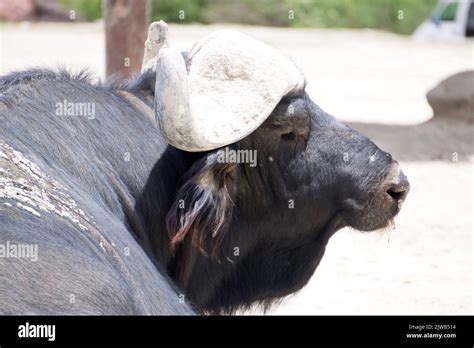
According to the African Wildlife Foundation, there are 4 buffalo species in Africa and 75% of their total population now lives in protected areas. Despite their population in Africa is estimated to amount to 400,000, their numbers are decreasing. Hence they are listed as “Near Threatened” on ICUN’s Red List.
So where can you actually see each species?
- Savanna Buffalo (Syncerus caffer caffer) also known as the Cape buffalo: This is the most common and widespread subspecies. It is found in a variety of habitats in countries across East and Southern Africa.
- West African Savanna Buffalo (Syncerus caffer brachyceros): Countries with notable populations include Benin, Burkina Faso, Niger, Ivory Coast, and Senegal.
- Central African Savanna Buffalo (Syncerus caffer aequinoctialis): Significant populations are in Central African Republic, Democratic Republic of the Congo, and South Sudan.
- Forest Buffalo (Syncerus caffer nanus): The forest buffalo is smaller and is found in the rainforests of Central and West Africa. However, precise figures for their populations are not readily available. Countries where they are known to be common include Cameroon, Gabon, and the Republic of Congo.
The African Elephant (Loxodonta africana & Loxodonta cyclotis)
The African elephant is the largest land animal on earth and there are two subspecies which include the African savanna elephant and the forest elephant. The African savanna elephant (Loxodonta africana) weighs between 2,500 kg to 6,000 kg and measures 11 feet at the shoulder and 19-24 feet in length. The forest elephant (Loxodonta cyclotis) is relatively smaller, weighing between 1,800 kg - 5,400 kg.
An elephant can run at an average speed of 25 km-40 km/hr which is almost three times faster than a human being. Hunting such a massive animal on foot requires a hunter to get closer. Elephants are highly intelligent animals capable of recognizing threats and adopting accordingly. They live in social groups with protective instincts led by a matriarch. Attempting to hunt an individual may lead to aggressive defensive behavior such as mock charges or actual charges from other members of the group.
Elephants have an effective communication instinct too as they can communicate with each at a longer distance of over 10 km using infrasound. This enables them to warn each other and move away if any potential danger is detected. Despite the combination of strength, intelligence, social structure, defensive behaviors, and adaptability, unlawful hunting, known as poaching, is responsible for 60% decline of the African elephant population over the past five decades.
According to the African elephant status report 2016, there are an estimated 415,000 individuals living in over 37 countries. Botswana is famous for harboring over 130,000 individuals, which is almost a third of the world’s African elephant population. The country’s Chobe national park (11,700 sq.km) alone is home to over 50,000 elephants, making for the largest concentrations of elephants in a single place. Tanzania is home to over 50,433 elephants of which over 2,500 live in a 2,850 sq.km Tarangire-Manyara ecosystem in the northern region.
African elephants are critically endangered on the IUCN Red List of endangered species and protected by international and national conservation laws. Hunting them is heavily regulated and involves obtaining permits and adhering to strict guidelines. Conservation efforts prioritize the protection...
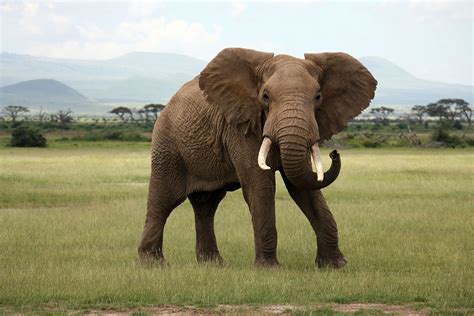
This gentle giant is the largest land mammal with two sub-species: the African Savannah Elephant and the African Forest Elephant. According to an estimate from 2016, their total number was 415,428 living in herds across the African continent.
More than 50% of African Savannah Elephants live in the world’s largest conservation area called Kavango Zambezi Transfrontier Conservation Area (KAZA), which includes Angola, Botswana, Namibia, Zambia, and Zimbabwe. In an unprecedented first-ever aerial survey conducted by KAZA in 2022, resulted in positive outcome and showed a population of 227,900, which is an increase by 7% compared to the 2016 data. IUCN reported that African Forest Elephants primarily live in the central African range, with 72% of their population in Gabon and the Republic of Congo.
South Africa: A Prime Habitat
South Africa is a prime habitat for several of the Big Five animals, each with significant populations across various regions of the country. South Africa also boasts the largest leopard population in Africa, concentrated in diverse habitats including the Western and Eastern Cape Provinces, KwaZulu-Natal Province, and the northern regions near the Kgalagadi Transfrontier Park.
In terms of rhinos, South Africa holds the majority of the continent’s population, with over 70% of Africa’s rhinos residing there. This includes around 12,968 southern white rhinos and approximately 2,056 black rhinos. South Africa has a significant population of Savanna Buffalos estimated to be around 30,000 at the end of the 20th century. Last, but not least there are said to be 44,326 wild elephants roaming the land in South Africa.
Where to Find Them: Key Habitats
Here's a breakdown of where you can find the Big Five in Africa:
Popular articles:
tags: #Africa
