Now here’s a question that demands an answer. Why is it that arguably the world’s richest continent - in terms of natural resources - has some of the world’s poorest people? To answer it, we’d need to take a trip down memory lane.
We often seem to be a people with little patience for history or interest in the impact of past events on present realities. There is no other way to understand Africa today without considering the history of the continent.
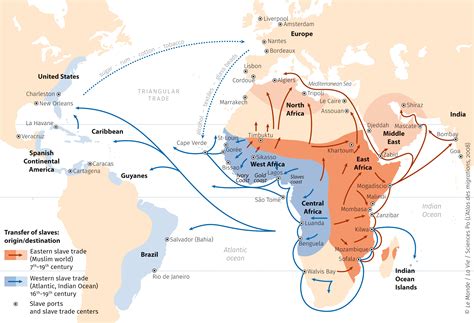
Major slave trade routes in Africa.
The Legacy of Slavery
In the 1400s the Portuguese were the first European nation to use African slave labour to cultivate sugar plantations off the coast of west Africa, in São Tomé. From then on, through its peak in the 18th century and until its staccato abolition in late 1800s, the barbaric and dehumanising trade in Africans would be the primary economic activity through which Europe’s early globalisation efforts were funded.
An estimated 11 million people were forcibly taken into slavery in the New World, but comparable numbers were for centuries also sold across the Sahara, the Red Sea and the Indian Ocean. The professor of economics, Nathan Nunn, in his study of Africa’s slave trades on subsequent economic development, was unequivocal in his assessment: “The African countries that are the poorest today are the ones from which the most slaves were taken,” he wrote in the Quarterly Journal of Economics.
Read also: Walter Rodney on Africa's Underdevelopment
The Impact of Colonialism
The enslavement of the black body made way for another equally brutal system, but one that elicits even less public sympathy. Because this system of oppression, based on greed and white supremacy, was not a lived experience for the inhabitants of this fair isle - as segregation in the US was, for example - and because it is still not taught in our schools, we delude ourselves into believing that empire was a noble cause, and we are charmed by the promises politicians make to take us back to the good old days. What period exactly are we trying to get back to?
All of Africa’s colonial masters left behind a way of life completely decimated, a people traumatised and taught in colonial schools to loathe everything about themselves: their skin, their languages, their dress, their customs. Even their gods were replaced. As the psychoanalyst and revolutionary writer Frantz Fanon put it this way in his 1961 book, The Wretched of the Earth: “Colonialism is not satisfied merely with holding a people in its grip and emptying the native’s brain of all form and content. By a kind of perverted logic, it turns to the past of the oppressed people, and distorts, disfigures, and destroys it.”
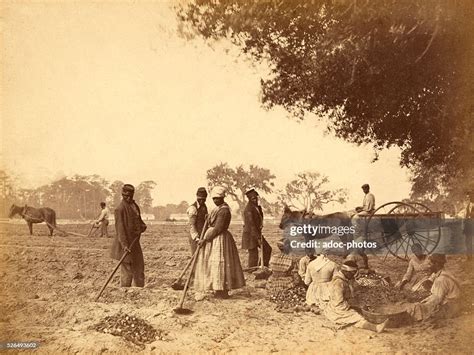
Slaves working in the sweet potato fields in the Hopkinson plantation in South Carolina, c1862.
So a people seemingly with no past were now free to determine their own future. Except, in most - if not all - cases, they weren’t. Postcolonial Africa was caught in the middle of the cold war battle for ideological dominance, then crippled by structural adjustment policies of the World Bank and IMF and is now at the mercy of multinational corporations whose bank balances (many times the size of many African economies) give them power to act in ways that are, if not always above the law, certainly outside of the moral maze.
Modern Economic Systems and Their Effects
In May, a report into resource flows in and out of Africa revealed that the continent loses more money each year than it receives in aid, investment and remittances. According to Honest Accounts 2017 more than three times the amount Africa receives in aid was taken out mainly by multinational companies deliberately misreporting the value of their imports or exports to reduce tax. Along with these illicit financial flows brain drain, debt servicing, and the costs of climate change - caused predominantly by the west but played out on the world’s poorest people - all make Africa a net creditor to the world.
Read also: Property Practitioners Regulatory Authority
These examples speak to the way in which the global economic, trade and information systems are set up, and screw over African countries: from unfair intellectual property laws, to trade deals that force African countries to open up their markets to the rich world’s surplus production, destroying local agriculture and manufacturing in the process. But this shouldn’t be read as a get-out-of-jail-free card for African leaders.
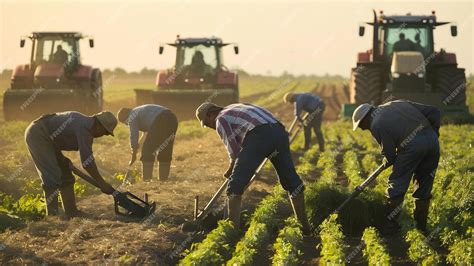
Farm workers stand in a field at a farm in Klippoortie, east of Johannesburg, where Gulf states are looking to invest.
In the half-century since independence, while economies have grown and, in the broadest sense, governance has improved, democracy on the continent is still faltering. The lack of transparency, accountability, safety and the rule of law; the often bloated public sectors and squeezed small businesses; patriarchy masquerading as religion and culture; high unemployment rates and, recently, jihadism destabilising the Sahel region - all these factors are keeping Africans poor.
Walter Rodney argues that to fully appreciate and understand the effect of European exploitation on Africa, four distinct issues need to be addressed: a reconstruction of pre-European Africa's developmental condition, that of pre-expansionist Europe, and their contributions to each other's present condition, developed or otherwise. After an introductory chapter in which he definitionally discusses development, underdevelopment, and associated terminologies in their historical and contemporary contexts, he devotes a chapter to each of these four issues. He concludes the book with a chapter critiquing arguments that promote the "supposed benefit of colonialism".
But of course, that statement is a sweeping generalisation - the kind you have to make when writing about 54 countries in 1,000 words. That every day millions of internet users are seeking to understand a continent rather than a specific country or a region is itself telling. The question about why Africa is so poor is loaded with bias, and presumes two things: the first is that there’s a homogeneous place called Africa, and that Google’s search algorithm will find some pithy yet succinct quote to explain 54 distinctive trajectories.
Read also: Amazing Facts About Africa
The second assumption is that there is something exceptional about Africa, that while other continents and peoples have got or are getting richer, Africans, for reasons we can think but no longer speak in polite company, choose to remain in poverty. Our capacity to see Africa as divergent lets us off the hook so we don’t have to understand our own complicity in the challenges various African countries face today. It also means we rarely rage as we should against the actions of the corporations and governments that profit from instability, corruption or even inexperience (African negotiators at the climate talks have historically been disadvantaged by their lack of experience and the expectation among western negotiators that they should be grateful with whatever they get).
If there is, then, no innate propensity for corruption, violence or poverty in Africa, then the narratives that fuel the stereotypes need questioning.
| Flow Type | Details |
|---|---|
| Aid Received | Amount received by African countries |
| Investment and Remittances | Funds invested and sent home by workers |
| Illicit Financial Flows | Money taken out mainly by multinational companies misreporting the value of their imports or exports to reduce tax. |
| Brain Drain | Loss of skilled workers |
| Debt Servicing | Costs associated with repaying debts |
| Climate Change Costs | Expenses related to the impact of climate change |
Why Africa is so Poor (Hint: It isn’t Colonialism)
Popular articles:
tags: #Africa
