Ghana, located in West Africa, is a country rich in culture and history, offering a unique travel experience. Bordered by Cote d’Ivoire to the west, Burkina Faso to the north, Togo to the east, and the Gulf of Guinea to the south, Ghana boasts diverse landscapes, including coastal plains, tropical forests, and expansive savannas.
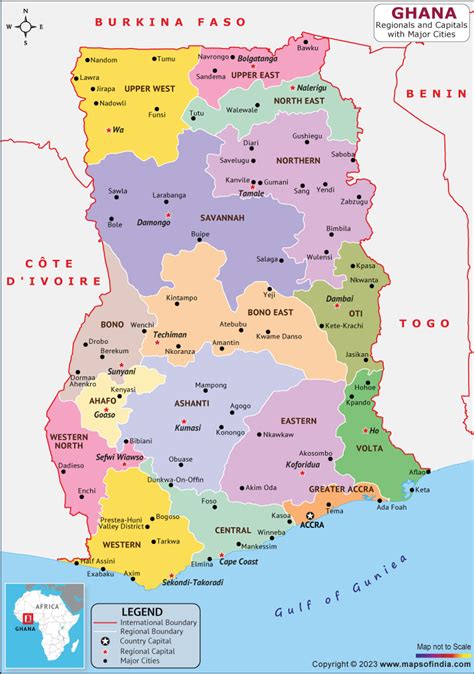
Map of the regions of Ghana
This guide provides essential information for planning your trip, ensuring a safe and memorable adventure.
Updated Travel Advisory
Exercise increased caution in Ghana due to crime and violence, especially against women and lesbian, gay, and bisexual travelers. Be aware of increased risks in specific regions.
Specific Concerns:
- LGBTQ+ Travelers: Ghanaian law prohibits “unnatural carnal knowledge,” often interpreted as same-sex intimacy. Punishments include fines and/or incarceration up to three years. Rhetoric and violence targeting LGBTQ+ individuals have increased, including assault, rape, mob attacks, and harassment.
- Women Travelers: Updated information reflects potential threats against women travelers.
Essential Travel Tips
Our Ghana travel tips and checklist will prepare you for your West Africa adventure. Travel safe!
Read also: The Joys of Group Travel in Ghana
Travel Insurance:
We highly recommend that you buy insurance before you travel. Check with your travel insurance provider about evacuation assistance, medical insurance, and trip cancellation coverage.
Emergency Contacts:
In case of any urgent matters, you can reach the Embassy Duty Officer at +233 (0) 30-274-1000. Please note that this phone number is not for visa inquiries. For any emergency dial 112.
Visa and Entry Requirements
How to apply for a Ghana Visa
All non-Ghanaian residents must have a passport to enter. Travel to Ghana without a visa is possible for African Union (AU) citizens, who can apply for a visa on arrival.
Starting 2025, all African passport holders visiting Ghana will be able to enter visa-free.
Ghana does not offer working holiday visas, but visitors can extend a tourist visa once in Ghana.
Read also: Best Nairobi Excursions
Specific Requirements:
- Passport Validity: Your passport should be valid for a minimum of 6 months from the date of entry into Ghana.
- Yellow Fever Certificate: You will be expected to present a yellow fever vaccination certificate on arrival in Ghana from all travelers 9 months of age and older even if you are transiting. The vaccine must be administered at least ten days before your proposed travel date. Once you get this vaccine it provides lifelong protection.
Money Matters
The local currency in Ghana is called the Ghana cedi. Credit card payments aren’t widely accepted, and credit card fraud is a problem. Cash is king when it comes to shopping in local markets, food stalls and using public transport.
Tips for Managing Money:
- Cash vs. Card: Carry cash for local markets and transport. Use credit/debit cards for larger expenses and withdraw money from ATMs when needed.
- Money Transfer Apps: A good app money transfer app to send money to Ghana to download on your phone is Sendwave. Use my code OQF8X to get a £5.00 credit towards your first transfer.
Staying Connected
MTN provides the best mobile network coverage. Staying connected to the internet during your stay makes it easier to navigate the country.
For sim card registration, you’ll need to bring your passport with you as the sim card will be registered under your name and passport details.
Getting an e-SIM is a much simpler process than going to a store to register for a SIM card.
Safety and Security
Exercise increased caution in Ghana due to crime. Travelers should use registered taxis, stay alert in crowded places, and be cautious with credit card details to prevent unauthorized transactions.
Read also: Boat Trips in Hurghada, Egypt
Safety Tips:
- General Caution: Be aware of your surroundings at all times.
- Petty Theft: Pickpocketing is common in crowded areas. Keep your belongings secure.
- Road Safety: Travel in darkness, particularly outside the major cities, is extremely hazardous due to poor street lighting and the unpredictable behavior of pedestrians, bicyclists, and animals. There has been an increase in robberies on the highways from Bole-to-Wa and Kintampo-to-Tamale, as well as on other minor roads within parts of the Upper West, Upper East, Northern, Eastern, Bono, Bono East, and Ahafo Regions.
- LGBTQ+ Safety: Ghana is not an LGBTQ+ friendly country. If you are a member of the LGBTQ+ community, I recommend being extremely careful when traveling to Ghana, especially as a same-sex couple. It is not recommended to outwardly display acts of affection towards a member of the same sex in this country.
Healthcare
Healthcare in urban areas is basic, and medical facilities are more limited in rural areas. You may need upfront cash payments for treatment. In severe cases, medical evacuation may be necessary for better treatment outside the country, especially from rural areas.
Health Precautions:
- Vaccinations: For disease control, the government required proof of Yellow Fever vaccination as an entry requirement.
- Water: Only drink bottled water; avoid sachet water.
- Medications: Bring charcoal tablets and Imodium for digestive issues.
Local Customs and Practices
While in Ghana, it’s recommended to follow local customs and practices. Understanding and adhering to local laws can help you avoid legal issues.
Cultural Etiquette:
- Greetings: Greetings in Ghana are a big deal, and it’s considered rude not to greet others. When you enter a room, you should say hello, good morning, good afternoon, or good evening.
- Respect for Elders: Respect for elders is immense in Ghana. You should not greet elders with a hat on your head. If you are wearing a hat, take it off completely or lift it halfway while extending your greeting.
- Right Hand Rule: Actions like eating, waving, and handing an item to someone are to be done with your right hand only. Using your left hand for gestures and main tasks is considered highly disrespectful.
Top Things To Do In Ghana
Ghana offers a wide array of attractions across its 16 regions. From historical sites to natural wonders, there's something for every traveler.
| Region | Attractions |
|---|---|
| Greater Accra | Black Star Square, Markets, Accra Art Center, Kwame Nkrumah Memorial Park, Jamestown, Osu Castle, Legon Botanical Gardens, Beaches, Shai Hills Resource Reserve, Batik Making Class |
| Central Region | Kakum National Park, Cape Coast Castle, Elmina Castle |
| Eastern Region | Boti Falls, Aburi Botanical Gardens, Asenema Waterfalls |
| Volta Region | Wli Waterfalls, Arikiko Resort in Akosombo |
| Upper West Region | Wechiau Hippo Sanctuary |
Where To Stay In Accra?
If you’re heading to Accra for the first time, it’s important to vet your accommodation before booking and always check reviews. The best areas to stay in Accra are:
- Osu
- Labone
- North Ridge
- Cantonments
- East Legon
- Airport Residential
Getting Around Accra
Uber and Bolt work in major cities like Accra, Kumasi, Takoradi, and Cape Coast so make sure you download it if you’re looking for a convenient way to get around.
I would also recommend hiring a local driver to get around. I did this for day trips from Accra which worked better for my schedule and gave me the freedom to choose where to go.
Restaurant Recommendations In Accra
If you leave Ghana without trying its delicious cuisine then I am side-eyeing you o. When in Ghana, you have gotta try some street food and eat Red Red, Ghana Jollof, fried rice, Shito, Kelewele, and waakye.
Popular articles:
tags: #Ghana
