In the dazzling world of Ghana’s elite boarding school, “School Girls; Or, The African Mean Girls Play” unfolds as a vibrant and razor-sharp comedy, delving into the complex dynamics of teenage girlhood. As tensions soar and alliances shift, Paulina reigns supreme as the undisputed queen bee, her sights set on the coveted Miss Global Universe pageant.

The subhead of Jocelyn Bioh’s 2017 play is alluring but ultimately misleading. This tale of a teenage queen bee and her frenemies is reimagined in the world of Bioh’s parents, who emigrated from Ghana, and she brings a wider observation into focus.
mean girls slime tutorial (OBC)
The time is 1986. At Aburi Girls’ School in the southern mountains of Ghana, Paulina is the iron butterfly of her “group,” four girls she bullies and rewards with unnerving skill. She claims to date a hot professional footballer and projects wealth and importance. Paulina is also an inveterate liar and fantasist, puffing herself up in the girls’ eyes with stories of her American cousins who eat at fancy restaurants like White Castle (“A castle! With food!”) and shop for their Calvin Kline designer clothes at upscale stores like Walmart.
Paulina quotes American sayings, like, “An apple a week keeps you from being sick,” and makes the motivations behind her supposed generosity crystal clear. “You’re my best friend,” she says, offering help with a dress. But not because she cares about the girl, rather, what she like reflects on Paulina.
The other girls go along with Paulina, enabling her bullying, then later privately apologizing. In the first scene we learn that a recruiter will arrive the next day seeking one contestant from Aburi for the 1986 Miss Ghana pageant. All the girls view it as a foregone conclusion that Paulina will be chosen.
Read also: Oprah Winfrey's School
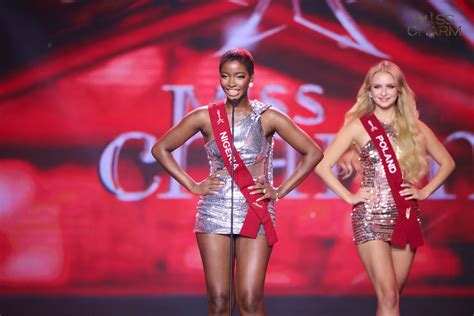
Paulina is mesmerized by visions of going on to the world competition, dating Bobby Brown, and creating a glamorous life of modeling and fame. “College is cute,” she says. “But I’m thinking about my future realistically.”
Then the fly in the ointment arrives - a beautiful new student named Ericka. She is everything Paulina pretends to be (rich, worldly, kind-hearted) and something Paulina can never be (light-skinned with long flowing hair; an exotic contrast to the other girls’ tidy short afros). The pageant recruiter arrives and turns out to be Eloise, a former student and classmate of the headmistress who went on to become Miss Ghana of 1966. They have history.
The headmistress favors dark-skinned Paulina as a perfect representative of the real Ghana. Eloise is dead set on Ericka, whose more “universal and commercial” look is what the judges at the international pageant will go for. Dark-skinned Eloise is bitter about losing at the international pageant, where the top ten girls were all white or light-skinned. But nothing has changed in the 20 years since. Light skin is crucial, and if Eloise is the one to find a winning Miss Ghana, she will get a promotion and the school will get a fat donation.
Secrets come out, alliances change, and the girls perform a profoundly awful choral rendition of “The Greatest Love of All.” Shame underscores Paulina’s supposed confidence, the headmistress must decide whether to betray her own principles, and the girls are left to wonder whether their aspirations have meaning.
The deeper resonance of Bioh’s themes hit. We are left wondering if this isn’t a comedy, but a kind of tragedy. No matter how much the individual characters may learn about themselves or the wider world, it will change nothing. The real mean girls will always win.
Read also: Extracurriculars in Ugandan High Schools
Director Rebecca Taichman stages things with deceptive simplicity and expertly calibrates the flow of the talented ensemble’s shifting tones. As her classmates, Latoya Edwards, Paige Gilbert, Abena Mensah-Bonsu, and Mirirai Sithole are wonderful. Each has her moment in the sun, and each brings humanity and humor to her performance. Maameyaa Boafo is vital, funny, and ultimately heartbreaking as Paulina, making her a true antihero, and letting us feel her inner struggles. The fact that we care about her - even at her worst - is a testament to Boafo’s considerable gifts.
Myra Lucretia Taylor is formidable and big-hearted at the headmistress and Zenzi Williams is elegant and wry as the former Miss Ghana turned recruiter. You see what they were like as girls in their scenes together, and they make the character’s regrets and obfuscations touching and real. As Ericka, Joanna A. Jones does a mean Whitney Houston and is all reasonableness and charm. The character tells a few lies of her own but never seems to have any mean impulses of her own.
The set may be a simple school room, but scenic designer Arnulfo Maldonado has created an almost magical portal to another time and place. Just coming into the theater, we saw the stage and loved it. Costume designer Dede Ayite’s school uniforms are just right, but she soars with the appropriately garish ’˜80s dresses the girls wear for their pageant audition.
The laughs are genuine, earned, and highly enjoyable, but what makes Schoolgirls so powerful is its exploration of how cultural hegemony is toxic and dehumanizing. When the girl’s practice for their audition, Ericka posits a sample question a judge might ask, “If you could be fire or water, which would you choose and why?” Her classmate stares at her. “But I am a human being,” she says, mystified, since obviously she can be neither fire nor water.