Planning a trip to Morocco? I visited Morocco recently and had a blast, but also learned some important things. By the end of this article, I hope you’ll be confident about planning your own trip to this captivating country.
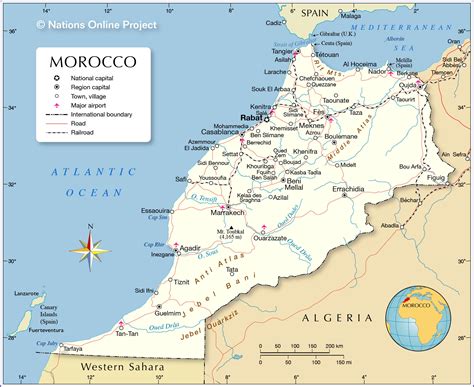
Morocco is in northwest Africa. It’s directly below Spain, across the Strait of Gibraltar.
Getting There
For a Morocco travel planning guide it would be helpful to tell you how to get there (lol). The major airport in Morocco is Casablanca Airport (CMN). This is likely where your flight will land. There is also the Marrakech Menara Airport (RAK). Depending on your travel itinerary, you may want to fly into one airport but fly out of the other. Based on our itinerary, that is what most of the travelers did.
There are a few differences, though. For example, United Airlines services Casablanca Airport but not Marrakech Menara Airport. You can also get to Morocco by taking a ferry from Spain. Depending on the route, the trip can be as short as 1 hour and 30 minutes or up to 36 hours. There are several ports of departure and arrival. The fastest ferry routes leaving from Spain are the Algeciras and Tarifa ports arriving in Tangier. They take 60-90 minutes. Barcelona Spain to Tangier Morocco takes about 28 to 36 hours.
You can also take your car by ferry to Morocco.
Read also: Structure of Uganda's Ministry of Finance
Morocco: What to Know Before You Visit Morocco
Transportation within Morocco
Morocco’s rail network is quite good - comfortable and (mostly) on time. There are several public and private bus companies that connect cities all around the country. Buses tend to be slow and are sometimes overcrowded. If traveling to major cities that are far from each other, you can opt for a domestic flight.
Petit taxis are smaller vehicles that can carry three passengers. Grand taxis are larger vehicles that usually carry up to six passengers. There is no Uber in Morocco but as an alternative there is an app called “Careem” that is available in some of the major cities. In Marrakech there are taxi apps- “Heetch” and “Roby”.
Best Time to Visit
The best time to visit Morocco is in the spring and fall: March to May (though you will probably want to plan around Ramadan) and September to November. It’s neither too hot nor too cold, and you’re outside of the peak tourist season (summer). We went at the beginning of June.
Morocco’s official religion is Islam. Ramadan typically lasts 30 days from March or April until April or May. As a result, most local restaurants and cafes are closed during the daytime. Some even close for the whole month. If you don’t mind this, it can be worth it to experience Morocco during Ramadan.
Northern cities like Casablanca and Tangier have a Mediterranean climate. Even during the hot, muggy summer, the sea breeze cools the place down. Cities like Fes and Marrakech in Central and Southern Morocco quickly become uncomfortably hot in the summer. Marrakech’s average summer temps are in the 90s and it can hit triple digits! The most rain in Morocco falls from November to March, especially in the coastal regions.
Read also: Budgeting for Africa Travel
Important Considerations
English isn’t widely spoken in Morocco. The currency in Morocco is the Moroccan Dirham (MAD). Lots of Moroccan establishments only accept cash, so you’ll want to get to an ATM as soon as you can. ATMs in Morocco tend to have decent exchange rates, but you can also consider exchanging some money at the airport. Most restaurants and main shops (not smaller shops in the souks) will take credit cards but usually not American Express.
I recommend dressing more on the modest side: tops that cover your chest and shoulders, lightweight pants or shorts that cover your knees. You can also wear long dresses and skirts (below the knee). As a rule of thumb, your shoulders, chest, and knees should be covered. Cover your shoulders and chest when visiting the mosques. Head coverings were not required in Morocco but bring a scarf just in case. Dress in Marrakech was more casual.
For both men and women, shoes must be removed when entering the mosques in Casablanca at Hassan II Mosque.
Accommodation: Riads
While traveling through Moroccan cities, a Riad is a popular place to stay. In modern day, a Riad is a hotel or guesthouse with shared common areas and gardens that have private rooms. These are often restored palaces and mansions. The architecture is magnificent. Many are within the Medinas which make them convenient for dining and shopping. You should do your due diligence to check reviews.
Must-See Destinations
Wondering where to go in Morocco? From vibrant Medinas and lively souks to beautiful mosques and manicured gardens, each city has its own distinctive allure.
Read also: Is Jamaica Worth the Hype?
Casablanca
Casablanca isn’t the official capital of Morocco but this bustling city sure feels like it. Mohamed V Square is a bustling hub where locals gather and soak in the joyful atmosphere. The Museum of Moroccan Judaism is a unique museum showcasing the 2,000-year history of the Jewish community in Morocco.
Fes
Fes is the opposite of Casablanca: impressively ancient and historic. The Royal Palace: Although you will not be able to get inside, you will be able to admire and take pictures of the stunning seven front gates. This palace was built in the 1960’s.
Jewish Cemetery: You will notice uniquely shaped white tombs on a hill. This is an expansive Jewish cemetery that was established in 1883. The tombs were freshly painted in 2019. Madrasa Bou Inania is a Muslim learning institute founded in the 14th century. Borj Nord is a fort dating back to the late 16th century that now houses the Museum of Arms.
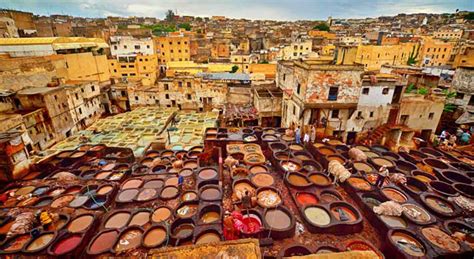
The Medina in Fes is one of the most expansive Medinas (historic districts that have residences, shops, and markets) in the country. If you were wondering where to go in Morocco to get an authentic experience, this is it. But, I have been in markets all over the world and I found it overwhelming EVEN with a guide. So, be careful, keep your belongings close to you. At the huge Chouara Tanneries, animal skins and hides are dyed. You can’t enter the tanning pit itself but there are terraces where you can see what goes on. Watching the process is interesting but may also be disturbing for some. There is a strong smell. You can ask to sniff on mint leaves to help prevent nausea. The shopping here is amazing. There are soooooo many leather goods! You can haggle. It is part of the culture.
Merzouga
Merzouga is a small, tranquil town in the Sahara Desert. It acts as a gateway to Erg Chebbi, an expansive stretch of sand dunes. Go glamping in the Merzouga Desert and witness a starlit sky free from light pollution. Unfortunately it was cloudy when we went but we did get to see a few stars and sunset. You can also do sand boarding. We had live music-drumming around a fire while drinking wine which meant we had to dance! It was awesome. Go on a hike to the highest dune in Erg Chebbi. You can get there in about an hour, but it’s not an easy trip. See flamingos at Dayet Srji, a salt lake west of Merzouga.
Dades Valley
Nestled in the rugged Atlas Mountains is the scenic Dades Valley. The Auberge Chez Pierre Hotel is a lovely hotel in town. The interior is stately and with the modern comforts you need. Explore all the Dades Valley has to offer, from towering cliffs to fertile gardens.
Marrakech
Marrakech is somewhat of a tourist city but doesn’t feel overly touristy at all. The Koutoubia Mosque is the largest mosque in Marrakech. It is also known as “Mosque of the Booksellers”. It was originally built in 1147 but entirely rebuilt from 1158-1195. Bahia Palace is an architectural gem dating back to the 19th century. It’s an opulent palace with tranquil courtyards, lush gardens, and studded fountains. I was mesmerized.
Jardin Majorelle is a lush botanical garden with groves of bamboo, dwarf palm trees, agave, and more. There’s also a museum onsite: the Berber Museum. The grounds are the former residence of Yves Saint Laurent. The “Majorelle Blue” is an official TM color and it is magnificent! Speaking of, the YSL Museum is nearby. There are exhibits of Yves Saint Laurent’s work, featuring tons of garments, accessories, sketches, photos and a gift shop. Jnane Tamsna: This is a Black, woman-owned hotel in Marrakech about 15 minutes from the Medina. A group of us had cocktails and appetizers on the roof at sunset followed by dinner on the hotel grounds.
Sample Itinerary
As you can see, we covered a lot of ground in Morocco. I curated this trip with Experience Morocco and they had positive reviews from travelers who had done this itinerary. We started in Casablanca for 1 night, spent 2 nights in Fes, 1 night Glamping in the Sahara/Merzouga, 1 night in Dades/Atlas Mountains, 3 nights in Marrakech. A total of 8 nights which included a lot of driving! It was a great way to see how diverse Morocco is but if you do not have a lot of time then I suggest spending most of it in one or two of the cities. Marrakech was my favorite.
Culinary Delights
This section could be a blog post on its own! While in Morocco we ate very well! In addition, since this was a Culinary Travels food tour, while planning a trip to Morocco, I included a walking food tour in Fes, food stall visits in Marrakech and a cooking class in Marrakech. Moroccan cuisine is aromatic and full of spices-a lot of turmeric, saffron and cumin. Some dishes tasted like curry to me. But we often had to add salt to dishes based on our American palates. They also eat a lot of BREAD! Couscous is Morocco’s national dish. Even if you’ve had it before, don’t pass up the opportunity to try it right from the source.
One of the best meals we had in Morocco in a Casbah in Dades. Harira is a soup typically made from tomatoes, lentils, chickpeas, and lamb. Tagine can refer to any dish cooked in a clay pot, usually slow-cooked chunks of lamb or beef or chicken with herbs and spices. We had this almost every day. Mostly chicken Tagine or vegetable with Couscous. Pastilla, also called bastilla, is a savory meat pie with a poultry or seafood filling. It’s a surprisingly complex dish, with a sweetness to it, thanks to having sugar, cinnamon, and almonds in it. Zalouk is a popular spread served as a side dish. It’s made of eggplants, garlic, tomatoes, olive oil, and spices, and served with a crusty bread.
Gazelle horns are Moroccan cookies made with an almond and orange blossom filling and wrapped in a thin pastry. Chebakia is a dessert made of a honey-dipped fried sesame cookie in the shape of a flower. Msemen are somewhat analogous to pancakes or crepes - a flatbread eaten for breakfast and as a street food. It can be sweet (served with honey and butter, for example) or savory (stuffed with meat and herbs). Honey is a staple in Morocco. Baghrir is another Moroccan pancake equivalent, commonly eaten for breakfast. Mint tea is the most popular beverage in Morocco. Its popularity has ceremonial origins but it’s now super common in everyday life. It is served hot in a glass cup-just like in Turkey. This is so interesting to me. It is made with fresh mint with real blocks of sugar from light sweetness to extra sweet.
Shopping in Morocco
If I had known the shopping in Morocco would be so amazing, I would have figured out how to bring an extra suitcase! Between me and others in the group we bought wine, leather goods, home goods, pottery, furniture, mirrors, jewelry, clothes..!!!
Here is a summary of tips for planning a trip to Morocco:
| Topic | Tips |
|---|---|
| Best Time to Visit | Spring (March-May) and Fall (September-November) to avoid extreme temperatures and peak tourist season. |
| Transportation | Use trains for long distances, petit taxis for short city rides, and consider Careem or local taxi apps in major cities. |
| Accommodation | Stay in Riads for an authentic Moroccan experience, but check reviews beforehand. |
| Currency | Carry Moroccan Dirham (MAD) for most transactions, as many places only accept cash. Credit cards are accepted in main shops and restaurants but not always American Express. |
| Dress Code | Dress modestly, covering shoulders, chest, and knees, especially when visiting religious sites. |
| Key Destinations | Casablanca, Fes, Merzouga, Dades Valley, and Marrakech. |
| Language | Learn basic Arabic phrases, as English is not widely spoken. |
Popular articles:
tags: #Morocco
