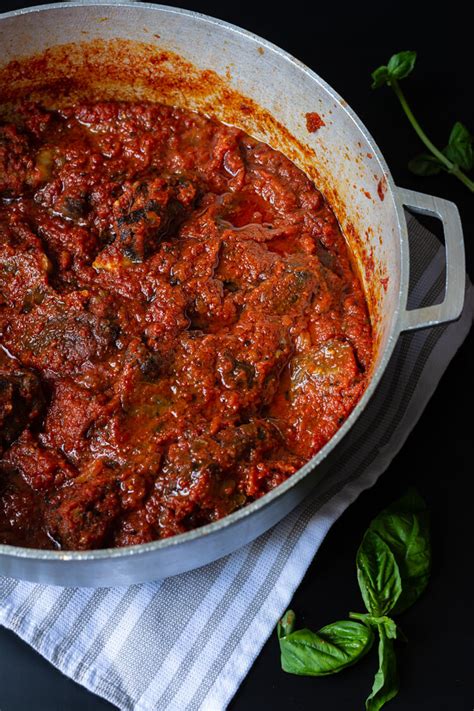
Tomato stew is a staple dish enjoyed all over West Africa, with slight ingredient variations depending on culture and personal preferences. In Nigeria, this stew is a common dish in almost every household due to its ease of preparation. What ties all the different stew variations together is that they are commonly made with blended tomatoes (sometimes with onions and peppers), cooked with some oil and some type of protein.
Here, we will explore a classic Nigerian tomato stew recipe, featuring ram meat for a unique and delicious gamey flavor. This recipe will guide you through each step, from preparing the ingredients to achieving the perfect taste and consistency.
Ingredients
Here's what you'll need to create this flavorful Nigerian stew:
- 2 lbs of Braised ram meat chunks (about 907 grams)
- 3.5 lbs or Plum tomatoes (about 1570 grams)
- 2 large Onions
- 2 large Bell peppers
- 4 Scotch bonnet peppers
- 3 cloves Garlic
- Ginger: small thumb size
- Half cup of Flavorless oil
- One and three-quarter cups of Lamb stock
- 1 teaspoon of Curry powder
- 2 teaspoon of Dried thyme
- 1 teaspoon of Bouillon powder or one cube
- Salt (to taste)
Note on Ingredients:
- Ram Meat: Ram is one of the more popular celebratory meats eaten in Nigeria, especially during the Eid el Kabir season. Meat from the ewe (female lamb) while it has more flavor than lamb, is usually tougher, so a ram is my choice meat for this tomato stew. If you cannot get ram meat locally, the meat with the closest flavor profile is goat meat (chevon).
- Tomatoes: Tomatoes in full season are very sweet and juicy and usually make for the best tomato stews. If you do not have access to roma or any variety of plum tomatoes, I suggest using any other low moisture, sweet tomato variety you have access to. If you want to make tomato stew with out-of-season tomatoes, I recommend using good quality canned whole tomatoes.
- Peppers: In Nigeria, the actual pepper of choice is natively called “tatashe” by the yorubas. Tatashe is a red bell pepper variant that has thinner skin but is more intense and chili-like level of spiciness.
- Flavorless Oil: Other flavorless oils that can be used are canola oil, vegetable oil, avocado oil and corn oil.
Instructions
Follow these step-by-step instructions to make your own Nigerian tomato stew:
Read also: How to Make Nigerian Stew
Step 1: Prepare the Base
Blend the tomatoes, a single large onion, bell peppers, scotch bonnet peppers, garlic and ginger, and set aside.
Step 2: Broil and Braise the Meat
Broil the braised lamb chunks in the oven until it is browned on both sides then set aside.
Step 3: Cook the Blended Tomato Mixture
In a large pot Cook the blended tomato mixture on medium heat until it forms a paste. It should reduce to about half its volume. While the blended tomato mixture is reducing, slice one large onion and set aside.
Step 4: Caramelize the Onions and Add Tomato Paste
Once the tomato mixture has reduced, scoop the paste out of the pot and set it aside. In the same pot, heat the oil on medium heat and caramelize the onions until it is mostly softened. Add the tomato paste to the caramelized onions and add the cook on low- medium heat for 5 minutes.
Step 5: Add Meat Stock and Spices
After 5 minutes, pour in the stock, and season with bouillon, dried thyme and curry powder. Stir and continue to cook for another 10 minutes on low heat.
Read also: Step-by-Step Mask Guide
Step 6: Add Meat of Choice
After 10 minutes, add in the cooked ram, stir, and cook the stew covered for another 5 minutes on low heat. Taste for salt and adjust to your preference, and cook for another 5 minutes covered.
Step 7: Serve!
After 5 minutes, your stew is ready to serve!
Nigerian tomato stew is usually paired with boiled rice, beans, plantain, starchy root vegetables like yam and sometimes soups commonly eaten with fufu.
how to cook fresh tomatoes stew with Nigerian goat meat recipes
Variations and Serving Suggestions
Depending on who is cooking it for you; the type of oil used, the other vegetables blended with the tomatoes, the consistency of the tomato stew and the protein used to cook the stew varies.
Here are some common variations and serving suggestions to enhance your Nigerian tomato stew experience:
Read also: Easy Nigerian Puff Puff
- Protein Variations: You could also use old layer hens, and even stew cut pork; however, if you really want to try this Nigerian red stew recipe exactly as is, and you cannot get ram meat locally, the meat with the closest flavor profile is goat meat (chevon). We use goat and ram meat interchangeably at home and the stew is just as delicious with either! If you prefer beef, chicken, cow skin, goat meat or even fish, feel free to experiment with assorted meats to create your unique stew.
- Serving Suggestions: This stew is incredibly versatile and can be paired with various dishes such as boiled rice, beans, plantain, starchy root vegetables like yam, and sometimes soups commonly eaten with fufu.
Nutritional Information
Here's a quick overview of the nutritional content per serving:
| Nutrient | Amount |
|---|---|
| Calories | 353.4kcal |
(Note: Nutritional values are estimates and can vary based on specific ingredients and portion sizes.)
Enjoy creating this delicious and authentic Nigerian tomato stew! Be sure to adjust the ingredients and spices to your liking, and share your culinary creations with friends and family.
