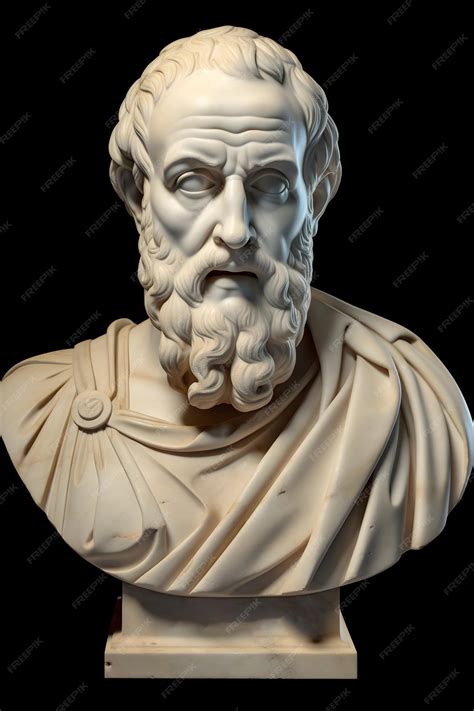
The ancient Greek traveler and historian Herodotus, born in Halicarnassus around 484 BC, left a lasting mark on how the world perceived ancient civilizations through his work, "The Histories". His writings offer a detailed account of the Greco-Persian Wars and various cultural insights, including a fascinating glimpse into ancient Egypt. Herodotus's travels covered a large part of the Persian Empire: he visited Egypt, Libya, Syria, Babylonia, Susa in Elam, Lydia, and Phrygia.
His subject in the "History" is the wars between Greece and Persia (499-479 BCE) and their preliminaries. As it has survived, the "History" is divided into nine books. Books I-V describe the background to the Greco-Persian Wars; Books VI-IX contain the history of the wars, culminating in an account of the Persian king Xerxes’ invasion of Greece (Book VII) and the great Greek victories at Salamis, Plataea, and Mycale in 480-479 BCE.
Herodotus was deeply impressed not only by the great size of the Persian Empire but also by the varied and polyglot nature of its army, which was yet united in a single command, in complete contrast to the Greek forces with their political divisions and disputatious commanders, although the Greeks shared a common language, religion, and way of thought and the same feeling about what they were fighting for.
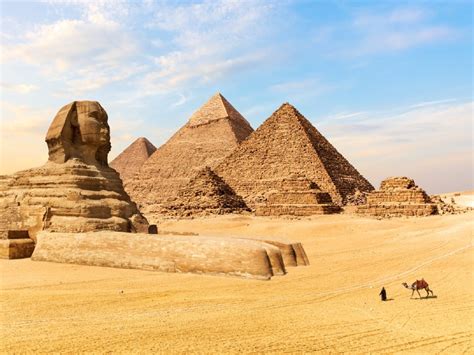
During his visit to Egypt, Herodotus was captivated by the country's unique characteristics, documenting everything from its impressive monuments to the daily lives of its people. He wrote about ancient monuments like the pyramids (already thousands of years old by the time he saw them), great temples, and the works of kings. But he was equally interested in the habits and daily life of the people around him.
His accounts reveal a land of contrasts, where customs and norms differed significantly from those of his native Greece. Just as the Egyptians have a unique climate, and the nature of their river is unlike any other, they have established customs and norms that are different from any other people.
Read also: Egypt: A Gift of the Nile?
Herodotus' perspective on Egypt was shaped by his background as a Greek. These details he lists are things that were the reverse of typical Greek habits: in Greece, men usually went out to the market while many women stayed in the home doing textile work. Greeks customarily ate their meals inside their homes but went outside to relieve themselves.
Two factors are at work in Herodotus’ perception of the Egyptians, factors familiar to anyone who has spent time in a foreign culture. In the first place, we tend to notice things that are different more than things that are the same. When you visit a new place, you tend to notice that people speak differently than you are used to or eat foods you haven’t tried before, not all the little things that are just like at home. Secondly, when we notice these differences, they tend to blow up to exaggerated proportions in our minds.
Daily Life and Customs
Herodotus meticulously documented the daily lives of Egyptians, noting customs that seemed peculiar to a Greek observer:
- Among them, the women haggle in the market while the men stay home weaving.
- While other peoples weave by pushing the weft up, the Egyptians push it down.
- Men always carry burdens on their heads, women on their shoulders.
- Women pee standing up, men sitting down.
- They relieve themselves in their homes but eat outside in the street, saying that what is embarrassing but necessary should be hidden away, but what is not shameful may be done in the open.
- No woman serves as priest either for a male or a female deity; men serve each and every god.
Some of Herodotus’ observations actually do align with our evidence for ancient Egyptian culture in the period when he visited. For example, it seems it was not unusual for Egyptian women to do business outside the home or for men to work as weavers. Some are simply false: at least some Egyptian women did serve as priestesses.
These observations, though sometimes inaccurate, provide valuable insights into the social structure and gender roles of ancient Egypt. Herodotus was a sharp-eyed observer of culture, but even so he wrote from a partial and biased perspective, not just as a foreign visitor trying to make sense of an unfamiliar world, but as an educated Greek who knew something about history and literature.
Read also: Egyptian Adventure
Herodotus on Egyptian Women and the Pyramids
Herodotus's accounts also touch on the roles of women in Egyptian society and their potential involvement in monumental constructions like the pyramids. He explored stories claiming that the builder of the third of the three main pyramids was a woman.
In his "History", 2.124-134, Herodotus refers to various different stories about the pyramids at Giza in Egypt. This essay centers on stories claiming that the builder of the third of the three main pyramids was a woman. In some of these stories, the woman is a queen, while in others she is a courtesan.
Herodotus recounts a tale of Rhodōpis, a beautiful and alluring courtesan, who some Greeks believed commissioned the third pyramid. However, Herodotus dismisses this claim, attributing the pyramid's construction to Pharaoh Mukerinos. He argues that Rhodōpis lived much later, during the reign of Pharaoh Amasis.
Greeks had a long tradition of writing about Egypt as an alien world, a kind of magical Neverland where nothing was as it was in Greece. We credit Herodotus with inventing the genre of history in the Western tradition, but he saw himself as following in the footsteps of epic poets like Homer.
Here's a summary of the key figures associated with the construction of the third pyramid, according to different accounts:
Read also: Learn Arabic in Egypt: Guide
| Figure | Role | Source |
|---|---|---|
| Mukerinos | Pharaoh who commissioned the third pyramid | Herodotus |
| Rhodōpis | Courtesan believed by some Greeks to have commissioned the pyramid | Some Greeks (disputed by Herodotus) |
| Nitōkris | Queen who ruled Egypt and erected the third pyramid | Manetho |
Despite his skepticism about Rhodōpis, Herodotus acknowledges her existence as a Thracian courtesan who was once a slave. This acknowledgment highlights the complex interplay between historical fact and cultural perception in Herodotus's writings.
According to the anonymous foil, as I have already noted, it was a courtesan named Rhodōpis who actually built the pyramid, whereas Herodotus rejects that particular detail in the story. But that same detail, about the building of the third pyramid by a courtesan known as Rhodōpis, is in fact independently attested in Greek sources other than the anonymous foil of Herodotus.
The question you ask is very interesting, but more complex than it might seem at first glance. It depends on what we mean by “accurate” and, what is more, the answer varies over time and depends on which expert you ask and how we understand Herodotus’ work. Your question also raises the further issues of reliability and the method of Herodotus’ own sources. For the sake of simplicity, let us say that Herodotus preferred to trust what he saw in order to compose his account (which does not rule out errors of judgment), though that is certainly not possible for all subjects. When this was not possible, he favoured what he heard (which presents the problem of the quality and reliability of his interlocutors), passing the information he gathered through the filter of critical judgment.
We have just seen, then, an Egyptian story about a fair-skinned and blond queen of Egypt who supposedly built the third pyramid at Giza. And we have also seen that the Greek name Rhodōpis ‘the one with the rosy face’-or ‘the one with the rosy looks’-fits the appearance of such a queen. But we have also seen that Herodotus and his anonymous foil, who was probably Hecataeus of Miletus, both link the name of Rhodōpis not with a queen but with a courtesan.
Herodotus was criticized in his times for his inclusion of "legends and fanciful accounts" in his work. The contemporaneous historian Thucydides who covered the infamous Peloponnesian War in his History of the Peloponnesian War would separately accuse Herodotus of making up stories for entertainment.
In fact, the version I just quoted, claiming that Rhodōpis gets credit for the third of the three main pyramids at Giza, is just the third of three Egyptian versions to be found in the text of Diodorus. According to the first version, also highlighted in the text, the three pyramids were built by three pharaohs whose names are spelled Khemmis and Kephrēn and Mukerinos. [18] These three pharaohs correspond to Kheops and Khephrēn and Mukerinos in the separate narrative of Herodotus. [19] So, in this version as also in the version reported by Herodotus, the third pyramid had been built by Mukerinos.
According to the story as reported by Herodotus, at 2.134-135, the courtesan Rhodōpis was not even Egyptian: rather, she was a Thracian by birth, and she had once been a slave of a man from the island state of Samos named Iadmōn; further, another slave owned by this Samian man Iadmōn was Aesop, described as a logopoios-the word is sometimes translated as ‘maker of prose’. In reconstructing this nexus of relationships, Herodotus relies in part on his investigation of various traditions concerning the death of Aesop at Delphi, observing that a grandson of Iadmōn, also named Iadmōn, once received from the Delphians a blood-price as a compensation for their having killed Aesop, who was the former slave of Iadmon the grandfather. [31] But how did Rhodōpis, who, like Aesop, had been a slave of the elder Iadmōn, wind up in Egypt? According to Herodotus, the man who brought her there as a slave was not the elder Iadmōn {117|118} but another Samian, named Xanthēs. [32]
Herodotus on The Pyramids // The Histories 440 BC // Ancient Greek Primary Source
Popular articles:
tags: #Egypt
